 Blaine Exterior
 Building an Exterior for Semiahmoo's Shoreline Climate
Semiahmoo sits on a narrow spit at the edge of Semiahmoo Bay, about as close to open marine weather as a home in Whatcom County can get. That location is the whole appeal of living there, and it's also exactly why exteriors take more punishment here than they do a few miles inland in Blaine proper. Salt-laden air, sustained wind off the water, driving winter rain, and a moss season that can run eight months or longer all work on a house at the same time, and they don't take turns being gentle about it.
We've built our business around exteriors for this part of Washington, and Semiahmoo is one of the areas where the difference between a product that's rated for coastal exposure and one that's merely rated for "the Pacific Northwest" shows up fastest. This page walks through what we see on homes out there and how we approach siding, roofing, windows, and decks for that specific exposure.
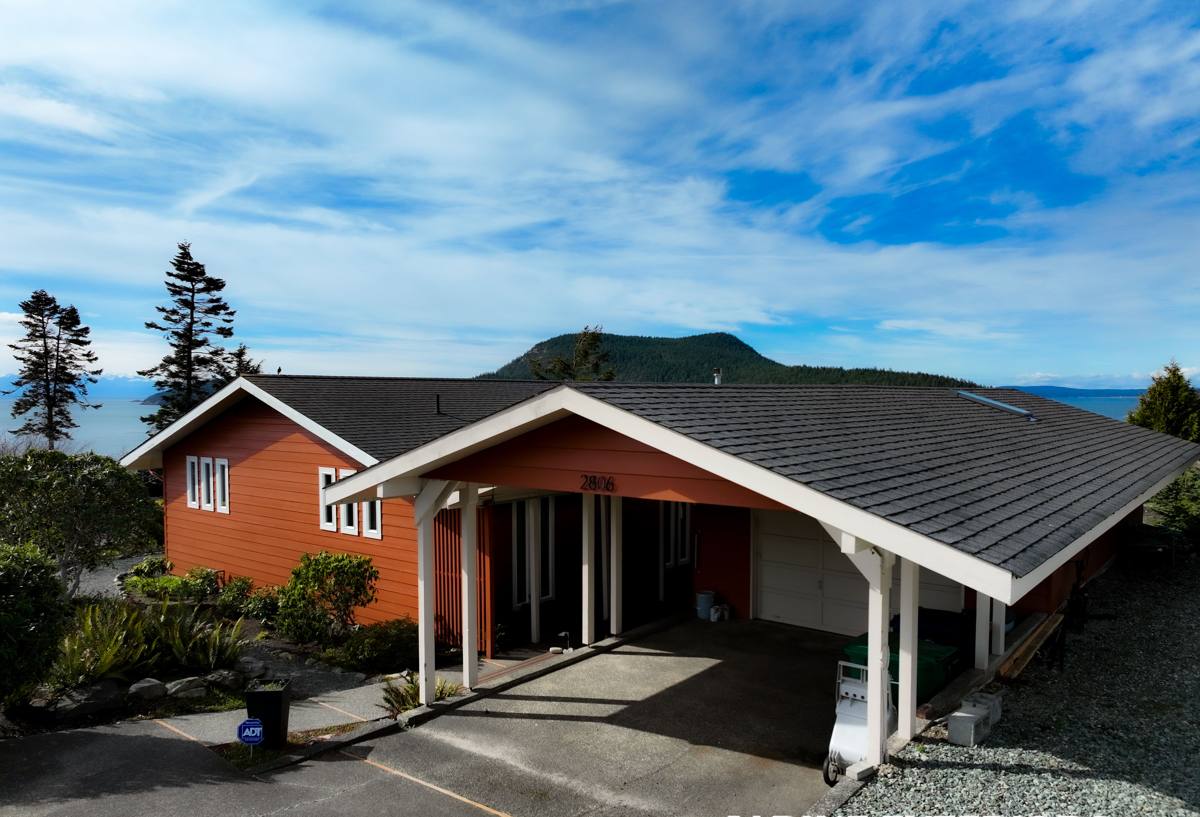
What Salt Air and Wind Actually Do to a House
Salt Air
Airborne salt is corrosive to metal fasteners, flashing, and hardware, and it accelerates the breakdown of finishes that weren't formulated to handle it. On a spit surrounded by water on three sides, salt exposure isn't an occasional thing that happens during a storm surge — it's a constant, low-level presence in the air that settles on every exterior surface, day after day.
Wind
Open water means less to break up the wind before it hits a house. Sustained wind pushes rain sideways into joints, seams, and laps that would stay dry in a more sheltered location. It also puts more load on siding fasteners, roof edges, and window seals over time, which is why exposure rating matters more here than in a typical inland neighborhood.
Moss and Constant Moisture
Long, damp winters combined with the region's cooler, shaded microclimates make Whatcom County prime territory for moss growth on roofs, siding, and decking. Moss holds moisture against the surface it's growing on far longer than open air would, which is what turns a cosmetic nuisance into a slow-motion durability problem — trapped moisture behind moss is what leads to rot, coating failure, and premature wear.
Siding for a Salt-Air Environment
This is where product choice matters most, and it's why our company installs only James Hardie fiber cement siding — not vinyl, not LP SmartSide, not primed wood, not cedar. We'll be direct about why, because homeowners on the spit deserve a straight answer instead of a sales pitch.
Why We Don't Install the Alternatives Here
- Vinyl siding expands and contracts more than fiber cement in wind and temperature swings, and its seams and panels are more prone to working loose under sustained coastal wind loads over the years. It also can't be painted a different color down the road without extra prep, which limits long-term flexibility.
- LP SmartSide and other engineered wood products are wood-based, which means their long-term performance depends heavily on the integrity of the factory coating and correct field caulking at every cut edge. In a salt-air, high-moisture environment, any breach in that coating gives moisture a foothold, and wood-based substrates don't handle sustained moisture as gracefully as fiber cement.
- Primed spruce and cedar are natural wood products that require an ongoing maintenance commitment — recoating, caulking, and touch-up — to keep moisture out. On a property exposed to constant salt air and wind-driven rain, that maintenance window shrinks, and the consequences of skipping a cycle show up faster.
Why James Hardie
Fiber cement is non-combustible and dimensionally stable, meaning it doesn't swell, shrink, or warp with humidity and temperature the way wood-based products can. Hardie's ColorPlus factory finish is baked on under controlled conditions and holds up to UV and salt exposure better than field-applied paint, and it's backed by a real transferable warranty. Hardie also engineers specific product lines (HZ5, for example) for harsher climate zones, which is the kind of climate-specific engineering a coastal spit actually benefits from rather than a generic siding spec.
| Factor | Vinyl | Wood/Engineered Wood | James Hardie Fiber Cement |
|---|---|---|---|
| Salt air resistance | Moderate | Low without diligent maintenance | High |
| Wind/impact durability | Moderate | Moderate | High |
| Maintenance burden | Low, but seams loosen over time | High — recoating, caulking | Low |
| Fire resistance | Low | Low to moderate | Non-combustible |
| Repaint flexibility | Limited | Yes, with prep | Yes, factory finish or repaint |
Roofing for Moss, Wind, and Wind-Driven Rain
Roofs on the spit deal with two separate problems at once: wind uplift at the edges and ridges, and sustained moss growth wherever shade or debris allows moisture to linger. A roofing job here needs proper edge and ridge fastening for wind exposure, underlayment that can handle wind-driven rain finding its way under shingles at laps, and flashing details at every penetration and valley done correctly the first time — those are the spots where a marginal install turns into a leak a few winters later.
We also talk with homeowners about moss prevention as part of the roofing conversation, not as an afterthought. Zinc or copper strips near the ridge, regular gentle cleaning rather than aggressive pressure washing, and keeping overhanging branches trimmed back all extend the life of a roof in this climate more than any one product choice does.
Windows That Hold Up to Coastal Exposure
Windows facing open water take a different kind of abuse than windows on a sheltered inland lot. Wind-driven rain tests seals and flashing details around the frame far more aggressively, and salt air accelerates corrosion on lower-quality hardware and frame components over time. When we replace windows on Semiahmoo homes, we pay particular attention to:
- Proper flashing and integration with the water-resistive barrier and siding, so wind-driven rain can't get behind the frame
- Frame and hardware materials suited to salt-air exposure rather than a generic inland spec
- Correct sizing and installation to keep seals tight as the building moves seasonally with temperature and humidity
- Energy performance appropriate for a house that stays colder and damper for longer stretches of the year than homes further from the water
Signs Windows Are Losing the Battle with the Climate
- Condensation or fogging between panes, meaning the seal has failed
- Drafts or whistling during wind events
- Visible corrosion on hardware or frame fasteners
- Soft or discolored trim around the frame, a sign moisture has been getting in
Decks Facing Open Water
A deck on or near the spit is under near-constant exposure — sun, salt, rain, and wind, often with very little shelter from any of them. Fasteners and hardware need to be rated for coastal/marine-grade exposure, not standard exterior grade, because standard hardware corrodes noticeably faster here. Decking material choice matters too: composite decking generally holds up better to salt air and moisture cycling than untreated wood, which needs regular sealing to keep water from working into the grain and fastener holes. Railing systems, ledger board flashing, and the connection to the house all deserve the same level of attention as the decking itself, since that's where a lot of long-term moisture problems actually start.
Why a Local Crew Matters Out Here
Semiahmoo isn't a typical suburban lot, and an exterior contractor who mostly works sheltered inland neighborhoods can miss details that matter on the spit — wind exposure ratings, salt-air-appropriate fasteners, moss-prone roof geometry, and flashing details sized for wind-driven rain rather than ordinary rainfall. We work throughout Whatcom County, including this stretch of coastline, and we build every siding, roofing, window, and deck job around what the site actually faces rather than a one-size-fits-all spec sheet.
A Practical Exterior Checklist for Semiahmoo Homeowners
- Check for moss buildup on the roof and any shaded siding areas at least twice a year
- Inspect deck fasteners and hardware annually for corrosion, especially anything not rated for marine exposure
- Look at caulking and trim around windows and doors for cracking or gaps after winter storm season
- Have your roof's flashing and valleys checked before the wet season if the roof is more than 10-15 years old
- Ask any contractor bidding your siding job directly what climate zone their product is rated for
Getting Started
If you're dealing with moss buildup, aging siding, drafty windows, or a deck that's showing its age out on Semiahmoo, we're happy to take a look and give you an honest read on what's going on and what it would take to fix it right for this specific location. Fill out the form below for a free, no-pressure estimate.