 Blaine Exterior
 What Primed Wood Siding Actually Is
Primed wood siding is exactly what it sounds like: solid wood boards — usually finger-jointed pine, spruce, or fir, sometimes cedar — that arrive from the mill with a coat of primer already applied. The primer is meant to give the installer a head start and protect the raw wood from moisture for the short window between installation and finish painting. It's been a staple of Pacific Northwest construction for generations, and there's a reason for that: it's affordable, it's easy to cut and nail with basic tools, and a freshly painted run of primed wood siding looks sharp.
We're not writing this page to tell you primed wood is a bad product. It isn't. It's a product that was designed around assumptions — regular repainting, careful detailing, a homeowner who stays on top of maintenance — that don't hold up well against the specific climate we work in here in Blaine. That mismatch is why we stopped installing it.
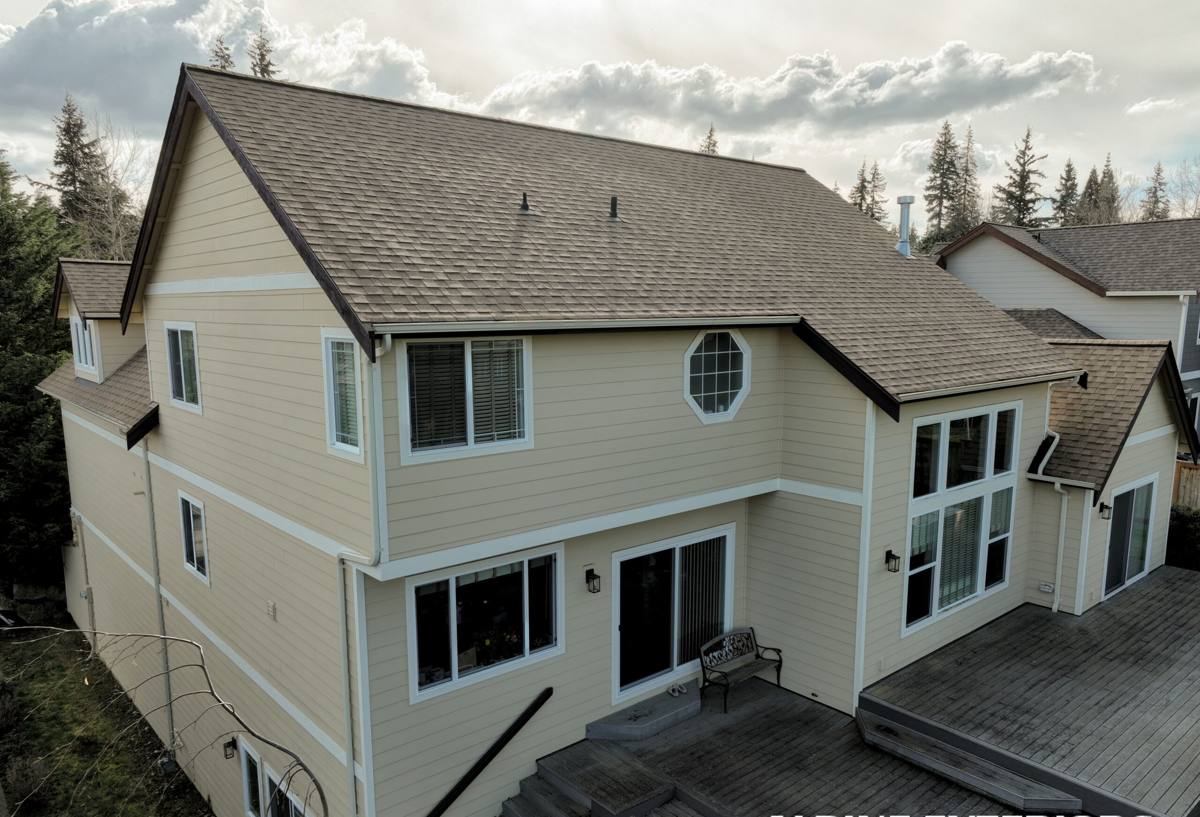
Why Whatcom County's Climate Is the Real Issue
Blaine sits right on the water, at the top corner of Washington state, which means every board on the exterior of a house here deals with a combination of stresses that inland siding never sees. Salt-laden air off the Strait of Georgia and Boundary Bay accelerates the breakdown of paint film and primer coatings. Driving rain off Puget Sound and the Strait pushes moisture sideways into seams, laps, and butt joints — the exact spots where primed wood is most vulnerable. And Whatcom County's long, gray moss season means algae and moss colonize damp wood surfaces for months at a time, especially on the north and west-facing walls that stay shaded and wet longest.
Wood siding can be detailed and maintained to handle some of this. But "can be" is doing a lot of work in that sentence — it requires a level of ongoing attention that most homeowners don't sign up for when they picture new siding.
What Salt Air Does to Painted Wood
Salt is hygroscopic — it pulls moisture out of the air and holds it against whatever surface it lands on. On a coastal property, that means paint film on primed wood siding stays damp longer after every rain, every morning dew, every marine fog. That extended damp exposure is what breaks down paint adhesion over time, letting moisture reach the wood underneath long before the paint job "looks" like it's failing from the street.
What Driving Rain Does at the Joints
Wood siding is installed in overlapping courses with butt joints where one board ends and the next begins. Those joints are sealed and caulked at installation, but caulk is not permanent, and driving rain — common in a waterfront town like Blaine — finds its way into any joint that isn't perfectly sealed. Once water gets behind primed wood, it doesn't dry out quickly, because the same primer and paint that keep bulk water out during a storm also slow the wood's ability to release trapped moisture.
The Maintenance Burden Nobody Mentions at Purchase Time
This is the core of our position. Primed wood siding is not a "install it and forget it" product — it's a product that asks for a maintenance relationship for as long as it's on the house. Here's what that actually looks like in practice:
- Repainting on a cycle of roughly 5-8 years in a marine climate, sooner on south and west exposures that take direct weather
- Annual inspection of caulk lines at joints, corners, and trim for cracking or separation
- Periodic moss and algae treatment on shaded walls before growth works into the paint film
- Prompt repainting of any area where paint has chipped or worn through, since exposed wood absorbs moisture fast
- Watching for soft spots near the ground, at deck ledgers, and around window sills — the classic early signs of rot
- Keeping gutters, downspouts, and grade slope working correctly, since wood siding has almost no tolerance for repeated wetting from poor drainage
Skip any one of these for a couple of seasons in a climate like ours, and the deferred maintenance compounds. A paint job that's six months overdue in Seattle might be fine. The same six months in Blaine, with salt air and moss season working on it, is when moisture starts finding its way in.
Moisture Behavior: Where Wood Struggles Specifically
Solid wood siding moves — it expands and contracts with humidity and temperature more than manufactured siding products do. That movement is normal for wood as a material, but it's also what eventually cracks paint film at the grain and opens hairline gaps at joints. Once that happens, the siding is no longer offering a fully sealed surface, and in a high-rainfall coastal environment, small gaps become significant moisture entry points faster than they would inland.
Rot doesn't usually show up first as visible decay. It shows up as paint that keeps failing in the same spot no matter how well it was applied, or trim that feels slightly soft when you press on it. By the time it's visually obvious, the repair is often more than a patch — it's cutting out and replacing a section of wall.
Installation Sensitivity
Primed wood siding is also less forgiving of installation shortcuts than homeowners often assume. Every cut end needs to be field-primed or sealed before installation, because factory primer only covers the face and back of the board — not the ends, which is exactly where end-grain wood absorbs water fastest. Every joint needs correct flashing behind it, not just caulk on the surface. Skipping either step doesn't show up as a problem on day one. It shows up two, three, or five winters later, and by then it's a repair, not a fix.
We're not willing to install a product where the difference between "looks fine for a decade" and "starts failing in year three" comes down to invisible prep steps that are easy for any crew to shortcut and impossible for a homeowner to verify after the fact.
Cost Factors: Wood vs. Fiber Cement Over Time
| Factor | Primed Wood Siding | James Hardie Fiber Cement |
|---|---|---|
| Initial material cost | Lower | Moderate to higher |
| Repainting cycle in marine climate | Every 5-8 years | ColorPlus factory finish typically holds 15 years or more before repaint is needed |
| Moisture/rot vulnerability | Higher — wood absorbs and swells | Low — fiber cement doesn't rot |
| Combustibility | Combustible | Non-combustible |
| Moss/algae resistance | Requires periodic treatment | Better resistance to sustained damp exposure |
| Warranty structure | Typically limited to the primer/paint manufacturer's terms | Strong transferable manufacturer warranty on the siding itself |
Lower upfront cost is real, and we won't pretend otherwise. But when you price out a 30-year window that includes multiple repaint cycles, caulk maintenance, and the risk of a rot repair somewhere along the way, the total cost of ownership on primed wood in a coastal climate usually lands close to or above what fiber cement costs over the same span — without the recurring maintenance calendar.
What We Install Instead, and Why
We install James Hardie fiber cement siding exclusively, and the reasons track directly against the trade-offs above. It's non-combustible, which matters on its own merits. It's engineered in climate-specific HZ product lines, so the board specified for a marine, high-moisture region like Whatcom County is built differently than one specified for a dry inland climate. The ColorPlus factory finish is baked on under controlled conditions, which gives it far better long-term adhesion and color retention against salt air and UV than field-applied paint over primed wood ever achieves. And it comes with a strong transferable warranty backed by the manufacturer, not just the installing contractor.
None of that makes fiber cement immune to bad installation — correct flashing, proper clearances, and manufacturer-spec fastening still matter enormously, which is exactly why we treat installation the way we do. But it removes the specific failure mode that concerns us most with primed wood on a coastal property: a material that depends on a homeowner keeping up an aggressive maintenance schedule indefinitely, in a climate that punishes any lapse.
Questions to Ask Before Choosing Wood Siding Anywhere on the Coast
- Who is priming and sealing the cut ends on-site, and how is that verified after the crew leaves?
- What flashing detail is going in behind every joint, not just what caulk is going on top of it?
- What's the realistic repaint interval for this specific exposure — north wall, south wall, ground-level, upper story?
- What's actually covered under warranty if paint fails early — the wood, the primer, or nothing?
- Who is responsible for annual inspection and touch-up, and is that built into any contract or is it entirely on the homeowner?
If a contractor can't answer those clearly, that's worth pausing on regardless of which siding material you're considering.
Getting an Honest Look at Your Home
Every property in Blaine faces the water and the weather a little differently depending on exposure, tree cover, and elevation, and that affects how hard any siding material has to work. If you're weighing your options, we're glad to walk your home, look at your specific exposure, and give you a straight answer about what will hold up — no pressure, no sales script. Reach out for a free estimate and we'll tell you what we'd actually put on our own house in your spot.