 Blaine Exterior
 Exterior Work Built for Everson's Climate
Everson sits inland along the Nooksack River in Whatcom County, and while it doesn't take the same direct salt spray that homes closer to Blaine and the coastline deal with, it shares the same marine-influenced weather pattern that defines exteriors work across this part of Washington. Long stretches of overcast, wet weather, heavy tree cover along the river corridor, and a moss season that can run from fall through spring all put steady pressure on siding, roofing, trim, and decking. We work throughout Whatcom County, and Everson's mix of river-bottom humidity, shaded lots, and driving rain off the foothills is a pattern we know well.
The homes here run the gamut — older farmhouses on larger lots, newer construction on the edges of town, and everything in between. What they have in common is exposure to sustained moisture rather than a handful of big storms. That distinction matters more than most homeowners realize, and it shapes almost every recommendation we make.
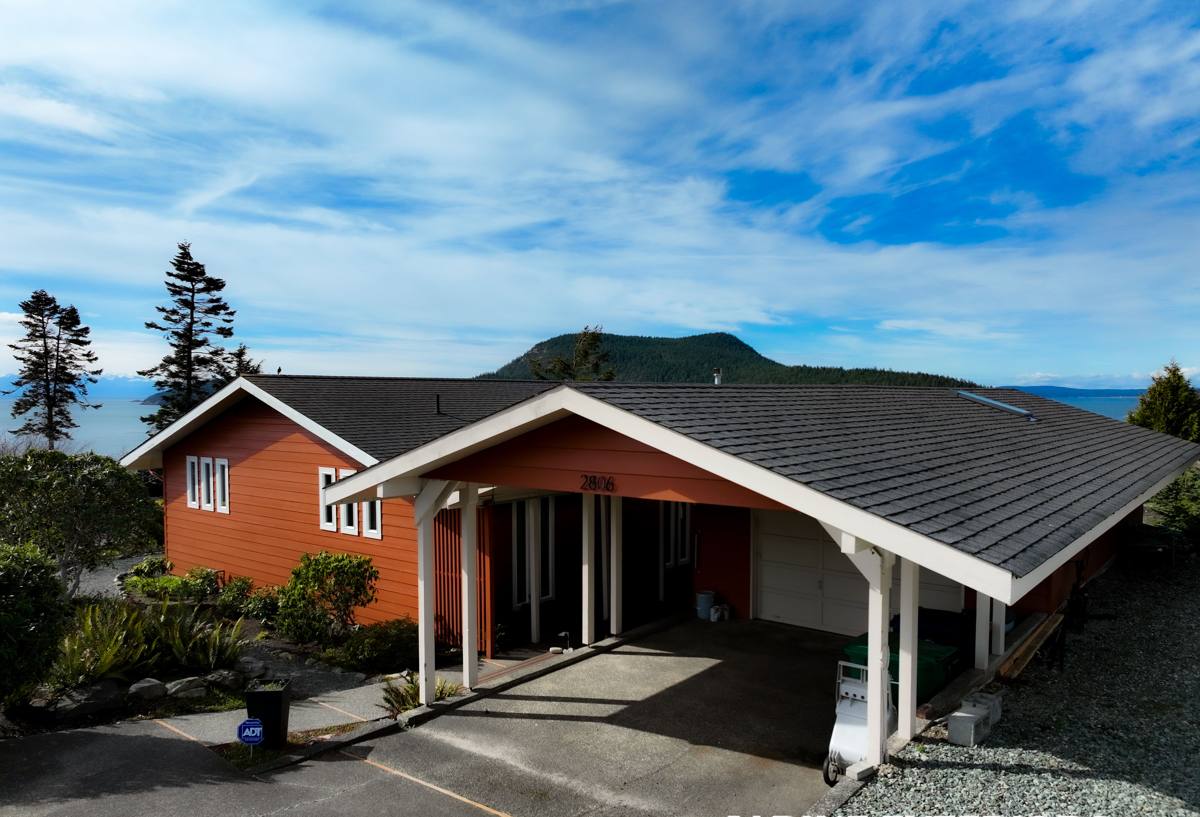
What Everson Homes Actually Face
Moisture That Doesn't Let Up
It's rarely a single hard rain that damages an exterior in this region — it's weeks of dampness that never fully dries out between events. Wood trim, cedar siding, and even some engineered wood products can hold moisture at seams and butt joints long enough for rot to start, especially on north-facing walls or sections shaded by mature trees. Once moisture gets behind a siding panel or under a shingle, the clock starts on hidden damage that often isn't visible until paint starts failing or boards start softening.
Moss, Algae, and Shaded Rooflines
Shaded lots and river-valley humidity are a near-perfect environment for moss and algae growth on roofs, north walls, and anywhere airflow is limited. Moss holds moisture against roofing material and can work its way under shingle edges, shortening the life of a roof that would otherwise perform fine. On siding, algae staining is mostly cosmetic, but it's a visible sign that a surface is staying wet longer than it should.
Temperature Swings and Seasonal Movement
Whatcom County sees real temperature swings between summer and winter, plus daily freeze-thaw cycles in colder months. Materials that expand and contract a lot, or that aren't dimensionally stable, tend to open up gaps at seams and fastener points over time — which is exactly where water gets in.
Why We Only Install James Hardie Siding
Blaine Exterior Co made a deliberate decision to install James Hardie fiber cement siding exclusively. We don't install vinyl, LP SmartSide, Cemplank, Allura, primed spruce, or cedar siding. That's not a marketing position — it's a standard we hold because of what we've seen these products do, and not do, in exactly the kind of climate Everson sits in.
What the Alternatives Get Right — and Where They Fall Short Here
- Vinyl siding is affordable and low-maintenance in dry climates, but it can warp or buckle with temperature swings, and its seams and J-channels give sustained moisture more opportunities to find a way in over years of exposure.
- Cedar siding looks excellent and is a genuinely traditional Northwest material, but it requires ongoing staining or sealing to hold up against constant moisture, and lapses in that maintenance schedule show up fast as cupping, splitting, or rot.
- Primed spruce and engineered wood products like LP SmartSide perform well when installation and maintenance are perfect, but they're more sensitive to moisture intrusion at cut edges and seams than fiber cement, and a single missed caulk joint can lead to swelling.
- Cemplank and Allura are also fiber cement products and share some of Hardie's core advantages, but we've standardized on one manufacturer, one installation protocol, and one warranty structure so every job we do meets the same bar — and Hardie's specific HZ5 formulation and factory finish process are what we've found perform most consistently in this region.
Every one of these products has a place somewhere. Our judgment, based on years of exterior work in this climate, is that fiber cement — specifically Hardie — gives Everson homeowners the best balance of moisture resistance, low maintenance, and long-term durability without asking them to babysit a maintenance schedule.
James Hardie Siding: The System We Install
Hardie fiber cement is engineered from cement, sand, and cellulose fibers, which makes it non-combustible and dimensionally stable — it doesn't expand and contract with humidity and temperature the way wood or vinyl does. That stability matters directly for a climate with steady moisture and regular freeze-thaw cycles, because it means fewer opened seams and fewer entry points for water over the life of the siding.
HZ5 Product Line
Hardie makes climate-specific formulations, and the HZ5 line is engineered for regions with the kind of moisture exposure and freeze-thaw cycling common to Western Washington. It's built to resist moisture-related damage better than Hardie's formulations designed for drier climates.
ColorPlus Factory Finish
Rather than field-painting siding after installation, Hardie's ColorPlus finish is baked on in a controlled factory process, which produces more consistent coverage and better fade resistance than site-applied paint — and it comes backed by its own finish warranty separate from the product warranty.
Warranty Structure
Hardie backs its fiber cement products with a long, transferable limited warranty, which matters to homeowners who may sell within a decade or two — the coverage follows the house, not the original owner.
Roofing for a Wet, Shaded Climate
Roofing in Everson has to account for both sustained rain and the moss risk that comes with tree cover and shaded rooflines. We look at ventilation, underlayment quality, flashing at valleys and penetrations, and edge details — the places where a roof actually fails first, long before the field of the shingles wears out. Proper attic and roof ventilation also reduces the moisture buildup that feeds moss growth from underneath, not just what falls on top from rain and shade.
Windows: Sealing Out Sustained Moisture
Old or poorly flashed windows are one of the most common hidden water entry points we find on exteriors in this region. It's rarely the glass — it's the flashing and sealant details around the frame that fail first under years of steady moisture exposure. When we replace windows, we treat the flashing and integration with the surrounding siding as seriously as the window unit itself, because a well-installed window with bad flashing will leak just as fast as a cheap one.
Decks Built to Handle Standing Moisture
Decks in shaded, humid yards face two problems at once: wood that stays damp longer between dry spells, and surfaces that can get slick with algae growth. Proper spacing between boards, correct fastening that doesn't trap water, and ledger board flashing where the deck meets the house are the details that determine whether a deck lasts or starts showing rot within a few seasons.
Cost Factors to Expect
| Project | What Drives the Cost | Climate Consideration |
|---|---|---|
| Siding replacement | Home size, number of stories, trim detail, existing siding removal | Fiber cement's moisture resistance reduces long-term maintenance cost |
| Roof replacement | Roof pitch, square footage, layers to remove, ventilation upgrades | Moss-prone, shaded roofs benefit from upgraded ventilation and underlayment |
| Window replacement | Number of openings, frame material, flashing complexity | Proper flashing is critical given sustained regional rainfall |
| Deck construction/repair | Size, materials, ledger and footing condition | Board spacing and ledger flashing matter more in shaded, damp yards |
These are general factors, not quotes — every property is different, and the only way to get real numbers is a walkthrough of your specific home.
What a Local Crew Actually Changes
A crew that works Whatcom County regularly knows what moss-prone shaded lots and river-valley humidity do to an exterior over time, because they've seen it firsthand on other homes nearby — not just read about it in a training manual. That translates into practical decisions on your job: where extra flashing attention matters, which details tend to fail first in this climate, and how to sequence work around the region's wet stretches so materials aren't installed in conditions that compromise the job. It also means someone local is reachable if a question comes up after the work is done.
Before You Hire: A Homeowner's Checklist
- Ask what siding, roofing, and window products the contractor actually installs — and why they chose those brands.
- Confirm they're licensed and insured in Washington, and ask to see proof rather than taking it on faith.
- Ask how they handle flashing at windows, doors, and deck ledgers specifically — this is where most water damage starts.
- Get a clear scope of work in writing, not just a total price.
- Ask about warranty coverage on both materials and labor, and whether it's transferable if you sell the home.
- Be cautious of bids that are dramatically lower than others — ask what's being left out.
Get a Free, No-Pressure Estimate
If you're weighing siding, roofing, window, or deck work on a home in Everson, we're glad to take a look and walk you through what we're seeing and why. There's no obligation and no pressure — just a straight assessment from a crew that works this climate every day. Use the form below to request your free estimate.