 Blaine Exterior
 Exterior Work in California Creek
California Creek sits on the edge of Blaine, close enough to Semiahmoo Bay and the water that the air carries salt most days of the year, and close enough to open farmland and tree cover that homes here also deal with heavy shade, damp ground, and long stretches without direct sun. That combination is harder on a house than either condition alone. A place that's only salty stays relatively dry between weather systems; a place that's only shaded and wet doesn't usually have salt working on its metal and finishes too. Homes in this part of Whatcom County get both, and it shows up in the siding, the roof, the window frames, and the deck boards faster than homeowners moving here from inland areas usually expect.
We work this stretch of Blaine regularly, which matters more than it sounds like it should. A crew that only shows up for one job doesn't know which yards flood first after a hard rain, which roads ice before others in a cold snap, or how differently the coastal wind hits a west-facing wall out here compared to a few miles inland. That local pattern recognition changes how we sequence work, what we flag during an inspection, and what we recommend for materials.
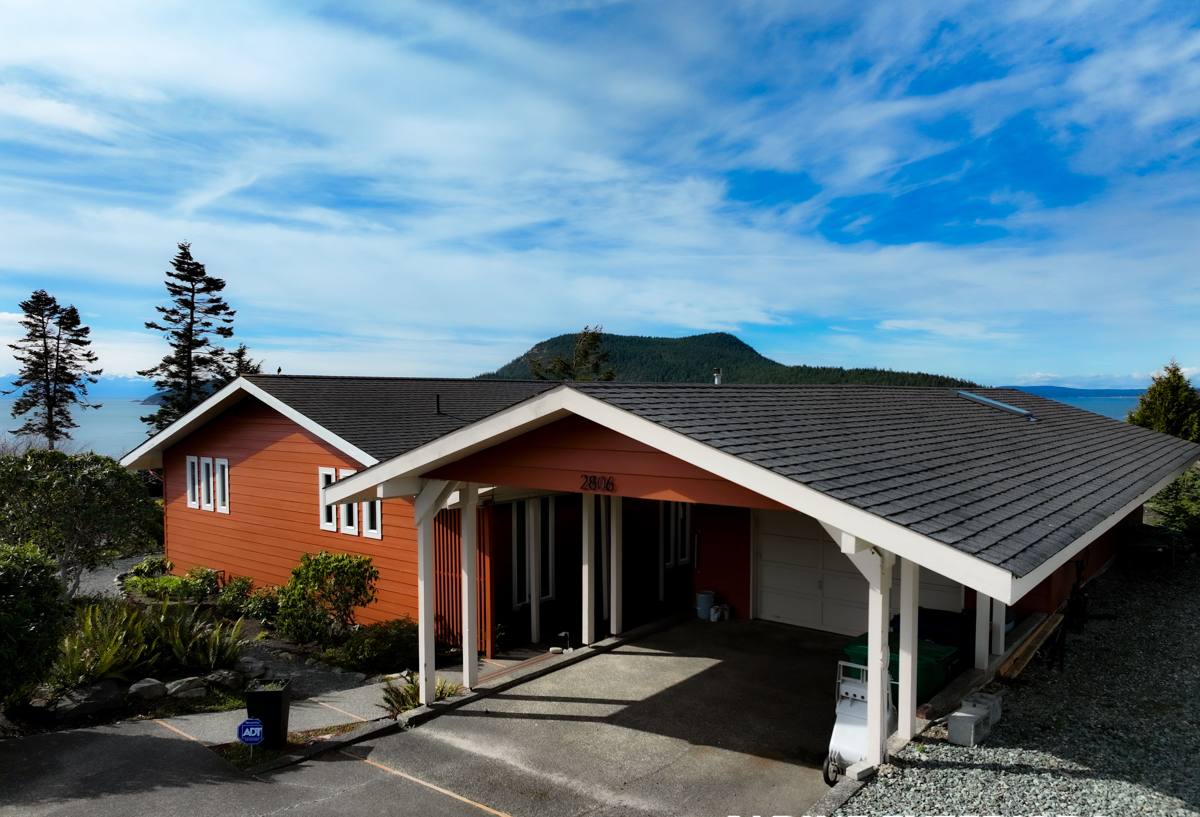
What the Climate Actually Does to a House Here
Salt Air
Even a mile or two off the water, airborne salt settles on exterior surfaces and accelerates corrosion on anything metal — fasteners, flashing, gutter hardware, deck hardware. It also breaks down cheaper paint films faster than inland exposure would, which is why homes near the coast tend to show chalking, fading, and peel years before homes with the exact same siding product further inland.
Driving Rain
Blaine doesn't just get rain, it gets rain pushed sideways by wind off the Strait. Driving rain finds every gap in flashing, every under-caulked window trim, and every place where siding wasn't lapped correctly. Water that would just run off a wall in calmer weather gets forced up and under trim pieces here, which is why so many moisture problems in this area start at windows, corner boards, and butt joints rather than in the open field of a wall.
Moss and Shade
Tree cover and cloud cover mean long stretches where roofs, siding, and decking simply don't dry out. Moss and algae get a real foothold on north-facing roof slopes and shaded siding, and once established they hold moisture against the surface underneath, which is a slow but steady path to rot and granule loss on shingles.
Temperature Swings
Freeze-thaw cycles are milder here than east of the mountains, but they still happen, and they still work on cracked caulk, hairline siding damage, and deck fasteners. Small problems that get ignored over a Blaine winter tend to be bigger problems by spring.
Siding: Why We Install James Hardie and Nothing Else
We install James Hardie fiber cement siding exclusively. We don't install vinyl, LP SmartSide, Cemplank, Allura, or primed wood species like spruce or cedar, and we think homeowners in California Creek deserve an honest explanation of why, not just a sales pitch.
Vinyl is inexpensive and low-maintenance, but it's a plastic product that expands and contracts with temperature and can become brittle over time; in a marine climate with salt exposure and wind, seams and fastening points are where problems start. LP SmartSide and similar engineered wood products perform reasonably well in dry, well-ventilated conditions, but they're wood-based, and wood-based siding is more sensitive to sustained moisture exposure — exactly the condition California Creek delivers for a good chunk of the year. Cedar and primed spruce are real wood, and real wood in a shaded, damp, salt-air environment needs a maintenance schedule most homeowners don't keep up with: repainting, re-caulking, and watching for rot at every seam.
James Hardie fiber cement is cement, sand, and cellulose fiber. It doesn't feed moss the way wood does, it isn't fuel for a wildfire the way wood-based products are, and its ColorPlus factory-applied finish is baked on and warranted separately from the substrate, which matters a lot in a place where UV and salt both degrade paint. Hardie's HZ5 product line is engineered specifically for climates like ours — freeze-thaw cycling, moisture exposure, and coastal weather — and comes with a strong transferable limited warranty that covers the material itself, not just workmanship.
None of this means other siding products are junk. It means that after years of doing exterior work in this exact climate, we standardized on the one product that gives homeowners the least to worry about over a 30-plus-year window, and we'd rather turn down a job than install something we don't believe will hold up on a California Creek wall.
Siding Material Comparison for This Climate
| Material | Salt Air Behavior | Moisture/Moss Resistance | Maintenance Load |
|---|---|---|---|
| James Hardie fiber cement | Non-corrosive, factory finish holds up well | Doesn't feed moss, dimensionally stable when wet | Low — occasional wash, no repainting cycle |
| Vinyl | Can become brittle; fasteners/trim more exposed | Fine on its own, but seams trap moisture | Low, but limited repair options if damaged |
| LP SmartSide / engineered wood | Coating wears faster near salt exposure | Wood-based; sensitive to prolonged damp shade | Moderate — edge sealing and inspection matter |
| Cedar / primed wood | Salt accelerates finish breakdown | Prone to rot and moss in shaded, wet spots | High — repainting and caulk maintenance |
Roofing in California Creek
Roofs here take a beating from the two things this area has in abundance: driving rain and shade-driven moss. We check flashing at every penetration and valley first, because that's where sideways rain actually gets in, not usually through the open field of shingles. On shaded, north-facing slopes we look closely for moss growth and the granule loss that comes with it, since a roof that looks fine from the ground can already be losing its protective layer underneath. Gutters and downspouts matter more here than in drier parts of the state — undersized or clogged gutters during a hard coastal rain send water somewhere it shouldn't go, usually straight down a wall or into a soffit.
Windows: The First Place Driving Rain Gets In
Wind-driven rain off the Strait finds poorly flashed or under-caulked windows before it finds anything else on a house. We pay close attention to how new or replacement windows integrate with the water-resistive barrier and the siding around them — flashing sequence matters as much as the window itself. A high-quality window installed with the wrong flashing detail will leak in this climate; a mid-grade window installed correctly usually won't. We also talk with homeowners about glass and frame options that cut down on the condensation that comes with our long damp, cool stretches.
Decks: Built for a Wet, Shaded Climate
Decks in California Creek deal with the same shade and moisture that punishes roofs and siding, plus direct foot traffic and standing water risk if drainage isn't right. Framing and ledger connections need real attention to flashing and fastener choice, since corrosion-resistant hardware isn't optional this close to salt air. Decking material choice — whether wood or composite — should account for how slowly things dry out here; a board that's fine in a sunny inland yard can stay damp for days under tree cover near the water, which shortens its life and makes it more slippery underfoot.
Why a Local Crew Matters Here
Exterior work in California Creek isn't identical to exterior work ten minutes down the road in downtown Blaine, and it's not the same as work done inland in Whatcom County. A crew that works this area regularly knows which walls take the worst of the wind-driven rain, where moss shows up first each fall, and how the water table and tree cover affect drying time for decks and siding after a project wraps. That local knowledge shapes real decisions — where extra flashing attention goes, which slopes get closer roof inspection, how a deck gets oriented and drained.
Signs Your Exterior Needs a Closer Look
- Dark green or black streaking on siding, especially on shaded or north-facing walls
- Moss buildup on roof valleys or shingles, or granules collecting in gutters
- Paint that's chalking, fading, or peeling faster than expected
- Soft or spongy spots on deck boards, railings, or near ledger connections
- Visible gaps, cracked caulk, or staining around window trim
- Rust streaks below metal flashing, fasteners, or hardware
- Musty smell or visible staining on interior walls near exterior corners
How We Approach a California Creek Project
We start with an on-site look at the actual conditions on your property — sun exposure, tree cover, wind direction, and how water moves across the lot — because those specifics drive real recommendations, not a generic quote. From there we walk through material options honestly, including why we'll steer you toward James Hardie siding rather than cheaper alternatives if long-term performance in this climate is what you're after. We sequence work to account for our weather patterns, and we don't cut corners on flashing and moisture detailing, because that's where most exterior failures in this area actually start.
If your home in California Creek is showing signs of wear from salt air, driving rain, or a long moss season, we're happy to take a look and talk through what's actually going on — no pressure, no obligation. Reach out for a free estimate using the form below.