 Blaine Exterior
 Why Semiahmoo Roofs Take a Different Kind of Beating
Semiahmoo sits right where Whatcom County's shoreline meets open water, and that location shapes everything about how a roof ages here. Homes on or near the spit and the surrounding waterfront get wind off the water with almost nothing to slow it down, driving rain that hits shingles and flashing at an angle instead of straight down, and a near-constant salt mist that settles on every exposed surface. None of that is dramatic on any single day. It's the accumulation — storm after storm, winter after winter — that wears out fasteners, flashing, and roofing materials faster than you'd see on a home tucked inland.
We work on roofs in this specific stretch of Blaine regularly, and the damage pattern is consistent enough that we can usually tell a Semiahmoo roof from an inland one just by looking at the wear. That's useful, because it means we're not guessing at what a storm did — we know what to check first.
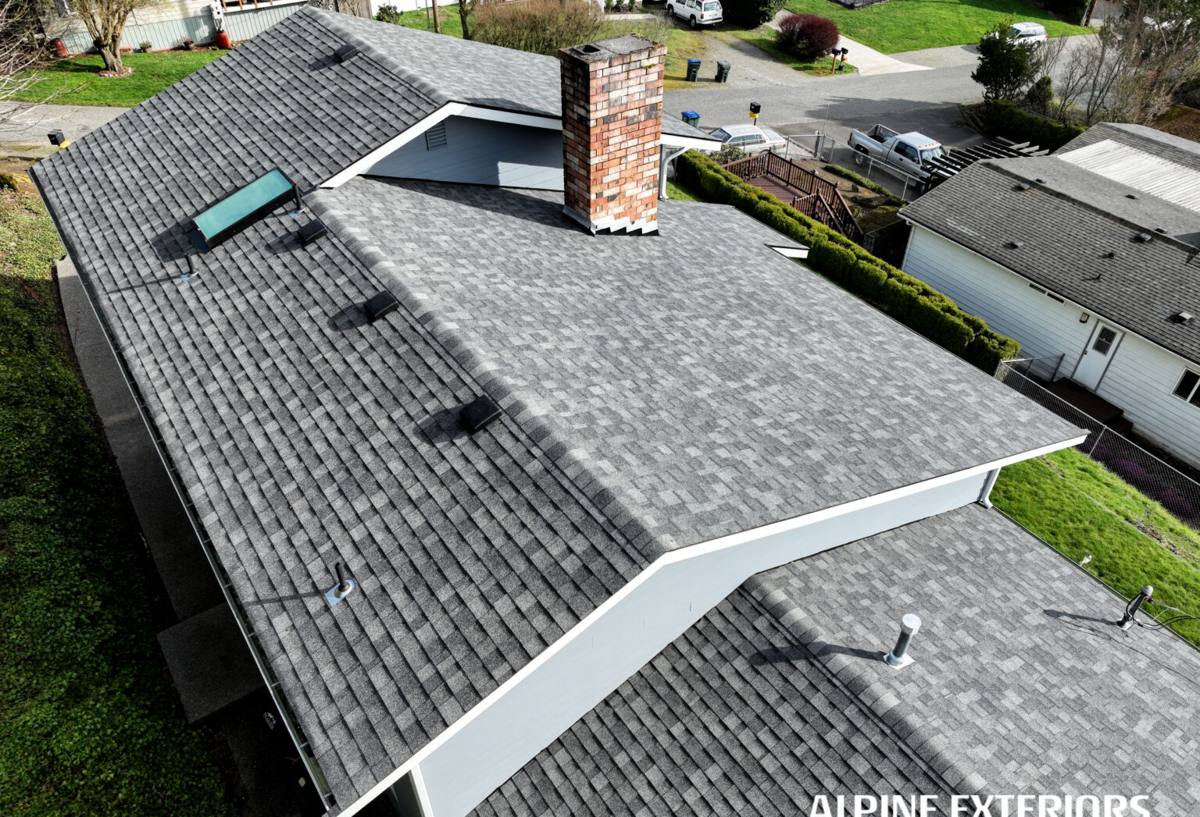
What Storm Damage Actually Looks Like Here
Wind Damage
Sustained wind off the water doesn't just rip shingles off in dramatic fashion — more often it works edges loose gradually, lifting shingle tabs at the perimeter and ridge line until the seal breaks. Once a shingle's adhesive seal is broken, it can flap in every subsequent wind event, working the nails loose and letting water underneath. From the ground, a roof with this kind of damage can look fine. Up close, it's a different story.
Driving Rain and Wind-Driven Water Intrusion
Rain that comes in sideways finds every gap a straight-down rain never would. Flashing around chimneys, vents, and roof-to-wall transitions is the first place we look after a storm, because wind-driven rain pushes water uphill under laps that were never designed to handle it. A leak that shows up inside the house during a storm is very often a flashing problem, not a shingle problem.
Salt Air and Corrosion
Salt in the air accelerates corrosion on anything metal — nail heads, flashing, gutter fasteners, vent boots with metal collars. Corroded fasteners lose their grip on shingles and flashing, which is part of why storm damage on a waterfront roof can look worse, or spread faster, than the same storm would cause a few miles inland.
Moss and Prolonged Moisture
Blaine's long wet season means moss has months to establish itself on any roof surface that stays shaded or damp. Moss holds moisture against the roofing material, and during a storm that saturated moss adds weight and can channel water sideways under shingle edges instead of letting it run off. Storm damage and moss damage often show up together because one makes the other worse.
Our Storm Damage Assessment Process
When we come out after a storm, we're not just looking for obvious holes or missing shingles. A proper assessment covers the whole roof system, because storm damage is frequently worse — or entirely different — from what's visible from the driveway.
- Full roof surface walk, checking shingle seal integrity and lifted or cracked tabs, not just missing ones
- Flashing inspection at every penetration — chimneys, plumbing vents, skylights, roof-to-wall junctions
- Fastener condition check, especially on older roofs where corrosion may already be underway
- Gutter and downspout check for storm debris, granule buildup, and attachment security
- Attic check for water staining, active moisture, or daylight where there shouldn't be any
- Moss and organic growth assessment, since it affects both current damage and future risk
- Photo documentation of everything found, dated and organized for insurance if you need it
We give you a written summary of what we found, what's urgent, what can wait, and what a fix will involve — before any work starts.
Repair or Replace? How We Actually Decide
Storm damage doesn't automatically mean a new roof, and it doesn't automatically mean a patch job either. The honest answer depends on the roof's age, how widespread the damage is, and whether the underlying deck and flashing are still sound.
| Situation | Typical Approach | Why |
|---|---|---|
| Isolated wind damage, roof under 10-15 years old | Targeted repair | Surrounding shingles and flashing are still in good condition and can be matched |
| Repeated storm damage in the same area over time | Repair plus a look at the root cause (flashing detail, ventilation, drainage) | Fixing the same spot twice without addressing why it keeps failing wastes money |
| Widespread seal failure or brittle shingles across the roof | Full or partial replacement | A roof that's failing broadly from age won't hold a patch reliably |
| Heavy moss coverage plus storm damage | Treatment and cleaning first, then repair scope reassessed | You need to see the actual roof surface to know what's really damaged versus just covered |
| Deck rot or sustained water intrusion found in the attic | Deck repair as part of the roofing work, not a cosmetic patch | Shingles installed over a soft or wet deck won't perform, regardless of quality |
We'll always tell you plainly which category your roof falls into and why, rather than defaulting to the most expensive option.
How We Build Repairs to Actually Hold Up in This Location
Fastening and Flashing
Given the corrosion risk from salt air, we pay close attention to fastener choice and flashing material on Semiahmoo repairs specifically. This isn't about upselling premium products — it's about not having to come back and redo the same repair in three years because standard fasteners corroded in a higher-salt environment.
Sealing Details
Wind-driven rain punishes weak seal points. On repairs in this area we're deliberate about sealing laps and transitions in a way that accounts for rain hitting at an angle, not just falling straight down.
Matching Existing Materials
For partial repairs, matching the existing shingle profile and color as closely as possible matters for both appearance and performance — mismatched materials can age at different rates and create new weak points at the seams between old and new.
Storm Repair Now, Fewer Problems Later: Moss and Maintenance
A storm repair is a good moment to deal with contributing factors, not just the immediate damage. If moss was part of what let water in, treating and removing it — and improving airflow or shade issues where reasonably possible — reduces the odds of the same failure repeating next season. We'll flag this during the assessment rather than treat it as a separate upsell; on a lot of Blaine roofs, moss control is genuinely part of storm damage prevention, not a cosmetic add-on.
Gutters deserve the same attention. Clogged gutters after a storm can back water up under the roof edge, turning a minor issue into a deck or fascia problem. Clearing and checking gutter attachment is a small step that's easy to skip and expensive to ignore.
Insurance Documentation Done Right
Most storm damage claims live or die on documentation. We provide dated photos, a written scope of damage, and a clear description of cause (wind, wind-driven rain, impact, etc.) that you can hand directly to your insurance adjuster. We're not a public adjuster and we don't negotiate your claim for you, but we make sure the physical evidence and paperwork on our end are thorough and organized, which puts you in a much stronger position when a claim is being reviewed.
Signs You Should Get a Roof Checked After a Storm
- Granules collecting in gutters or at downspout outlets after heavy wind or rain
- Any shingle that looks lifted, curled, or out of alignment, even if nothing is missing
- New or growing water stains on ceilings or in the attic
- Daylight visible through the roof deck from inside the attic
- Flashing that looks bent, separated, or loose around chimneys or vents
- A sudden increase in moss or dark streaking after a wet stretch
- Debris (branches, shingle pieces from neighboring roofs) that landed on the roof during the storm
If any of these apply, it's worth a look before the next storm system moves through — small issues found early are almost always cheaper to fix than the damage they cause if left alone.
Why a Local Blaine Crew Matters for Semiahmoo Roofs
A roofer who mainly works inland jobs may not have much reference for how fast salt air corrodes fasteners, or how differently wind-driven rain behaves on an exposed waterfront roof compared to a sheltered one. We work in and around Blaine and Whatcom County regularly, including Semiahmoo, so we're not learning these conditions on your roof — we already know what tends to fail here and why, and we build repairs accordingly. That local familiarity also means faster response after a storm, since we're not driving in from out of the area to take a first look.
If your roof took a hit in a recent storm, or you just want an honest read on its current condition, we're happy to come out for a free, no-pressure estimate. There's no obligation — just a straight assessment of what we find and what it would take to fix it right. You can request one using the form below.