 Blaine Exterior
 Exterior Contracting for Point Roberts Homes
Point Roberts sits in its own category among Whatcom County communities. It's a small peninsula that's part of Washington State but physically cut off from the rest of the U.S. mainland by water and by the Canadian border — reaching it means driving through British Columbia. That geography shapes everything about how homes here age, and it shapes how exterior work needs to get done. Blaine Exterior Co. works throughout Point Roberts on siding, roofing, windows, and decks, and we plan every job around the realities of a peninsula community: tighter scheduling windows, border logistics for crews and material deliveries, and a building stock that includes a mix of full-time residences and seasonal or vacation homes that don't always get looked at as often as they should.
Whether your home is occupied year-round or sits empty for stretches at a time, exterior neglect on a property exposed the way Point Roberts homes are exposed tends to show up faster than homeowners expect. That's the gap we fill — a local crew that understands the area's specific wear patterns and shows up prepared to do the job right the first time.
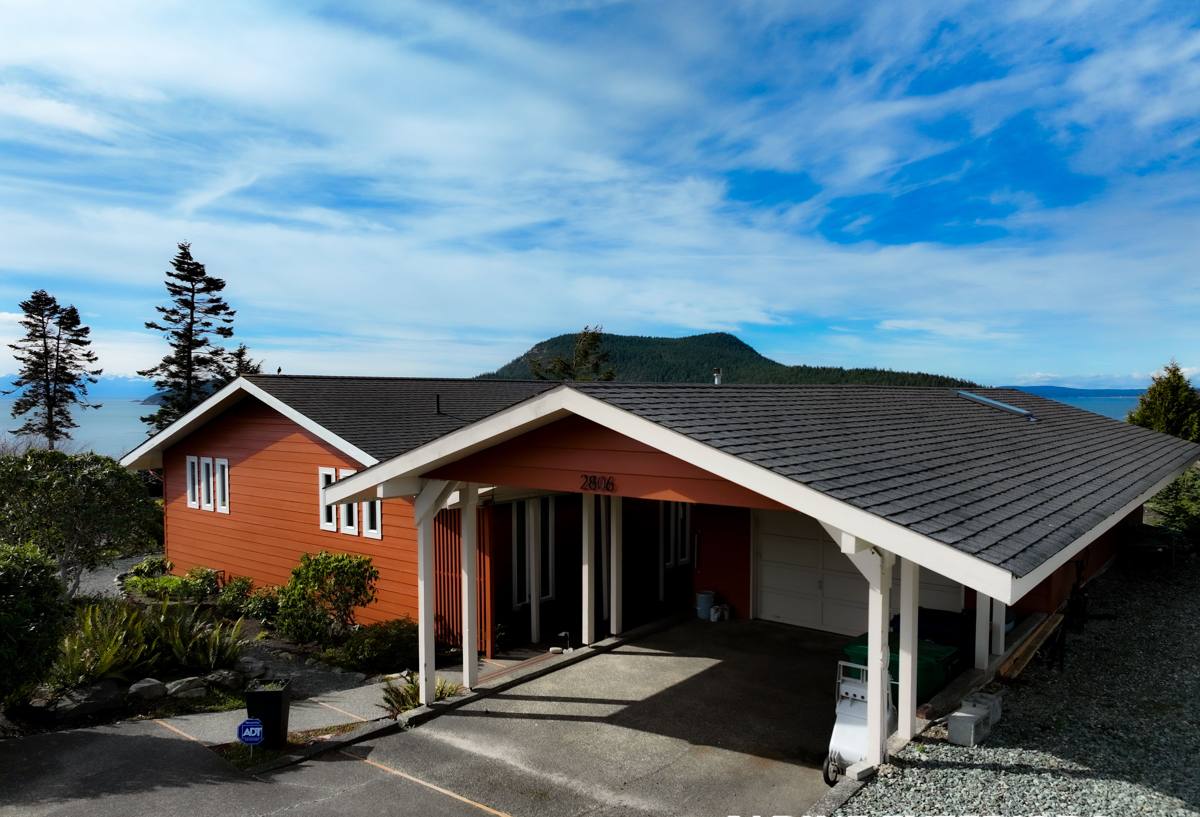
What the Climate Does to Homes Here
Salt Air and Constant Moisture
Being surrounded on three sides by water, Point Roberts gets steady exposure to salt-laden air. Salt air accelerates corrosion on fasteners, flashing, and any exposed metal, and it degrades paint films and lesser siding materials faster than homes further inland experience. Combined with the Pacific Northwest's long wet season, homes here are dealing with two compounding problems at once: moisture intrusion risk and accelerated material breakdown from airborne salt.
Driving Rain and Wind-Driven Water
Rain in this part of Whatcom County doesn't just fall straight down — wind off the water pushes it sideways into wall assemblies, window frames, and roof edges. Driving rain finds every gap in flashing, every under-caulked joint, and every seam where a lesser siding product has started to separate. It's one of the main reasons why installation quality on a coastal property matters as much as the material itself.
Moss and Shaded, Damp Conditions
Point Roberts has a long moss season, like most of the maritime Northwest, but it's compounded here by salt-air humidity that keeps surfaces damp longer between dry spells. Moss on roofing isn't just cosmetic — it holds moisture against shingles and roof decking, works its way under shingle edges, and shortens roof life if it isn't managed. On siding and decking, sustained dampness plus organic growth is a recipe for rot in any wood-based product.
Siding: Why We Only Install James Hardie
Given the salt air, driving rain, and moss exposure Point Roberts properties deal with, siding choice matters more here than in a drier, more sheltered location. Blaine Exterior Co. installs James Hardie fiber cement siding exclusively. We don't install vinyl, LP SmartSide, Cemplank, Allura, primed spruce, or cedar, and we think homeowners deserve a straight explanation of why.
What the Alternatives Get Right — and Where They Struggle
Vinyl siding is inexpensive and low-maintenance in mild climates, but it's a petroleum-based product that can warp, fade, and become brittle under UV and temperature swings, and its seams and J-channels give wind-driven rain more places to find a way in. Wood-based composite products like LP SmartSide use engineered wood strand technology and can perform well when maintained diligently, but they rely on factory-sealed edges and site-applied caulking staying intact — any breach lets moisture into the wood fiber core, and that's a bigger risk on a salt-air peninsula than in a drier inland town. Cemplank and Allura are also fiber cement, and fiber cement as a category is the right call for this climate; our reason for standardizing on Hardie specifically comes down to their factory-applied ColorPlus finish, their HZ5 product engineering aimed at moisture-prone regions, and the depth of their installer network and warranty backing. Primed spruce and cedar are traditional, attractive choices, but raw or primed wood siding demands a maintenance schedule — repainting, caulk inspection, moisture monitoring — that most homeowners underestimate, and that's especially unforgiving in a location that stays damp as long as Point Roberts does.
Why Hardie Fits This Location
James Hardie fiber cement is non-combustible, doesn't rot, and isn't a food source for the moss, mold, and organic growth that thrives in this climate. The ColorPlus factory finish resists fading and chipping better than field-applied paint, which matters on a property where a homeowner might not be checking the exterior every week. Hardie's HZ product lines are engineered specifically for moisture and climate exposure, which lines up with what a Point Roberts home actually experiences. And the transferable warranty means the investment holds value even if the home changes hands, which is relevant in a community with a meaningful share of vacation and second-home ownership.
Roofing for Salt Air, Rain, and Moss
Roofing on a Point Roberts home has to hold up to three things at once: sustained wind-driven rain, salt-air corrosion on any exposed metal components, and moss growth that thrives in the shaded, damp conditions common along this stretch of coastline. We look closely at flashing details around chimneys, vents, and valleys, since that's where driving rain most often finds a way past the roofing material itself. Metal components — flashing, drip edge, fasteners — get evaluated for corrosion resistance given the salt exposure, not just cost. And we talk with homeowners honestly about moss management: periodic treatment and removal, plus attention to any tree cover contributing to shade and debris buildup, extends roof life meaningfully in this climate.
Windows: Sealing Out Wind-Driven Rain
Window failures on the coast are rarely about the glass — they're about the seal. Wind-driven rain pushes water sideways against window frames in a way that inland homes never experience, and older or improperly flashed windows let that moisture track into wall cavities where it causes rot and mold long before anyone notices a problem inside the house. When we replace windows in Point Roberts, proper flashing integration with the wall assembly and weather-resistant barrier is as important as the window unit itself. We also talk with homeowners about frame material — vinyl, fiberglass, and clad-wood windows all perform differently under sustained salt-air and moisture exposure, and the right choice depends on the specific exposure of each elevation of the home.
Decks: Built for Damp, Shaded Conditions
Decks in this climate face the same core problem as siding and roofing: sustained moisture plus organic growth. Wood decking left untreated or under-maintained in a shaded, damp environment will develop moss, algae, and eventually rot at fastener points and board ends where water sits longest. Composite decking reduces that maintenance burden considerably and holds up better against the moss and mildew common in Point Roberts's shadier, damper spots, though it isn't immune to the effects of salt air on fasteners and structural hardware. Ledger board attachment and proper flashing where the deck meets the house are details we take seriously — a poorly flashed ledger is one of the more common sources of hidden rot damage in coastal homes.
Comparing Siding Materials for This Climate
| Material | Moisture/Rot Resistance | Maintenance Needed | Salt-Air Durability |
|---|---|---|---|
| James Hardie Fiber Cement | High — non-combustible, doesn't rot | Low — factory ColorPlus finish | High — HZ lines engineered for exposure |
| Vinyl | Moderate — seams allow water entry | Low, but degrades under UV/temp swings | Moderate — can become brittle |
| LP SmartSide / Engineered Wood | Moderate — depends on sealed edges/caulk | Moderate — caulk inspection needed | Moderate — core vulnerable if breached |
| Cemplank / Allura (Fiber Cement) | High — same category as Hardie | Low to moderate | High |
| Primed Spruce / Cedar | Lower — organic material, needs sealing | High — repainting, moisture checks | Lower — most demanding upkeep |
Why a Local Crew Matters in Point Roberts
Point Roberts' geography makes logistics a real factor in exterior work, not an afterthought. Material deliveries, crew scheduling, and even simple things like a follow-up visit all take more planning when a border crossing is part of the route. A contractor unfamiliar with the area can underestimate this and leave homeowners waiting. Blaine Exterior Co. is based right in Blaine and works this corridor regularly, so we build realistic timelines into every Point Roberts project from the start — no surprises about scheduling once work is already underway.
We also understand that a meaningful number of Point Roberts homes are seasonal or vacation properties. That means exterior problems can go unnoticed longer between visits, and it means we often coordinate directly with owners who aren't on-site to walk through findings, photos, and recommendations remotely before any work begins.
What to Check Before Hiring an Exterior Contractor
- Do they carry current Washington State contractor licensing and insurance, and will they provide proof without being asked twice?
- Do they have experience specifically with coastal or peninsula properties, not just general regional work?
- Will they explain material choices honestly, including trade-offs, rather than just upselling the most expensive option?
- Do they offer a written scope of work and warranty terms in plain language before any contract is signed?
- Can they work with an absentee or seasonal homeowner — site visits, photo documentation, remote communication — if the home isn't occupied full-time?
- Do they have a plan for weather delays and border-crossing logistics specific to reaching Point Roberts?
Our Process for Point Roberts Projects
We start with an on-site inspection to assess actual exposure conditions for the specific property — shade, prevailing wind direction, proximity to water, and existing damage patterns all factor into our recommendations. From there we provide a clear, written estimate covering material, labor, and timeline, with realistic scheduling that accounts for the logistics of working in Point Roberts. Every siding job uses James Hardie products installed to manufacturer specification, since correct installation is what determines how well any siding system performs against driving rain over the long term. Roofing, window, and deck work follow the same standard: proper flashing and moisture management first, aesthetics second — because on this stretch of coastline, the details you can't see are the ones that determine how long the work lasts.
If you own a home in Point Roberts and want a straight assessment of what your exterior needs — whether that's a full siding replacement, a roof due for attention, aging windows, or a deck showing its age — we're happy to take a look. Reach out for a free, no-pressure estimate using the form below.