 Blaine Exterior
 Semiahmoo Sits Right Where Siding Fails Fastest
Semiahmoo occupies one of the more exposed pieces of real estate in Whatcom County — a low spit and shoreline community wrapped by Semiahmoo Bay and Drayton Harbor, with open water on multiple sides. That location is the whole appeal of living there, and it's also exactly why siding on Semiahmoo homes ages differently than siding a few miles inland in Blaine proper. Salt-laden air moves across these properties almost constantly, driving rain comes in sideways off the water during winter storms, and the shaded, damp stretches of many lots stay wet long enough each year to grow a steady crop of moss and algae.
None of that means siding here is doomed — it means siding here needs to be repaired correctly, promptly, and with materials that were built to take this kind of exposure. A patch job that would hold up fine in a drier inland neighborhood can fail within a season on a waterfront wall in Semiahmoo. This page is about what that correct repair actually looks like.
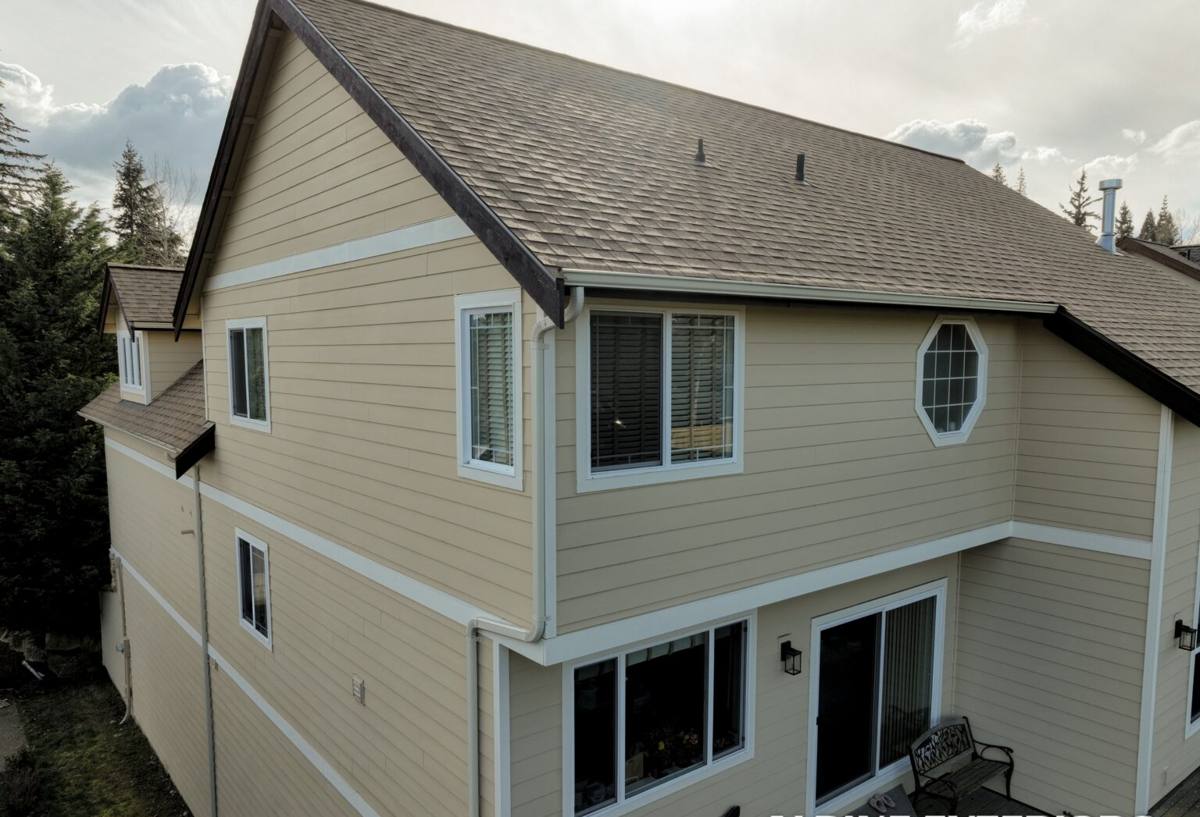
What Salt Air, Rain, and Moss Actually Do to Siding
Salt Air
Airborne salt is corrosive to metal fasteners, flashing, and trim, and it accelerates the breakdown of finishes that weren't engineered to resist it. On wood-based and composite sidings, salt exposure combined with moisture speeds up swelling, delamination, and finish failure at a rate that's hard to predict from a distance — a wall can look fine and be compromised underneath.
Driving Rain
Wind-driven rain doesn't just fall on siding, it gets pushed into every gap, lap joint, and fastener penetration that isn't sealed and flashed correctly. Over time, that's how water finds its way behind panels and into the wall assembly, where the real damage — rot, sheathing decay, mold — happens out of sight.
Moss and Algae
Whatcom County's long wet season gives moss and algae plenty of time to establish on north-facing walls, shaded siding, and anywhere airflow is limited. Beyond looking bad, a mat of moss holds moisture against the siding surface far longer than open air would, which keeps the material wet and speeds up whatever damage the moisture is already causing.
Signs a Semiahmoo Home Needs Siding Repair, Not Just a Cleaning
- Soft or spongy spots when you press on the siding, especially near the bottom courses or around window and door trim
- Visible gaps, cracks, or separated seams where panels meet trim, corners, or each other
- Paint or finish that's peeling, bubbling, or chalking in patches rather than evenly across the wall
- Persistent moss or algae staining that comes back quickly after cleaning
- Discoloration or a musty smell on the interior wall directly behind a suspect section of exterior siding
- Visible warping, buckling, or panels that no longer sit flat against the wall
- Rust streaks below fasteners or flashing, a sign the hardware itself is failing
Any one of these on its own might be minor. Several together, or any sign paired with softness to the touch, usually means water has already gotten past the surface and the repair needs to address what's underneath, not just what's visible.
What a Correct Siding Repair Actually Involves
A repair that just swaps a damaged piece for a new one and calls it done is a temporary fix at best. On a Semiahmoo property, where the underlying cause is almost always some combination of moisture intrusion and constant marine exposure, a correct repair has to answer three questions before any new material goes up.
1. What let the water in?
Failed caulking, missing or damaged flashing, a fastener pattern that doesn't match the product's installation requirements, or a gap where two trades' work didn't line up correctly are the usual culprits. Replacing the siding without fixing the entry point just guarantees the same failure returns.
2. How far did the damage spread?
Water travels. A stain on one panel can mean the sheathing behind three panels is compromised. A proper repair includes opening up the area enough to see the actual extent of the damage — rot, mold, or degraded sheathing — rather than assuming the damage stops where it's visible.
3. What's the wall assembly supposed to look like once it's closed back up?
Correct house-wrap or weather-resistive barrier overlap, properly lapped flashing, and fasteners driven to the manufacturer's specified pattern and depth are not optional details — they're the difference between a repair that lasts and one that fails again in a wet season or two.
Repair or Replace? How We Help You Decide
Not every damaged section needs a full re-side, and not every "just patch it" request should be honored if the underlying material or installation is compromised. Here's the general framework we use when walking a Semiahmoo property:
| Factor | Leans Toward Repair | Leans Toward Replacement |
|---|---|---|
| Extent of damage | Isolated to a small area, single wall, or a few panels | Recurring failures across multiple walls or exposures |
| Underlying material | Sound fiber cement with a localized issue | Widespread rot, delamination, or a failing legacy material |
| Age of existing siding | Well within its expected service life | Nearing or past the age where repeated repairs stop making sense |
| Cause of damage | A one-time event (impact, isolated flashing failure) | Ongoing moisture exposure from siding not suited to this environment |
| Color/finish match | Close match achievable or aging is uniform enough to blend | Faded or discontinued finish makes patch repairs visually obvious |
We'll always give you a straight answer on which side of that table your situation falls on, including when a repair is genuinely the right call and a full re-side would be overkill.
Our Process for Semiahmoo Siding Repair Calls
- On-site diagnosis. We inspect the damaged area and the surrounding wall, checking for softness, moisture readings where relevant, and signs the problem extends beyond what's visible.
- Investigate the cause. We identify what let moisture or damage in — flashing, sealant, fastening, or a material issue — so the fix addresses the source, not just the symptom.
- Open it up if needed. If there's any indication of hidden damage, we open the wall enough to confirm the true extent before closing anything back up.
- Repair the wall assembly correctly. Damaged sheathing gets replaced, house-wrap and flashing get restored to proper lapping and overlap, and fasteners go in per manufacturer spec.
- Match the siding. We install new James Hardie fiber cement matched to your existing profile and, where possible, finish, so the repair blends in rather than standing out.
- Walk the results with you. Before we leave, we go over what was found, what was fixed, and what to watch for going forward.
Why We Repair With James Hardie Fiber Cement — Not Whatever's Already On the Wall
Blaine Exterior Co installs and repairs with James Hardie fiber cement siding exclusively. We don't install LP SmartSide, vinyl, Cemplank, Allura, primed spruce, or cedar, and that standard applies to repair work too. In a marine environment like Semiahmoo, the material choice matters as much as the workmanship.
Fiber cement is non-combustible and doesn't feed the moisture-driven decay cycle that engineered wood and untreated cedar products can be prone to in a wet, salt-air climate. James Hardie's HZ5 product line is specifically engineered for climates with significant moisture exposure, and the ColorPlus factory finish is baked on under controlled conditions rather than field-applied, which gives it better resistance to fading and peeling than most site-applied paint systems — a real advantage on a wall that spends its life facing salt spray and driving rain.
If an existing section of a home has a different siding material and it's failed, we'll say so plainly and explain the trade-offs rather than just patching like with like. Sometimes a targeted repair using compatible materials is the right near-term answer; when the underlying product is the reason for repeat failures, we'll tell you that too.
What Correct Fiber Cement Repair Requires
- Cuts and fastening that follow James Hardie's published installation specifications
- Proper clearance from grade, decks, and roof lines to keep the repaired section out of standing water and splash-back
- Correctly lapped flashing and house-wrap at every seam and penetration
- Fasteners and trim hardware suited to a marine, salt-air environment
- A finish match that accounts for the age and weathering of the surrounding siding
Why a Crew That Already Works Semiahmoo Makes a Difference
Siding repair in a marine-exposed neighborhood isn't identical to siding repair three miles inland. A crew that regularly works Blaine and Semiahmoo properties has already seen how quickly moss re-establishes on shaded, damp walls here, which orientations take the worst of the driving rain, and where salt exposure tends to concentrate fastener and flashing failures. That local pattern recognition shortens the diagnosis and reduces the odds of a repair addressing the wrong problem.
It also means realistic expectations about maintenance. A repair here should come with honest guidance on cleaning intervals, what early moss regrowth looks like, and which spots on your specific property are worth an annual check — not a one-size-fits-all answer that ignores how exposed the site actually is.
What to Ask Before You Hire Anyone to Repair Your Siding
- Will you identify and fix the cause of the damage, or just replace what's visibly broken?
- Will you check for hidden moisture or rot before closing the wall back up?
- What siding material and fastening spec will you use for the repair, and why?
- How will you match the color and profile to my existing siding?
- Do you have experience with waterfront or marine-exposed properties specifically?
- What warranty applies to the repair work, and what applies to the materials?
If you're seeing early signs of damage on a Semiahmoo home — softness, staining, persistent moss, or gaps around trim — it's worth getting it looked at before another wet season pushes it further. We're happy to come take a look and give you a straightforward, no-pressure estimate on what a correct repair would involve.