 Blaine Exterior
 Exteriors Built for Dakota Creek's Climate
Dakota Creek sits close enough to the water that salt air is part of daily life, not an occasional visitor. Add in Whatcom County's long wet season and the moss growth that comes with it, and you have a combination that is genuinely hard on a house. Siding, roofing, windows, and decks in this part of Blaine don't fail because homeowners neglect them — they fail because the materials weren't matched to what the climate actually does, month after month, year after year.
We've worked exteriors throughout Blaine and the surrounding areas long enough to know what holds up here and what doesn't. This page walks through what Dakota Creek homes tend to face, how we approach each part of the exterior, and why the products we choose to install — and the ones we don't — reflect what actually survives this environment.
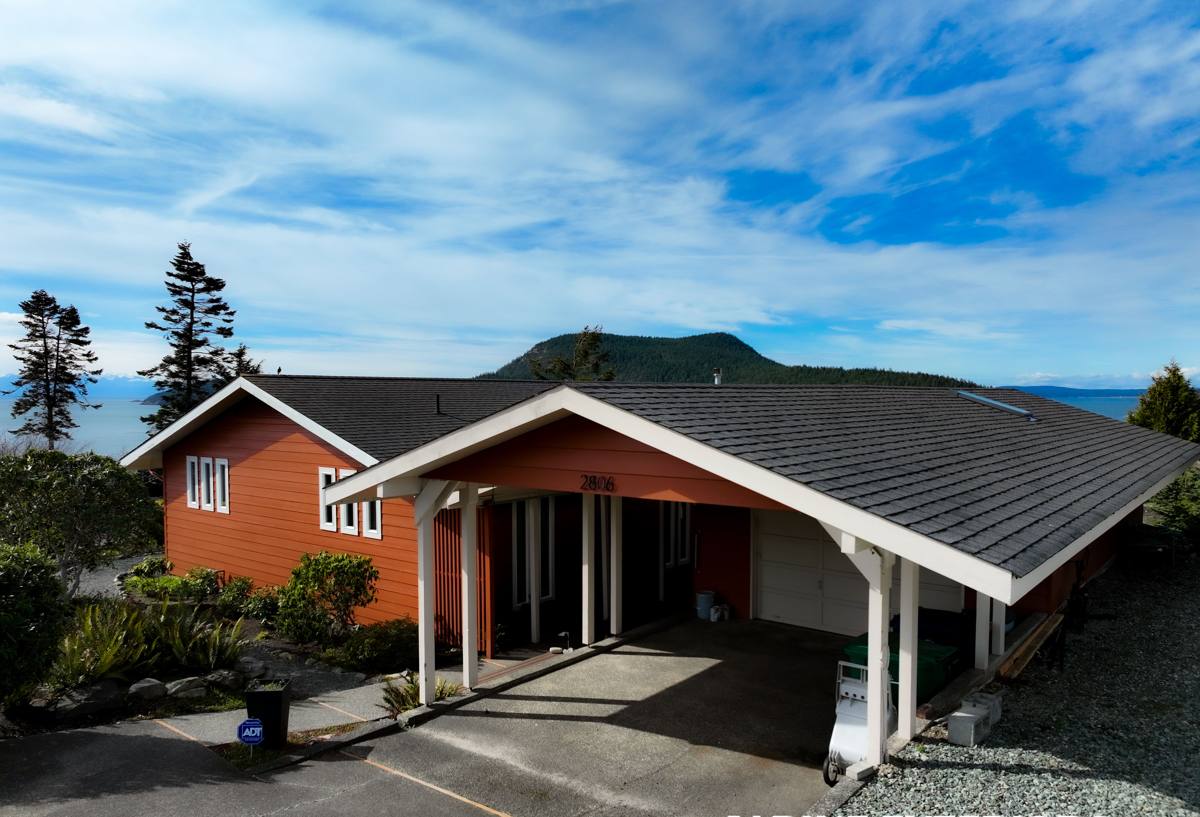
What Salt Air, Rain, and Moss Do to a House
Salt Air
Proximity to the water means airborne salt settles on every exterior surface. Over time it accelerates corrosion on fasteners, trim, and any metal components that aren't rated for coastal exposure. It also breaks down paint films and finishes faster than an inland home would experience, which means whatever's on the outside of your house needs a finish that's built to resist that breakdown, not just cover it up for a season.
Driving Rain
Blaine doesn't just get rain — it gets rain pushed sideways by wind off the water. That matters because driving rain finds every gap, seam, and poorly lapped joint in a building envelope. Materials that are fine in a calm, dry climate can perform very differently once water is being forced horizontally against a wall or under a roof edge.
Moss and Sustained Moisture
The long wet season here means surfaces stay damp for extended stretches, which is exactly what moss and algae need to take hold. On roofs, moss lifts shingles and holds moisture against the roof deck. On siding and decking, it traps water against the surface and accelerates rot in anything that isn't moisture-resistant by nature.
Siding: Why We Only Install James Hardie
Siding takes the brunt of Dakota Creek's climate because it's the largest exposed surface on the house, facing salt air and driving rain every single day. That's why we made a deliberate decision as a company: we install James Hardie fiber cement siding, and we don't install vinyl, LP SmartSide, Cemplank, Allura, or wood products like primed spruce or cedar. This isn't about any one product being "bad" — it's about which materials we're willing to stand behind after years of watching how different sidings actually perform in this climate.
Where Other Products Struggle Here
- Vinyl can warp or become brittle under repeated wet-dry and temperature swings, and its seams and J-channels give driving rain more places to work its way behind the panel.
- Wood-based siding (LP SmartSide, primed spruce, cedar) is an engineered or natural wood product at its core — even with factory treatments, sustained moisture exposure near the water increases the risk of edge swelling and moisture intrusion if caulking and paint aren't maintained on schedule.
- Other fiber cement brands (Cemplank, Allura) are legitimate fiber cement products, but we've standardized on one manufacturer, one finish system, and one warranty structure so we can install to spec every time and stand behind the result without managing multiple product lines.
Why James Hardie
James Hardie fiber cement is non-combustible, dimensionally stable, and doesn't absorb moisture the way wood-based products do. Its ColorPlus factory finish is baked on under controlled conditions, which holds color and resists the fading and film breakdown that salt air causes to field-applied paint. Hardie also engineers regional product lines (HZ5 for harsher climates) specifically for moisture and weather exposure, which lines up with what a Dakota Creek home actually needs. The transferable warranty backs that up with real terms, not just a sales pitch.
Roofing for Blaine's Rain and Wind
A roof in this part of Whatcom County has to shed sideways-driven rain, resist moss colonization, and hold up to wind gusts off the water. That means proper underlayment, correctly lapped flashing at every valley and penetration, and ventilation that keeps the attic dry enough that moisture doesn't condense from the inside out. We pay particular attention to edge and valley detailing here, since that's where driving rain causes the most water intrusion when a roof is installed to a lower standard.
Moss prevention starts with the roofing material and detailing, but it's maintained with periodic cleaning — a roof that's shaded by mature trees or facing prevailing wet weather will need more frequent attention than one in full sun.
Windows: Sealing Out Salt Air and Moisture
Windows are one of the most common points of water intrusion on any coastal home, and Dakota Creek is no exception. Failed seals, degraded flashing tape, and hardware corroded by salt air all show up here more than they would inland. When we install or replace windows, we focus on:
- Proper flashing integration with the siding system so water is directed out, not behind the wall
- Corrosion-resistant hardware and frame materials suited to coastal exposure
- Correct sealant application at every joint, since a small gap here is exactly what driving rain will find
Windows that are improperly flashed are one of the leading causes of hidden water damage behind siding, regardless of how good the siding itself is — which is part of why installation quality matters as much as product choice.
Decks: Built for Wet-Dry Cycles and Moss
Decks in Dakota Creek deal with the same sustained dampness and moss pressure as roofs, but with the added stress of foot traffic and structural loads. We build decking systems with attention to proper drainage under and around the structure, ledger board flashing to keep water out of the house connection point, and material choices that resist the wet-dry cycling that causes wood decking to cup, crack, and eventually rot at fastener points. Railing and fastener hardware also need to be rated for coastal exposure, or corrosion becomes a slow but steady problem.
Why a Local Crew Matters
A crew that works Blaine and the surrounding Whatcom County area regularly knows things a general contractor passing through wouldn't: which directions the prevailing rain comes from, which parts of a roof or wall face the worst of it, and how much moss pressure to expect based on tree cover and sun exposure. That local knowledge shapes real decisions — flashing details, product selection, ventilation choices — not just talking points. It also means we're around after the job is done if a question comes up, not a name that's hard to track down a year later.
Our Process
- On-site assessment of your home's exterior, noting existing damage, moisture entry points, and moss or algae pressure
- A written scope covering siding, roofing, windows, or decking — whichever areas need attention
- Material and color selection, with Hardie's ColorPlus options for siding
- Installation to manufacturer spec, including flashing, fastening, and ventilation details
- Final walkthrough so you understand what was done and what maintenance (if any) it needs going forward
Cost Factors to Understand Before You Budget
| Factor | Why It Matters in Dakota Creek |
|---|---|
| Existing water damage | Hidden rot behind old siding or around windows adds repair scope before new material goes on |
| Home size and complexity | More corners, gables, and window openings mean more flashing detail work |
| Roof pitch and access | Steeper or harder-to-access roofs affect both labor time and safety setup |
| Product selection | Hardie panel, lap, or shingle profiles vary in material and labor cost |
| Site exposure | Homes with direct water-facing exposure may need additional detailing at vulnerable points |
We provide a written estimate based on an actual look at your home, not a phone-quoted range — every property here carries a different combination of these factors.
Simple Maintenance That Extends the Life of Your Exterior
- Rinse siding and decking periodically to remove salt residue before it accumulates
- Clear gutters and downspouts before the wet season so water is directed away from the house, not pooling at the foundation or roof edge
- Trim back vegetation that shades roof and siding surfaces, since shade prolongs the dampness that feeds moss
- Inspect caulking around windows and doors annually and re-seal where it's cracked or pulled away
- Address moss growth promptly rather than letting it establish and hold moisture against the surface
Get a Free, No-Pressure Estimate
If you're weighing siding, roofing, window, or deck work on a Dakota Creek property, we're happy to take a look and give you an honest read on what your home actually needs. Use the form below to request a free estimate — no pressure, no obligation, just a straight answer from a crew that knows this stretch of Blaine.