 Blaine Exterior
 Exterior Work Built for the Nooksack Area
The stretch of Whatcom County around Nooksack sits close to the water and close to the mountains, and homes here get squeezed from both directions. Moist marine air rolls in off the Salish Sea, rain settles into the valley for days at a time, and shaded north sides of houses stay damp long after the sun comes back out. If you've owned a home in this part of the county for more than a few years, you've probably already dealt with moss creeping across a roofline, paint failing early on a shaded wall, or trim that stayed soft to the touch no matter how many times it got repainted. That's not bad luck — it's what this climate does to exterior materials that aren't built to shed water and resist rot.
We're a local exterior crew that works siding, roofing, windows, and decks across this area, and we build every job around the reality of the climate rather than around what's cheapest to install. That shows up most clearly in our siding: we install James Hardie fiber cement exclusively, and we'll walk you through exactly why below.
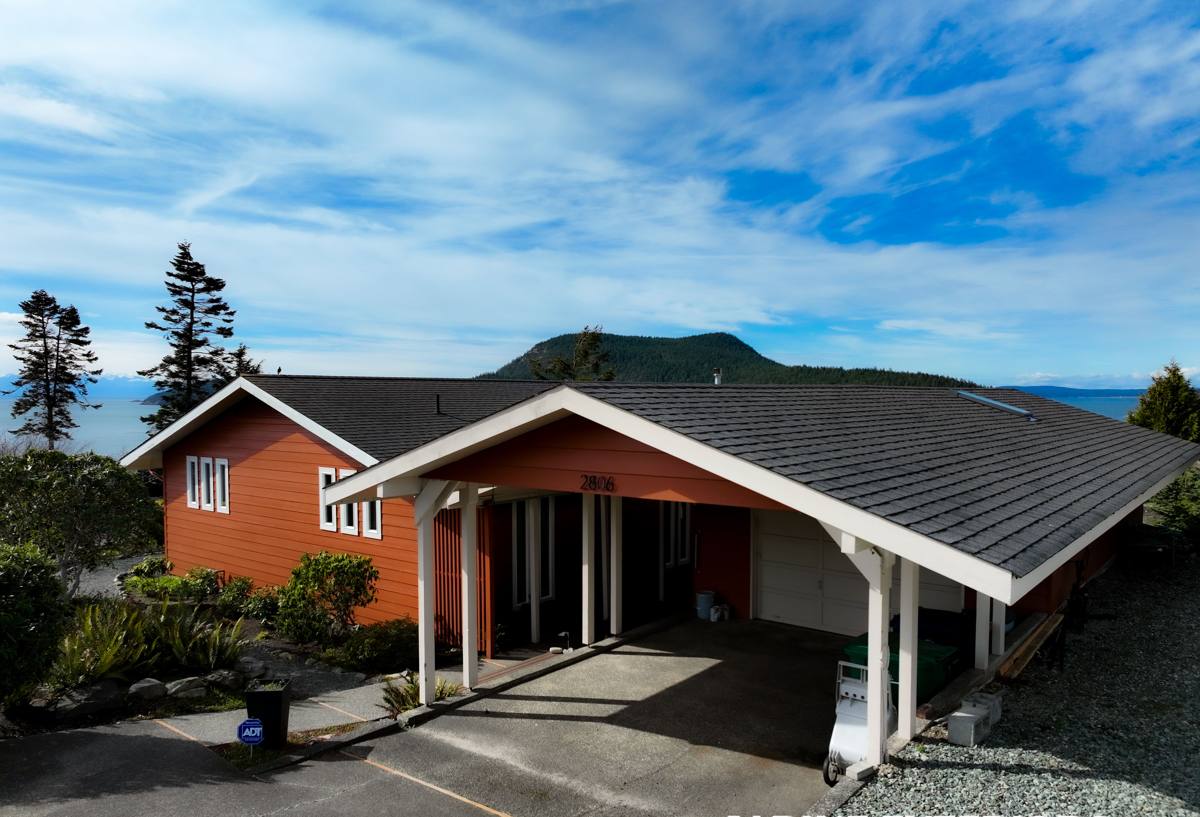
What This Climate Does to a House
Moisture That Doesn't Let Up
Whatcom County gets a long, gray, wet season, and homes near Nooksack see extended stretches of driving rain rather than quick passing showers. Water gets pushed sideways into wall assemblies, works into seams and fastener holes, and sits against siding and trim for hours at a time. Materials that absorb moisture — or that rely on paint film alone to keep water out — start failing years before they should.
A Long Moss Season
Shade, humidity, and mild temperatures make this part of the county ideal for moss and algae growth on roofs and north-facing siding. Moss holds moisture against the surface underneath it, which accelerates rot on wood-based products and shortens the life of roofing materials that aren't rated to handle it. A roof or wall that stays damp under a moss mat for months at a stretch is under constant, low-grade attack.
Salt Air and Wind-Driven Weather
Proximity to the Salish Sea means salt-laden air is part of the regional weather pattern, and it's harder on fasteners, flashing, and finishes than most homeowners expect. Combine that with wind-driven rain during winter storms and you get an exterior envelope that's tested from multiple directions at once — not just straight-down rainfall.
Why We Only Install James Hardie Siding
We get asked regularly why we don't offer vinyl, LP SmartSide, cedar, or other fiber cement brands. It's a fair question, and the honest answer is that we made a standard based on what holds up in this specific climate, not on what's fastest or cheapest to install.
Vinyl Siding
Vinyl is inexpensive and easy to install, and in a dry climate it can perform reasonably well. In a wet, wind-exposed area like this one, vinyl's weaknesses show up faster: it flexes and can crack in cold snaps, seams open up over time and let moisture behind the panel, and it fades and becomes brittle under UV exposure. Once vinyl is damaged, matching panels years later is often difficult because colors are discontinued. We don't think it's the right long-term investment for this climate.
LP SmartSide and Other Engineered Wood
Engineered wood siding is wood-based, and wood-based products are more vulnerable to moisture intrusion at cut edges, seams, and fastener points than fiber cement is. In a climate with this much sustained rain and moss pressure, any gap in the factory coating or field-applied sealant becomes a place for water to get in and start swelling or delaminating the substrate. Manufacturers have improved these products over the years, but the underlying material is still more moisture-sensitive than fiber cement.
Cedar and Primed Spruce
Real wood siding has genuine appeal, but it demands ongoing maintenance — refinishing, caulking, and vigilant moisture management — to hold up in a climate this wet. Skip a maintenance cycle or two and cedar or primed spruce can start cupping, checking, or rotting, especially on shaded, moss-prone walls. For homeowners who don't want siding maintenance to be a recurring line item, we don't think it's the right fit here.
Why Hardie
James Hardie fiber cement is non-combustible, dimensionally stable, and doesn't absorb water the way wood-based products do, so it resists the swelling, rot, and moss-driven decay that this climate produces. The ColorPlus factory finish is baked on under controlled conditions and holds color far longer than field-applied paint, which matters in an area where north-facing walls barely see direct sun. Hardie's HZ5 product line is engineered specifically for climates with heavy moisture exposure. Backed by a strong transferable warranty and installed to manufacturer spec, it's the product we're comfortable standing behind on homes in this part of Whatcom County.
Siding Material Comparison
| Material | Moisture Resistance | Maintenance | Fit for This Climate |
|---|---|---|---|
| James Hardie Fiber Cement | Excellent — does not absorb water like wood | Low — factory finish holds color for years | What we install |
| Vinyl | Fair — seams and panel flex allow intrusion | Low, but cracks and fades over time | Not offered |
| LP SmartSide / Engineered Wood | Moderate — vulnerable at cuts and seams | Moderate — sealant upkeep required | Not offered |
| Cedar / Primed Spruce | Poor to fair without diligent upkeep | High — regular refinishing needed | Not offered |
Roofing for a Wet, Mossy Climate
A roof in this area does more work than a roof in a dry climate. It has to shed sustained rain without backing up at valleys and penetrations, resist moss colonization on shaded slopes, and hold flashing seals tight through repeated freeze-thaw and wind cycles. We install and repair roofing with attention to the details that matter most here — proper underlayment, correctly lapped flashing at chimneys and skylights, and ventilation that keeps the attic dry so moisture doesn't work its way into the roof deck from underneath. If moss is already established on a roof, we can talk through removal and treatment options as part of a repair or replacement.
Windows That Handle Wind-Driven Rain
Older windows in this area often show their age through fogged glass, soft sills, or drafts around the frame — all signs that seals have failed and moisture has been getting in. Replacement windows need to be installed with proper flashing and sealant details to keep wind-driven rain from finding its way behind the trim, which is one of the most common ways water damage starts around window openings. We install windows as part of a full exterior job or on their own, always with an eye toward how the assembly performs against the direction rain actually comes from here — sideways, not just down.
Decks Built to Handle Rain and Shade
Decks in this part of the county deal with the same moisture and moss pressure as roofs and siding, plus standing water and debris that collects between boards. We build and repair decks with attention to drainage, proper fastening, and materials suited to a climate where a deck can stay wet for days at a stretch during winter. Whether it's a full rebuild or repair work on an aging structure, we design for water to move off the deck instead of sitting on it.
Why a Local Crew Matters
Exterior work in this climate isn't a one-size-fits-all job. A crew that mostly works drier inland regions or milder coastal areas elsewhere may not build in the same margin for wind-driven rain, moss, and salt air that a house near Nooksack actually needs. We work in Whatcom County regularly, which means we're used to sequencing jobs around this area's weather windows, flashing details that hold up to sustained rain, and material choices that are proven here rather than just proven somewhere.
What to Check Before Hiring an Exterior Contractor
- Do they carry current Washington contractor licensing and insurance, and can they show proof without hesitation?
- Do they install to manufacturer specifications, including flashing and moisture-barrier details — not just the visible finish work?
- Do they explain material trade-offs honestly, including why they do or don't offer certain products?
- Do they have experience specific to wet, moss-prone climates, not just general exterior experience?
- Do they provide a clear, written scope of work before starting, so there's no ambiguity about what's included?
Signs Your Exterior Needs Attention
- Moss or dark streaking building up on roof slopes or north-facing siding
- Soft or spongy spots on trim, siding, or deck boards
- Paint that's peeling or bubbling earlier than expected
- Drafts, fogging, or visible gaps around window frames
- Water stains on interior ceilings or walls near exterior corners
Catching these early usually means a smaller repair instead of a full replacement, so it's worth a walk around the house once or twice a year, especially after the wettest months.
If you're seeing any of these signs, or you're just weighing your options for siding, roofing, windows, or a deck, we're happy to take a look and walk through what we'd recommend for your specific house. Reach out for a free, no-pressure estimate using the form below.