 Blaine Exterior
 Building Decks for a Waterfront Community in Whatcom County
Semiahmoo sits right on the water, and that exposure changes what a deck has to survive. Homes here face a steady mix of salt-laden air, wind-driven rain coming off the bay, and a wet season that stretches longer than it does even a few miles inland in Blaine. A deck built to a generic spec sheet — the kind that works fine in a dry inland subdivision — often struggles here. Fasteners corrode faster, framing stays damp longer between storms, and any north-facing or shaded section of decking becomes a moss farm by late winter if it wasn't detailed correctly from the start.
This page is about one job done right in one place: custom deck construction and replacement for Semiahmoo homes. We're not going to sell you on a one-size-fits-all deck package. We're going to walk through what actually holds up out here, what a correct build looks like, and how we approach the work.
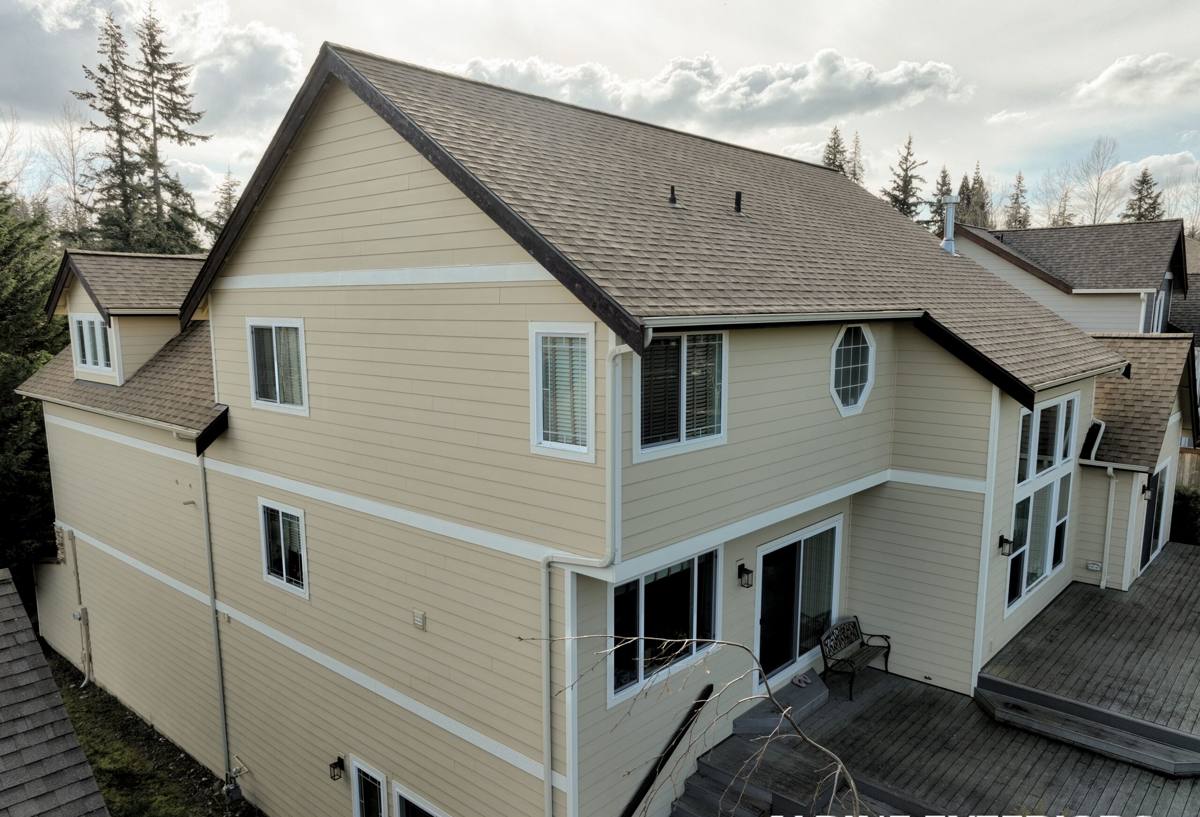
What Semiahmoo's Climate Actually Does to a Deck
Whatcom County gets a lot of rain overall, but waterfront exposure adds two things a lot of homeowners don't think about until they're dealing with the consequences:
Salt Air and Metal Fatigue
Airborne salt accelerates corrosion on any exposed metal — screw heads, joist hangers, bolts, railing brackets. Standard zinc-coated hardware that's perfectly fine in a dry inland yard can start rusting and streaking within a couple of seasons this close to the water. Once a fastener starts to corrode, it loses holding strength long before it looks obviously bad, which is part of why we don't treat hardware selection as an afterthought.
Driving Rain and Wind-Loaded Water
Rain here doesn't just fall straight down — wind off the bay pushes it sideways into ledger connections, under railings, and into any gap where end-grain lumber is exposed. That means flashing details at the house connection and end-sealing on cut boards matter more here than they would on a sheltered inland lot.
A Long Moss Season
Shaded or north-facing deck sections in Whatcom County can stay damp for months at a stretch. Moss and algae don't just look bad — they hold moisture against the decking surface and make boards slick and dangerous underfoot. Board spacing, ventilation underneath the deck, and material choice all affect how bad this gets.
What a Correctly Built Deck Requires Out Here
A deck that's going to last on a Semiahmoo lot needs a few things addressed deliberately, not left to standard builder defaults:
- Stainless steel or heavy-duty coated fasteners rated for coastal/marine exposure, not standard exterior-grade hardware
- Proper ledger flashing where the deck ties into the house, so wind-driven rain can't work its way behind the band board
- Adequate airflow beneath the deck structure to let framing dry out between storms instead of staying saturated
- Board spacing and orientation that accounts for shade patterns and moss buildup on the site
- Sealed or capped end-cuts on any decking material where the factory coating was cut through on site
- Railing hardware and post connections that won't corrode and loosen over a few winters
- Footings sized and set for the actual soil and drainage conditions on a waterfront lot, not a generic inland assumption
None of this is exotic. It's standard good practice — but it only gets done consistently by a crew that treats coastal exposure as the normal condition, not the exception.
Choosing the Right Decking Material for a Waterfront Lot
There's no single "best" decking material for every home — it depends on your budget, how much upkeep you want to do, and how exposed your specific spot is to salt air and shade. Here's how the common options actually compare in this environment:
| Material | How It Handles Salt Air & Moisture | Moss/Algae Resistance | Maintenance |
|---|---|---|---|
| Pressure-treated wood | Good if fasteners and flashing are correct; wood itself can still cup or check over time | Needs regular cleaning to stay ahead of it | Annual cleaning, periodic staining/sealing |
| Cedar | Naturally decay-resistant, but still needs sealed end-cuts and good ventilation underneath | Moderate — still benefits from cleaning | Periodic oiling/sealing to hold color and protect grain |
| Composite decking | Very stable in salt air and moisture; won't rot or corrode internally | Better than wood, but still needs cleaning in shaded, damp areas | Low — occasional washing, no staining |
| PVC decking | Fully synthetic, handles moisture and salt exposure without material breakdown | Good, though surface film can still develop in constant shade | Low — soap and water cleaning |
We'll walk through these trade-offs with you specifically for your lot — shade pattern, sun exposure, budget, and how much maintenance you actually want to do matter more than any generic recommendation.
Fasteners, Fittings, and the Details That Fail First
When a deck near the water fails early, it's rarely the decking boards themselves — it's the hardware and connections. Rusted or corroded fasteners loosen railings, structural connectors weaken at the ledger, and cheap post bases corrode and crack. We spec stainless steel or marine-rated hardware for connections exposed to salt air, and we detail every ledger and post base connection so water sheds away instead of pooling against metal. This is one of the clearest differences between a deck that holds up in Semiahmoo and one that starts showing problems within a few years.
Our Process for Semiahmoo Deck Projects
1. On-Site Assessment
We walk your specific lot — sun exposure, wind direction relative to the water, existing drainage, and how the deck will tie into your home. Waterfront lots vary a lot even within the same neighborhood, so this step drives most of the material and detailing decisions that follow.
2. Design and Material Selection
We talk through layout, decking material, and railing options with the trade-offs above in mind — what fits your budget and how much upkeep you're willing to take on, weighed against how exposed the specific location on your lot actually is.
3. Permitting
Deck work typically requires a permit through the applicable local jurisdiction, and waterfront or shoreline-adjacent lots can carry additional review depending on setback and shoreline regulations. We handle this process so you're not chasing paperwork.
4. Construction
Framing, flashing, fastener selection, and decking installation follow the standards outlined above — not a generic inland build spec. We build footings and framing for the drainage and soil conditions actually present on your lot.
5. Final Walkthrough
We go over the finished deck with you, including basic care guidance specific to the material you chose and your lot's exposure, so you know what upkeep to expect and when.
Cost Factors for a Semiahmoo Deck Project
Every project is different, but the biggest cost drivers on a waterfront deck build are consistent enough to lay out honestly:
| Factor | Why It Affects Cost |
|---|---|
| Decking material | Pressure-treated wood costs less upfront than composite or PVC, but the gap narrows over the life of the deck once maintenance is factored in |
| Size and layout | Multi-level decks, built-in seating, and custom railings add labor and material beyond a simple rectangular platform |
| Site conditions | Slope, soil, and drainage on a waterfront lot can require deeper or more numerous footings than a flat inland lot |
| Hardware grade | Marine-rated fasteners and connectors cost more than standard exterior hardware, but they're what actually holds up here |
| Railing style | Cable, glass, and custom wood railings cost more than standard baluster railings, both in materials and install time |
| Permitting requirements | Shoreline-adjacent lots can involve additional review, which can affect project timeline and scope |
We give you an honest, itemized estimate up front, broken down by these factors, so you know exactly where your money is going and where you have room to adjust the scope.
Why It Matters That We Already Work in Semiahmoo
A crew that mostly builds decks on dry, sheltered, inland lots will often default to standard hardware and standard details because that's what works where they usually build. On a Semiahmoo waterfront lot, those defaults show up as premature corrosion, loosening railings, and moss problems within a few seasons. Working regularly in this specific area means we already know which fastener grades hold up, how the shade and wind patterns on waterfront lots typically play out, and what the local permitting process actually requires — so we're not learning those lessons on your project.
A Quick Checklist Before You Hire Anyone for a Deck Near the Water
- Ask specifically what fastener and hardware grade will be used — "exterior-grade" is not the same as marine or coastal-rated
- Confirm how the ledger connection to your house will be flashed against wind-driven rain
- Ask how framing ventilation will be handled underneath the deck
- Get a clear, written comparison of decking material options for your specific sun/shade conditions, not a single default recommendation
- Confirm who is pulling the permit and handling any shoreline-related review
- Ask for maintenance expectations in writing for whichever material you choose
If a contractor can't answer these clearly for a waterfront lot, that's worth noticing before you sign anything.
Get an Honest Look at Your Project
If you're planning a new deck or replacing one that's showing its age in Semiahmoo's salt air and rain, we're happy to walk your property, talk through material and layout options honestly, and give you a clear, no-pressure estimate. Use the form below to get started.