 Blaine Exterior
 Roof Repair on Semiahmoo: A Different Kind of Roof Problem
Semiahmoo sits out on a narrow spit between Semiahmoo Bay and Drayton Harbor, right at the edge of Blaine and the Canadian border. Roofs out there don't fail the same way roofs fail a few miles inland. A roof in a sheltered neighborhood might go a decade with nothing more than a missing shingle after a windstorm. A roof on the spit, with water and open wind on more than one side, tends to show wear at the flashing, the fasteners, and the moss-prone shade lines years before a comparable inland roof does. That's not a knock on any particular roofing product — it's just what happens when a roof spends every season absorbing salt-laden air and wind-driven rain with almost nothing around it to break the exposure.
This page is specifically about roof repair on Semiahmoo — not a full tear-off, not siding or windows, just what it takes to fix a roof that's leaking, losing shingles, growing moss it shouldn't, or showing damage at flashing points. We work this stretch of the county regularly, and repair work here rewards a slower, more careful diagnosis than a lot of contractors are willing to give it, because the visible problem on a Semiahmoo roof is rarely the whole story.
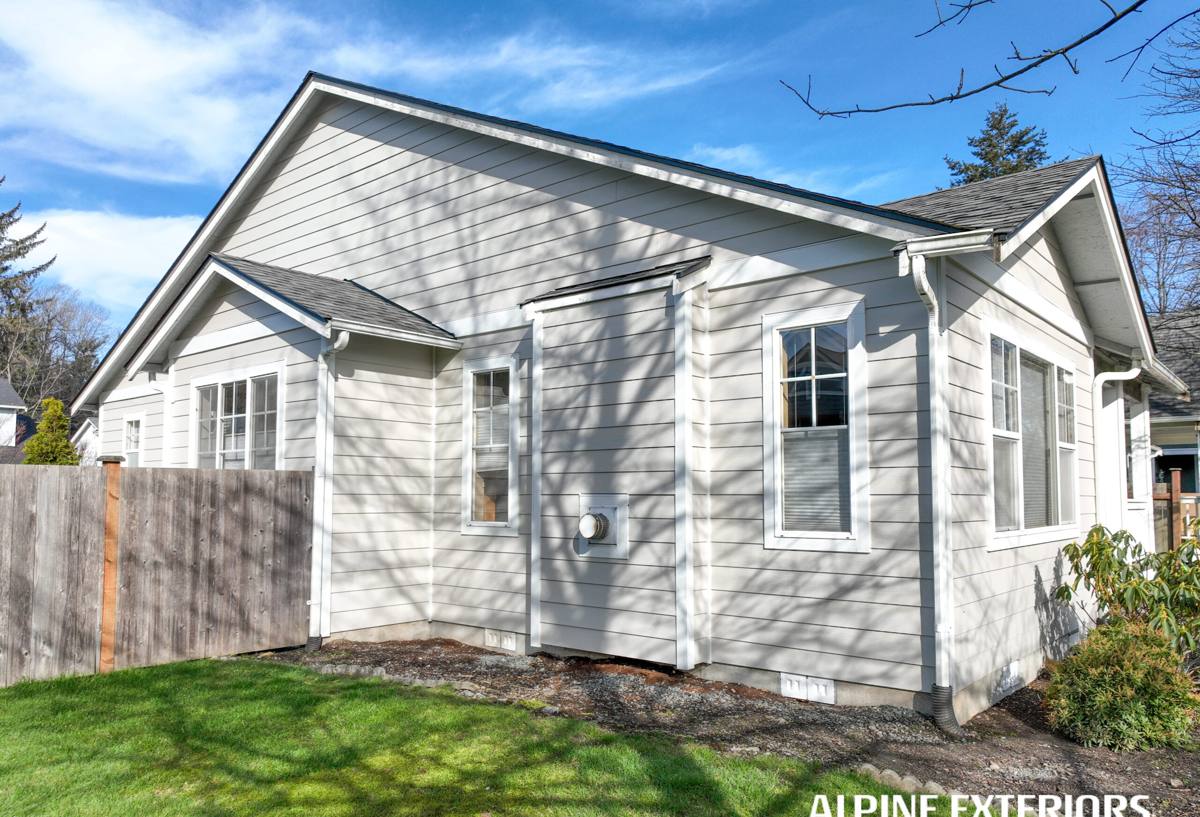
What This Climate Does to a Roof on the Spit
Salt Air From More Than One Direction
Because Semiahmoo has water on multiple sides, salt-laden air doesn't come from one prevailing direction the way it might on a more sheltered lot. It reaches the roof from wherever the wind happens to be blowing that week. Salt speeds up corrosion on exposed nail heads, flashing, and any unprotected metal, and corroded fasteners are one of the more common root causes we find behind a shingle that's lifted or a flashing seam that's started to leak. A repair that only replaces the visible shingle without checking the fasteners and flashing underneath tends to fail again within a season or two.
Driving Rain With Nothing to Break It
Open wind off the water pushes rain sideways instead of letting it fall straight down, and that sideways load lands hardest on valleys, roof-to-wall transitions, and anywhere two roof planes meet. A roof built or repaired without that in mind can look fine in a light rain and still leak in the kind of wind-driven storm that comes through Whatcom County several times a year. This is the exposure that separates a Semiahmoo roof repair from the same repair done on a roof set back from the water.
A Moss Season That Barely Breaks
Mild temperatures and near-constant moisture give moss and algae a growing season that runs most of the year on shaded, north-facing, or tree-covered roof slopes. Moss isn't just cosmetic — it holds water against the roofing surface, works its way under shingle edges and tabs, and can lift material enough to create a leak path even when the shingle itself is still structurally sound. On the spit, moss tends to show up early and come back fast after a surface cleaning if the underlying moisture problem isn't addressed.
The Repair Problems We See Most Often on Semiahmoo Roofs
Every roof is a little different, but a handful of issues show up again and again on repair calls in this specific area:
- Lifted or missing shingles at exposed edges — usually the ridge, eaves, or rake edges that take the brunt of open wind
- Flashing failures at chimneys, vents, and skylights — sealant that's cracked or shrunk, or flashing that's lifted enough to let water track underneath
- Valley leaks — where two roof planes meet and wind-driven rain concentrates before it can shed off the roof
- Moss-related shingle lift — moss growing under tabs and lifting them just enough to break the shingle's seal
- Corroded or backed-out fasteners — a slow, salt-driven failure that often shows up as a leak long before it's visible from the ground
- Soft or spongy decking around a known leak point — a sign the moisture has been getting in longer than the visible symptoms suggest
What a Correct Roof Repair Actually Involves
Diagnosing the Real Extent Before Touching Anything
A roof repair that starts by patching the visible symptom, without first tracing where the water is actually getting in, is one of the most common ways a repair fails to hold. Water travels along the underlayment and roof deck before it shows up as a stain or a drip, so the point where a leak appears inside the house is often several feet from where it's actually entering the roof. On Semiahmoo repairs, we check the attic and roof deck from the inside when it's accessible, look for the moisture path rather than just the surface damage, and confirm whether the deck underneath has softened before deciding what the repair actually needs to include.
Matching Material and Technique to What's Already There
A repair needs to tie into the existing roofing system correctly, not just cover the damaged spot. That means matching shingle type, profile, and where possible color, and making sure new material is woven or lapped into the surrounding roof the way the manufacturer's installation spec calls for. A patch that sits on top of the old roofing instead of integrating into it is one of the more common shortcuts that leads to a repeat leak in the next storm.
Flashing and Moisture Detailing Done Right
Most of the repair calls we get on the spit trace back to flashing, not the shingles themselves. Correct flashing repair means replacing corroded or undersized flashing rather than just re-sealing it, properly lapping new flashing with the surrounding roofing material so water sheds downward and outward, and using fasteners and metal rated for the corrosion this climate throws at them. Caulk and sealant have a place in a repair, but they're a supplement to correct flashing geometry, not a substitute for it.
Repair or Replace? How We Help You Decide
| Situation | Usually a Repair | Usually Points Toward Replacement |
|---|---|---|
| Age of roofing material | Roof is well within its rated life | Roof is at or past its expected lifespan |
| Extent of the problem | Damage is localized to one area or penetration | Moss, wear, or leaks are spread across multiple slopes |
| Roof deck condition | Deck is solid once the leak source is exposed | Deck shows soft spots or rot in more than one location |
| Repair history | First or second repair on this roof | Roof has already had several patch repairs in recent years |
| Material availability | Matching shingle or roofing is still available | Discontinued product makes a clean match impossible |
We look at all five of those factors together rather than any single one in isolation. A twelve-year-old roof with a single flashing leak at one skylight is almost always a repair. A twenty-two-year-old roof with moss damage on two slopes and a soft spot in the decking is usually more honestly addressed as a replacement, because another repair on a roof that's already near the end of its service life tends to be money spent to buy a year or two rather than a lasting fix.
Our Process for a Semiahmoo Roof Repair
- On-site inspection: We look at the roof from both the exterior and, where accessible, the attic or roof deck from inside, tracing the actual moisture path rather than just the visible symptom.
- Clear written scope: Before any work starts, you get a straightforward explanation of what we found, what the repair will involve, and what it will cost — no vague verbal estimate.
- Repair using matched materials and correct flashing detail: We tie new material into the existing roof properly and treat flashing and fastener corrosion resistance as standard, not optional, given this location.
- Final check: We confirm the repair area sheds water correctly and walk you through what we found and fixed before we consider the job done.
What Roof Repair Costs Depend On
| Factor | Why It Matters |
|---|---|
| Size and location of the damaged area | A single flashing point costs less to correct than a leak spread across a valley or multiple penetrations |
| Roof pitch and accessibility | Steeper or harder-to-reach roof sections take more time and equipment to work safely |
| Condition of the decking underneath | Soft or rotted decking has to be replaced before new roofing material goes back on, which adds material and labor |
| Material match | Matching an older or discontinued shingle can add time and occasionally cost more than a common, current product |
| Corrosion-resistant hardware and flashing | Salt-air exposure on the spit calls for better-rated fasteners and flashing than an inland repair typically needs |
These are the general factors that drive a repair estimate, not a quote — we don't price roof repair over the phone or from a photo, because the extent of hidden moisture damage usually isn't clear until we're actually up on the roof or in the attic. Two roofs with the same visible symptom can need very different scopes of work once we get eyes on the deck underneath.
Timing a Repair Around Local Weather
Whatcom County's wettest, windiest stretch typically runs from late fall into winter, and Semiahmoo's open exposure makes that stretch harder on a roof, and on repair work, than it is further inland. Dry, stable weather in spring and summer gives new roofing material, underlayment, and sealant the conditions they need to set up properly. That said, an active leak doesn't wait for good weather, and a temporary, weather-tight repair followed by a proper fix once conditions allow is often the right call rather than leaving water intrusion to sit through an entire wet season.
Why a Crew That Already Works Semiahmoo Matters
A roofer who works this specific stretch of coastline regularly already knows which slopes hold moss the longest, how far wind-driven rain actually reaches into a valley on an exposed lot, and which fastener and flashing choices are worth the extra time so a repair holds through the next big storm off the water rather than needing a callback. That familiarity comes from doing the work here repeatedly, not from a general roofing background applied to an unfamiliar property. Semiahmoo's exposure is different enough from more sheltered parts of Blaine and Whatcom County that a one-size-fits-all repair approach tends to show its limits fast, usually in the first hard windstorm after the work is finished.
If you're dealing with a leak, missing shingles, or moss damage on a Semiahmoo roof, we're glad to take a look and give you a straightforward, honest read on what it actually needs. Reach out using the form below to schedule a free, no-pressure estimate.