 Blaine Exterior
 Why This Question Is Harder to Answer in Whatcom County
Anywhere else, "how old is my roof" might be enough to decide if it's time to replace it. In Blaine, the roof over your head is dealing with a rougher mix of conditions than most manufacturers' warranty language assumes. You've got salt-laden air coming off Semiahmoo Bay and Drayton Harbor, long stretches of driving rain off the Strait, and a moss season that runs most of the year on north-facing slopes. All three of those shorten the practical life of a roof compared to the same material installed somewhere drier and further from saltwater.
That doesn't mean every roof in Blaine needs replacing early. It means the decision should be based on what's actually happening to your specific roof, not just a number of years on a calendar. This page walks through how to read the signs correctly.
Start With Material Age — But Don't Stop There
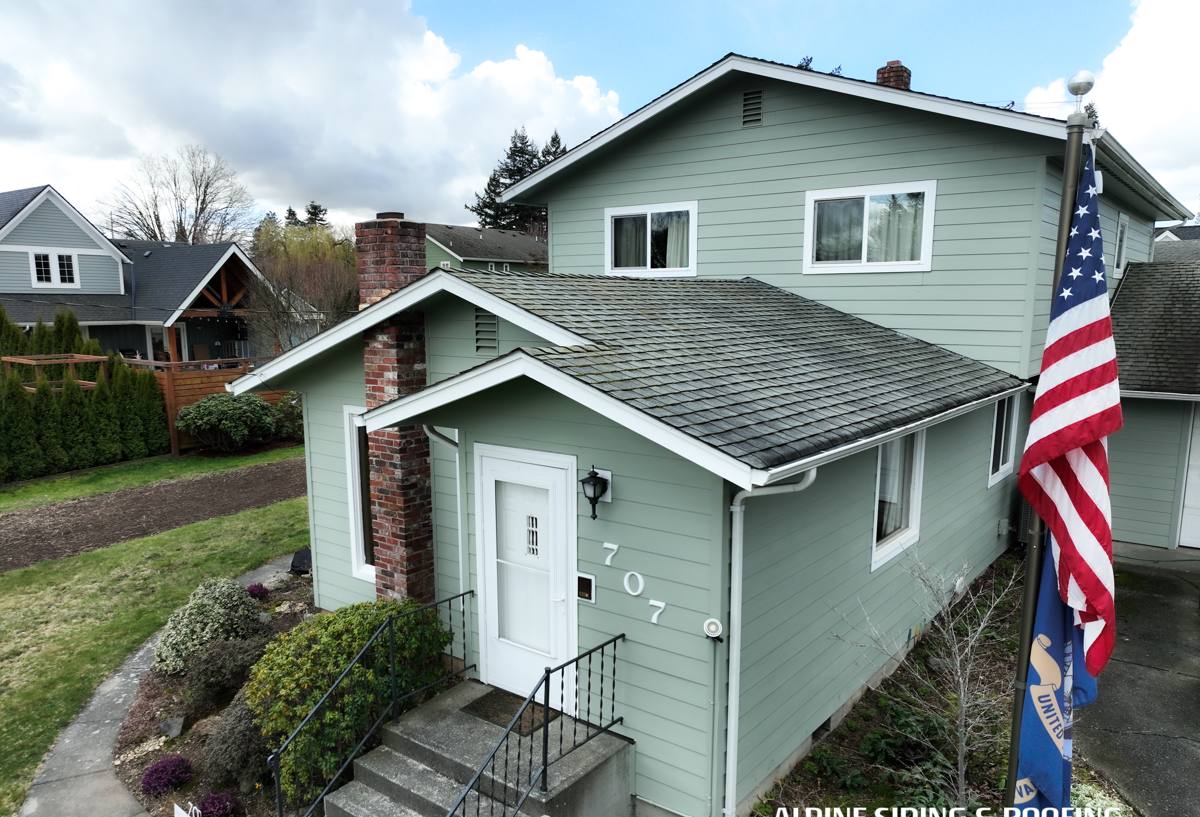
Every roofing material has a rough service life range. Age alone is a useful first filter, but two roofs of the same material and the same age can be in very different condition depending on slope, shade, ventilation, and how exposed they are to wind off the water.
| Roofing Material | Typical Lifespan | What Shortens It Locally |
|---|---|---|
| 3-tab asphalt shingle | 15-20 years | Wind uplift, moss holding moisture against granules |
| Architectural/dimensional shingle | 20-30 years | Moss, prolonged wet exposure, salt air degrading adhesive strips |
| Wood shake | 20-25 years with upkeep | Moss and moisture retention are the primary failure driver here |
| Metal (standing seam) | 40-50+ years | Fastener and flashing wear, coastal corrosion at cut edges |
| Composite/synthetic shingle | 30-50 years | Varies by product; moss and UV exposure still matter |
If your roof is in the back half of its expected range, that's the point to start paying closer attention, not necessarily the point to schedule replacement. The next sections cover what to actually look for.
Visible Signs That Point to Replacement
Some wear is cosmetic. Some is structural. Knowing the difference saves you from either replacing too early or waiting too long.
- Shingles that are curling, cupping, or losing granules in patches — the roof is past its ability to shed water reliably in heavy rain, not just showing age.
- Bald spots where granules have washed off — the asphalt underneath is now exposed directly to UV and moisture.
- Cracked or missing shingles after a windstorm — one storm event can be a repair; repeated storm damage on an older roof is usually a sign the whole field is brittle.
- Dark streaking or thick moss mats — cosmetic at first, but moss holds water against the roof surface long after rain stops, which accelerates rot underneath.
- Sagging rooflines — this is a structural concern, not cosmetic, and should be evaluated promptly rather than added to a future to-do list.
- Rusted or lifting flashing around chimneys, vents, and valleys — flashing fails before the field of the roof usually does, and it's often where leaks start.
- Visible daylight through the roof deck from the attic — an unambiguous sign that replacement isn't optional.
Signs You Won't See From the Ground
Some of the most important warning signs show up inside the house, not on the roof itself.
Attic and Ceiling Clues
- Water stains on ceilings or attic sheathing, even faint ones that appear only after heavy rain
- A musty smell in the attic, which often means trapped moisture rather than an active drip
- Daylight visible around vent pipes or ridge areas
- Sagging or soft-feeling decking when walked on during an inspection
Energy and Comfort Clues
A failing roof often shows up first as a heating bill that creeps up for no obvious reason, or rooms that feel drafty near the ceiling. Compromised insulation from long-term moisture intrusion is a slower, quieter version of the same underlying problem as a visible leak.
Moss: The Whatcom County Roof Killer
Moss deserves its own section because it's the single biggest factor separating roof lifespan here from roof lifespan in drier climates. Blaine's combination of shade, humidity, and mild temperatures gives moss a long growing window on north- and east-facing slopes especially. Moss doesn't just look bad — it lifts shingle edges as it grows, holds water against the roof surface between rain events, and traps organic debris that keeps the surface damp even on clear days.
A roof that's kept clean of moss can often reach the upper end of its material's expected lifespan. A roof that's allowed to accumulate heavy moss mats for several seasons in a row is usually replaced early, because the granule loss and deck moisture damage happen faster than most homeowners expect. If moss keeps coming back within a year or two of cleaning, that's often a sign of a shade or ventilation issue that's worth discussing with a roofer rather than treating repeatedly.
Salt Air and Wind: The Coastal Factor
Being close to Semiahmoo Bay and Drayton Harbor means metal components on a roof — nails, flashing, vent caps, gutter hardware — corrode faster than they would inland. Corroded fasteners and flashing are a common cause of leaks that show up well before the shingles themselves look worn out. Driving rain off the Strait, combined with wind, also pushes water sideways into laps and valleys that were designed for straight-down rainfall, which is why valley and flashing failures are worth checking even on a roof that otherwise looks fine.
Repair or Replace? How to Weigh It
Not every problem means a full replacement. The honest way to decide is to weigh the scope of the damage against the age and remaining life of the roof.
| Situation | Repair Usually Makes Sense | Replacement Usually Makes Sense |
|---|---|---|
| Isolated damage (one valley, one section) | Yes, if the rest of the roof is sound | Only if the roof is already near end of life |
| Roof age | Under 60% of expected lifespan | Past 75-80% of expected lifespan |
| Leak history | First leak, clear single cause | Recurring leaks in different spots |
| Granule loss | Minor, localized | Widespread bald patches |
| Deck condition | Solid, no soft spots | Soft, spongy, or visibly sagging decking |
A straightforward way to think about it: a repair should buy you real years, not just delay an inevitable full replacement by a single winter. If a contractor can't explain why a repair will hold, that's a reason to get a second opinion rather than proceed.
What Waiting Actually Costs You
Deferred roof problems rarely stay contained to the roof. Water that gets past aging shingles and failed flashing travels — into the attic insulation, along rafters, and eventually down into wall cavities behind your siding. By the time a leak shows up as a stain on an interior ceiling, it's often been finding its way into the structure for a while. That's part of why we look at roof and siding condition together: rot at a wall's top plate, discolored sheathing behind trim, or soft siding near roof lines is frequently a downstream effect of a roof problem that started higher up.
This is also where product choice on the wall assembly matters. If a roof leak or wind-driven rain does find its way behind cladding, the material underneath makes a real difference in outcome. It's a major reason this company installs James Hardie fiber cement siding exclusively — it doesn't swell, rot, or delaminate the way wood-based or wood-composite products can when they take on incidental moisture, and it holds up to the same salt air and driving rain that wears down a roof. When we're on a property for a roof conversation, we'll flag any siding-related moisture issues we see, honestly and without upselling — but if a wall assembly does need attention, Hardie is what we recommend and what we install.
A Practical Pre-Winter Checklist
Before the wet season sets in, it's worth doing a basic visual check yourself, or having a professional do one if you'd rather not get on a ladder.
- Look for moss buildup, especially on north-facing slopes and in valleys
- Check gutters for granule accumulation, which signals shingle wear
- Scan flashing around chimneys, skylights, and vent pipes for rust or lifting
- Check the attic for stains, daylight, or musty smell after the next hard rain
- Note any shingles that look curled, cracked, or missing
- Confirm downspouts are draining away from the foundation and siding base
Getting an Honest Read on Your Roof
The most reliable way to know where your roof actually stands is to have someone look at it who isn't guessing from a photo or an age estimate alone. Roof condition in Blaine depends on slope orientation, tree cover, how close you are to the water, and how the roof has been maintained — not just how many years it's been up there. If you're seeing any of the signs above, or you just want a clear, no-pressure read on how many good years you have left before it becomes a bigger project, we're glad to take a look and give you a straight answer, along with a free estimate for whatever work — roof, siding, or both — actually needs doing.