 Blaine Exterior
 Siding Built for the Semiahmoo Waterfront
Semiahmoo sits about as exposed to the water as a Whatcom County neighborhood gets. Homes here face a steady mix of salt-laden air off the bay, wind-driven rain that comes in sideways instead of straight down, and a moss season that runs long and wet for most of the year. Siding that would hold up fine a few miles inland can fail early out here — not because it's a bad product everywhere, but because it wasn't built or installed for this specific exposure.
We install fiber cement siding for homes in and around Semiahmoo, and the work we do here looks different in a few important ways from a standard inland siding job. This page walks through what that exposure actually does to a house, what a correct installation has to account for, and why our process is built around the realities of this stretch of coastline rather than a generic siding job.
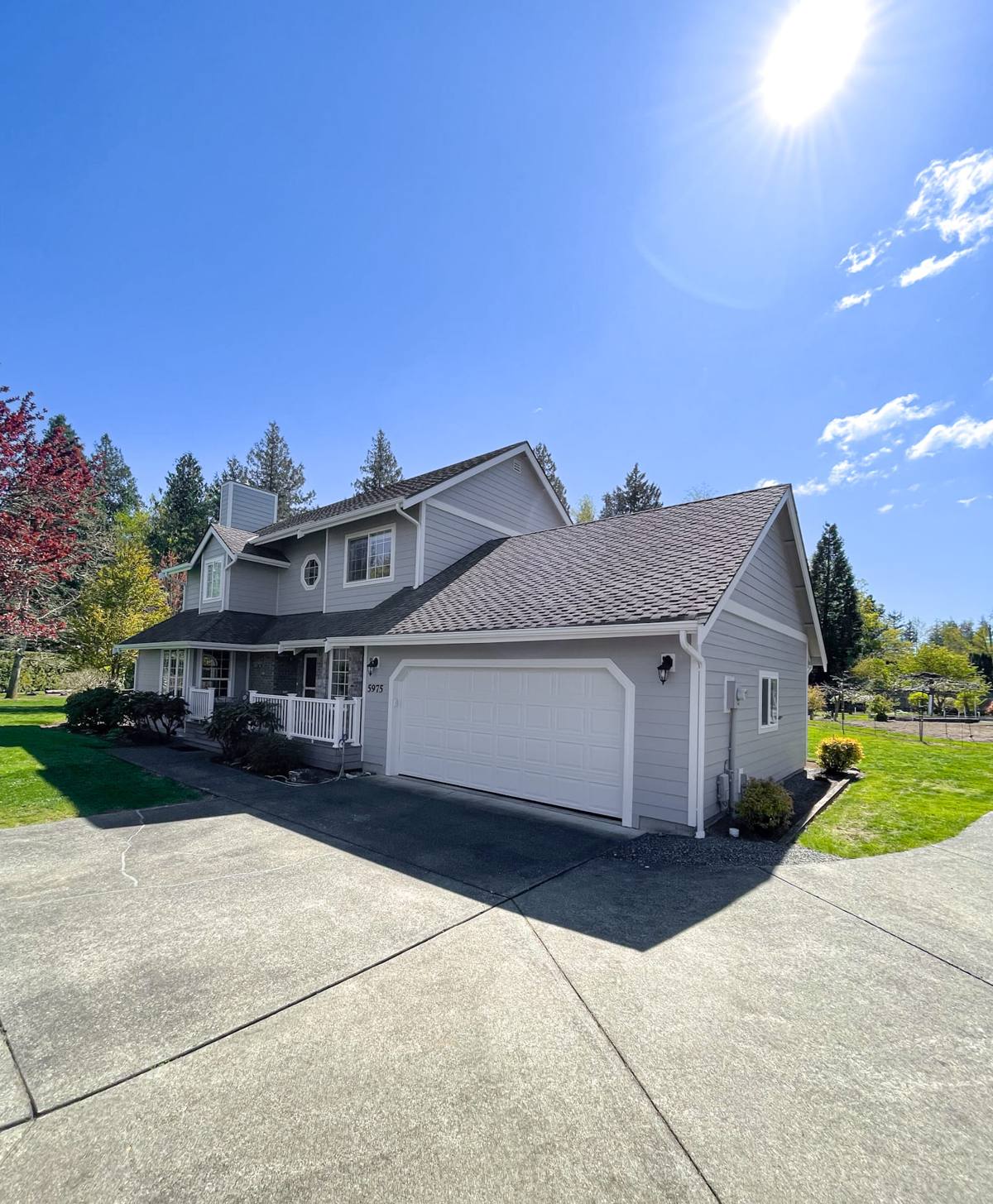
What Salt Air, Rain, and Moss Actually Do to a Home
Salt air
Airborne salt doesn't just sit on the surface of your siding — it works into fasteners, trim joints, and any exposed edge that isn't properly sealed or finished. Over years, that accelerates corrosion in metal flashing and fasteners, and it breaks down paint finishes that weren't formulated to resist it. This is one of the reasons finish quality matters as much as the siding material itself.
Wind-driven rain
On a calm site, rain runs down a wall and off. On an exposed waterfront lot, wind pushes rain sideways and even upward under laps and around trim, which means the water management behind the siding — not just the siding itself — is doing most of the real work. A house can have expensive siding and still leak if the drainage plane, flashing, and joint details behind it are wrong.
Moss and prolonged moisture
Whatcom County's long wet season keeps north-facing and shaded walls damp for extended stretches. Moss and algae growth on siding isn't just cosmetic — it holds moisture against the surface longer than bare siding would, which matters most at butt joints, corners, and anywhere caulk or paint has started to fail.
What a Correct Installation Has to Address
| Exposure Factor | What It Does to a Wall | What the Installation Must Get Right |
|---|---|---|
| Salt-laden air | Corrodes exposed fasteners and metal flashing; degrades weak paint finishes over time | Corrosion-resistant fasteners, properly lapped flashing, factory-baked finish rather than field-applied paint |
| Wind-driven rain | Forces water sideways and upward past laps, trim, and penetrations | Correct drainage plane / rainscreen gap, proper lap and overlap dimensions, sealed penetrations |
| Long wet season / moss | Keeps shaded and north-facing walls damp for extended periods | Ventilated gap behind siding, correct clearance from grade and decks, joint details that shed rather than trap water |
| Coastal wind loads | Puts more stress on fastening patterns and panel edges | Fastener spacing and type matched to the manufacturer's high-exposure specifications |
None of this is exotic — it's the difference between installing siding "to code" and installing it correctly for the site it's actually going on. A crew that treats a Semiahmoo home the same as a sheltered inland lot is skipping steps that matter here.
Why We Install James Hardie Fiber Cement — and Nothing Else
We install James Hardie fiber cement siding exclusively. We don't install vinyl, LP SmartSide, Cemplank, Allura, or unfinished cedar or spruce siding, and on a site like Semiahmoo the reasons matter more than they would somewhere sheltered.
Non-combustible, dense fiber cement
Hardie panels are cement-based rather than wood-based, so they don't absorb and swell with moisture the way wood-fiber siding products can, and they don't require the ongoing repainting that raw wood siding does. That matters on a wall that's wet more often than dry for half the year.
ColorPlus factory finish
Hardie's ColorPlus finish is baked on in a factory-controlled process, which gives it better adhesion and UV/weather resistance than field-applied paint — and it comes with its own finish warranty. On a coastal wall exposed to salt air and constant moisture, a factory finish holds up longer than a job-site paint job, and it means you're not repainting siding on a house that's already hard to access on multiple sides.
Climate-engineered HZ product lines
Hardie manufactures siding in different HZ (HardieZone) formulations engineered for different climate exposures. Western Washington's damp, moderate-freeze coastal climate calls for a different formulation than a hot, dry region would — we spec the product line appropriate to this exposure rather than treating all fiber cement as interchangeable.
A warranty that transfers
Hardie's warranty structure is transferable to a new owner within its terms, which matters on the kind of higher-value waterfront and near-waterfront properties common around Semiahmoo — it's a real asset at resale, not just paperwork.
Our Process on a Semiahmoo Home
Site assessment
Before we quote anything, we walk the exterior and note exposure direction, existing moisture damage, drainage patterns around the foundation, and the condition of trim, flashing, and any decks or walkways that meet the siding. Waterfront and near-waterfront lots often have wind exposure that varies significantly wall to wall, which changes fastening and flashing decisions on different sides of the same house.
Tear-off and substrate check
We don't install new siding over unknown problems. Once old siding comes off, we check sheathing for rot or moisture damage — this is common on homes that have had water management issues for years without visible symptoms indoors. Any damaged sheathing gets replaced before anything new goes up.
Water management first, siding second
We install a proper drainage plane and rainscreen gap, correct flashing at every window, door, and penetration, and manage joints so water sheds outward instead of collecting. This is the part of the job that determines whether the house stays dry for the next 30-plus years — the siding itself is almost the easy part by comparison.
Fastening and finish detailing
Fasteners, spacing, and clearances are set to Hardie's specifications for this exposure category, and finish details — caulking at butt joints versus manufacturer-approved joint treatments, trim sealing, and touch-up paint matched to ColorPlus colors — are handled to hold up against salt air rather than just look right on install day.
Signs Your Current Siding Is Already Losing the Battle
- Persistent moss or dark streaking on north- or shade-facing walls that returns shortly after cleaning
- Soft spots, bubbling, or visible warping in siding or trim, especially near ground level or decks
- Paint that's chalking, peeling, or fading unevenly, particularly on the sides facing prevailing wind and water
- Rust staining below fasteners or metal flashing
- Gaps opening up at butt joints, corners, or window and door trim
- Interior signs — musty smell, damp drywall, or peeling interior paint on exterior-facing walls
Any one of these on its own isn't necessarily an emergency, but on an exposed waterfront lot they tend to compound faster than homeowners expect, since the underlying moisture source rarely stays limited to one wall.
Maintenance That Actually Matters Here
Fiber cement lowers the maintenance burden compared to wood siding, but "low-maintenance" isn't "no-maintenance," especially in this environment. A periodic rinse to clear salt residue and moss buildup, keeping gutters and downspouts clear so runoff doesn't sheet down the wall, and an annual visual check of caulk lines and trim joints will catch small issues before they become sheathing problems. None of this requires repainting the field of the siding if the ColorPlus finish was installed correctly and hasn't been damaged.
Why a Crew That Already Works Semiahmoo Matters
Siding installation on an exposed coastal lot isn't the same job as siding installation three miles inland, even though it looks similar from the street. A crew that regularly works this stretch of Whatcom County already understands which walls on a Semiahmoo-area home take the worst of the wind and rain, how local wind exposure changes fastening decisions, and what permitting and access look like on waterfront and near-waterfront lots. That's knowledge you don't get from a general contractor who does a job out here once a year — and on a house exposed to this much weather, the difference shows up in the first hard storm, not on install day.
If you're weighing a siding replacement on a home in the Semiahmoo area, we're happy to walk the exterior with you and give you a straight assessment — what shape your current siding and sheathing are in, what a correct fiber cement installation would involve on your specific walls, and a clear, no-pressure estimate. There's no obligation, and the form below is the fastest way to get that conversation started.