 Blaine Exterior
 Exterior Work Built for Grandview's Coastal Climate
Grandview sits in that stretch of Whatcom County where the exterior of a house is never really "finished" — it's always negotiating with the weather. Homes here deal with salt-laden air rolling in off the water, long stretches of driving rain through fall and winter, and a moss season that can run most of the year on north-facing roof slopes and shaded siding. If you've lived in the area for a while, you've probably already seen what that combination does to a home that wasn't built or maintained with it in mind: chalky or peeling paint, soft trim boards, streaked roofing, and siding that never quite dries out between storms.
Blaine Exterior Co works throughout Whatcom County, and Grandview is part of our regular service area. We're not driving in from Seattle or Bellingham on a one-off job — this is local, recurring work, and we see the same handful of problems repeat themselves on houses of a certain age or a certain siding type. That pattern recognition is worth something when you're deciding how to spend money on your home's exterior.
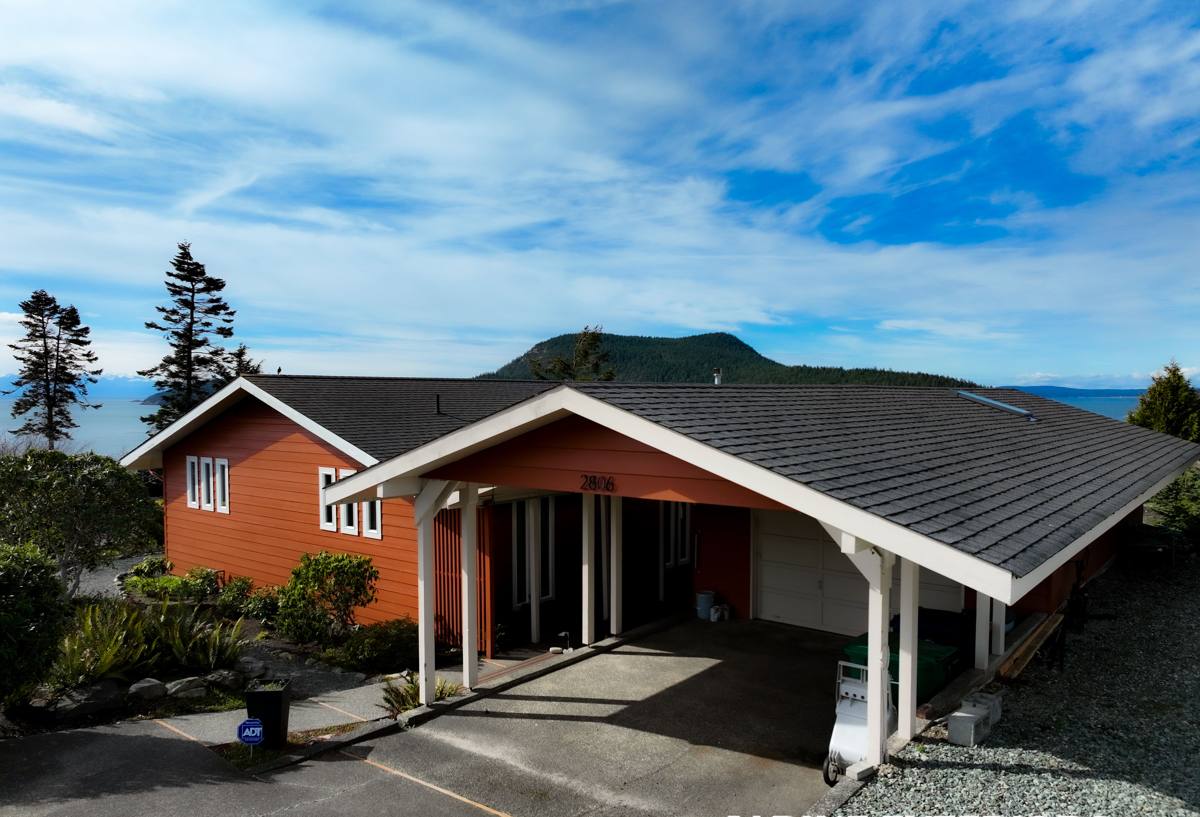
What the Local Climate Does to a House
Salt Air and Moisture
Proximity to Puget Sound and Boundary Bay means airborne salt is a constant, low-grade stressor on exterior materials. Salt accelerates corrosion on fasteners, flashing, and any exposed metal, and it interacts with moisture to keep surfaces from ever fully drying. Paint films break down faster in this environment, and wood-based siding products absorb and release moisture in a way that eventually shows up as cupping, splitting, or rot at the edges and end cuts.
Driving Rain
Whatcom County doesn't just get a lot of rain — it gets wind-driven rain, which behaves differently than a straight-down downpour. Wind-driven rain finds its way into laps, seams, and fastener penetrations that would stay dry in a calmer climate. This is why flashing detail and proper lap coverage matter more here than in drier parts of the state; a marginal installation that would survive for years inland can fail much sooner a few miles from the water.
Moss and Organic Growth
Shade, moisture, and mild temperatures are exactly what moss and algae need to thrive, and Grandview's tree cover combined with the damp climate gives them plenty of opportunity. Moss on a roof holds water against the shingles or panels and can work its way under the edges over time. On siding, algae staining is mostly cosmetic, but it's also a visible sign that a surface is staying wet longer than it should.
Siding: Why We Only Install James Hardie
Blaine Exterior Co installs James Hardie fiber cement siding exclusively. We don't install vinyl, LP SmartSide, Cemplank, Allura, primed spruce, or cedar. That's a deliberate standard, not a lack of options, and in a climate like Grandview's the reasoning is straightforward.
- Non-combustible core. Fiber cement doesn't feed a fire the way wood-based products can, which matters for insurance and peace of mind alike.
- Moisture-resistant, not moisture-proof. Hardie's fiber cement doesn't swell, rot, or delaminate the way wood or wood-composite siding can when it stays damp for extended periods — a real advantage given how long surfaces stay wet here.
- Factory-applied ColorPlus finish. Rather than field-painted, ColorPlus finishes are baked on and warranted, which holds up better against salt air and UV than site-applied paint on wood siding.
- Climate-engineered HZ product lines. Hardie's HZ10 formulation is built specifically for wetter, colder regions like the Pacific Northwest, which is what we specify for this area.
- Strong, transferable warranty. A warranty that's actually backed by the manufacturer and can transfer to a future buyer adds real value if you ever sell.
We've had plenty of conversations with homeowners about vinyl and engineered wood products, and we're honest about the trade-offs: vinyl is inexpensive and low-maintenance in the short term but can become brittle and fade over time, and it's a poor match for a coastal climate where wind-driven rain finds every gap. Engineered wood products like LP SmartSide perform reasonably well when installed and maintained exactly to spec, but they remain wood-based, which means moisture management is unforgiving — a nick in the coating or a poorly sealed cut edge can start a slow rot problem that's hard to catch early. Cedar is beautiful but demands ongoing refinishing to survive salt air and rain, and that maintenance cost adds up over the life of the siding. We standardized on Hardie because it holds up to this specific climate with the least long-term maintenance burden, and we'd rather install one product exceptionally well than several products adequately.
Roofing in a Moss-Prone Environment
Roofing decisions in Grandview should account for shade patterns and moss exposure on your specific lot, not just material choice. We evaluate ventilation, underlayment, and flashing detail as closely as the roofing material itself, because a roof with poor attic ventilation or weak flashing will develop moisture problems regardless of what's on top. Proper edge and valley flashing is especially important given how much wind-driven rain this area sees — that's usually where leaks start, not in the field of the roof.
Routine moss removal and gutter maintenance extend the life of any roof here, but they're maintenance, not a substitute for correct installation. A roof installed with attention to ventilation and flashing will need far less intervention over its life than one that's cutting corners in those details.
Windows: Sealing Out Wind-Driven Rain
Window performance in this climate comes down to two things: the quality of the window unit and the quality of the flashing and sealing around it. Even a good window will leak eventually if it's not properly integrated with the house wrap and siding around it — this is one of the most common sources of hidden water damage we find when we open up a wall during a siding project. When we replace windows, we pay close attention to flashing sequencing so that water is directed out and down, not trapped behind the window frame.
Energy efficiency is also worth considering here — Whatcom County gets a real heating season, and older single-pane or poorly sealed windows lose a meaningful amount of heat through both the glass and the gaps around the frame.
Decks: Built to Handle Standing Water and UV Cycling
Decks in Grandview face a different version of the same climate problem: standing water from long rainy stretches, followed by intense summer UV that dries and stresses the same boards. Composite decking has become popular here because it resists rot and doesn't need annual staining, but the details still matter — proper joist spacing, ventilation underneath the deck, and flashing where the deck meets the house all affect how long it lasts. A deck built with inadequate under-deck airflow will stay damp longer after every rain, regardless of the decking material on top.
Cost Factors to Expect
Every home and project is different, but these are the main variables that drive cost on exterior projects in this area:
| Factor | Why It Matters |
|---|---|
| Home size and complexity | More corners, dormers, and roof planes mean more flashing detail and labor time |
| Existing damage | Rot or moisture damage found during removal often needs to be addressed before new material goes on |
| Access and site conditions | Steep lots, tree cover, or limited access can add time and equipment needs |
| Material selection | Product lines, colors, and profiles vary in cost within the Hardie lineup itself |
| Scope | A single-trade project (just siding, just roofing) is more efficient than staged, separate projects |
We give straightforward, itemized estimates rather than vague ballpark numbers, because homeowners deserve to know what they're actually paying for.
Why a Local Crew Matters
Exterior work in a climate like this isn't something you want handled by a crew that's used to drier conditions. Flashing details, moisture management, and material selection all need to account for what actually happens to a house here over the course of a wet Pacific Northwest year. A local crew that works this area regularly has already seen how different products and installation approaches hold up — or don't — in Whatcom County's specific mix of salt air, rain, and moss. That's the kind of knowledge that doesn't come from a manual; it comes from doing the work here, year after year.
Before starting any project, we walk the property, look at drainage, shade, and existing damage, and talk through what's actually driving the wear on your home's exterior — not just what's cosmetically visible.
Get a Free, No-Pressure Estimate
If your home in Grandview is showing signs of wear from the salt air, rain, or moss — or you're just planning ahead — we're happy to take a look and talk through your options honestly. Fill out the form below to schedule a free estimate with no pressure and no obligation.