 Blaine Exterior
 Why Semiahmoo Siding Wears Differently Than Siding Inland
Homes on the Semiahmoo peninsula sit in one of the more exposed pockets of Whatcom County. The same waterfront setting that makes the area desirable also means siding here takes a harder hit than siding on a home ten miles inland in Blaine or Custer. Salt-laden air off the water accelerates corrosion on fasteners and trim, wind-driven rain gets pushed sideways into wall assemblies that were only ever designed for rain falling straight down, and the long, damp shoulder seasons common to this part of Washington keep north- and shade-facing walls wet enough, long enough, for moss and algae to take hold and stay.
None of that is exotic or rare — it is simply the normal operating environment for a house near the water in this part of the Pacific Northwest. But it does mean that siding material and installation details that get away with mediocrity in a drier, more sheltered location will fail faster here. We've built our Semiahmoo siding replacement approach around that reality rather than around a generic national spec sheet.
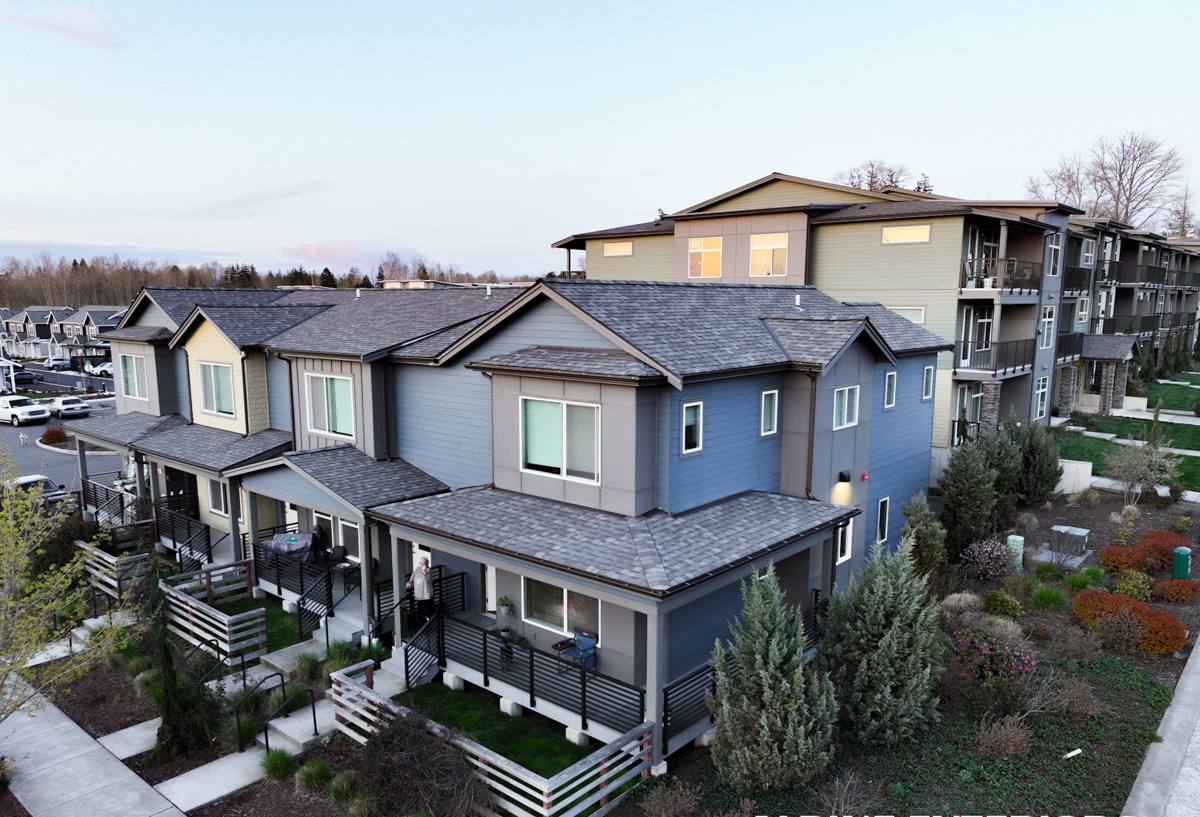
What Salt Air Actually Does to a Building Envelope
Salt air is corrosive to metal and hard on organic materials. Over years of exposure, it accelerates the breakdown of exposed fasteners, degrades cheaper coil stock trim, and can chalk or dull lower-grade paint finishes faster than the same product would fade a few miles inland. It doesn't damage every siding material equally:
- Untreated or lightly treated wood-based products absorb moisture faster in salt-humid air and are more prone to swelling, cupping, and rot at joints.
- Vinyl siding can become brittle and discolor faster under sustained coastal UV and salt exposure, and it still relies on lap joints and J-channels that were never sealed watertight to begin with.
- Fastener corrosion at trim boards and flashing is the detail that gets missed most often — a fastener that rusts and weeps stains the face of the siding and, eventually, opens a path for water.
Fiber cement siding is inherently more stable in this environment because it isn't an organic material and isn't a plastic that degrades under UV — it's Portland cement, sand, and cellulose fiber, engineered specifically to resist moisture-driven failure. That's the starting point for why we standardized on it, but the material alone isn't the whole story — installation detail matters just as much in a salt-air, high-rain zone.
Driving Rain and the Details That Actually Keep Water Out
Waterfront exposure in this area often comes with wind-driven rain, not just vertical rainfall. That changes what "correct installation" means. A siding job that looks fine on a calm, dry day can still let water in during a January storm if the water-resistive barrier, flashing, and siding overlaps weren't built for rain that comes in sideways. On a proper Semiahmoo siding replacement we pay particular attention to:
Water-Resistive Barrier and Drainage Plane
A continuous, properly lapped weather-resistive barrier behind the siding, with a drainage gap where the wall assembly calls for one, gives incidental moisture a way out instead of trapping it against the sheathing. This is the single most important layer of the whole system, and it's invisible once the siding goes back on — which is exactly why it's worth verifying before it's covered up.
Flashing at Every Penetration
Windows, doors, hose bibs, light fixtures, deck ledgers — every penetration through the wall is a place water can get behind the siding if it isn't flashed correctly. In a driving-rain environment, sloppy flashing is where failures start, usually years before anyone notices a problem on the inside.
Lap and Joint Detailing
Correct overlap at horizontal laps, sealed and back-primed cut ends at butt joints, and properly fastened corners all matter more here than they would in a drier climate, because wind-driven rain actively tests every gap instead of just running down the face of the wall.
Moss Season: The Slow Damage Homeowners Underestimate
Whatcom County's long, mild, wet stretch of the year is effectively an extended moss season on shaded and north-facing walls, especially under tree cover or in the shadow of a neighboring structure — both common around Semiahmoo's wooded and waterfront lots. Moss and algae growth on siding isn't just cosmetic. Moss holds moisture against the surface far longer than the wall would otherwise stay wet, and on wood-based or fiber-composite products with lower moisture tolerance, that sustained dampness is what eventually leads to soft spots, delamination, or rot at seams.
James Hardie's factory-applied ColorPlus finish resists this kind of buildup better than field-applied paint because it's cured under controlled conditions to bond more tightly to the fiber cement substrate, and the substrate itself doesn't feed rot the way wood-based sidings can. That doesn't mean a Semiahmoo home will never see moss — anything exposed to this climate can pick up surface growth — but it does mean the siding underneath isn't degrading every time it happens.
Why We Only Install James Hardie Fiber Cement
We don't install LP SmartSide, vinyl, Cemplank, Allura, primed spruce, or cedar, and that's a deliberate standard, not a lack of options. Each of those products has legitimate strengths — vinyl is inexpensive and low-maintenance in mild climates, engineered wood siding can look good and install quickly, cedar has real natural appeal. But in a marine, high-rain, moss-prone environment like Semiahmoo, the trade-offs stack up against homeowners over time: wood-based products carry rot risk at cut edges and joints if moisture management isn't perfect for the life of the product; vinyl can't be painted to refresh its look and its seams are a known weak point in wind-driven rain; cedar demands ongoing refinishing to hold up at all near salt air.
James Hardie's HZ10 product line is engineered specifically for climates with more moisture exposure — it's the version we spec for this area rather than the HZ5 line built for drier regions. Combined with a factory ColorPlus finish, a non-combustible fiber cement core, and a manufacturer warranty that's transferable to a future buyer, it's the product we're willing to put our name behind on a waterfront property that's going to take real weather for the next 30-plus years.
Our Semiahmoo Siding Replacement Process
A siding replacement on a coastal-exposed home isn't just "remove old siding, install new siding." Our process is built around the failure points specific to this location:
- Assessment and moisture check. Before pricing anything, we look at the existing siding, trim, and sheathing for signs of trapped moisture, soft spots, or prior water intrusion — common at corners, under windows, and on shaded elevations.
- Tear-off and sheathing inspection. Removing the old siding exposes the sheathing and framing underneath. Any rot or damage found here gets addressed before anything new goes back on — covering a wet or damaged wall with new siding just hides the problem.
- Water-resistive barrier and flashing install. This is the layer that does the real work of keeping wind-driven rain out, and it's the layer we won't rush.
- James Hardie fiber cement installation to manufacturer spec. Correct fastener type and placement, proper clearances, and correct lap and joint detailing — all of which affect both performance and the manufacturer warranty.
- Trim, caulking, and final detail work. Corners, penetrations, and transitions get finished with the same attention as the field siding, since these are the spots most likely to leak if rushed.
- Walkthrough. We go over the finished work with the homeowner and explain what was done and why, so there are no surprises later.
Cost Factors for a Semiahmoo Siding Job
Every home is different, but the same handful of factors drive most of the variation in scope and price on Semiahmoo projects specifically:
| Factor | Why It Matters Here |
|---|---|
| Sheathing condition | Coastal exposure and prior moss/moisture issues increase the odds of hidden sheathing repair once old siding comes off |
| Wall exposure | Water-facing and prevailing-wind elevations often need more flashing and joint attention than sheltered walls |
| Home height and access | Waterfront and view-lot homes are frequently multi-story, which affects staging and labor |
| Trim and detail complexity | Bay windows, multiple rooflines, and dormers common on larger Semiahmoo homes add corners and penetrations to flash correctly |
| Existing siding type | Removing brittle old vinyl or rotted wood siding is a different tear-off job than removing sound fiber cement |
Maintaining Hardie Siding in a Marine Climate
Fiber cement is low-maintenance, not no-maintenance, and coastal exposure means a little more attention pays off:
- Rinse siding periodically to clear salt residue and organic buildup, especially on shaded or wind-sheltered walls where moss takes hold.
- Keep gutters clean and functioning so overflow isn't running down the siding face during heavy rain.
- Trim back vegetation that keeps a wall shaded and damp longer than the rest of the house.
- Check caulking at trim and penetrations every year or two — sealant is the first line to wear in a high-rain, high-wind location.
- Address any impact damage or corner chips promptly so moisture doesn't have an entry point.
Why Local Experience Matters on This Job
A crew that has worked Semiahmoo before knows which elevations on this peninsula take the worst of the weather, where moss shows up first, and how the local building department expects flashing and water-resistive barrier details to be documented. That's not something a crew coming from outside the area picks up on the first job — it's built from doing this work, on this kind of exposure, repeatedly. It shows up in the small decisions: where we add extra flashing attention even when it isn't strictly the minimum spec, and which corners of a Semiahmoo home we know to inspect closely before assuming the sheathing is sound.
Get a Free, No-Pressure Estimate
If your Semiahmoo home's siding is showing moss buildup, soft spots, fading, or you're simply planning ahead for a replacement, we're happy to walk the property, look at the specific exposure your home deals with, and give you a straightforward assessment — no pressure, no hard sell. Use the form below to request a free estimate.