 Blaine Exterior
 Sandy Point Sits Right on the Line Between Beauty and Wear
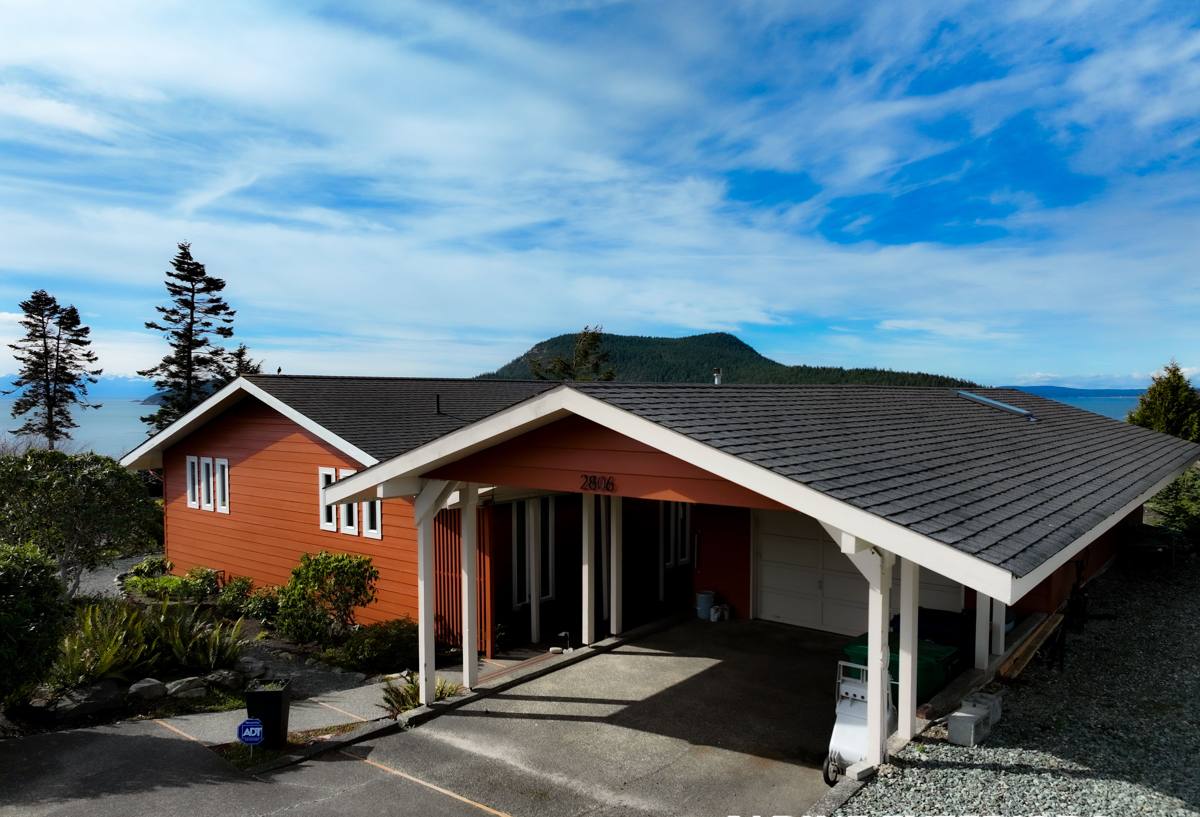
Sandy Point is one of the more exposed pockets of Whatcom County — a low-lying spit and shoreline community north of Blaine where the Strait of Georgia is close enough to smell on almost any given day. That proximity is exactly why people love it, and it's exactly what makes exterior materials work harder here than they do a few miles inland. Salt-laden air, wind off the water, and driving rain off the Pacific systems that roll through the Northwest all season long put steady pressure on siding, roofing, windows, and decks. None of it is dramatic on any single day. It's the accumulation — year after year — that separates homes that were built and finished correctly from homes that weren't.
We've worked on homes throughout Blaine and the surrounding Whatcom County waterfront, and Sandy Point has its own personality: more wind-driven moisture, more salt exposure on north- and west-facing walls, and a moss season that runs longer than most homeowners expect. This page covers what that means for your exterior and how our crew approaches it.
What Salt Air and Driving Rain Actually Do to a Home
Salt Air
Salt doesn't just sit on the surface — over time it works into seams, fasteners, and any spot where a coating has thinned or a caulk joint has failed. Metal fasteners and flashing are the most vulnerable, which is why fastener quality and flashing detail matter more at Sandy Point than they would on a home set back from the water.
Driving Rain
Wind-driven rain doesn't fall straight down — it gets pushed sideways into wall assemblies, especially on west- and north-facing elevations that catch weather off the Strait. That means water intrusion risk isn't just about the roof; it's about how siding laps, seals around windows, and drains at the bottom of the wall.
Moss and Sustained Moisture
Whatcom County's long wet season gives moss and algae plenty of time to establish on roofs, north-facing siding, and shaded decking. Left alone, moss holds moisture against the surface far longer than open air would, which accelerates whatever material is underneath — wood rots faster, coatings degrade faster, and fastener corrosion speeds up.
Siding: Why We Only Install James Hardie
We get asked fairly often why we don't offer vinyl, LP SmartSide, or the various fiber cement alternatives on the market. It's a fair question, and the honest answer is that we made a standard decision as a company rather than deciding product-by-product, job-by-job.
Vinyl
Vinyl is inexpensive and low-maintenance in mild conditions, and there's nothing dishonest about that. But in a coastal wind environment, vinyl's weak points show up: it can distort or crack in cold snaps, its seams and panels are more vulnerable to wind uplift in gusty coastal exposures, and it's a combustible product — a real consideration on properties with any wildfire exposure inland from the water. It also simply doesn't hold color or rigidity as long as a fiber cement product when it's facing sun, salt, and wind together.
Engineered Wood (LP SmartSide) and Alternative Fiber Cement
Engineered wood siding has improved a lot over the years, but it's still a wood-based product at its core, which means its long-term performance depends heavily on unbroken paint film and sealed edges. In a high-moisture, salt-air environment like Sandy Point, any breach — a nail pop, a cut edge left unsealed, a caulk joint that fails — gives moisture a path into the substrate faster than it would with a non-wood product. Off-brand fiber cement products can also perform well, but we've standardized on one manufacturer so our crews install to one spec, one flashing detail, and one warranty structure, every time, rather than juggling installation requirements across several product lines.
Why James Hardie
James Hardie fiber cement is non-combustible, engineered for damp and wind-driven climates through its HZ5 product line, and finished at the factory with ColorPlus — a baked-on finish that holds color far longer than field-applied paint and doesn't need to be repainted on the same cycle. It's also backed by a strong, transferable warranty, which matters to buyers if you ever sell. None of that means Hardie is maintenance-free — it still needs correct caulking, proper clearance from grade and decking, and periodic inspection — but installed to spec, it's the product we're comfortable standing behind on a coastal Whatcom County home.
| Factor | Vinyl | Engineered Wood | James Hardie Fiber Cement |
|---|---|---|---|
| Combustibility | Combustible | Combustible | Non-combustible |
| Salt air / wind performance | Can distort, seam stress | Depends on paint film integrity | Engineered for damp, windy climates (HZ5) |
| Finish longevity | Fades, chalks over time | Field paint wears on standard repaint cycle | Factory ColorPlus finish, longer color life |
| Moisture sensitivity | Low absorption, seam-dependent | Higher — wood-based substrate | Low — cement-based, dimensionally stable |
| Typical warranty | Varies by brand | Varies by brand | Strong, transferable manufacturer warranty |
Roofing: Built for a Long Wet Season
A roof at Sandy Point earns its keep. The details that matter most are the ones you don't see once the job is done: proper underlayment, correctly lapped and sealed flashing at every penetration, and ventilation that lets the attic breathe so moisture doesn't condense from the inside out. Ice and heavy snow aren't the main threat here the way they are further inland — sustained rain and moss are. We pay close attention to valleys, chimney and vent flashing, and any low-slope transitions, since those are the spots where driving rain and standing moisture find a way in over time.
Moss Management
Moss on a roof is a maintenance issue before it's a replacement issue. Regular removal and keeping gutters clear of debris that feeds moss growth go a long way toward extending a roof's service life, especially on shaded or north-facing slopes that stay damp longest.
Windows: The Weak Point in Any Wall
Windows are where the wall assembly is interrupted, and that makes flashing and sealant detail around each unit critical in a wind-driven rain environment. We look at window performance in two ways: the unit itself (glass package, frame material, and how well it resists condensation and drafts) and the installation (how it's flashed and integrated with the siding and weather-resistive barrier behind it). A well-built window installed poorly will leak; a modest window installed correctly usually won't. Both matter, but installation detail is what we control most directly.
Decks: Salt, Sun, and Standing Water
Decks at Sandy Point take a different kind of abuse — direct sun exposure combined with salt air accelerates fastener corrosion and finish breakdown on both wood and composite decking. Composite decking generally holds up better against moisture and doesn't need refinishing, but it still needs proper fastener selection (coastal-rated, corrosion-resistant hardware) and drainage detail underneath so water doesn't sit against ledger boards or posts. Wood decking can look great here too, but it demands a more disciplined maintenance schedule — cleaning, sealing, and fastener checks — to keep pace with the environment.
A Seasonal Checklist for Sandy Point Homes
- Inspect siding caulk joints and butt seams each spring for cracking or separation
- Clear gutters and downspouts before the fall rains set in
- Remove moss from roof surfaces and shaded siding before it spreads
- Check window flashing and sills for staining or soft spots after heavy storms
- Inspect deck fasteners and ledger connections annually for corrosion
- Walk the exterior after any major wind event to check for lifted flashing or loose trim
Why a Local Crew Matters Here
Sandy Point isn't a generic climate zone on a spec sheet — it's a specific exposure within Whatcom County, and the right flashing detail, fastener spec, and clearance requirements are learned by working on homes in this exact environment, not by following a one-size-fits-all install guide. A crew that works this coastline regularly knows which elevations take the worst of the wind-driven rain, where moss tends to establish first, and how salt air changes the maintenance conversation compared to a home just a few miles inland. That local knowledge shows up in the details — the ones that determine whether an exterior holds up for decades or needs attention again in a few years.
If you're planning a siding, roofing, window, or deck project at Sandy Point, we're happy to take a look and talk through what your home's exposure calls for. Reach out below for a free, no-pressure estimate.