 Blaine Exterior
 Ask five roofing contractors what a new roof costs and you'll get five different numbers, none of which mean much without context. The honest answer is that roof replacement cost is driven by a handful of specific, measurable factors — not by guesswork or the size of your house alone. This page walks through what those factors actually are, so that when a contractor hands you a quote, you understand what you're paying for and why two bids for the "same roof" can land far apart.
We're a Blaine-based exteriors contractor, and while our own crews focus on siding rather than roofing, we work alongside roofers on nearly every full exterior project we do. We see the estimates, the tear-offs, and the surprises. This is the same explanation we'd give a neighbor.
The Big Picture: What Ranges Actually Look Like
For a typical single-family home in Whatcom County, most straightforward asphalt shingle replacements land somewhere in the low-to-mid five figures, with steeper, more complex roofs, premium materials, or extensive rot repair pushing well past that. Metal roofing and specialty materials run higher still. These are broad regional ranges, not a quote — your actual number depends entirely on the factors below, and the only price that matters is the one written on a signed estimate from a contractor who has walked your roof.
| Cost Factor | Why It Matters |
|---|---|
| Roof size (squares) | Base driver — more material and labor, plain and simple |
| Pitch and complexity | Steep or cut-up roofs slow crews down and require more safety gear |
| Number of existing layers | Tear-off labor and disposal cost scale with what's coming off |
| Decking condition | Rotted sheathing found mid-tear-off adds material and labor not in the original bid |
| Material choice | Three-tab shingle, architectural shingle, and metal occupy very different price tiers |
| Flashing and penetrations | Chimneys, skylights, and multiple valleys each add detail work |
| Ventilation upgrades | Bringing an old attic up to current intake/exhaust standards is common on older homes |
| Access and staging | Tight lots, tall roofs, or landscaping to protect affect crew efficiency |
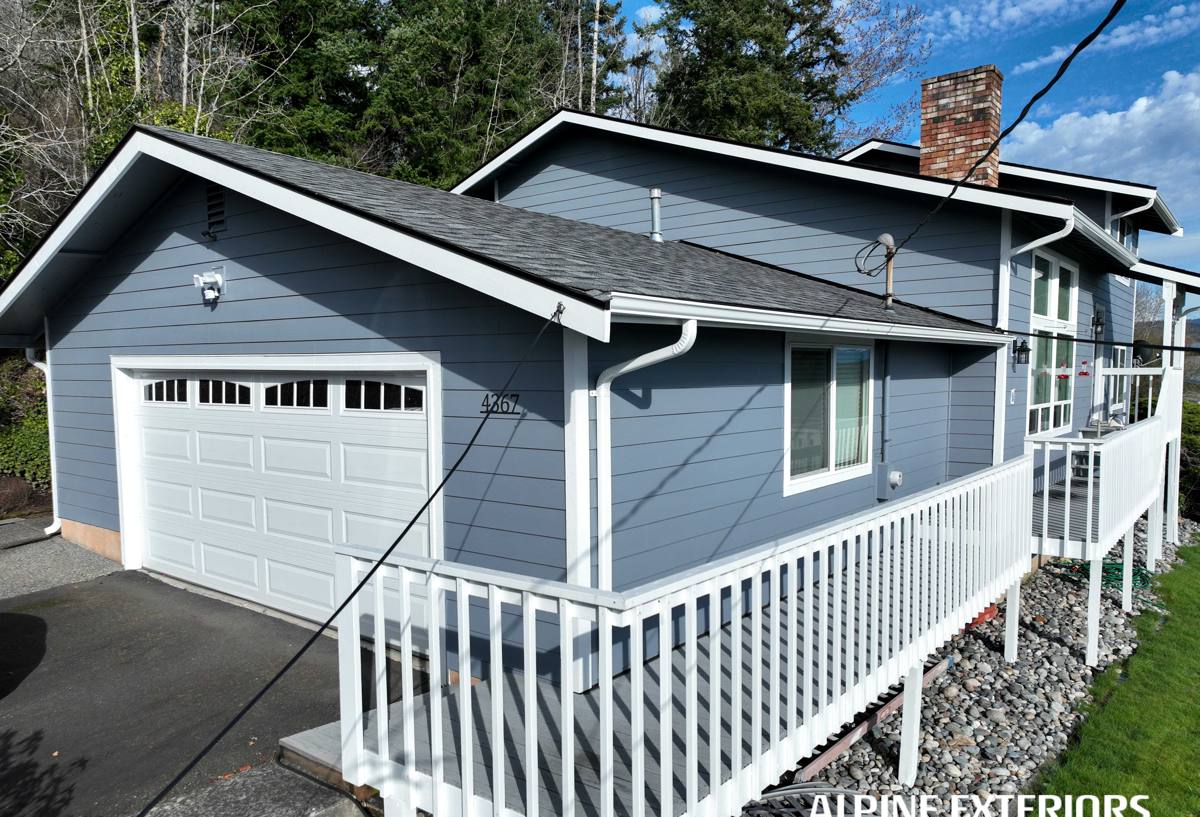
Size, Pitch, and Complexity
Roofers price in "squares" — 100 square feet of roof surface. That's the baseline, but it's rarely what separates a moderate bid from a high one. Pitch does more of that work. A steep roof takes longer to work safely, requires additional fall-protection setup, and slows down every step from tear-off to final nailing. A roof with multiple valleys, dormers, or roof-to-wall transitions multiplies the number of flashing details a crew has to get right, and each one is a place where a rushed job leaks later.
Simple, low-pitch rectangular roofs are the cheapest to replace per square foot. Cut-up roofs with lots of angles cost more not because the material is different, but because the labor is genuinely harder.
What Adds Complexity
- Multiple roof planes, dormers, or additions with different rooflines
- Steep pitch requiring additional harness and staging setup
- Skylights, chimneys, and roof vents that each need custom flashing
- Valleys, which concentrate water flow and need careful detailing
- Limited access for material staging and debris removal
Material Choice: What You're Actually Buying
Material is where homeowners have the most control over final cost, and where the trade-offs are easiest to misjudge. Cheaper isn't always cheaper over the life of the roof, and the "best" material depends on what you're trying to optimize for — upfront cost, longevity, wind and moss resistance, or appearance.
| Material | Typical Lifespan | Trade-offs |
|---|---|---|
| 3-tab asphalt shingle | 15-20 years | Lowest upfront cost, lowest wind rating, shows moss and wear sooner |
| Architectural/dimensional shingle | 25-30 years | Better wind and impact rating, heavier profile, moderate cost step-up |
| Standing seam metal | 40-60+ years | Excellent moss and moisture shedding, higher upfront cost, needs experienced installers |
| Cedar shake | 20-30 years with upkeep | Traditional look, ongoing maintenance to manage moss and rot in wet climates |
In a climate like ours, the gap between shingle grades matters more than it would somewhere dry. A budget three-tab shingle that's rated for a modest wind speed is a real liability during a winter windstorm off the Strait. Architectural shingles cost more per square but carry meaningfully better wind ratings and hold up longer against the freeze-thaw and moss cycle this area puts every roof through.
What Tear-Off and Decking Add — the Line Items Homeowners Don't See Coming
The single biggest source of "surprise" cost on a roof replacement isn't the shingles — it's what's underneath them. Once the old roofing is stripped off, the crew can finally see the decking (the plywood or board sheathing the shingles are nailed to). If that decking has been absorbing moisture for years, especially around old flashing or in shaded, moss-prone areas, sections of it are often soft or delaminated and need to be replaced before new roofing can go down.
A contractor can give you a solid estimate range before tear-off, but a fully firm number often can't be locked in until the old roof is off and the decking is visible. A trustworthy contractor will explain this upfront and give you a per-sheet replacement price in the contract, rather than surprising you with an open-ended change order.
Multiple existing layers of shingles also add cost. Many older homes have a second layer installed over the first from a prior "overlay" job — both layers have to come off, which means more tear-off labor and more disposal weight than a single-layer roof.
What Whatcom County's Climate Adds to the Job
Roofs here don't fail the same way roofs fail in a dry climate, and that shapes what a well-built roof needs. Blaine sits right on the water, and the combination of salt-laden air, driving rain off the Strait of Georgia, and a long, damp moss season means a roof is under near-constant moisture pressure for much of the year.
- Salt air accelerates corrosion on exposed metal fasteners, flashing, and vent caps — cheaper galvanized hardware corrodes faster near the water than it would inland, so material grade on flashing and fasteners matters more here than in most of the state.
- Driving rain pushed sideways by wind finds gaps that a straight-down rain never would, which is why flashing detail quality around chimneys, valleys, and wall intersections carries more weight in coastal Whatcom County than in calmer inland areas.
- Moss season runs long here. Moss holds moisture against the roof surface, works its way under shingle edges, and shortens the life of any roof that isn't cleaned or treated periodically. Roofs on shaded, north-facing slopes see this worst.
None of this means Blaine needs exotic materials — it means detail work (proper underlayment, corrosion-resistant fasteners, correct flashing laps, and adequate ventilation to keep the deck dry from underneath) matters more here than in a drier part of the state, and it's worth asking any roofing bid specifically how they're addressing it.
Permits, Underlayment, and Code Requirements
A legitimate roof replacement in Blaine requires a building permit, and the job has to meet current Washington building code for underlayment, ice-and-water membrane at eaves and valleys, and attic ventilation. These aren't optional upsells — they're baseline requirements, and a bid that skips them isn't actually a lower-cost bid, it's an incomplete one that will need to be pulled back into compliance if the work is ever inspected or if it's time to sell the house.
Ventilation is worth calling out specifically. Many older homes in this area were built with minimal attic ventilation by today's standards. Bringing intake and exhaust airflow up to code during a re-roof isn't just a code checkbox — it's what keeps moisture from condensing on the underside of the new decking, which is one of the more common causes of premature rot in older homes here.
Labor, Scheduling, and Timing
Roofing crews in this part of Washington work around a real weather window. Spring through early fall is peak season, and a well-regarded local roofer's schedule fills up months out. Trying to squeeze a tear-off into a narrow dry stretch in late fall or winter can work, but it adds risk and sometimes cost if weather delays force the crew to tarp an open roof mid-job. If your roof is showing clear signs of trouble, it's worth getting on a contractor's schedule early rather than waiting for the first leak.
A Practical Checklist Before You Sign
- Get the bid broken out by material, tear-off, decking allowance, flashing, and permit — not one lump number
- Ask what happens (and what it costs) if rotted decking is found after tear-off
- Confirm the underlayment and ice-and-water shield spec meets current code, not just "standard felt"
- Ask specifically how flashing will be handled at every penetration and valley
- Confirm fastener and flashing material grade, given the salt-air environment near the water
- Check that attic ventilation will be assessed and brought up to code, not just matched to the old setup
- Verify the contractor is licensed, bonded, and insured, and ask for proof rather than taking it on faith
- Get the warranty terms in writing — both manufacturer material warranty and the contractor's workmanship warranty
When Roof Work Reveals Siding Problems
Because we're a siding contractor, this is worth flagging honestly: when a roof comes off, it's common for a homeowner to notice, for the first time, how the siding and trim around the roofline have held up. Fascia boards, top courses of siding, and wall-to-roof transitions take the same moisture beating as the roof itself, and problems there are often hiding in plain sight until the roof scaffolding goes up and someone takes a close look.
If your roof project uncovers soft trim, cracked or delaminating siding, or paint that won't hold near the roofline, it's worth having that assessed at the same time rather than as a separate project later. We install James Hardie fiber cement exclusively for exactly the reasons that matter most in this climate — it doesn't absorb water and swell the way wood-based products can, it carries a factory-baked ColorPlus finish that holds up to sun and salt air without repainting on the same cycle as painted wood or engineered wood siding, and it's non-combustible. We don't install vinyl, LP SmartSide, or primed wood siding, and we're glad to walk through why if a roof project turns into a broader exterior conversation.
If you're weighing a roof replacement and want a straight answer about what your specific roof needs — not a generic estimate — we're happy to take a look and talk through it with no pressure to sign anything. Use the form below to request a free estimate.