 Blaine Exterior
 Exterior Work on Cherry Point: Building for a Wooded, Wind-Exposed Coastline
Cherry Point sits along the Strait of Georgia north of Blaine, a mixed stretch of Whatcom County where forested rural lots run right up against open water. Properties out here tend to be larger and more spread out than in-town Blaine, often with mature tree cover, longer driveways, and more exterior wall and roof area to maintain than a typical in-town lot. That combination — heavy tree canopy on one side of a property and open marine exposure on the other — creates a specific set of demands on siding, roofing, windows, and decks that doesn't match what works a few miles inland.
We handle all four of those exterior systems for homes in and around Cherry Point, and we approach them as one connected building envelope rather than four separate trades bolted together. On siding specifically, we install James Hardie fiber cement and nothing else. That's not a brand preference pulled off a supplier price sheet — it's a standard we settled on after years of seeing which materials hold up on exposed, moisture-heavy Whatcom County properties like the ones out here, and which ones start showing problems within a few short years.
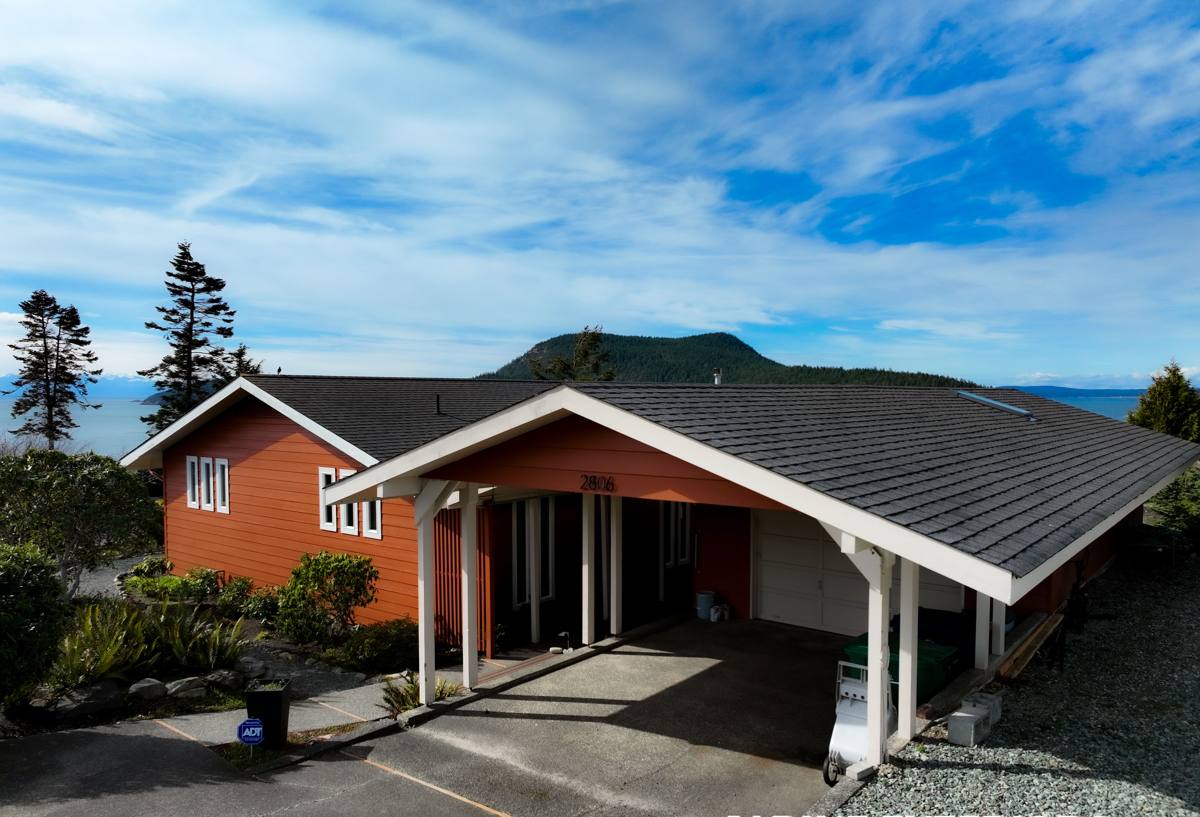
What This Climate Does to a Cherry Point Home
Salt Air Off the Strait
Even set back from the shoreline itself, homes along Cherry Point pick up salt-laden air carried inland off the Strait of Georgia, especially on properties with a clear line to the water or elevated positioning. Salt accelerates corrosion in fasteners, flashing, and any exposed metal trim, and it breaks down lower-grade paints and finishes faster than a fully inland site would see. That corrosion risk needs to be designed into a project from the start — the right fastener grade, the right flashing metal — rather than discovered later as rust stains bleeding down a wall.
Driving Rain With Little to Break It
Wind off open water doesn't arrive gently. On the more exposed lots around Cherry Point, wind-driven rain gets pushed sideways into wall assemblies, window openings, and roof-to-wall transitions with real force, rather than falling straight down the way it might on a sheltered inland property. That's a heavier moisture load on joints, laps, and seams than the region's average rainfall totals alone would suggest. Installation details that hold up fine on a calm, tree-sheltered inland lot can still fail here specifically because water is finding a way in sideways.
Shade, Moisture, and a Long Moss Season
The flip side of Cherry Point's forested lots is shade — and shade combined with near-constant Pacific Northwest humidity is exactly what moss and mildew need to establish themselves. Whatcom County's moss season runs most of the year, and heavily wooded properties tend to see it worst on north-facing walls and roof slopes that rarely get direct sun. Gutters and valleys clogged with falling needles and leaves compound the problem by holding standing moisture against roofing and siding longer than an open, sun-exposed lot would.
Why We Only Install James Hardie Siding
We used to install a broader range of siding products. We stopped. That change came directly from what we kept finding on service calls and tear-offs on exposed, moisture-heavy properties like the ones around Cherry Point — not from a supplier relationship or a sales incentive to push one brand.
- Non-combustible core: Fiber cement doesn't feed a fire the way wood-based siding products can, which matters for both safety and, in many cases, insurance underwriting on larger wooded lots.
- Factory-applied ColorPlus finish: Color is baked on under controlled factory conditions rather than brushed on in the field, and it holds up far longer against fading, chalking, and moisture intrusion than site-applied paint.
- Climate-engineered HZ product lines: Hardie's HZ5 formulation is built for regions with heavy moisture exposure and freeze-thaw cycling, which describes coastal Whatcom County well.
- Dimensional stability: Fiber cement doesn't swell, cup, or warp the way engineered wood products can after repeated wetting through a long wet season.
- Strong transferable warranty: Hardie backs its product with one of the more substantial warranty structures in the industry, as long as installation follows their spec.
We won't install LP SmartSide, vinyl siding, Cemplank, Allura, primed spruce, or cedar. Each of those products has a legitimate place in the market and homeowners who are satisfied with them elsewhere. On a shaded, salt-exposed property like the ones around Cherry Point, though, we've made a professional call that we'd rather stand fully behind one system than offer a cheaper option that quietly shifts long-term maintenance risk onto the homeowner.
What Correct Hardie Installation Requires
Fiber cement only performs the way it's engineered to when it's installed to Hardie's published specifications. That means the correct fastener type and spacing, proper clearance from grade and roof lines, drainage or rain-screen detailing behind the panels where the assembly calls for it, and factory-mitered or properly caulked joints. On a shaded lot where a wall stays damp longer after every storm, sloppy installation shows up faster than it would on a drier, sun-exposed site — the material is only as good as the crew putting it up.
Roofing for Cherry Point Homes
Roofing takes the most direct and continuous hit from this environment — sun where it reaches, wind-driven rain, falling debris from tree canopy, and moss all land on the roof plane before anything else. A roof system needs correct underlayment, properly lapped flashing at every penetration and wall transition, and ventilation that lets the attic and roof deck actually dry out between storms instead of trapping moisture against the sheathing. On heavily treed lots, gutter and valley maintenance matters just as much as the roofing material itself, since clogged drainage is one of the fastest ways a sound roof develops a moisture problem, especially through the fall and winter months when needles and leaves come down steadily.
Signs a Cherry Point Roof Needs Attention
- Moss buildup on shaded, north-facing slopes that keeps returning shortly after cleaning
- Gutters and valleys that fill with debris faster than expected between cleanings
- Granule loss showing up in gutters or at downspout outlets
- Soft spots, sagging, or visible daylight at the attic near roof-to-wall transitions
- Water staining on interior ceilings near exterior walls, especially after a windy storm off the water
Roof Material Considerations for Wooded, Coastal Lots
Different roofing materials handle Cherry Point's combination of shade and salt exposure differently. Asphalt composition shingles remain the most common choice and perform well when the underlayment, flashing, and ventilation are done correctly, though shaded slopes will need more frequent moss treatment than sun-exposed ones. Metal roofing sheds moss and debris more readily and holds up well to wind, but it requires corrosion-resistant fasteners and careful detailing at penetrations to avoid the very leak points that make any roofing material fail early near salt air. Whatever the material, the underlying workmanship on flashing and ventilation matters more here than the marketing on any particular shingle or panel product.
Windows That Hold Up to Wind-Driven Rain
Window performance on exposed Cherry Point properties comes down to flashing and installation just as much as the window unit itself. A well-built window installed with poor flashing integration will still leak under sustained wind-driven rain, while a mid-grade window installed correctly will often outperform it over time. We pay close attention to how new window flashing ties into the surrounding wall assembly and siding, since that transition is one of the most common places water finds its way into a wall system on open, water-facing lots. On shaded elevations, we also watch for condensation and slow-drying trim, which can quietly rot window casings even when the flashing itself is sound.
What to Ask About Before Replacing Windows Here
- How the new flashing will integrate with the existing siding or the new Hardie installation
- Whether the window's performance rating matches the property's actual wind and rain exposure
- How openings will be sealed and detailed at the sill, where water pools first
- What the warranty covers if a leak develops at the flashing rather than the window unit itself
Decks: Built for Shade, Moisture, and Salt Together
Decks on Cherry Point properties often deal with a combination inland decks rarely face: shade from surrounding trees that slows drying after every rain, periodic salt exposure carried in off the water, and the repeated wetting-and-drying cycles that come with both. That combination is hard on fasteners, structural connectors, and lower-grade decking materials alike, and it's part of why moss and algae tend to establish on deck surfaces here faster than on an open, sun-exposed lot. We use hardware rated for corrosive exposure, and we walk homeowners through the real maintenance differences between wood and composite decking for this specific setting rather than pushing a one-size-fits-all answer. Ledger board attachment and flashing where a deck meets the house deserve particular attention here, since that's a shaded, slow-drying joint on many wooded lots and a common spot for hidden rot to develop unnoticed.
Comparing Common Exterior Materials in This Climate
| Material | Moisture Behavior | Maintenance in Shade and Salt Air | Typical Longevity Here |
|---|---|---|---|
| James Hardie fiber cement | Dimensionally stable, resists swelling | Low; factory finish resists fading, chalking, and moisture staining | 30+ years with correct install |
| Vinyl siding | Can warp or distort with heat and settle over time | Low upfront, but seams and fasteners remain exposure points | Variable; shorter on exposed, wind-facing walls |
| LP SmartSide / engineered wood | Wood-based core is moisture-sensitive at cut edges and joints | Moderate; edge sealing and caulk upkeep matter, especially in shade | Depends heavily on installation and upkeep |
| Cedar / primed wood | Absorbs and releases moisture readily | High; regular refinishing needed where walls stay damp longer | Shorter without consistent maintenance |
Cost Factors Homeowners Should Understand
Exterior project costs on a Cherry Point property depend on more than square footage. Larger, more spread-out lots often mean more linear feet of siding and gutter, more roof planes, and longer staging and access time than a compact in-town lot. Tree cover can add cost too, since branches may need trimming back before roofing or siding work can proceed safely, and existing moss or moisture damage sometimes reveals sheathing repairs that weren't visible from the ground during an initial estimate.
- Lot size and access: Longer driveways and more spread-out structures add labor and staging time.
- Existing moisture damage: Hidden rot behind old siding or at deck ledgers can only be priced accurately once it's exposed.
- Tree and vegetation clearance: Branch trimming or debris removal ahead of roofing work is sometimes needed for safe access.
- Material and hardware grade: Corrosion-resistant fasteners and flashing cost more upfront but reduce repeat maintenance calls.
Why a Local Crew Matters Out Here
A contractor who regularly works this stretch of Whatcom County coastline already knows that Cherry Point's mix of tree cover and open water exposure behaves differently than either a fully inland lot or a fully open waterfront property. That familiarity shows up in the small decisions — where extra drainage detailing gets added on a shaded wall, which fastener grade gets used near the water, how gutter and valley layouts get planned around mature trees — and those details are exactly what determines whether an exterior system lasts one wet season or several decades on a property like this.
A Simple Checklist Before Hiring for Exterior Work on Cherry Point
- Ask what siding material they install and why, and whether they stand behind it with a written warranty
- Confirm they carry current Washington contractor licensing and active liability insurance
- Ask how they detail flashing at windows, doors, and roof-to-wall transitions for wind-driven rain
- Ask about fastener and hardware corrosion resistance, particularly for decks and roofing near the water
- Ask how they plan drainage and ventilation around shaded, tree-covered sections of the property
- Get a clear, written scope of work before any contract is signed
Our Process
We start with an on-site assessment of the existing exterior — siding, roofing, windows, or decking, depending on what's being addressed — and look specifically at how the current system has handled moisture, shade, and salt exposure over time. On a Cherry Point property, that usually means checking both the shaded, tree-facing sides and the sides with a clear line to the water, since they tend to wear differently. From there we put together a clear, written scope and timeline before any work begins, and we treat flashing, drainage, and corrosion-resistant fastening as standard practice on a property like this, not as optional upgrades.
If you're weighing options for siding, roofing, windows, or a deck on a Cherry Point property, we're happy to walk the exterior with you and give an honest read on what it actually needs. Reach out below for a free, no-pressure estimate.