 Blaine Exterior
 Two Very Different Products, One Big Decision
Vinyl siding and fiber cement siding get compared constantly, and for good reason — they're the two most common choices homeowners in Whatcom County ask us about. Both can look good on a house. Both are sold by reputable manufacturers. But they are fundamentally different materials that behave differently once they're on a wall facing wind off Semiahmoo Bay, months of steady rain, and the moss and mildew pressure that comes with our climate. This page lays out the honest differences — not a sales pitch, just what each product is, how it holds up, and why our company standardizes on James Hardie fiber cement rather than installing vinyl.
We're not going to tell you vinyl is junk. It isn't. It's a legitimate, widely used product that works fine in a lot of situations. What we will do is explain the trade-offs plainly so you can make the call with real information instead of a showroom pitch.
What Vinyl Siding Actually Is
Vinyl siding is extruded PVC (polyvinyl chloride) plastic, formed into overlapping panels and usually colored all the way through during manufacturing. It's been the most common siding material in North America for decades because it's inexpensive, lightweight, and fast to install. Panels snap together and hang on nail slots rather than being face-nailed tight, which lets the material expand and contract with temperature.
Where vinyl performs well
- Lower upfront material and labor cost than fiber cement
- Never needs painting — color runs through the panel
- Lightweight, which speeds up installation
- Resists rot and insect damage because it isn't wood-based
Where it struggles
Vinyl is a thin plastic product, and thin plastic has known limits. It can crack in a hard impact, especially in cold weather when it becomes brittle — a real consideration during a Whatcom County cold snap. It expands and contracts noticeably with temperature swings, which over years can lead to visible waviness or gaps at the seams. It also softens and can warp when exposed to concentrated heat, which matters for anything near a barbecue, dark-colored window reflections, or a neighboring structure fire. And because color is baked into the plastic rather than applied as a finish, it fades unevenly over time and can't be touched up or repainted without specialized paint made for vinyl.
What Fiber Cement Actually Is
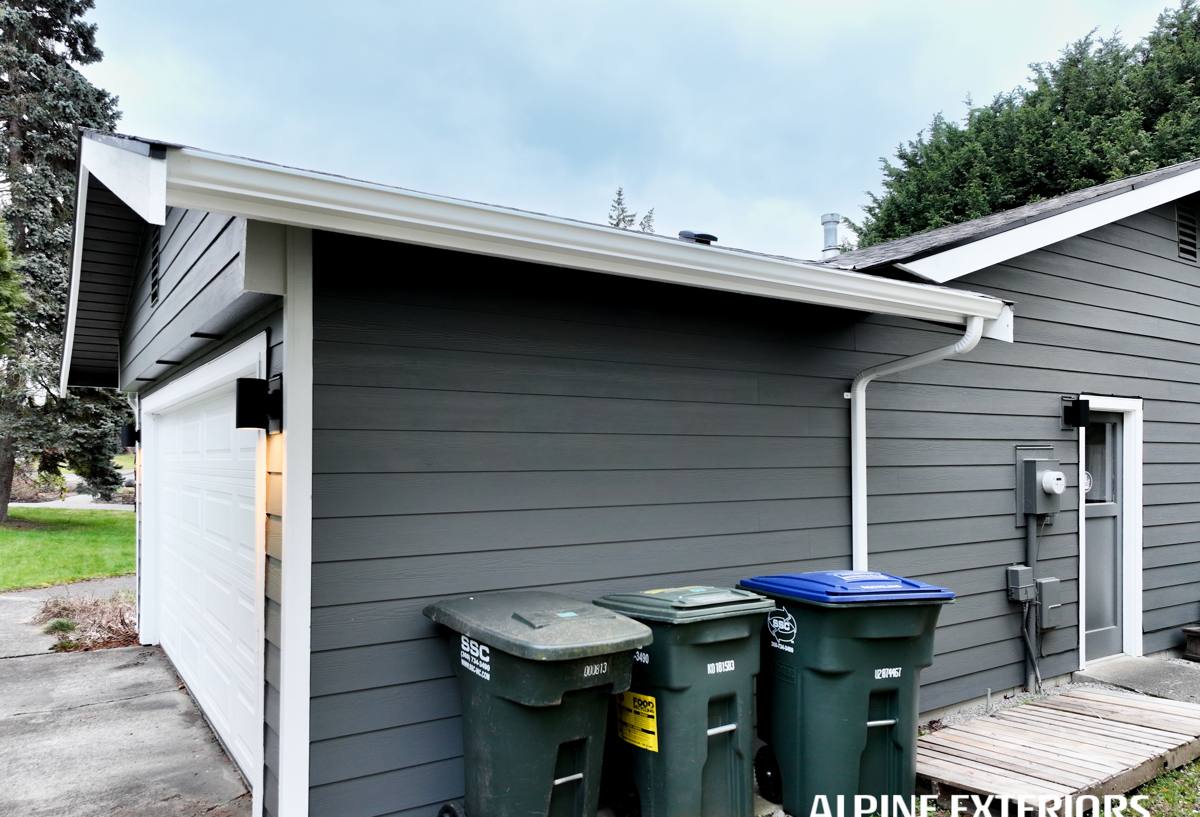
Fiber cement siding is a composite of Portland cement, sand, and cellulose fiber, cured into rigid boards and planks. James Hardie, the brand we install exclusively, engineers its products in regional formulations — HZ5 for our climate zone — specifically for high-moisture, marine environments like ours. The boards are factory-finished with a baked-on ColorPlus finish rather than field-painted, which gives a more consistent, durable color layer than site-applied paint.
Where fiber cement performs well
- Dense, rigid material — resists dents, impacts, and pest damage
- Non-combustible, which matters for fire-prone dry seasons and burning-ember exposure
- Holds paint and factory finish far longer than wood or vinyl finishes
- Engineered specifically for wet, coastal, and high-humidity regions
- Doesn't warp, crack from cold, or soften from heat the way plastic does
Where it requires more from the installer
Fiber cement is heavier and denser than vinyl, which means it takes longer to install and requires specific fastening, clearance, and flashing practices. It has to be cut with proper dust control, fastened correctly (over- or under-driven nails are a real failure point), and kept off grade with the manufacturer's clearance requirements. Installed wrong, fiber cement can fail early — trap moisture, crack at fasteners, or fail at the caulked joints. This is a product where the installer's skill matters as much as the material itself, which is part of why we only use certified crews and don't treat it as a commodity product.
Side-by-Side Comparison
| Factor | Vinyl Siding | James Hardie Fiber Cement |
|---|---|---|
| Base material | PVC plastic | Cement, sand, cellulose fiber |
| Typical lifespan | 20-30 years | 30-50+ years when installed to spec |
| Fire behavior | Combustible plastic; can soften/melt from heat | Non-combustible |
| Impact resistance | Can crack, especially in cold weather | Dense; resists denting and cracking |
| Color/finish | Color through material; fades unevenly, cannot be repainted easily | Factory-baked ColorPlus finish; can be repainted if desired |
| Moisture behavior | Panels don't absorb water, but seams and J-channel can trap it | Engineered for moisture; requires correct flashing and clearances |
| Warranty structure | Varies widely by manufacturer and grade | Strong transferable manufacturer warranty on Hardie products |
| Upfront cost | Lower | Higher |
How Each One Holds Up in Whatcom County's Climate
This is the part that matters most for anyone actually building or re-siding a home in Blaine. We're on saltwater — Semiahmoo Bay and Drayton Harbor are right there — and salt-laden air accelerates wear on a lot of exterior materials, siding included. We also get long stretches of driving rain off the Strait of Georgia, and a moss season that runs most of the year on north-facing and shaded walls.
Salt air
Salt air doesn't rot vinyl or fiber cement the way it corrodes metal, but it does accelerate UV and finish breakdown on any exterior surface. Vinyl's color is molded through the panel, so fading from sun and salt exposure shows up as a dulling you can't reverse without replacing the panel. Hardie's factory finish is engineered to hold color longer under UV and weather exposure, and if it does eventually need refreshing, it can be repainted — vinyl generally can't be, at least not without specialty coatings.
Driving rain
Wind-driven rain finds every gap in a building envelope. Vinyl's overlapping panel system is designed to shed bulk water, but it's not a sealed system — water can and does get behind it, which is why proper house wrap and flashing matter regardless of siding choice. Fiber cement's advantage isn't that it repels water better on its face; it's that the material itself doesn't degrade from repeated wetting the way some products do, and Hardie's clearance and flashing specifications are built around exactly this kind of exposure.
Moss and mildew
Moss needs moisture, shade, and a surface it can grip. Both vinyl and fiber cement can grow moss and mildew on north-facing or tree-shaded walls if they're never cleaned, but the more relevant issue is what happens underneath. A siding system with poor drainage or damaged panels holds moisture against the wall assembly longer, and that's where real damage happens — not on the siding face itself. Correct installation, not the brand name alone, is what keeps moisture moving out instead of pooling in.
Fire Considerations
This isn't a wildfire-prone corner of the state the way parts of Eastern Washington are, but house fires — from a neighboring structure, a chimney, or an electrical fault — are a risk everywhere. Vinyl is a petroleum-based plastic and will soften, deform, and burn under sustained heat. Fiber cement is non-combustible by composition. It's one of the more clear-cut differences between the two products, and it's a meaningful part of why we standardized on Hardie.
Cost Over the Life of the Siding
Vinyl almost always wins on day-one price. But the honest comparison isn't upfront cost — it's cost over the years you'll actually own the house.
| Cost Factor | Vinyl | Fiber Cement |
|---|---|---|
| Installed cost | Lower | Higher |
| Repainting needed | Not designed for it; replace faded panels instead | Optional — factory finish lasts many years, repaintable later |
| Impact/storm damage repair | Common; panels crack and need replacement | Less frequent; dense material resists impact |
| Warranty coverage | Varies; often prorated | Strong, transferable Hardie warranty |
| Resale perception | Neutral to negative in comparison | Often viewed as a premium, durable upgrade |
None of these numbers should be taken as a quote — every project has its own scope, and we'll walk you through real numbers for your home specifically. But as a general pattern, vinyl's lower entry cost gets offset over 15-20 years by more frequent panel replacement and a shorter effective lifespan, while fiber cement's higher upfront cost is spread across a longer service life.
Installation Quality Matters More Than the Label
A poorly installed fiber cement job can underperform a well-installed vinyl job, and vice versa. The manufacturer's warranty on either product is typically conditional on installation following spec — proper fastening, correct clearances above grade and roof lines, sealed joints where required, and compatible house wrap and flashing underneath. This is the main reason we don't take on multiple product lines: certifying and training a crew properly on one system, and doing it the same way every time, produces more consistent results than juggling several products with different installation rules.
A Practical Checklist Before You Decide
- Ask what warranty actually covers — material only, or material and labor, and is it transferable to a future buyer
- Ask how the contractor handles flashing and clearance at grade, decks, and roof lines — this affects both products equally
- Ask whether the crew installing your siding is manufacturer-certified for that specific product
- Factor in how long you plan to own the home — cost per year owned tells a different story than cost on install day
- Consider your specific wall exposure — south and west walls take more UV and driving rain than shaded north walls
- Get a written scope that names the exact product line, not just "vinyl siding" or "fiber cement siding"
Why We Chose to Install Only James Hardie
We looked at this trade-off the way we're laying it out here, and we made a standard for our company: we install James Hardie fiber cement, and we don't install vinyl. It comes down to what holds up best, longest, with the least maintenance burden, in the specific conditions homes in Blaine and the rest of Whatcom County actually face — salt air off the water, driving rain most of the year, and shaded, moss-prone walls. Hardie's HZ5 formulation is built for exactly this kind of marine climate, it's non-combustible, and it carries a strong transferable warranty that backs up the material for the long haul. We'd rather install one product very well than several products at a lower standard.
If you're weighing vinyl against fiber cement for your own home, we're happy to walk your property, look at your specific exposure, and give you a straightforward, no-pressure estimate — no obligation, just honest numbers for your house.