 Blaine Exterior
 Custer sits inland from Semiahmoo Bay and Drayton Harbor, close enough to the water that salt-laden air still reaches homes here on a regular basis, but far enough into the agricultural flats of Whatcom County that wind, standing moisture, and shade from tree lines create their own set of problems. It's a different exposure profile than a beachfront lot in Birch Bay or a bluff-top home in Blaine proper, but the underlying stress on a house's exterior is the same: this is a wet, mild, marine climate that never really dries out for long, and every material on the outside of a house pays a price for that over time.
We work on homes throughout this part of Whatcom County, and Custer comes up often enough that it's worth talking through what we actually see here, what holds up, and what tends to fail early.
What Custer's Climate Does to a House
Whatcom County gets a lot of rain, but the number that matters more than total rainfall is how many days a year local materials stay damp. Around Custer, that's most of the year. Low winter sun angles, morning fog rolling off the bay, and long stretches of overcast, drizzly weather mean exterior surfaces — siding, trim, decking, roofing — often don't get a real chance to dry between rain events from October through April.
Moss and Algae
Moss doesn't need standing water, just consistent moisture and a lack of direct sun, which describes a lot of rooflines and north-facing siding walls around Custer for a good chunk of the year. Once moss establishes on a roof, it holds moisture against shingles and can work its way under tabs and flashing, shortening the life of the roof covering. On siding, algae staining and moss growth in horizontal laps or behind gutters and downspouts is one of the most common maintenance complaints we hear from homeowners in this area.
Salt Air and Wind-Driven Rain
Custer isn't right on the water, but prevailing wind off the Strait of Georgia and Semiahmoo Bay still carries salt-laden moisture inland, especially during winter storms. Combined with wind-driven rain, that means fasteners, flashing, and any exposed wood trim take more abuse than the same materials would a few miles further inland. Metal components corrode faster, and any gap in a home's water management system gets tested repeatedly over a wet season instead of just occasionally.
Temperature Swings and Material Movement
The Pacific Northwest doesn't get extreme heat, but it does get real temperature and moisture swings — cold, damp mornings followed by warmer afternoons, freeze-thaw cycles in the winter, and long dry stretches in July and August that can crack materials that were fine all winter. Siding and trim that absorb moisture swell; when they dry out too fast, they can crack, cup, or pull away from fasteners. This cycle, repeated year after year, is what eventually does in lower-grade exterior materials.
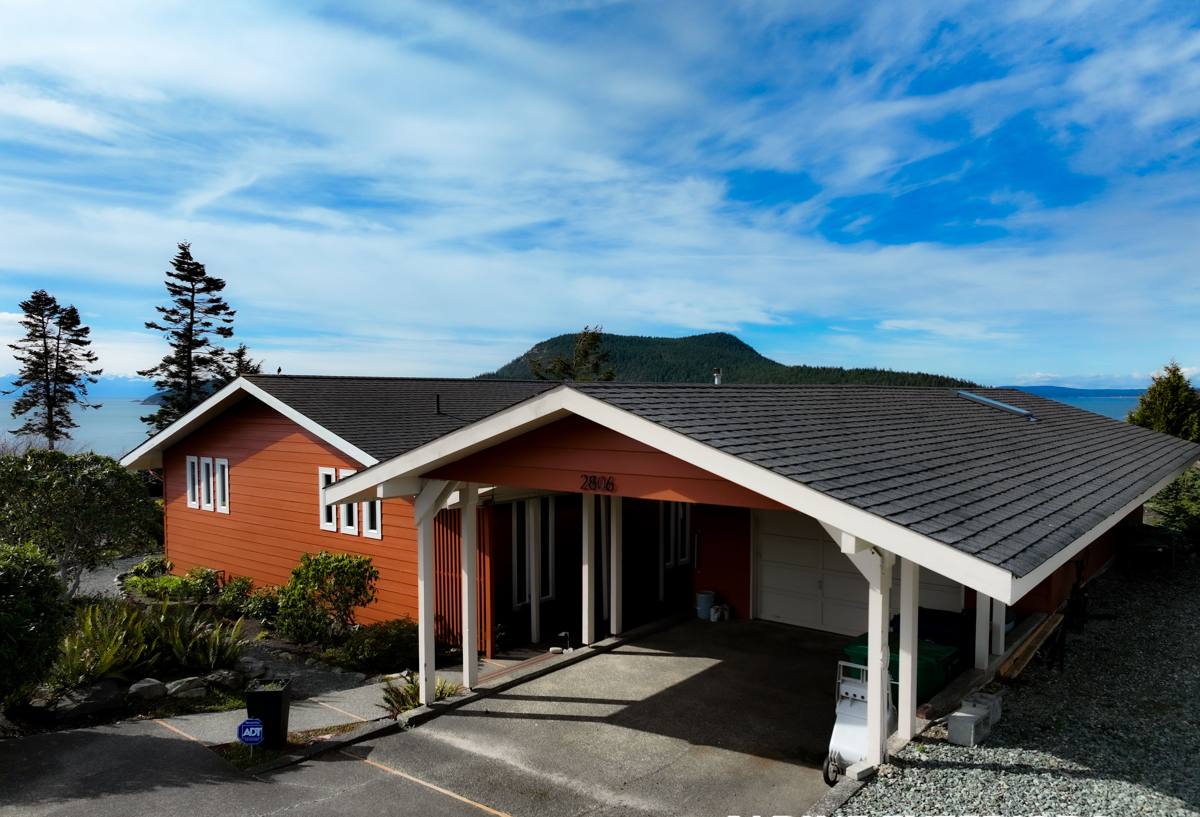
Siding in Custer: Why We Only Install James Hardie
We made a decision a while back to stop installing vinyl siding, LP SmartSide, primed wood siding, and cedar lap siding, and to install James Hardie fiber cement exclusively. That's not a marketing position — it's a response to what we kept seeing on service calls and re-siding jobs throughout Whatcom County, including plenty of homes right here in Custer.
What We Were Seeing
- Vinyl siding that had warped, buckled, or cracked from temperature swings and impact, with no realistic repair option short of full panel replacement
- Primed wood and cedar siding with moisture damage at butt joints, corners, and anywhere paint film had failed and let water in behind the surface
- Engineered wood siding with edge swelling where caulking or paint maintenance had lapsed, which happens easily in a climate that doesn't give homeowners many dry weekends
- Persistent moss and algae staining on horizontal siding that never got direct sun exposure, requiring regular cleaning to keep from looking neglected
None of those products are "bad" — they're commodity materials with real trade-offs, and plenty of homes around the country wear them fine. But in a marine climate with Custer's combination of salt air, shade, and near-constant moisture, those trade-offs show up faster and cost homeowners more over the life of the siding than most people expect when they first install it.
Why James Hardie
James Hardie fiber cement siding is engineered specifically to resist the failure modes we kept running into. It's non-combustible, doesn't support moss or rot the way wood-based products can, and holds its factory-applied ColorPlus finish far longer than field-applied paint on wood or composite siding. Hardie also makes climate-specific HZ product lines, engineered for moisture exposure rather than a one-size-fits-all national spec, which matters in a place like Custer where the exterior envelope is wet more often than it's dry. The warranty is transferable and backed by a large, established manufacturer rather than a regional mill — something worth asking about with any siding product, since not all warranties survive a change of ownership or hold up the same way in practice.
Correct installation matters as much as the product itself. Hardie siding installed with the wrong fastener pattern, insufficient clearance from grade or roof lines, or without proper flashing and house wrap detailing will still have problems, regardless of how good the material is. That's a big part of why we standardized on one product line — it lets our crews install to spec every time instead of relearning installation quirks across five different siding brands.
Roofing in a Moss-Prone Climate
Roofs around Custer take a beating from moss more than from any single storm event. A roof that's shaded by trees or faces north tends to stay damp longer, and moss will establish itself in shingle valleys, along ridge lines, and anywhere debris collects. Left alone, moss lifts shingle tabs, holds water against the roof deck, and shortens the service life of an otherwise sound roof by years.
What Local Roofs Need
- Proper ventilation to reduce trapped moisture in the attic space, which affects both roof deck longevity and moss growth from underneath
- Ice-and-water shield or equivalent underlayment at eaves and valleys, where wind-driven rain and ice dams (on the rare cold snap) put the most stress on a roof system
- Metal flashing detail around chimneys, skylights, and roof-wall intersections that accounts for salt-air corrosion, not just standard-grade fasteners
- Realistic gutter and downspout sizing for the volume of rain this area gets, so water is actually carried away from the roofline and siding instead of overflowing back onto it
We install and repair roofing as part of full exterior work in Custer, and we're generally looking at the roof, gutters, and siding together, since problems in one system usually show up as damage in another.
Windows: Air Sealing and Condensation
Older windows in this part of Whatcom County commonly show two problems: failed seals on double-pane units (visible as fogging or condensation between the panes) and general air leakage around frames that were never properly flashed or insulated when installed. In a climate where indoor-outdoor temperature and humidity differences are constant, poorly sealed windows are a steady source of both energy loss and moisture intrusion into wall cavities.
When we replace windows, we're paying close attention to flashing integration with the surrounding siding — a window opening is one of the most common places for water to find its way behind the exterior cladding, and it's an easy thing to get wrong if it's treated as a standalone swap rather than part of the whole wall assembly.
Decks: Built for Wet, Not Just Sunny Days
A deck in Custer spends more of the year wet than dry, which changes what actually matters in deck material and construction. Standing water on horizontal surfaces, ledger board connections at the house, and any end-grain wood exposure are the places we see the most deterioration on older decks in this area.
| Deck Factor | Why It Matters Here |
|---|---|
| Ledger board flashing | The connection point to the house is the single most common source of hidden rot on Northwest decks |
| Composite vs. wood decking | Composite resists moisture absorption and doesn't need annual sealing, which matters in a climate with few dry maintenance windows |
| Fastener corrosion resistance | Salt-influenced air accelerates corrosion on standard fasteners; coated or stainless hardware lasts longer |
| Drainage under the deck | Poor grading or drainage below a low deck keeps the structure damp longer and invites rot from underneath |
Whether a homeowner wants a full composite rebuild or a wood deck maintained properly, the construction details matter more than the material choice alone — a well-built wood deck with correct flashing will outlast a poorly built composite one.
Cost Factors for Exterior Work in Custer
Every project is different, but a few things consistently move the price on siding, roofing, window, and deck jobs in this area:
| Factor | Impact |
|---|---|
| Home size and complexity | More corners, gables, and roof-wall intersections mean more flashing detail and labor time |
| Existing material condition | Hidden rot or moisture damage found during tear-off adds repair scope before new material goes on |
| Access and site conditions | Tree cover, tight lot lines, or septic system layout can affect equipment access and staging |
| Material selection | Hardie siding lines, roofing product tiers, and composite vs. wood decking all carry different price points |
Why a Local Crew Matters
Exterior work in a climate like this isn't just about installing a product to the manufacturer's minimum spec — it's about knowing where water actually goes on a house once wind, moss, and repeated wet-dry cycles get involved. A crew that works throughout Whatcom County regularly sees which details fail first in this specific climate and builds around them: flashing laps sized for wind-driven rain, fastener choices that account for salt air, and siding clearances that keep material away from persistent ground moisture.
What to Check When Hiring for Exterior Work
- Washington state contractor license and current liability insurance
- Manufacturer certification for the specific siding or roofing product being installed
- A written scope of work that specifies flashing, house wrap, and fastener details — not just "install siding"
- Local references or completed work in the same climate zone, not just general experience
- A clear warranty explanation covering both materials and labor
If you're weighing options for siding, roofing, windows, or a deck project on a home in Custer, we're happy to take a look and talk through what actually makes sense for your house and budget — no pressure, no sales script. Reach out for a free estimate using the form below.