 Blaine Exterior
 Exterior Work Built for Bellingham's Climate
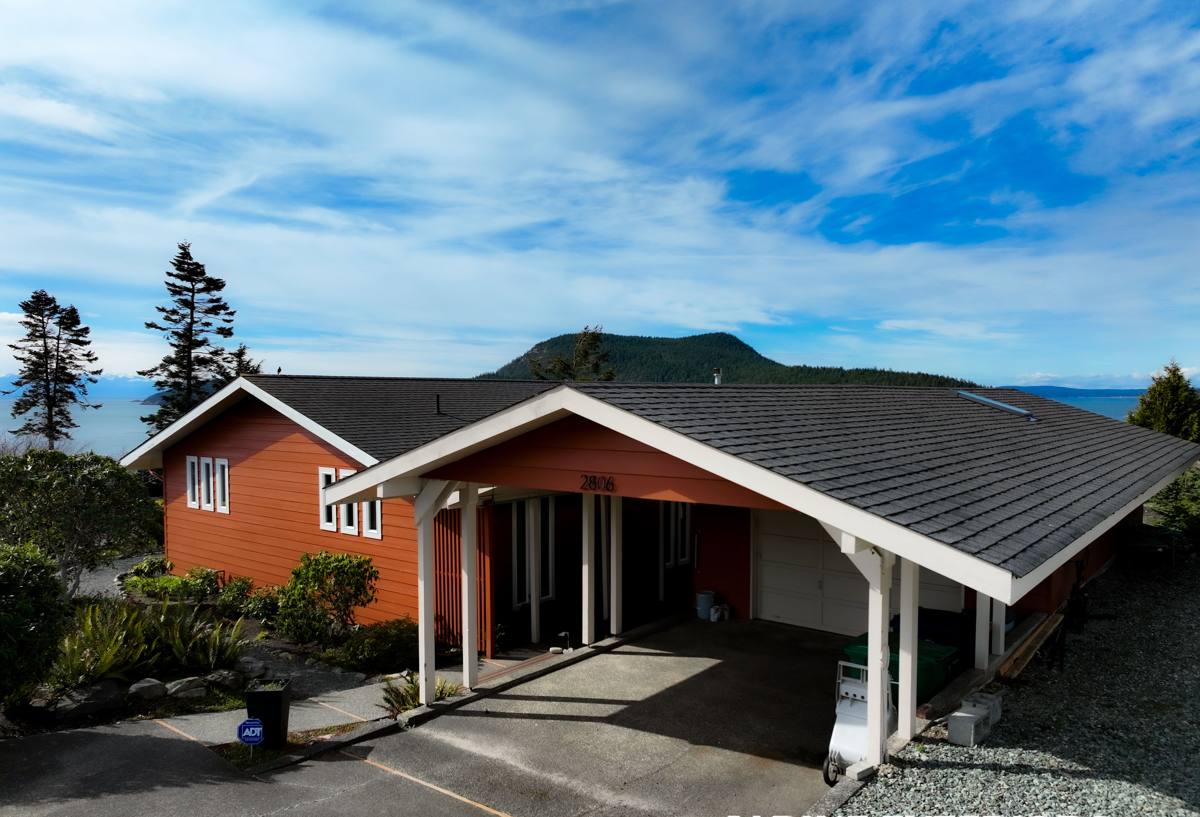
Bellingham sits in a part of Whatcom County where marine weather shapes almost every decision about how a home should be built and maintained. Proximity to the water means salt-laden air moving inland, long stretches of driving rain off the Pacific systems that roll through the Salish Sea corridor, and a shade-and-moisture combination that keeps moss and algae active for much of the year. None of that is unusual for this part of Washington, but it does mean exterior materials and installation details that work fine in a drier climate can fail early here. We work throughout the Bellingham area and see the same patterns show up on house after house: siding that swells at the bottom edge, roofs with moss colonies working into the shingle mat, window trim that stays damp long after a storm passes, and deck ledger boards that never quite dry out between rain events.
A home's exterior is a system, not a collection of separate products. Siding, roofing, windows, and decks all interact with the same moisture and airflow around a house, and a weak point in one usually shows up as damage in another. That's the lens we bring to every Bellingham property we work on.
What Salt Air and Driving Rain Actually Do to a House
Salt Air
Even a few miles inland from Bellingham Bay, airborne salt settles on exterior surfaces and accelerates corrosion of fasteners, flashing, and metal roofing components. Over years, this shows up as rust streaking below nail heads, premature failure of lower-grade hardware, and paint or coatings breaking down faster than their rated lifespan would suggest. It's a slow process, which is exactly why it's easy to underestimate until a homeowner is dealing with staining or a fastener failure that should not have happened for another decade.
Driving Rain
Wind-driven rain off the water doesn't fall straight down — it gets pushed sideways into wall assemblies, under trim, and around window and door openings. Siding systems and flashing details that are only designed for vertical rainfall protection tend to let moisture in at horizontal laps, seams, and penetrations. This is one of the main reasons installation quality matters as much as the material itself: a good product installed with the wrong flashing sequence in this climate will still leak.
Moss and Organic Growth
Whatcom County's combination of moisture, moderate temperatures, and shaded lots (especially under mature evergreens common around Bellingham) creates ideal conditions for moss, algae, and lichen on roofs, siding, and decking. Beyond the cosmetic issue, moss holds moisture against the surface it's growing on far longer than bare material would, which shortens the service life of roofing and wood-based products in particular.
Siding: Why We Only Install James Hardie Fiber Cement
We install James Hardie fiber cement siding exclusively. We don't install vinyl, LP SmartSide, Cemplank, Allura, primed spruce, or cedar, and that's a deliberate standard, not a lack of options. In a marine climate like Bellingham's, siding has to hold up to sustained moisture exposure, resist the kind of organic growth that thrives in shaded, damp conditions, and stay dimensionally stable through repeated wet-dry cycles. Fiber cement is non-combustible and doesn't absorb and swell the way wood-based or engineered wood products can when moisture works past a seam or fastener point.
James Hardie's HZ5 product line is engineered specifically for climates with more moisture exposure, which fits the Pacific Northwest well. The factory-applied ColorPlus finish is baked on under controlled conditions rather than field-painted, which matters in a climate where field-applied paint doesn't always get the cure time it needs between rain events. Hardie also backs its products with a strong, transferable warranty, which carries real weight for homeowners who may sell within the warranty period.
None of this means every other siding product is poorly made. Vinyl is inexpensive and low-maintenance in the sense that it doesn't need painting, but it can warp in temperature swings and doesn't offer the fire resistance or the rigid, factory-finished look that fiber cement does. Wood-based engineered sidings like LP SmartSide perform reasonably well when detailed and maintained correctly, but they're organic material at the core, and organic material in a climate this wet requires more diligence around caulking, painting, and moisture management than most homeowners want to commit to over 20-30 years. We made the call to standardize on one product line so we can install it correctly every time, rather than juggling installation details across five different systems with five different failure modes.
Roofing in a Moss-Prone, Rain-Heavy Climate
Roofing in the Bellingham area has to account for both sustained rain volume and the moss and algae growth that comes with shaded, moist roof surfaces. Proper underlayment, ice-and-water protection at vulnerable areas like valleys and eaves, and correctly lapped flashing at every penetration matter more here than in drier parts of the state. We also pay close attention to attic and roof ventilation, since a roof deck that can't dry out between storms is far more likely to develop rot underneath the roofing material, even if the surface layer still looks intact.
Moss removal and prevention is part of ongoing roof maintenance for most homes in this area, not an occasional chore. Zinc or copper strips near the ridge, keeping gutters and valleys clear of organic debris, and trimming back overhanging branches where practical all help slow regrowth, but they don't replace a roofing system that was installed with good drainage and ventilation in the first place.
Windows: Sealing Out Wind-Driven Moisture
Window failures in this climate are rarely about the glass itself — they're almost always about flashing, sealant, and how the window integrates with the surrounding wall assembly. Wind-driven rain pushes water sideways and upward at window openings in a way that vertical-rain flashing details don't anticipate. When we replace windows, we treat the flashing and integration with the siding as equally important as the window unit itself, because a well-made window installed without proper head flashing or a sloped sill pan will still leak in a Bellingham storm.
Older single-pane or early dual-pane windows common in older Whatcom County homes also tend to run colder on the interior glass surface, which contributes to condensation and, over time, sash and frame moisture problems. Upgrading to modern dual-pane units with better thermal performance addresses both the energy loss and the condensation issue at once.
Decks: Built to Handle Standing Moisture
Decks in this area spend a large part of the year wet, shaded, or both, especially on lots with mature tree cover. Ledger board attachment and flashing at the house connection is one of the most important — and most commonly overlooked — details on any deck, since that's the point where water runoff and structural framing meet. Proper flashing tape, correct fastener spacing, and drainage that keeps water moving off the deck surface rather than pooling around joists all matter more here than in a drier climate. Decking material choice also affects how much moss and mildew maintenance a deck will need year over year; some materials shed moisture and resist organic growth far better than others.
Why a Local Crew Matters
Contractors who work outside marine climates day-to-day sometimes apply flashing and detailing practices that are standard elsewhere but undersized for what Bellingham actually sees in a wet season. A crew that works regularly in Whatcom County knows which details to over-build: extra flashing at horizontal laps, correct ledger board treatment on decks, and roof ventilation sized for sustained moisture rather than occasional rain. That local knowledge is often the difference between an exterior that needs attention again in five years and one that holds up for decades.
What to Check Before Hiring an Exterior Contractor
- Do they carry active Washington state contractor licensing and insurance, and can they show proof without hesitation?
- Do they explain flashing and moisture-management details specific to marine climate conditions, not just the product being installed?
- Do they offer a written scope of work, including underlayment, flashing, and fastener specifications rather than a vague material list?
- Do they stand behind their labor with a written workmanship warranty in addition to the manufacturer's product warranty?
- Can they speak to how their approach differs for a shaded, moisture-heavy lot versus an open, sun-exposed one?
Cost Factors to Expect
Exterior project costs vary based on home size, existing condition, and how much repair or moisture damage is uncovered once old material comes off. The table below outlines the general factors that move pricing on most Bellingham-area projects, without pretending to give a fixed number that wouldn't hold up across different homes.
| Project | Key Cost Drivers | Climate-Specific Considerations |
|---|---|---|
| Siding replacement | Square footage, number of stories, trim complexity, existing wall condition | Fiber cement HZ5 material, added flashing detail at laps and penetrations |
| Roof replacement | Roof size and pitch, number of layers to remove, penetrations and valleys | Upgraded underlayment, ventilation improvements, moss-resistant detailing |
| Window replacement | Number and size of units, frame material, whether structural framing needs repair | Sloped sill pans, enhanced head flashing for wind-driven rain |
| Deck construction or repair | Deck size, height, decking material, railing style | Ledger flashing, joist protection, drainage slope for standing moisture |
How Our Process Works
We start with an on-site inspection to understand the actual condition behind the visible surface — not just what a homeowner can see from the ground, but what's happening at flashing points, behind trim, and around penetrations. From there we put together a written scope that covers material, underlayment or flashing details, and labor, so there's no ambiguity about what's included. For siding specifically, that scope will always be James Hardie fiber cement, because that's the only system we stand behind for the long-term moisture exposure homes in this area deal with. Once work begins, we sequence it so the house isn't left exposed to weather any longer than necessary, which matters more in a climate where a delayed project can mean an unplanned rain event finding its way into open wall or roof sections.
If you're weighing a siding, roofing, window, or deck project on a Bellingham-area home, we're glad to walk the property, point out what we see, and put together a straightforward estimate — no pressure, no obligation. The form below is the easiest way to get that started.