 Blaine Exterior
 Roofing in Semiahmoo Means Building for the Water, Not Just the Weather
Semiahmoo sits on a spit surrounded by water on three sides, right where Semiahmoo Bay meets the Strait of Georgia. That location is what makes the neighborhood beautiful, and it's also what makes roofing here different from a typical Whatcom County job a few miles inland. Homes on the spit and along the shoreline take a steady diet of salt-laden air, wind-driven rain that hits roofs sideways instead of straight down, and a moss season that can run eight or nine months out of the year in the shade pockets. A roof that would hold up fine in a drier, more sheltered part of Blaine can wear out early out here if it wasn't specified and installed with those conditions in mind.
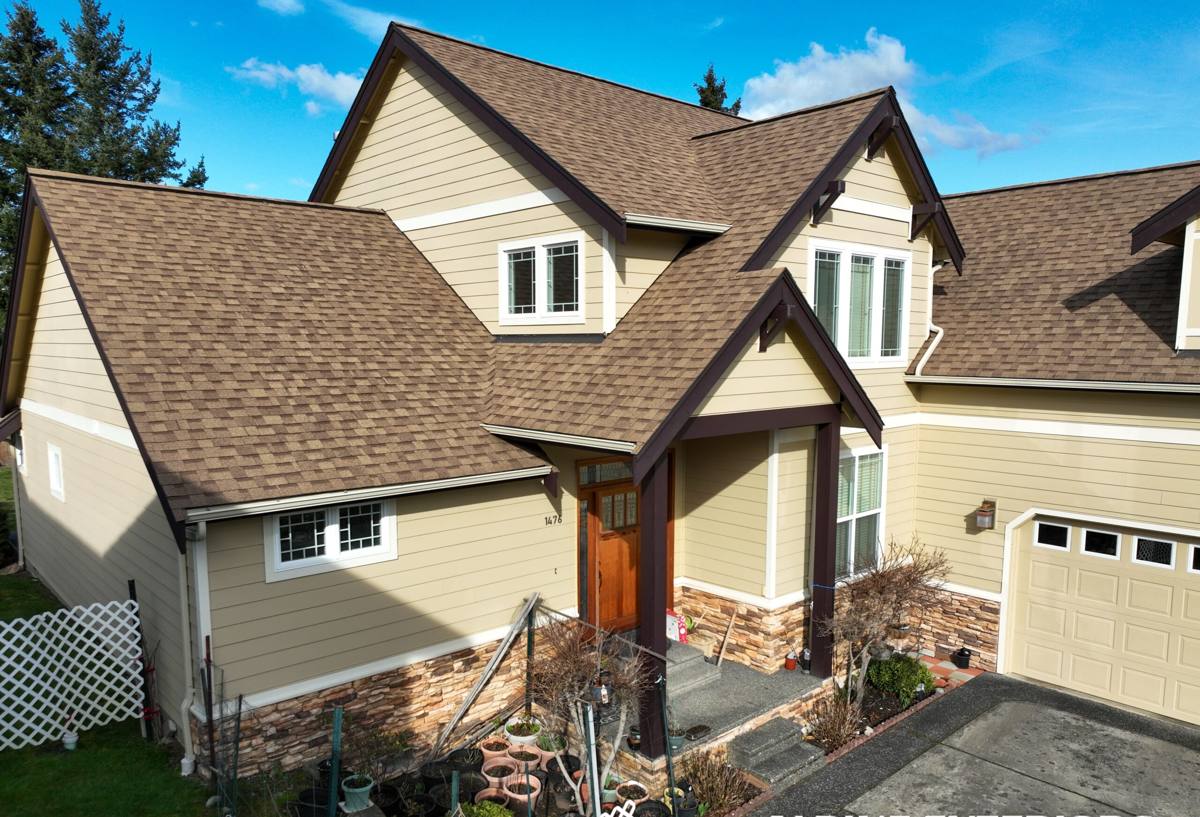
This page is about one job in one place: putting a new roof on a Semiahmoo home. Not a general overview of roofing services, not a county-wide climate lecture — just what actually matters when the tear-off crew and the material choices have to account for salt exposure, sustained coastal wind, and moisture that doesn't let up.
What Salt Air Actually Does to a Roof
Salt air is corrosive to exposed metal, full stop. On a Semiahmoo roof, that shows up first in the small metal components — nails, flashing fasteners, drip edge, valley metal, and any exposed screws on vents or mounts. Standard galvanized fasteners can start showing surface corrosion years before they'd fail in a non-coastal setting, and once a fastener corrodes it loses holding power, which is exactly the wrong place to lose strength on a roof that's also fighting wind uplift.
We treat coastal fastener and flashing selection as a non-negotiable part of any Semiahmoo re-roof, not an upgrade option. That means:
- Stainless steel or coated fasteners rated for coastal/marine exposure, not standard interior-grade galvanized
- Flashing and drip edge in materials that resist salt corrosion over the life of the roof, not just the first few winters
- Careful attention to any dissimilar-metal contact points, since certain metal combinations corrode faster near saltwater
- Sealed, not just crimped, connections at vents, pipe boots, and other roof penetrations
None of this is exotic. It's a matter of specifying the right hardware up front instead of using whatever's standard stock, because on a shoreline roof the difference shows up as a leak five years sooner.
Driving Rain Changes How Water Has to Be Managed
Most of Whatcom County gets plenty of rain, but Semiahmoo's exposure means rain often arrives with real wind behind it — pushed sideways under eaves, into vents, and up under shingle tabs and flashing edges that would stay dry in a calmer setting. A new roof here has to be built assuming water will try to get in from angles a standard installation doesn't fully guard against.
In practice, that means we pay extra attention to a few details that are easy to shortcut on a quieter site:
Underlayment as a real second layer of defense
We treat underlayment as a genuine backup water barrier, not a formality between the deck and the shingles. In driving-rain conditions, wind-driven water can work past the primary roofing material at edges, valleys, and penetrations — a synthetic underlayment with properly lapped and sealed seams is what keeps that moisture from reaching the deck.
Ice-and-water shield in the vulnerable zones
Even without heavy snow load, Semiahmoo gets enough cold, wet weather that self-adhering waterproof membrane belongs at eaves, valleys, and around every penetration — the spots where wind-driven rain is most likely to find a way in.
Wider, properly lapped flashing at every transition
Chimneys, skylights, dormers, and roof-to-wall transitions all need flashing that's sized and lapped for sideways rain, not just vertical runoff. Undersized step flashing is one of the most common causes of slow leaks we find when we're called out to a coastal home for water damage.
Moss: The Slow, Quiet Roof Killer
Semiahmoo's mix of shade, moisture, and mild temperatures is close to ideal for moss growth, and moss does real damage over time — it holds water against the roofing surface, lifts shingle edges as it grows, and works its way under flashing. A roof that looks fine from the ground can already have moss colonies established at the north-facing slopes, valleys, and anywhere tree cover keeps a section shaded and damp longer than the rest of the roof.
A new roof installation is the right time to build in moss resistance rather than treat it as an afterthought:
- Zinc or copper strips at the ridge, positioned so rain washes trace metal down the roof slope and inhibits regrowth
- Material choices that shed water quickly and don't hold moisture against the surface
- Attention to any design elements — valleys, low-slope sections, areas under trees — that are naturally more moss-prone, so those areas get extra scrutiny during installation
We're straightforward with Semiahmoo homeowners about this: no roofing material is moss-proof if it sits shaded and damp long enough. What a correct installation does is stack the odds in your favor and make ongoing moss control (a rinse and light treatment every year or two) much easier than fighting an already-degraded roof.
What a Correct New Roof Installation Involves
A new roof isn't just stripping the old material and nailing down new shingles. On a Semiahmoo home, we walk through the same core process every time:
- Tear-off and deck inspection. We remove the existing roofing down to the deck and inspect for soft spots, rot, or damage — especially around chimneys, vents, and any area where past leaks may have gone unnoticed. Bad decking gets replaced before anything new goes down; roofing over a compromised deck just hides the problem.
- Ventilation check. Proper intake and exhaust ventilation keeps moisture from building up in the attic, which matters even more in a consistently damp coastal climate. We confirm the existing ventilation is adequate or correct it as part of the job.
- Underlayment and waterproofing membrane. Full synthetic underlayment plus ice-and-water shield at eaves, valleys, and penetrations, as described above.
- Flashing. New flashing at every wall transition, chimney, skylight, and penetration — sized and installed for wind-driven rain, using corrosion-resistant materials and fasteners.
- Roofing material installation. Installed to manufacturer spec for wind exposure, which on a site like Semiahmoo often means following the higher wind-rated installation pattern rather than the minimum standard method.
- Ridge, vents, and moss-prevention details. Ridge cap, ventilation components, and zinc or copper strips installed as part of the finished roof, not bolted on afterward.
- Final walkthrough. We review the completed roof with the homeowner, including what maintenance to expect given the site's exposure.
Cost Factors Specific to a Semiahmoo Roof
Every roof is priced on its own specifics — size, pitch, current condition, and material choice — so we won't quote numbers here that don't apply to your home. What we can tell you is which factors tend to move the price on a coastal Semiahmoo job compared to a similar roof further inland:
| Factor | Why it affects a Semiahmoo job |
|---|---|
| Fastener and flashing grade | Coastal-rated stainless or coated hardware costs more than standard galvanized, but it's not optional this close to the water |
| Waterproof membrane coverage | Extending ice-and-water shield beyond code minimum at eaves and valleys adds material cost but reduces driving-rain leak risk |
| Wind-rated installation method | Higher-wind installation patterns (tighter nailing schedules, sealed tabs) can take more labor time than a standard install |
| Access and site conditions | Shoreline lots, steep driveways, or limited staging space can affect equipment access and labor time |
| Existing deck condition | Homes with a history of slow leaks sometimes need deck repair discovered only after tear-off |
We walk every roof and give a written estimate before any work starts, so you know exactly what's driving the number for your specific home.
Why It Matters That We Already Work in Semiahmoo
A roofing crew that mostly works inland jobs isn't wrong about roofing in general — but they may not think to spec coastal-grade fasteners by default, or know which slopes on a Semiahmoo lot tend to hold moss because of prevailing shade and wind patterns. That local pattern recognition only comes from doing the work here repeatedly.
Blaine Exterior Co is based in Blaine and works Whatcom County's coastal properties regularly, including Semiahmoo. That means we're not guessing at what the salt air, the wind direction off the water, or the shaded valleys on a spit lot will do to a roof over ten or twenty years — we've seen it, and we build for it from the first day of the install rather than fixing it after a homeowner calls about a leak.
Signs a Semiahmoo Home May Need a New Roof Rather Than a Repair
- Granule loss showing up in gutters or at downspouts, especially after wind events
- Curling, cracking, or lifted shingle edges, particularly on the sides that face prevailing wind and rain
- Visible moss or algae staining across multiple sections, not just one shaded corner
- Rusted or corroded flashing, fasteners, or vent boots
- Interior water stains, especially near chimneys, skylights, or where walls meet the roofline
- A roof that's approaching or past the expected service life of its material, especially if it was installed without coastal-grade hardware
Any one of these on its own might be a repair. Several together, or a roof already past its expected lifespan, usually means it's time to talk about full replacement rather than patching a coastal roof that's fighting a losing battle against salt and moisture.
Get a Straight Answer for Your Semiahmoo Home
If you're weighing a repair against a full replacement, or just want an honest read on how much life is left in your current roof, we're glad to take a look. We'll walk the roof, explain what we find in plain terms, and give you a written estimate with no pressure to commit on the spot. Reach out using the form below to schedule a free estimate for your Semiahmoo property.