 Blaine Exterior
 Exteriors Built for Birch Point's Coastline
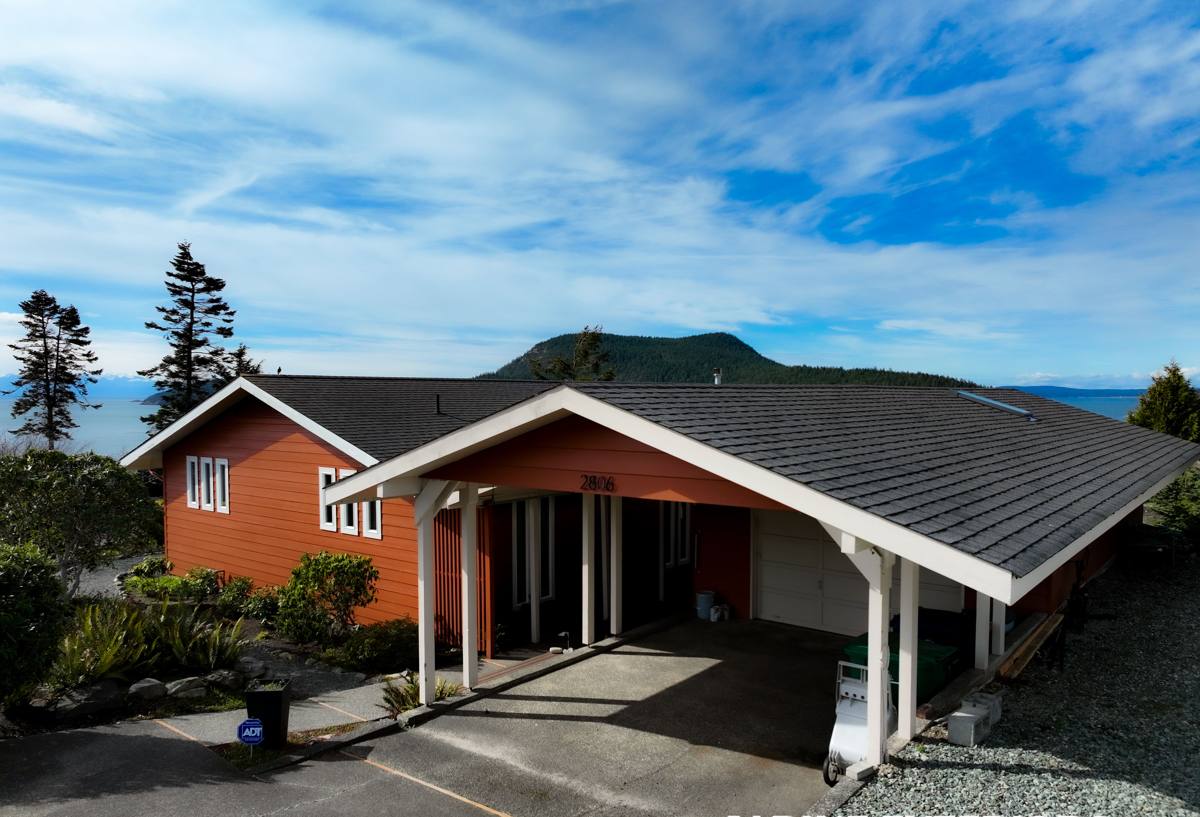
Birch Point sits close enough to the water that its homes live with a different set of conditions than houses ten miles inland. Salt-laden air, wind-driven rain coming straight off the Strait, and a moss season that seems to stretch longer every year all work on a house's exterior in ways that are easy to underestimate until you're the one repainting trim every three years or scraping algae off a north-facing wall every spring. We work throughout Blaine and the rest of Whatcom County, and Birch Point is one of the areas where we spend the most time explaining to homeowners why the materials and methods that work fine in a dry inland climate don't hold up the same way here.
This page covers what we see on Birch Point exteriors, how our siding, roofing, window, and deck work is adapted for this environment, and why we think a crew that actually understands marine exposure matters more here than almost anywhere else in the county.
What the Marine Environment Does to a House
Homes near the water take on stress that isn't always visible until it's already caused damage. A few patterns show up again and again on Birch Point properties:
Salt Air and Corrosion
Airborne salt doesn't just affect metal railings and fasteners — it accelerates the breakdown of paint films, caulking, and lower-quality siding materials. Fasteners and flashing that aren't rated for coastal exposure can start showing corrosion years before they would inland, and once flashing fails, water finds its way behind the cladding.
Driving, Wind-Driven Rain
Rain in Whatcom County isn't usually the problem on its own — it's rain pushed sideways by wind off the water. Wind-driven rain gets forced into laps, seams, and joints that would stay dry in a calmer climate. That means water-resistive barriers, flashing details, and siding lap coverage all matter more here than they would on a sheltered inland lot.
Moss, Algae, and a Long Wet Season
Shaded, north- and west-facing walls in this area can stay damp for months at a stretch. That extended dampness is exactly what moss and algae need to take hold on roofing and siding surfaces. Beyond the cosmetic issue, sustained moisture against a wall assembly is what eventually leads to rot in the substrate underneath, especially where a house's siding wasn't designed to shed water and dry out between rain events.
Siding: Why We Only Install James Hardie
Siding is where these climate factors show up first and most visibly. We've made a deliberate decision as a company to install only James Hardie fiber cement siding — we don't install vinyl, LP SmartSide, Cemplank, Allura, primed spruce, or cedar. That's not a marketing angle; it's a standard we hold because of what we've seen happen to other materials in exactly this kind of coastal, high-moisture environment.
Vinyl siding can warp and become brittle with age and UV exposure, and its seams and J-channels give wind-driven rain more opportunities to work its way behind the cladding over time. Engineered wood products like LP SmartSide perform well in many climates but rely heavily on intact factory coatings and correct field sealing at every cut edge — in a marine environment with near-constant moisture cycling, any gap in that protection becomes a vulnerability. Cedar and primed spruce are natural wood products that need real, ongoing maintenance — repainting, resealing, and moisture management — to hold up anywhere, and a long wet season with limited drying time is about the hardest place to keep on top of that.
James Hardie fiber cement is engineered specifically to resist the things that break down other sidings: it's non-combustible, dimensionally stable, and resistant to moisture-driven swelling and rot in a way wood-based products simply can't match. Hardie's ColorPlus factory-applied finish is baked on in a controlled setting rather than field-painted, which gives it much better long-term color and adhesion performance than site-applied paint, especially in a climate where paint doesn't get much of a chance to fully cure between rain events. Hardie also makes climate-engineered HZ product lines, and the backing and warranty structure reflect a company that has actually engineered for regions like ours.
None of this means Hardie is maintenance-free — it still needs correct installation, proper caulking at trim and penetrations, and periodic inspection like anything on the outside of a house. But it starts from a material that's already suited to salt air and sustained moisture, rather than one that's fighting those conditions from day one.
How We Install Hardie for This Exposure
- Correct water-resistive barrier and flashing details behind every siding plane, not just at obvious penetrations
- Proper lap and clearance spacing so water sheds instead of wicking into seams
- Stainless or coastal-rated fasteners where exposure calls for it
- Factory-cut and factory-primed edges kept intact wherever possible, with field cuts sealed per manufacturer spec
- Trim and caulking details built to move with the building instead of cracking
Roofing for Wind, Rain, and Moss
A roof in Birch Point has to handle two separate jobs: shedding wind-driven rain without letting it back up under shingles or flashing, and resisting the kind of sustained dampness that lets moss and algae establish themselves. We pay particular attention to flashing at valleys, chimneys, and roof-to-wall transitions, since those are the spots where driving rain most often finds a way in. We'll also talk through algae-resistant roofing options and ventilation, since a well-ventilated attic dries out faster and gives moss less of a foothold than a roof deck that stays cold and damp.
Windows That Actually Seal Against the Weather
Older or poorly installed windows are one of the most common sources of hidden water intrusion we find on coastal homes. It's rarely the window unit itself that fails first — it's the flashing and sealant around it. When we replace windows, we treat the flashing and integration with the surrounding wall assembly as seriously as the window itself, because a well-built window installed without proper flashing will still leak eventually, especially with rain being pushed sideways by wind off the water. We also talk with homeowners about glass and frame options that hold up to salt air without pitting or discoloring prematurely.
Decks Built to Handle Standing Moisture
Decks near the water deal with the same moss and moisture pressure as siding and roofing, plus the added stress of standing water on horizontal surfaces and ground-level moisture wicking up through posts and footings. We build and repair decks with attention to drainage, ledger flashing, and fastener corrosion resistance, since a deck that traps water against its structure will show rot well before one that's built to shed and dry.
Comparing Exterior Materials for This Climate
| Material | Moisture/Rot Resistance | Maintenance in Coastal Climate | Our Position |
|---|---|---|---|
| James Hardie fiber cement | High — non-combustible, dimensionally stable | Periodic inspection and caulk maintenance | What we install |
| Vinyl siding | Seams and J-channels can let wind-driven rain behind cladding | Low upfront, but can warp/discolor over time | Not installed by our crew |
| LP SmartSide / engineered wood | Depends heavily on intact coatings and sealed cut edges | Requires consistent field sealing to perform | Not installed by our crew |
| Cedar / primed spruce | Natural wood, needs active moisture management | Regular repainting/resealing, higher in a wet climate | Not installed by our crew |
Signs a Birch Point Exterior Needs Attention
Because this climate works on a house continuously, it's worth knowing what to watch for before small issues turn into structural repairs. A few things we'd want a homeowner to call about:
- Green or black growth on siding or roofing that keeps coming back after cleaning
- Soft or discolored siding, especially near ground level or under windows
- Peeling or bubbling paint, particularly on north- or west-facing walls
- Visible rust streaking from fasteners or flashing
- Drafts, fogging, or water staining around window frames
- Deck boards that stay damp long after rain has stopped, or soft spots near ledgers and posts
Why a Local Crew Matters Here
A lot of exterior problems in this area aren't caused by bad materials or bad workmanship in a general sense — they're caused by details that would be fine in a different climate but aren't sufficient for wind-driven rain and salt air. Flashing laps, fastener choice, caulk selection, and even where a house's most exposed walls face all matter more here than they would twenty miles inland. A crew that works Blaine and the surrounding Whatcom County coastline regularly has already seen where these details go wrong on other Birch Point-area homes, and builds accordingly from the start rather than learning it through a callback.
What Working With Us Looks Like
We start with a walk-through of the exterior — siding, roofing, windows, and any deck structures — to see where moisture, wind exposure, and existing wear are already showing up. From there we'll give you a straightforward assessment of what's holding up fine, what's worth watching, and what needs to be addressed now versus down the road. If siding replacement is part of the conversation, we'll explain why we recommend James Hardie for this specific environment rather than just listing it as an option among several.
If you're weighing a full exterior renovation versus targeted repairs, we'll walk through both, including realistic timelines and how weather windows in this climate affect scheduling. We don't push a bigger project than a home actually needs.
If you own a home in Birch Point and want a straightforward, no-pressure look at your siding, roofing, windows, or deck, we're glad to come take a look and give you an honest assessment. Use the form below to request a free estimate.