 Blaine Exterior
 Roof Replacement Built for Point Roberts
Point Roberts sits on a small peninsula that's technically part of Whatcom County but physically cut off from the rest of the U.S. mainland, connected by land only through Canada. That geography shapes more than commute times and grocery runs. It puts most homes here on or near open water, exposed to the same salt air, driving rain, and long moss season that define the whole Whatcom County coastline, but often with less tree cover and more direct wind than towns set further back from the shoreline. A roof out here isn't fighting the weather in theory. It's absorbing it directly, on most sides of the house, most of the year.
This page is about one thing: replacing a roof on a Point Roberts home the right way, given what this specific stretch of coastline does to roofing materials over time. We work out of Blaine and cover Point Roberts regularly, so this isn't a generic roofing overview with the town name swapped in — it's what we've learned putting new roofs on houses that sit exposed to Boundary Bay and the Strait of Georgia.
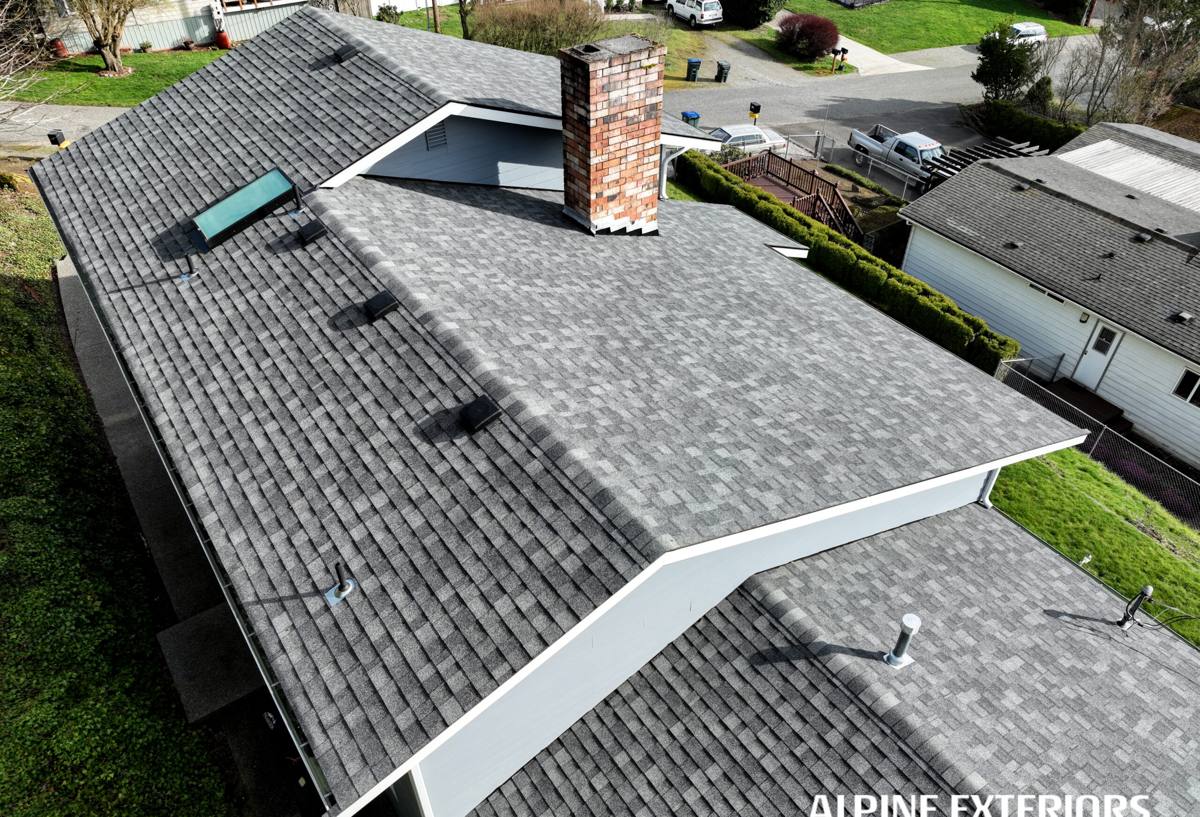
What Point Roberts' Climate Does to a Roof
Salt Air on an Exposed Peninsula
Being surrounded on three sides by water means salt-laden air isn't an occasional condition here — it's a constant one. Salt speeds up corrosion on fasteners, flashing, and any exposed metal, and it breaks down lower-grade coatings and sealants faster than they'd wear in a drier, more inland climate. On a peninsula this exposed, the difference between corrosion-resistant hardware and standard hardware shows up years earlier than it would on a sheltered inland roof.
Driving Rain Off the Water
Storms coming off the Strait of Georgia and Boundary Bay don't arrive as simple vertical rainfall. Wind pushes rain sideways and forces it up under shingle edges, into valleys, and against flashing details that a calmer climate would never test. Point Roberts' open exposure means this wind-driven pattern hits harder and more often than it does on more sheltered lots elsewhere in Whatcom County, and it's exactly the kind of moisture load that finds any weak point in an underlayment or flashing detail.
A Long Moss Season
Mild temperatures combined with near-constant moisture give moss a long growing season on shaded or north-facing roof planes, and that season can run for most of the year here. Moss holds moisture against the roof surface long after a storm passes, which works against the shingles from above while also slowing how fast the roof deck can dry out underneath.
Signs a Point Roberts Roof Needs Replacement, Not Just Repair
Not every roofing problem calls for a full replacement, but on an exposed peninsula, small issues tend to compound faster than they would in a milder climate. These are the signs worth taking seriously:
- Shingles that are curling, cupping, or shedding granules across large sections of the roof, not just one isolated spot
- Soft or spongy decking felt underfoot in the attic, or daylight visible through the roof boards
- Rust staining around flashing, vents, or fasteners, especially on roof planes facing open water
- Heavy, persistent moss coverage that keeps returning after cleaning
- Multiple past repairs in different spots, suggesting the underlayment and deck are wearing out broadly rather than failing at one point
- A roof approaching or past the expected lifespan of its shingle grade, especially if the original install predates current underlayment and flashing standards
A roof with one or two of these signs might still be a repair. A roof with several of them, especially soft decking or widespread granule loss, is usually past the point where patching makes sense.
Choosing the Right Roofing System for a Point Roberts Home
Most homes on the peninsula are well served by asphalt shingle roofing, but the grade and detailing matter more here than they would somewhere more sheltered. The table below lays out the practical tradeoffs for this specific exposure.
| Roofing Option | Typical Lifespan | Fit for Point Roberts' Exposure |
|---|---|---|
| 3-Tab Asphalt Shingles | 15-20 years | Lowest upfront cost, but a lighter build and lower wind rating make them a weak match for open, unsheltered lots |
| Architectural (Laminated) Shingles | 25-30 years | Heavier construction and stronger wind resistance; the practical standard for most homes on the peninsula |
| Premium/Algae-Resistant Shingles | 30+ years | Worth the upgrade on shaded, moss-prone, or heavily water-exposed roof planes |
| Standing Seam Metal | 40-50+ years | Strong option for homes wanting the longest service life against salt air and driving rain, at a higher upfront cost |
The right choice comes down to how much of the roof faces open water, how much shade it gets, and how long you plan to stay in the home. We'll walk the roof with you and talk through which option actually fits your house rather than defaulting to whatever's easiest to sell.
What a Correct Roof Replacement Involves Out Here
A roof replacement is a system, not a single product. On an exposed peninsula like Point Roberts, skipping or shortcutting any one layer of that system shows up faster than it would somewhere calmer.
Full Tear-Off and Deck Inspection
We strip the old roofing down to the deck rather than layering new shingles over old ones. That's the only way to find soft spots, rot, or moisture damage that's been developing quietly underneath, which is common on roofs that have been absorbing wind-driven rain for years.
Underlayment Rated for Wind-Driven Rain
Synthetic or self-adhered underlayment gives the deck a real secondary water barrier, which matters directly here since rain routinely gets forced under shingle edges instead of running straight off. Ice-and-water shield at eaves, valleys, and other vulnerable transitions adds another layer of protection at the spots most likely to leak first.
Flashing at Valleys, Vents, and Wall Transitions
Most roof leaks on this stretch of coastline don't start in the open field of shingles — they start at flashing. Valleys, vent penetrations, and any place the roof meets a wall need flashing that's properly lapped and integrated with the underlayment, not caulked over as an afterthought.
Corrosion-Resistant Fasteners
Given the constant salt exposure, fastener quality isn't a place to save a few dollars. Standard-grade fasteners corrode faster here, and a corroded fastener loses holding power well before it becomes visible from the ground.
Balanced Ventilation
Proper intake and exhaust ventilation keeps the underside of the roof deck dry year-round, which extends the life of the shingles and reduces the moisture that feeds moss growth from below. A roof can look fine from the street and still be losing years of service life to poor attic airflow nobody's checked.
Cost Factors for a Point Roberts Roof Replacement
Bids on the same roof can vary widely, and the difference usually comes down to real scope rather than one contractor padding a number. Here's what actually drives the cost:
| Factor | What It Affects |
|---|---|
| Roof size and pitch | Total material needed and labor time on site |
| Tear-off vs. layover | Whether hidden deck damage gets found and repaired before new roofing goes on |
| Shingle or material grade | Expected lifespan and wind resistance for this exposed setting |
| Underlayment type | How well the roof resists wind-driven rain forced under shingle edges |
| Flashing and ventilation scope | Long-term leak resistance and moisture control |
| Access and site logistics | Staging, material delivery, and crew travel given the peninsula's location |
That last line matters more here than in most towns. Getting crews, equipment, and materials to a Point Roberts job means planning around the border crossing, and a contractor who doesn't already build that into their scheduling can end up costing you time, not just money.
How Our Process Works
- In-person inspection: We walk the roof and attic ourselves and document what we actually find before writing anything up.
- Written, itemized estimate: You get a clear breakdown covering tear-off, underlayment, flashing, ventilation, and material selection, not a single lump-sum number.
- Scheduling around the border and the weather: We plan crew and material logistics for Point Roberts in advance, and we build in reasonable flexibility for the region's wetter stretches.
- Tear-off and deck repair: Old roofing comes off completely, and any deck damage gets addressed before new roofing goes down.
- Underlayment, flashing, and roofing installation: Each layer goes on to manufacturer specification, with extra attention at valleys, vents, and wall transitions.
- Final walkthrough and cleanup: We review the finished roof with you and do a full site and magnetic nail sweep before calling the job done.
Why Hiring a Crew That Already Works Point Roberts Matters
Point Roberts' location adds a layer most roofing jobs don't have to deal with: every crew, every delivery of shingles and underlayment, and every piece of equipment has to cross the border to get there. A contractor unfamiliar with that reality can turn a straightforward roof replacement into a scheduling headache, with delays that have nothing to do with the actual roofing work. We already build that logistics planning into how we schedule and staff Point Roberts jobs, because we work out here regularly, not as a one-off trip.
That regular presence also means we've seen firsthand how salt air corrodes underspecified hardware, how wind-driven rain finds gaps in a rushed flashing job, and which roof orientations on the peninsula hold moss longest through the wet months. Those are the kind of small, practical decisions that separate a roof built to last out here from one that's just built to pass inspection.
A Practical Checklist Before You Choose a Roofer for Point Roberts
- Do they perform a full tear-off with deck inspection, not just a layover?
- Does the estimate specify shingle grade and underlayment type, not just "new roof"?
- Is flashing work at valleys, vents, and wall transitions explicitly written into the bid?
- Do they have a real plan for getting crew and materials across the border on schedule?
- Do they carry current Washington contractor licensing, liability insurance, and workers' compensation?
- Does the bid clearly separate the manufacturer's material warranty from the contractor's own workmanship warranty?
Get a Free, No-Pressure Estimate
If your Point Roberts roof is showing its age or you just want an honest read on where it stands, we're glad to come take a look. Reach out using the form below to schedule a free estimate — no pressure, no upsell script, just a straightforward assessment from a crew that already works this stretch of the coast.