 Blaine Exterior
 Point Roberts Is a Different Kind of Job Site
Point Roberts sits on its own peninsula, exposed on multiple sides to open water off Boundary Bay and the Strait of Georgia. That exposure means homes here take a steadier beating from wind-driven rain and salt-laden air than most properties just a few miles inland in Blaine or the rest of Whatcom County. Add in the tall evergreen cover that shades many lots for much of the year, and you get long stretches of damp, low-sun conditions that are ideal for moss and algae growth on siding, trim, and window frames.
None of this is unusual for coastal Pacific Northwest construction, but it does mean windows here age differently than windows in drier, more sheltered areas. A replacement job that ignores salt exposure, wind load, and moss-prone shade isn't doing the home any favors, even if it looks fine on installation day.
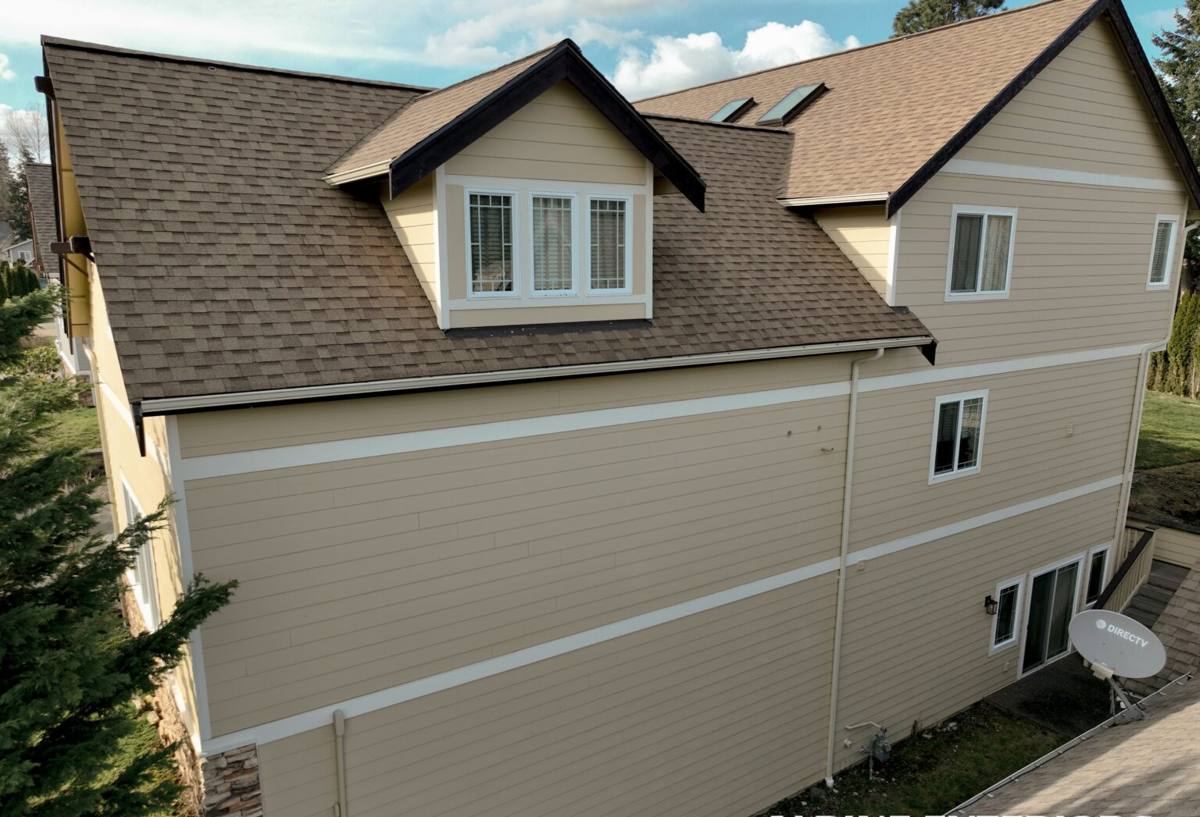
How Salt Air, Rain, and Moss Wear Down Older Windows
If your windows are older than 15-20 years, or if the home has always been exposed to marine air, you're likely to see some combination of the following:
- Corrosion or pitting on aluminum frames, hinges, and locking hardware
- Fogging or a hazy film between the panes of double-pane units, meaning the seal has failed and the gas fill has escaped
- Soft or discolored wood at the sill and lower corners, especially on north- or shade-facing walls
- Moss or dark algae staining collecting in frame corners and along the bottom rail
- Cracked, shrunken, or missing caulking around the perimeter
- Noticeable drafts or a cold spot near the window even with it fully closed
Any one of these on its own might just call for maintenance. Several at once, especially fogged glass combined with soft wood or corroded hardware, usually means the window has reached the end of its useful life and is worth replacing rather than patching.
What a Correct Window Replacement Actually Involves
Swapping in a new window is the easy part. Getting the water management and structural integration right is what actually determines how the window performs over the next 20+ years in this environment.
Removal and Inspection
Once the old unit is out, we check the rough opening for hidden rot, moisture staining, or compromised sheathing before anything new goes in. In a climate this wet, it's common to find some degree of moisture damage behind an old window that looked fine from the outside. This is the point where it gets caught and repaired, not sealed over.
Flashing and Water Management
Every new window gets integrated with proper sill pan flashing and window flashing tape that ties into the home's weather-resistive barrier, so any water that gets past the exterior seal drains back out rather than soaking into framing. This step matters more here than in drier parts of the state, because the volume and frequency of driving rain gives water more chances to find a way in.
Installation and Sealing
Fasteners, shims, and sealants are chosen with salt exposure and wind load in mind, not just whatever is cheapest or fastest to apply. A window that's plumb, level, and square, with the right sealant at the right joints, resists wind-driven rain far better than one that's simply screwed into the opening and caulked around the edge.
Choosing the Right Frame Material for This Climate
Frame material has a big effect on how a window holds up to salt air and moisture over time. There's no single "best" choice for every home, but here's how the common options compare for a property like yours:
| Frame Material | Salt/Moisture Resistance | Maintenance Needs | Notes for This Area |
|---|---|---|---|
| Vinyl | Good — won't corrode or rot | Low; occasional cleaning | Popular, budget-friendly choice for coastal exposure |
| Fiberglass | Very good — dimensionally stable, resists warping | Low | Handles temperature swings and wind load well; higher upfront cost |
| Aluminum | Fair — prone to pitting/corrosion near salt air over time | Moderate; hardware needs monitoring | We recommend it selectively, mainly for specific architectural needs |
| Wood / Wood-clad | Fair to good depending on cladding | Higher; exposed wood needs regular upkeep | Best suited to sheltered elevations, not full marine exposure |
For most Point Roberts homes, vinyl or fiberglass frames end up being the practical choice because they don't corrode and hold up well to sustained damp conditions. Where a home has wood-clad windows the owner wants to keep for appearance, we're upfront about the added maintenance that comes with that choice in this climate rather than glossing over it.
Glass and Glazing Choices That Matter Here
The glass package matters as much as the frame. A few things worth understanding before you choose:
Dual-pane vs. triple-pane: Dual-pane with a quality Low-E coating and argon fill covers most homes' needs and keeps costs reasonable. Triple-pane adds meaningful benefit mainly where a home faces sustained wind exposure or the owner wants maximum sound dampening from a busier road or waterside wind noise.
Low-E coatings: A good Low-E coating helps manage heat loss in winter and solar heat gain in summer. In a marine climate with more overcast days than sunny ones, the winter heat-retention side of that equation tends to matter more here than solar control.
Condensation resistance: Homes in shaded, damp settings are more prone to interior condensation on glass during cold snaps. Proper glazing selection and correct installation (including sealed, well-flashed frames) reduce this, though interior humidity levels and ventilation play a role too.
Our Process for Point Roberts Homeowners
Assessment and Measurement
We start with an on-site walkthrough of every window being considered, checking frame condition, seal integrity, sill condition, and how each opening has held up to its specific exposure (a shaded north wall behaves very differently than a wall facing open water).
Material Sourcing and Scheduling
Because Point Roberts is only reachable by land through Canada, we plan material deliveries and crew scheduling as a single coordinated trip rather than several piecemeal visits. That means confirming exact measurements and order specs up front, so we're not making a second border crossing to fix an avoidable ordering mistake.
Installation Day
Old units come out, openings get inspected and repaired as needed, flashing goes in correctly, and new windows are set plumb, level, and sealed. We work room by room to keep the home weather-tight at every stage rather than leaving multiple openings open at once in an area where rain can move in quickly.
Final Inspection and Cleanup
Every window gets checked for smooth operation, a solid seal, and clean exterior sealant lines before we consider the job finished. Debris and old units are hauled off site.
Why Hiring a Crew That Already Works Point Roberts Matters
Point Roberts' geography creates practical challenges that a contractor based elsewhere in Whatcom County may not be set up to handle well. The community is a U.S. exclave, accessible by land only through Canada, which means every trip a crew or material delivery makes involves a border crossing. A contractor unfamiliar with that reality can end up scheduling multiple avoidable trips, which shows up as delays or added cost passed on to the homeowner.
There's also the matter of understanding the specific exposure conditions on this peninsula. A crew that primarily works sheltered, inland properties may default to standard practices that don't account for the added wind load and salt exposure a Point Roberts home actually faces. Working here regularly means we plan trips efficiently, understand local permitting and inspection expectations, and know which materials and installation details actually hold up on this particular stretch of coastline, rather than treating it like any other job in the county.
Maintaining Your New Windows Through Moss Season
A correctly installed window still benefits from some seasonal attention in this climate. A few habits go a long way:
- Rinse frames and sills periodically to clear salt residue and organic buildup before it takes hold
- Keep gutters and nearby foliage trimmed back so water and debris don't pool against frames
- Check exterior caulking once a year, especially after a hard winter, and touch up anything that's cracked or pulling away
- Wipe down interior sills after heavy cold snaps if you notice condensation forming
- Operate hardware (locks, hinges, cranks) a few times each season so moving parts don't seize up from disuse and moisture
What Influences the Cost of Window Replacement Here
Every home is different, but the following factors are what typically move the number up or down for a project in this area:
| Factor | Effect on Cost |
|---|---|
| Number and size of windows | Larger scope means more material and labor, though per-unit pricing often improves |
| Frame material chosen | Vinyl is generally most economical; fiberglass and wood-clad cost more upfront |
| Glass package (dual vs. triple pane, coatings) | Higher-performance glazing adds cost but can reduce long-term energy loss |
| Extent of hidden rot or framing repair needed | Damage found once old units come out can add labor and material |
| Access and site conditions | Upper-story or hard-to-reach windows take more time to install safely |
| Trip and scheduling logistics | Coordinated single-trip delivery and install keeps costs predictable for this location |
We'd rather walk through your specific windows and give you a real, honest range than quote a number that doesn't reflect your home's actual condition.
If your windows are showing their age or you're just planning ahead, we're happy to take a look and talk through what makes sense for your home. Use the form below to request a free, no-pressure estimate.