 Blaine Exterior
 Siding on a Peninsula Surrounded by Water
Point Roberts sits at the very tip of a small peninsula, cut off from the rest of Whatcom County and the rest of Washington by water on three sides. It's reachable by land only by driving north through Canada and back across the border, which makes it one of the more unusual places to own a home in the state — and one of the more demanding places for exterior siding to hold up. Water on nearly every side means salt-laden air isn't an occasional condition here; it's a constant one, and it's a bigger factor in how siding ages in Point Roberts than in most towns further inland.
This page is specifically about siding replacement for Point Roberts homes — pulling off siding that's failing or worn out and putting on a system built for what this peninsula actually throws at it, not a generic re-side that happens to get installed here. We'll cover what the climate does to siding on this stretch of coastline, what a correct replacement job involves, and why a crew that already works Point Roberts regularly makes a real difference on a project like this.
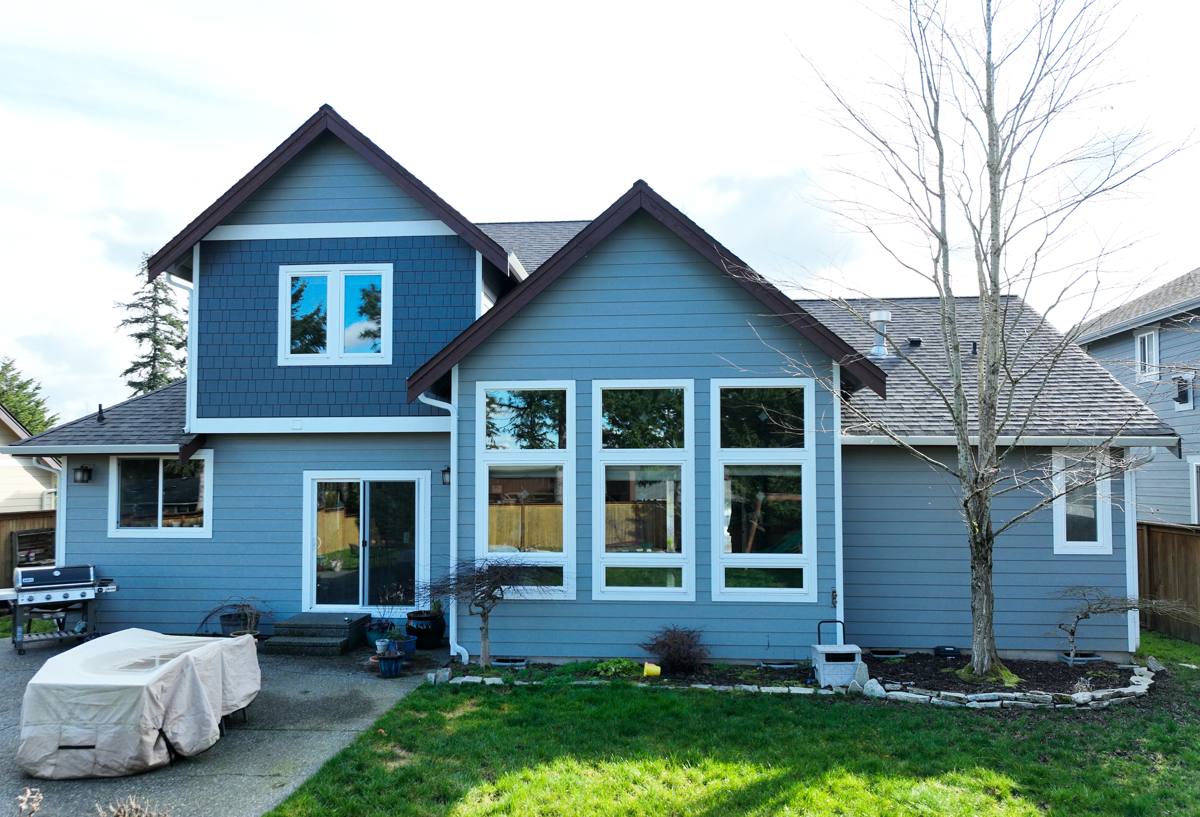
What Salt Air, Rain, and Moss Do to Siding Here
Salt Air From Nearly Every Direction
Because Point Roberts is surrounded by water rather than facing it from one side like most coastal towns, salt-laden air reaches homes here from multiple directions depending on the wind. That constant exposure accelerates corrosion in fasteners, trim hardware, and any exposed metal on a siding system, and it breaks down paint and caulking faster than it would on a home set back from the water. Siding that isn't built or fastened for sustained salt exposure tends to show its age here years before it would somewhere inland.
Driving Rain Off the Strait
Storms coming off the water don't arrive gently. Wind pushes rain sideways into seams, trim joints, and any gap in the siding system that a calmer climate could get away with ignoring. On a wall built for dry, sheltered conditions, that wind-driven pattern finds the weak points fast — an unsealed cut edge, a joint that wasn't flashed correctly, a nail that backed out slightly. None of that shows up as a problem on install day. It shows up two or three winters later as staining, softness, or rot working in behind the surface.
A Moss Season That Barely Breaks
Mild temperatures and near-constant moisture give moss, algae, and mildew a long growing season on this peninsula, and siding is one of the first surfaces to show it — especially on north-facing walls and anywhere shaded by trees or a neighboring structure. Porous or textured siding materials give moss more to grip onto, and once it takes hold, it holds moisture against the wall behind it, which compounds the rain and salt exposure the siding is already dealing with.
Repair or Full Replacement: Reading the Signs
Not every siding problem on a Point Roberts home means a full tear-off. But in this climate, symptoms that look cosmetic often point to something further along underneath, and it's worth knowing the difference before deciding which one you're dealing with.
| What You're Seeing | Likely Meaning | Usual Next Step |
|---|---|---|
| A few cracked or loose boards, otherwise sound siding | Localized damage or aging fasteners | Targeted repair |
| Soft spots when pressed, especially near the bottom of walls | Moisture has reached the sheathing | Open the wall and assess; often leads to replacement of that section or more |
| Paint that won't hold more than a season or two | Substrate is saturating faster than it can dry | Full replacement usually more cost-effective than repeated repainting |
| Persistent moss or staining across large wall areas | Material and wall assembly aren't drying between rain events | Replacement with a material and drainage detail built for this exposure |
| Siding age approaching or past its expected service life | General wear compounding with coastal exposure | Full replacement, planned rather than reactive |
The honest answer, in most cases, is that a single soft board or a section of visible rot is rarely isolated in a home that's taken decades of this peninsula's weather. A proper inspection during a repair call is what tells you whether you're looking at a patch job or the start of a full replacement conversation.
Why We Only Install James Hardie Fiber Cement Here
We install James Hardie fiber cement siding exclusively. We don't install vinyl, LP SmartSide, Cemplank, Allura, primed spruce, or cedar, and on a peninsula with this much sustained water exposure, that standard matters more than it would somewhere drier and more sheltered.
What the Alternatives Get Right, and Where They Fall Short Here
Vinyl is inexpensive and easy to install, but it's a thin material that can warp in sustained heat and crack in cold, and it isn't fire-rated the way fiber cement is. Cedar is genuinely beautiful and has real natural rot resistance, but it demands ongoing sealing or staining to keep performing, and in a climate this wet, that maintenance schedule gets punishing fast. LP SmartSide is engineered wood — better moisture resistance than raw lumber, but still wood-based at its core, which means it's more sensitive to sustained moisture exposure than a cement-based product. Primed spruce is essentially unfinished wood siding waiting on paint to do all the protective work, which is a difficult standard to keep up with here. Each of these products has a legitimate place somewhere. Sustained salt exposure on three sides of a peninsula isn't where we'd choose to bet on any of them.
Why Hardie Fits This Exposure
James Hardie fiber cement is non-combustible, doesn't absorb moisture the way wood-based products do, and holds a factory-applied ColorPlus finish that's engineered to resist fading and cracking well beyond what field-applied paint typically manages. James Hardie's HZ5 product line is specifically engineered for cold, wet climates like this one, and the system carries a strong transferable warranty when it's installed to the manufacturer's specification. None of that means it's maintenance-free — nothing on an exterior wall in this climate is — but it's the product we've found actually holds up to what Point Roberts weather does to a house over years, not just the first season.
What a Correct Siding Replacement Involves
The material is only part of the equation. A replacement job that actually performs in this climate needs the underlying work done right, not just a new surface layer over old problems. A correct job includes:
- Full removal of the old siding, not installation over an existing layer, so the sheathing underneath can actually be inspected
- Repair or replacement of any water-damaged sheathing or framing found once the old siding comes off
- A correctly lapped and taped weather-resistive barrier, since this is what actually stops wind-driven rain before it reaches the wall structure
- Proper flashing at every window, door, and penetration — the places where wind-driven rain finds a way in on a job done in a hurry
- Fastening to James Hardie's published spacing and fastener-type specification for this exposure, not a shortcut version of it
- Correct clearance between the bottom of the siding and grade, decks, or roof lines, so the wall has a real chance to dry between storms
- Factory-finished ColorPlus panels installed with the manufacturer's specified caulking and touch-up process at cut edges
- A final walkthrough covering what the specific product line actually needs going forward
Skip any one of those steps and the wall usually still looks finished on day one. In this climate, the gaps show up as staining, softness, or a warranty claim that gets denied because the installation didn't follow spec — usually a few winters after the crew that cut corners has moved on to the next job.
The Logistics of Doing This Work in an Exclave
Point Roberts isn't just exposed to more weather — it's also harder to get materials and equipment to than almost anywhere else in Whatcom County. Reaching it by land means crossing into Canada and back across an international border, both ways, for every material delivery, every crew arrival, and every load of tear-off debris headed to disposal. A crew unfamiliar with that reality plans a Point Roberts job the same way it would plan one five minutes from its shop, and then runs into delays it didn't account for — a material order that needed a longer lead time, a dump run that takes an entire afternoon instead of twenty minutes, a schedule that assumed border crossings wouldn't be a factor at all.
None of that is complicated once you've done it a few times, but it does change how a job gets planned from the start. Material needs to be ordered and staged with the border crossing built into the timeline, not treated as an afterthought once the crew is already on-site and short a delivery.
How Our Process Works for a Point Roberts Job
We start with an on-site inspection to see what's actually going on — whether the current siding needs full replacement or just isolated repair, what the sheathing looks like once we can get behind a section of the old material, and how exposed the specific walls of the house are to wind and salt off the water. From there we walk through the James Hardie product line and color options that fit the home and the budget, and we're direct about what full replacement will realistically cost versus what a more limited repair could buy you.
Once a project is scoped, material ordering and crew scheduling get planned around the border crossing from the start, so a Point Roberts job doesn't stall out waiting on a delivery that wasn't timed correctly. The install itself follows the sequence above — tear-off, sheathing repair where needed, weather-resistive barrier, flashing, then the Hardie panels fastened to spec. We haul debris out the same way everything else comes and goes here, planned into the schedule rather than left as a surprise at the end of the job.
Caring for New Siding in This Environment
Even a correctly installed Hardie system benefits from a bit of routine attention on a peninsula that sees this much salt air and moisture. A short list worth keeping in mind:
- Rinse the siding periodically to clear salt residue and organic buildup before it works into the ColorPlus finish
- Keep gutters and downspouts clear so water isn't running down the wall face during storms
- Trim back trees or shrubs that shade the siding or hold moisture against it, especially on north-facing walls
- Check caulking at trim joints and penetrations once a year, ahead of the wet season, and touch it up before a gap becomes a leak path
- Address any soft spot or staining right away rather than waiting — moisture problems in this climate don't slow down on their own
Why It Matters That We Already Work Point Roberts
A crew that mostly works closer to Blaine or further inland in Whatcom County can still do competent siding work, but a Point Roberts job has variables that don't come up as often anywhere else in the county — border-crossing logistics for every delivery and disposal run, sustained salt exposure from nearly every direction, and a moss season that runs longer here than it does even a few miles away on the mainland side of the border. Working this peninsula regularly means we've already worked out the scheduling and material planning that a job here actually requires, instead of learning it for the first time on your project.
That familiarity also shows up in the smaller judgment calls — which walls on a Point Roberts lot take the worst of the exposure, how much lead time a material order really needs, and being straightforward about what a full replacement will take here versus what's just an upsell.
Get a Straight Answer About Your Siding
Whether you're dealing with a few failing boards or a home that's due for a full re-side, we're happy to walk the property with you and lay out what we see plainly — no pressure, no upsell. Reach out below for a free estimate.
```