 Blaine Exterior
 Roof Repair Built for Point Roberts Conditions
Point Roberts sits on its own peninsula, surrounded by water on three sides, which means every roof out here deals with more salt-laden air and more direct exposure to wind-driven rain than a roof just a few miles inland. Add in Whatcom County's long, damp shoulder seasons, and you've got a climate that's genuinely harder on roofing materials than most of the Pacific Northwest. We repair roofs in Point Roberts on a regular basis, and the failures we see here follow patterns that are specific to this stretch of coastline — not generic "old roof" wear.
This page covers what actually goes wrong with roofs in Point Roberts, what a correct repair looks like, and how we approach the job so it holds up through the next few winters, not just until the next inspection.
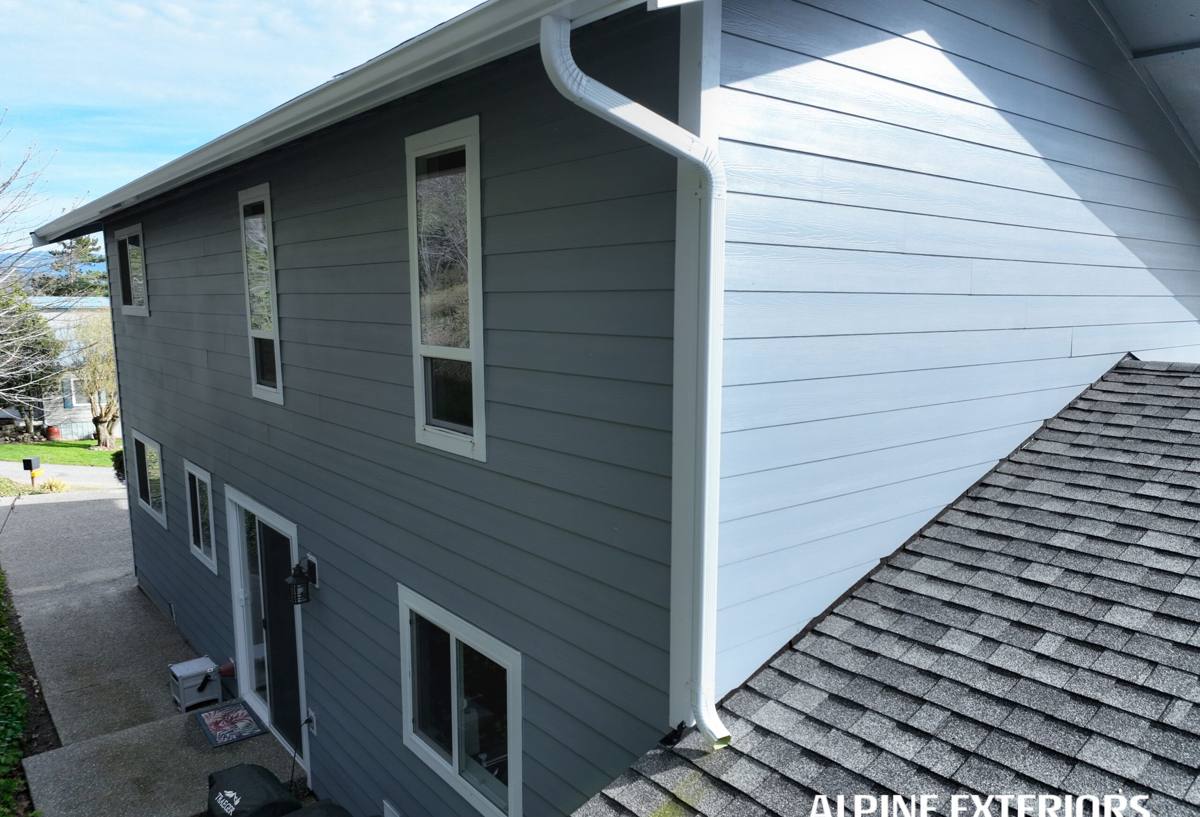
What Salt Air, Rain, and Moss Do to a Roof Over Time
Salt Air and Metal Fasteners
Salt-laden air accelerates corrosion on anything metal — roofing nails, flashing, vent boots with metal collars, and gutter hardware. Once fasteners start to corrode, they lose holding power and shingles or panels can work loose during wind events. This happens faster on homes closer to the water, but Point Roberts' small size means almost no property is truly sheltered from it.
Driving Rain and Wind-Driven Water Intrusion
Point Roberts gets a lot of rain that doesn't fall straight down — it comes in sideways off the water. That matters because wind-driven rain finds its way under shingle edges, around poorly sealed flashing, and into any gap that a calmer rain would never reach. A roof that would be fine in a low-wind climate can leak here simply because the water is being pushed uphill against the shingles instead of running off them.
Moss and Organic Growth
Whatcom County's long wet season gives moss, algae, and lichen plenty of time to establish themselves, especially on north-facing slopes and anywhere shade keeps a roof from drying out between rains. Moss doesn't just look bad — its root structure lifts shingle edges and holds moisture directly against the roofing material, which speeds up granule loss and wood rot underneath.
Signs a Point Roberts Roof Needs Repair
Most roof problems out here start small and stay hidden until they show up as a stain on a ceiling. Catching them earlier is almost always cheaper than waiting.
- Granules collecting in gutters or at the base of downspouts
- Moss or dark streaking concentrated on shaded or north-facing slopes
- Curling, cupping, or cracked shingles, especially on south and west exposures
- Rust staining or visible corrosion around flashing, vents, or metal valleys
- Soft spots, sagging, or discoloration on interior ceilings after heavy rain or wind
- Daylight visible through the attic roof deck or around chimney and vent penetrations
- Lifted or missing shingles after a windstorm
Any one of these on its own might not mean much. Two or three together, especially after a windy winter, usually means water has already found a way in.
Repair vs. Replacement: How We Make That Call
Not every roof problem in Point Roberts needs a full replacement, and we're not going to tell you it does. The decision comes down to how much of the roof's remaining service life is intact and whether the damage is isolated or spread across the whole surface.
| Factor | Favors Repair | Favors Replacement |
|---|---|---|
| Age of roof | Under 15-18 years (asphalt) | Nearing or past manufacturer's expected lifespan |
| Extent of damage | Localized to one slope, valley, or penetration | Spread across multiple slopes or the whole roof |
| Moss/organic growth | Surface growth, deck still sound underneath | Growth has caused deck rot or widespread granule loss |
| Underlayment condition | Still intact where accessible | Failing or missing in multiple areas |
| Number of past repairs | First or second repair on this roof | Roof has a long history of patch-on-patch fixes |
If a roof is a genuine repair candidate, we'll say so and explain why. If it's not, we'll walk you through what's actually failing and let you decide how to proceed — there's no pressure either direction.
What a Correct Roof Repair Actually Involves
A repair that's done right addresses the cause of the leak or damage, not just the symptom. That distinction matters a lot in a climate like this one, where a surface-level patch tends to fail again within a season or two.
Inspection Before Anything Gets Touched
We check the affected area from both the roof surface and, when accessible, the attic side, so we can see whether water has tracked along a rafter or sheathing seam before showing up somewhere else. A leak's exit point on the ceiling is often several feet from where the water actually got in.
Removing, Not Covering, Damaged Material
Damaged shingles, rotted decking, or compromised underlayment gets removed and replaced — not sealed over. Caulk and roofing cement have a place in roofing, but they're not a substitute for replacing material that's already failed.
Flashing and Penetration Detail Work
A large share of the leaks we find in Point Roberts trace back to flashing around chimneys, skylights, vents, and roof-to-wall transitions rather than the shingle field itself. Correct repair means resealing or replacing that flashing properly, with attention to how wind-driven rain moves across it — not just running a bead of sealant along the edge.
Matching Materials Where Possible
We match shingle type, color, and profile as closely as the market allows so a repair doesn't stand out as an obvious patch, and so the repaired section performs the same as the surrounding roof rather than becoming a weak point of its own.
Our Process for a Point Roberts Repair Call
- Free on-site inspection — we look at the roof, the attic if accessible, and the specific area of concern
- Honest assessment — repair or replace, explained in plain terms with the reasoning behind it
- Written estimate — scope of work and a clear price before anything starts
- The repair itself — done in a single visit for most jobs, weather permitting
- Cleanup and walkthrough — debris cleared, work reviewed with you before we consider it done
We schedule around Point Roberts weather windows deliberately — roofing repairs done in the wrong conditions, especially sealant and flashing work, don't hold up the way they should.
Moss and Seasonal Maintenance
A lot of repair calls out here could have been avoided, or at least delayed, with basic seasonal upkeep. This isn't a sales pitch for a maintenance contract — it's just what actually extends a roof's life in this climate.
- Keep gutters and downspouts clear so water isn't backing up under the roof edge
- Have moss and organic growth removed before it spreads across a full slope
- Trim back overhanging branches that keep shaded areas from drying out
- Check attic ventilation — poor airflow traps moisture and speeds up deck rot from underneath
- Have flashing and penetrations inspected every couple of years, even if nothing looks obviously wrong
Why Local Experience in Point Roberts Matters
Point Roberts is a bit of a logistical outlier — it's a U.S. community that's only reachable by land through Canada, which means scheduling, material delivery, and crew travel all take a bit more planning than a job just down the road in Blaine. A crew that already works this area has that figured out, so your repair isn't delayed by border timing or a supply run nobody accounted for.
Beyond logistics, familiarity with how local roofs actually fail matters. We've seen enough Point Roberts roofs to know that a stain in one corner of a ceiling often points back to a flashing detail on the opposite side of the house, or that a north slope with moss almost always has a south slope with granule loss that hasn't been noticed yet. That pattern recognition comes from doing this work in this specific place, not from a general roofing background.
Materials and Our Approach
For asphalt shingle repairs, we use materials rated for the wind and moisture exposure this area actually sees, and we pay particular attention to underlayment quality in repaired sections since that's the layer doing the real work if wind-driven rain gets past the shingles. On homes with metal roofing or flashing, we specify corrosion-resistant fastener and flashing materials given how much faster standard steel corrodes this close to salt water.
We don't push algae-resistant or "moss-proof" shingle claims as a cure-all — moss control is a combination of the right materials, proper ventilation, and periodic cleaning, not any single product. If a contractor tells you one shingle line will solve moss for good, that's a maintenance conversation being skipped, not a real fix.
Get an Honest Look at Your Roof
If you're dealing with a leak, visible moss, storm damage, or just want a second opinion on a roof that's getting older, we're glad to come take a look. The estimate is free, there's no pressure to move forward, and you'll get a straight answer about whether repair makes sense or whether it's time to start planning for replacement. Fill out the form below to get started.