 Blaine Exterior
 Why Point Roberts Siding Wears Differently
Point Roberts sits on its own peninsula, surrounded by water on three sides, which means every wall on every home there takes on more weather than a comparable house set back from the shoreline. Salt-laden air moves in off the water and settles into siding seams, fastener heads, and any spot where the factory finish has been nicked or worn thin. Add wind-driven rain that hits siding sideways instead of straight down, and a shaded, damp season that runs long even by Pacific Northwest standards, and you have a climate that finds every weakness in a siding system faster than most parts of Whatcom County.
None of that means siding is doomed here — it means repairs have to account for what's actually attacking the wall, not just patch what's visible. A quick fix that ignores salt exposure or trapped moisture usually fails again within a season or two.
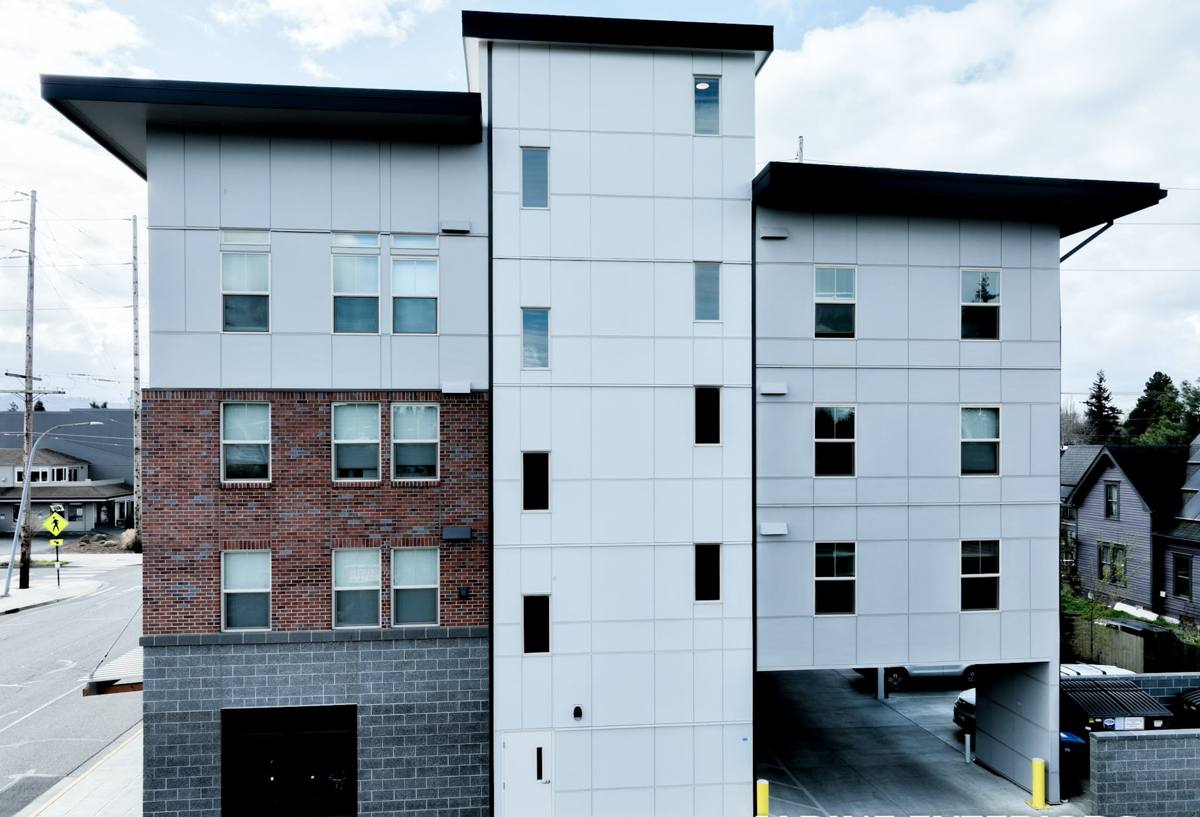
What Salt Air, Rain, and Moss Actually Do to Siding
Salt air
Airborne salt is mildly corrosive and hygroscopic — it pulls moisture out of the air and holds it against whatever surface it lands on. On siding, that means fasteners and metal trim corrode faster, paint and factory finishes chalk and fade sooner, and any exposed raw edge (a cut end, a scratch through the coating) becomes a spot where moisture sits longer than it should.
Driving rain
Wind off the water doesn't let rain run straight down a wall — it pushes it sideways and up under laps, seams, and trim. Siding that's caulked or lapped correctly sheds that water fine. Siding with a failed seal, a warped board, or a gap at a butt joint lets water track behind the cladding, where it can sit against sheathing and framing for weeks without anyone noticing.
Moss and organic growth
Shaded, damp walls — north sides, areas under tree cover, spots that never get direct sun — grow moss and algae readily in this climate. Beyond the cosmetic issue, moss holds moisture against the siding surface far longer than bare material would, which accelerates rot in wood-based products and finish breakdown in almost anything else.
Signs Your Siding Needs Repair Now, Not Later
- Soft, spongy, or crumbling spots when you press on the siding, especially near the bottom courses or around windows and doors
- Visible gaps at seams, corners, or trim where daylight or drafts come through
- Paint or finish that's peeling, bubbling, or chalking heavily in patches rather than evenly across the wall
- Persistent moss or dark streaking that comes back within weeks of cleaning
- Nail or fastener heads that are rusted, popped, or staining the siding around them
- Interior signs — a musty smell, a soft spot on interior drywall, or a stain near an exterior wall — that point to moisture already past the siding
Catching these early is the difference between a targeted repair and a much larger job once water has reached the sheathing.
What a Correct Repair Actually Involves
Diagnosis before demolition
The first step isn't pulling boards — it's figuring out why the damage happened. A rotted section under a window is usually a flashing or sealant failure, not a siding defect on its own. Repairing the visible siding without correcting the water path behind it just buys a year or two before the same spot fails again.
Matching material and finish
Patch repairs only look right and perform right if the replacement piece matches the existing siding's profile, exposure, and finish. On factory-finished products this also means matching color and sheen as closely as possible, since a mismatched patch is one of the most common complaints homeowners have after a repair done by someone unfamiliar with the product line.
Rebuilding the water management, not just the surface
Any time siding comes off, it's a chance to check and correct the housewrap or building paper, flashing at windows and penetrations, and the drainage plane behind the cladding. Skipping this step is the single biggest reason repairs fail early in a wet, salt-exposed climate like this one.
Fastening and sealing for the exposure
Corrosion-resistant fasteners and the correct sealant at joints and terminations matter more here than in a sheltered inland location. Standard fasteners that would be fine elsewhere in Whatcom County can start showing rust streaks within a few seasons on a home with direct water exposure.
Repair or Replace? How We Help You Decide
Not every damaged section needs a full re-side, and not every repair is worth doing on siding that's already at the end of its useful life. We look at the extent of the damage, the condition of the material around it, and how much of the wall has already been patched before.
| Situation | Repair usually makes sense | Replacement usually makes more sense |
|---|---|---|
| Damage extent | Isolated to one or two sections or elevations | Spread across multiple walls or recurring in the same spots |
| Underlying moisture | Localized, source identified and correctable | Sheathing or framing already compromised in several areas |
| Material condition | Rest of the siding is sound, finish intact | Original material is failing broadly (chalking, warping, prior patches) |
| Age of siding | Well within expected service life | Near or past the material's realistic lifespan for this climate |
| Match availability | Matching material/color is realistically available | Discontinued profile or color, patches would visibly mismatch |
We'll give you a straight answer on which category your home falls into — including telling you when a repair is the right call, even if a full re-side would be the bigger job for us.
Why We Rebuild With James Hardie, Not a Mixed Patch
When a repair grows into a larger job — a full elevation, or siding that's failed in enough places that patching stops making sense — we rebuild with James Hardie fiber cement rather than matching into vinyl, LP SmartSide, or a wood product. It's a deliberate standard, not a default: Hardie is non-combustible, doesn't absorb water the way wood-based siding can, and holds its ColorPlus factory finish through the kind of salt exposure and sun-fade cycle Point Roberts homes see year after year. In a climate where moisture and airborne salt are the main things aging a wall, a cladding that doesn't swell, rot, or need repainting on a short cycle is worth the difference in upfront cost.
Hardie's HZ5 product line is engineered specifically for the moisture and freeze-thaw conditions common to the Pacific Northwest coast, which is exactly the exposure profile this area gets. When we do quote a larger repair or a full re-side, this is what we recommend and what we install — not because it's the only product that exists, but because it's the one we're willing to stand behind here.
Our Process for Point Roberts Jobs
Point Roberts is part of Whatcom County but geographically cut off from the rest of it — reaching it from Blaine or anywhere else in the county means crossing into Canada and back. That's a routine part of how we schedule and staff a job here, not an obstacle we're figuring out for the first time. It affects how we plan material deliveries, how we sequence a repair day so a crew isn't making an extra crossing for one forgotten item, and how we quote timelines honestly instead of padding them out of uncertainty.
- Inspection and diagnosis — we look at the damaged area and the surrounding siding, and check for the underlying cause (flashing, sealant, drainage) rather than just the visible symptom.
- Written scope and estimate — a clear description of what we're repairing, what material we're matching or replacing it with, and what it costs, before any work starts.
- Scheduling built around the logistics — materials and crew staged so the job runs efficiently in one trip rather than several.
- Repair with correct water management — housewrap, flashing, and fasteners addressed as part of the job, not left as-is under new material.
- Walkthrough when finished — so you know exactly what was done and what to watch going forward.
Maintenance That Extends Repair Life in This Climate
A good repair lasts a lot longer with basic upkeep, especially given the moss season and salt exposure here.
- Rinse siding periodically to clear salt residue, especially on walls facing open water
- Keep gutters and downspouts clear so water isn't overflowing onto siding below
- Trim back vegetation that shades a wall and keeps it damp longer than it should be
- Check caulking at trim, windows, and corners annually and recaulk before it fails, not after
- Address moss with a gentle wash rather than pressure washing, which can drive water behind siding seams
- Have any soft spot or bubbling paint looked at promptly — small repairs stay small when caught early
Get a Straight Answer on Your Siding
If you're dealing with a soft spot, a stubborn moss patch, or siding that just doesn't look right anymore, it's worth having someone who works this specific stretch of coastline take a look before it becomes a bigger repair. We'll tell you honestly whether it's a patch job, a partial re-side, or something that can wait. Reach out for a free, no-pressure estimate using the form below.