 Blaine Exterior
 Point Roberts Windows Live a Harder Life
Point Roberts sits on its own peninsula, wrapped by the Strait of Georgia and Boundary Bay on three sides, with nothing but open water between many homes and the weather rolling in off the Salish Sea. That location is part of what makes the area beautiful, and it's also exactly why windows here wear out faster than windows twenty miles inland. Salt-laden air, sideways rain, and a moss season that can stretch from fall through spring all work on window frames, hardware, and seals year-round, not just during a few storms.
A window that's rated fine for a typical Whatcom County subdivision can still underperform on a property that catches wind straight off the water. Custom windows for Point Roberts homes need to be selected and installed with that exposure in mind from the start, not treated as an afterthought once trouble shows up.
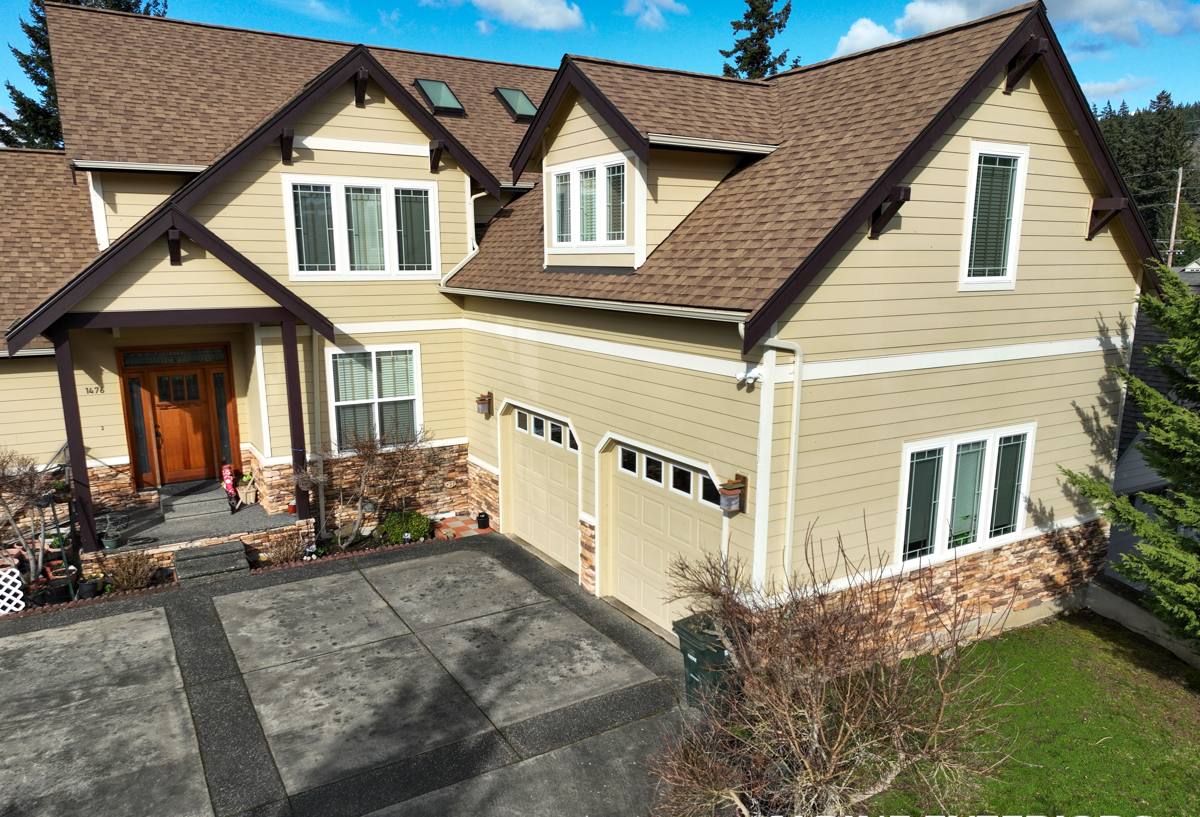
What Salt Air, Driving Rain, and Moss Actually Do
Salt Air and Hardware
Airborne salt settles on everything, including window frames, and it's especially hard on metal. Cheap hinges, cranks, locks, and screws corrode faster in a salt environment, and once a mechanism starts binding or seizing, homeowners often force it, which cracks frames or strips hardware that would otherwise have lasted for years. Salt residue also breaks down some finishes over time, leaving chalky or pitted surfaces on lower-grade materials.
Driving Rain and Water Intrusion
Rain that comes in sideways during a Pacific storm doesn't behave like rain falling straight down. It gets pushed up under trim, into gaps around poorly sealed frames, and behind flashing that wasn't lapped correctly. Most window leaks we find aren't a bad window — they're a window that was never properly flashed or sealed for wind-driven rain in the first place. On an exposed Point Roberts lot, that gap in workmanship shows up much sooner than it would on a sheltered inland home.
Moss and Prolonged Dampness
Whatcom County's long wet season keeps north-facing walls, sills, and window tracks damp for extended stretches. That moisture holds moss, algae, and mildew, which trap even more moisture against the frame and sill. Wood components that aren't properly clad or sealed can start to soften in these conditions, and even vinyl and fiberglass units need clean drainage paths so water doesn't sit and breed growth in the tracks.
Choosing Window Materials for This Climate
There's no single "best" window material for every home — it depends on exposure, budget, and how the house is built. Here's how the common options hold up specifically against salt air, driving rain, and a wet, mossy climate:
| Material | Salt Air Resistance | Moisture Behavior | Maintenance | Relative Cost |
|---|---|---|---|---|
| Vinyl | Good — won't corrode or rust | Handles moisture well if drainage is clean | Low | $ |
| Fiberglass | Very good — stable and inert in salt exposure | Excellent, minimal expansion/contraction | Low to moderate | $$-$$$ |
| Wood-clad | Fair — depends heavily on cladding quality and seal integrity | Vulnerable if cladding or seals fail | Higher | $$$ |
| Aluminum | Poor to fair unless marine-grade coated | Prone to condensation without thermal breaks | Moderate | $$ |
For a fully exposed Point Roberts property — waterfront or open to prevailing wind — we usually steer homeowners toward vinyl or fiberglass because both resist corrosion and don't rely on a coating or cladding staying perfect for decades. Wood-clad windows can still be the right call on homes where the look matters and the location is more sheltered, but we're honest about the added maintenance burden: any nick or gap in the cladding becomes an entry point for moisture in this climate, and it needs to be caught early.
What a Correct Installation Actually Involves
The window unit itself is only part of the job. In a marine climate, the installation details are what determine whether a window performs for twenty years or starts leaking in three. A correct install includes:
- Removing the old unit down to the rough opening and inspecting the sheathing and framing underneath for hidden rot before anything new goes in
- Installing a proper weather-resistive barrier and flashing tape, lapped correctly so water is always directed outward and downward, never trapped behind the siding
- Setting sill pan flashing so any water that does get past the window has a path to drain back outside instead of pooling in the rough opening
- Shimming and leveling the unit precisely so it operates smoothly and seals evenly — a slightly racked frame is one of the most common causes of premature seal failure
- Sealing with an exterior-grade sealant rated for the temperature swings and UV exposure of this climate, not a generic caulk
- Insulating the gap between the frame and rough opening without over-packing, which can bow the frame and cause operational problems
- Finishing interior and exterior trim so it sheds water rather than channeling it toward the window
Skipping any one of these steps can look fine on install day and still cause a leak two winters later. This is why we treat flashing and sealing details as non-negotiable, not optional extras.
Sizing and Style for Point Roberts Homes
Point Roberts has a mix of long-established homes and newer construction, and older homes in particular often have rough openings that don't match today's standard window sizes. Custom windows let us match an opening exactly rather than forcing a stock size and packing the gaps, which matters both for appearance and for how well the install seals up.
Many homes here are built to take advantage of water views, which means larger picture windows and sliders facing the weather side of the house. Those bigger units carry more wind load and more exposure to driving rain, so glazing choice matters more than it would on a small bathroom window. We generally recommend:
- Dual-pane, low-E glass with argon fill as a solid baseline for energy performance and condensation control
- Triple-pane glazing for larger units or rooms that face directly into prevailing wind and rain, where the extra pane adds real resistance to heat loss and noise
- Impact-rated or heavier-gauge frames for oversized picture windows and sliders that see the most wind load
- Tempered glass anywhere required by code near doors, low sills, or wet areas
Retrofit vs. Full-Frame Replacement
Not every job needs to go down to the studs. If the existing frame and flashing are sound, a retrofit (pocket) replacement can be faster and less invasive. But if there's any sign of water damage around the opening — soft trim, staining, or a musty smell — we recommend full-frame replacement so we can actually see and fix what's underneath rather than sealing a problem in behind a new window.
Our Process
- On-site assessment of each window opening, including a check for hidden moisture damage and an honest read on which units genuinely need replacing versus which can wait
- Material and glazing recommendations based on that specific wall's sun and wind exposure, with real trade-offs explained, not a one-size-fits-all pitch
- Custom measurement and ordering to match your rough openings
- Removal, flashing, and installation following the sequence above, with photos of the flashing work before it's covered
- Final sealing, trim, and a walkthrough so you know how to operate and maintain your new windows in this climate
Why a Crew That Already Works in Point Roberts Matters
Point Roberts is separated from the rest of Whatcom County by water and by an international border crossing — getting a crew and materials on-site takes real planning that doesn't apply to a typical mainland job. A contractor who already builds that logistics into their scheduling won't leave you waiting on a delayed delivery or a half-finished opening exposed to the next storm. We also know what building department requirements apply locally, and we know from repeat work in the area which details — flashing laps, sealant choice, hardware grade — actually hold up out here versus which ones look fine on a spec sheet but fail early in this exposure.
Keeping New Windows Performing Long-Term
Even the right window installed correctly still needs basic upkeep in this climate. A short annual routine goes a long way:
- Rinse salt residue off frames and glass with fresh water a few times a year, especially after windy storms
- Clear moss and debris from tracks and weep holes so drainage paths stay open
- Lubricate hardware — hinges, cranks, locks — with a product rated for exterior/marine use
- Check exterior sealant annually for cracking or separation and have gaps re-sealed before they become leaks
- Wipe down interior sills after heavy rain events to prevent condensation from sitting and encouraging mildew
If you're planning new windows for a Point Roberts home, we're happy to walk the property, look at your specific exposure, and put together a free, no-pressure estimate — no obligation, just a straight assessment of what your home actually needs.