 Blaine Exterior
 Siding Installation for a Peninsula That Takes a Beating
Point Roberts sits out on its own point, surrounded on three sides by water, which means homes here catch more direct salt spray, more wind-driven rain, and a longer moss season than most properties even a few miles inland in Blaine. Siding on a Point Roberts home isn't a cosmetic decision — it's the first line of defense against a climate that never really lets up, and it needs to be installed with that exposure in mind from the first piece of house wrap to the last caulk joint.
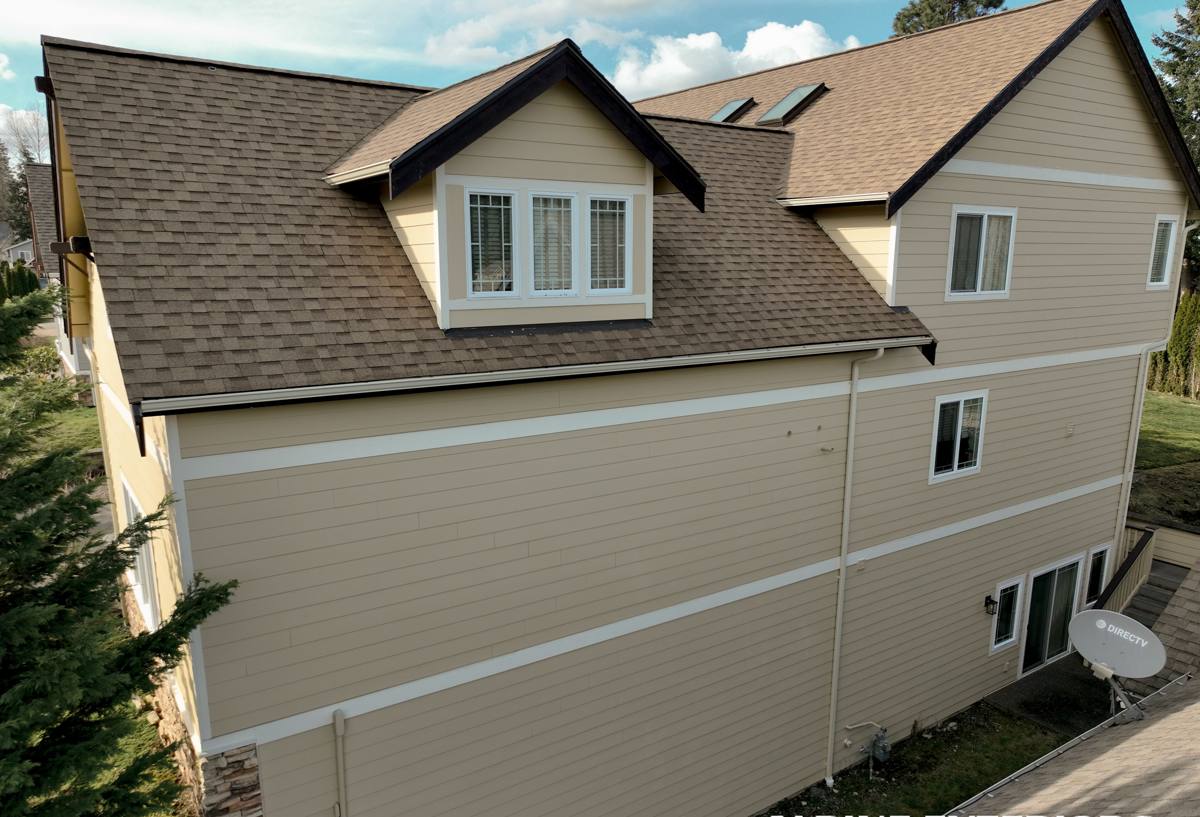
We install James Hardie fiber cement siding exclusively, and we treat Point Roberts jobs as their own category of work rather than a smaller version of what we do in town. The install details that matter here — flashing laps, fastener spacing, drainage behind the panel — are the same details that separate a siding job that looks good for five years from one that performs for thirty.
What This Climate Demands From Siding
Salt Air and Corrosion
Being surrounded by water on nearly every side means Point Roberts homes take on more airborne salt than most Whatcom County properties. Salt accelerates corrosion in fasteners, trim coil, and any lower-grade hardware, and it breaks down a weak paint finish faster than a drier, more inland site ever would. Every fastener and flashing detail on a Point Roberts siding job needs to be chosen for that corrosion exposure specifically, not just for what's cheapest or fastest to install.
Driving Rain From Every Direction
A peninsula exposed to open water gets wind from more compass directions than a sheltered inland lot, and that means wind-driven rain hits walls that a standard rainfall chart wouldn't flag as high-risk. Water gets pushed sideways and upward into laps, joints, and penetrations instead of just running down a wall. Siding systems and installation details that hold up fine in a calm location can still fail here because the water is coming in at an angle, not straight down.
A Long Moss and Mildew Season
Mild temperatures, shade from tree cover, and near-constant moisture add up to a moss and mildew season that runs long on this peninsula, especially on north-facing walls and anything shaded by trees or a neighboring structure. Any siding material that holds moisture against its own substrate becomes a growth surface over time, and once moss and mildew get a foothold, they hold moisture against the wall even longer — a cycle that's hard to break without addressing the material itself.
Why James Hardie Is the Only Siding We Install
We used to install a wider range of siding products. What changed our approach wasn't a supplier relationship — it was years of service calls and tear-offs on exactly this kind of exposed, wet, salty coastline. On a peninsula like Point Roberts, we've made the professional call to install one system we fully stand behind rather than offer a cheaper option that quietly shifts long-term maintenance risk onto the homeowner.
- Non-combustible fiber cement core: Doesn't feed a fire the way wood-based siding products can.
- Factory-applied ColorPlus finish: Baked on under controlled conditions, which holds color and resists chalking far better than a field-applied paint job exposed to salt air.
- Climate-engineered HZ formulations: Built specifically for regions with heavy moisture exposure and freeze-thaw cycling, which describes this stretch of coastline well.
- Dimensional stability: Fiber cement doesn't swell, cup, or warp the way engineered wood siding can after repeated wet-dry cycles through a long rainy season.
- Strong transferable warranty: One of the more robust warranty structures in the siding industry, provided the installation follows Hardie's published spec.
We don't install LP SmartSide, vinyl siding, Cemplank, Allura, primed spruce, or cedar. Each has its place in the market, and plenty of homeowners elsewhere are satisfied with them. But on an exposed peninsula like Point Roberts, where salt, wind, and moisture all compound each other, we'd rather take full responsibility for one system than sell a homeowner something we know will need more maintenance to keep ahead of this specific climate.
What a Correct Installation Actually Involves
Tear-Off and Substrate Check
A proper job starts with removing the old siding and actually inspecting what's underneath — sheathing, framing, and any existing moisture damage — rather than covering over problems with a new layer. On a home that's taken years of salt air and driving rain, this step often reveals issues that need to be addressed before a single new panel goes up.
Weather Barrier and Drainage Plane
Behind every Hardie installation we do, there's a continuous weather-resistant barrier and, where the wall assembly calls for it, a drainage plane that lets any incidental moisture that gets past the siding find its way back out instead of sitting against the sheathing. On a peninsula catching wind-driven rain from multiple directions, this layer is doing real work, not just checking a code box.
Fastening, Flashing, and Joint Details
Correct fastener type, spacing, and depth matter more in a salt-air environment than most homeowners realize — the wrong fastener corrodes and telegraphs through the finish within a few years. Flashing at every window, door, and roof-to-wall transition needs to be lapped correctly so water sheds outward at every stage, and joints need to be factory-mitered or properly caulked rather than simply butted together.
Clearance and Finish Details
Siding needs proper clearance from grade, roof lines, and decks so it isn't sitting in standing water or trapped moisture. Cut edges get sealed per Hardie's spec before installation, since an unsealed cut edge is one of the more common places moisture gets into an otherwise well-installed system.
Our Process for a Point Roberts Job
- On-site assessment: We walk the exterior, evaluate the existing siding and substrate condition, and look specifically for how the home has handled salt and moisture exposure so far.
- Written scope and quote: A clear, itemized scope before any contract is signed, so there's no ambiguity about what's included.
- Scheduling around the location: Because Point Roberts is a U.S. exclave reached by land only through Canada, we plan crew time and material deliveries around that border crossing in advance rather than treating it as a same-day logistics problem.
- Installation to spec: Tear-off, barrier and drainage detailing, fastening, and flashing carried out to Hardie's published installation requirements.
- Final walkthrough: We review the finished work with the homeowner before considering the job complete.
Signs a Point Roberts Home Needs New Siding
- Visible cracking, buckling, or gaps opening up at seams and joints
- Soft spots when you press on the siding, which often points to moisture already in the substrate
- Persistent moss or mildew staining that returns soon after cleaning
- Paint or finish that's chalking, peeling, or fading unevenly, especially on wind-exposed walls
- Rising energy bills that suggest the wall assembly behind the siding is no longer performing
- Visible rust streaking from fasteners or trim, a common early sign of salt-air corrosion
Comparing Siding Materials for This Kind of Exposure
| Material | Behavior in Salt Air / Wind-Driven Rain | Moss & Moisture Resistance | Typical Longevity Here |
|---|---|---|---|
| James Hardie fiber cement | Dimensionally stable, resists corrosion-driven finish failure | Non-porous core, factory finish resists growth | 30+ years with correct installation |
| Vinyl siding | Can distort or loosen under sustained wind exposure | Low maintenance surface, but seams and J-channels trap moisture | Variable; shorter on exposed, windy sites |
| LP SmartSide / engineered wood | Wood-based core sensitive at cut edges and joints | Needs consistent edge sealing to resist moisture intrusion | Heavily dependent on installation and upkeep |
| Cedar / primed wood siding | Absorbs and releases moisture readily in salt air | High maintenance; refinishing needed regularly | Shorter without ongoing maintenance |
Why a Crew That Already Works Point Roberts Matters
Point Roberts isn't a place a contractor can treat like any other stop on a route. Its location — cut off from the rest of Washington by land, reachable only by driving through Canada or by boat — changes how material deliveries, permitting, and crew scheduling need to be planned. A contractor unfamiliar with that logistics reality can end up with delayed material, rushed installation to make up lost time, or corners cut on the details that matter most in this climate.
Beyond logistics, familiarity with the peninsula's specific exposure — which walls take the worst of the wind, where moss tends to establish first, how salt air has treated other homes in the area over time — shows up directly in the quality of an install. That's the kind of knowledge that only comes from doing the work here repeatedly, not from a one-off job.
A Few Questions Worth Asking Before You Hire
- Have they installed siding on Point Roberts before, and how do they plan around the border crossing for materials and crew?
- What siding material do they install, and why — and will they put their reasoning in writing?
- Do they carry current Washington contractor licensing and liability insurance?
- How do they detail flashing at windows, doors, and roof-to-wall transitions for wind-driven rain specifically?
- Will you get a clear, written scope of work before signing anything?
If your Point Roberts home needs new siding or you're just trying to figure out whether it's time, we're happy to come take a look and give you a straight answer. Reach out below for a free, no-pressure estimate.