 Blaine Exterior
 Windows Built for the Point Roberts Climate
Point Roberts sits on its own little peninsula at the end of Boundary Bay, and the windows on those homes take a beating that inland Whatcom County houses never see. Salt-laden air moves in off the water almost constantly, driving rain comes in sideways during winter storms, and the shoulder seasons stay damp long enough for moss and algae to get a foothold on anything that stays wet. Windows are one of the first things to show it — hazy glass, chalky or pitted frames, corroded hardware, and a house that never quite feels warm even with the heat cranked.
Energy-efficient windows aren't just about a lower power bill, though that's part of it. In this climate, the bigger issue is usually moisture and air control: keeping wind-driven rain out of the wall cavity, stopping drafts around old frames, and choosing materials that won't rot, rust, or delaminate after a few wet winters. A window that's efficient on paper but poorly sealed against this weather will fail here faster than it would somewhere drier.
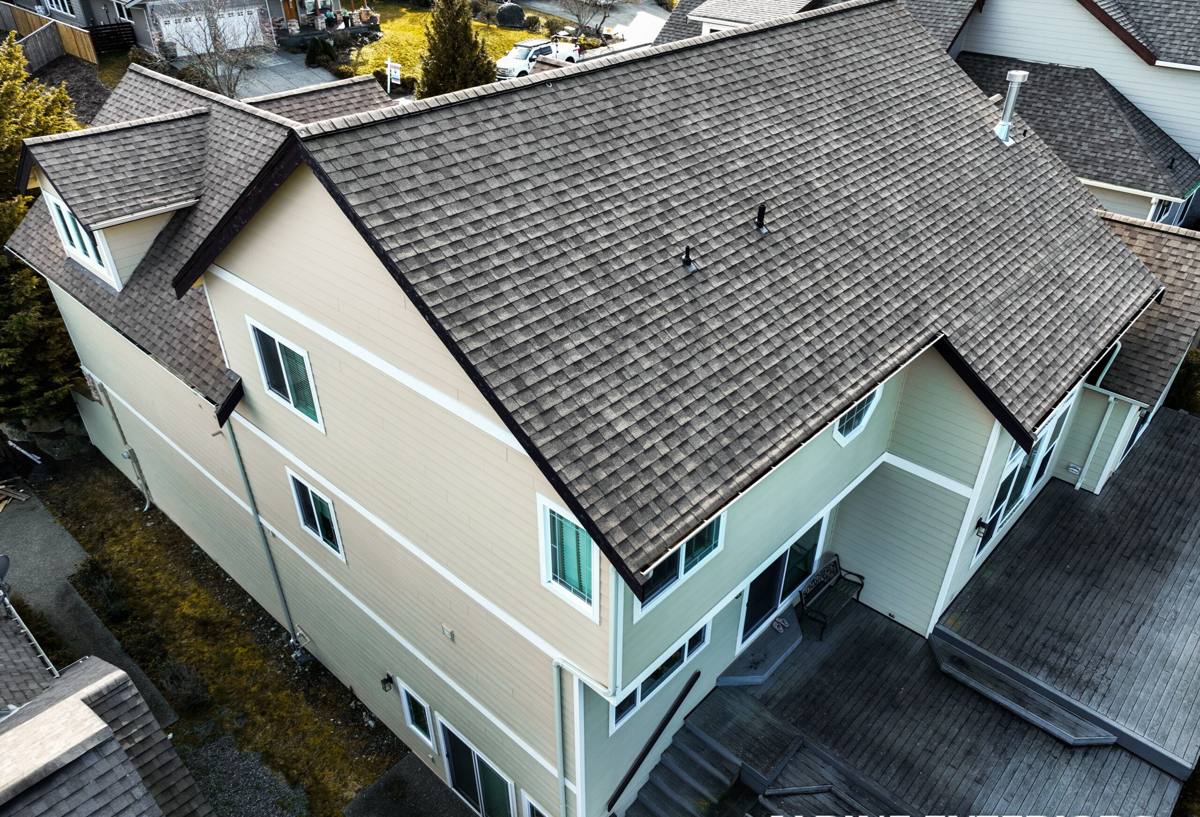
What "Energy-Efficient" Should Mean for a Point Roberts Home
Out here, air infiltration and moisture resistance usually matter more than solar heat gain control, since the Salish Sea marine climate doesn't bring the intense summer sun that window ratings in hotter regions are built around. What we look at first:
- U-factor — how much heat escapes through the window. Lower is better for our mild-but-persistent cold season.
- Air infiltration rating — how tight the sash and frame seal against wind, which matters a lot in a spot that gets steady coastal wind and driving rain.
- Condensation resistance — glass and frame materials that don't sweat and feed mold growth on cold, damp days.
- Frame durability — how the material holds up to years of salt exposure and dampness without swelling, corroding, or fading.
Double-pane, low-E glass with an insulated spacer is the baseline we'd recommend for most Point Roberts homes. Triple-pane can make sense for a north- or west-facing wall that takes the brunt of storms, but it's not automatically worth the extra cost on every window — we'll tell you honestly where it does and doesn't pay off.
Problems We Commonly See in Older Windows Out Here
Because Point Roberts is exposed on multiple sides to open water, older windows tend to show damage earlier than the same product would inland. The patterns we run into most:
Fogged or "blown" double-pane glass
Once the seal between panes fails, moisture gets between the glass and never fully clears. It's not repairable — the sealed unit has to be replaced. Homes with south- or west-facing exposure to weather tend to show this first.
Wood frame rot at the sill
Wind-driven rain finds its way into any gap in the sealant or flashing, and wood sills that stay damp for long stretches start to soften and rot from the inside out, often before it's visible from outside.
Corroded hardware and hinges
Salt air is hard on metal. Latches, cranks, and balance hardware on older aluminum or steel-reinforced windows can seize up or corrode well before the glass itself is a problem.
Moss and algae staining
Anything horizontal or shaded — sills, muntins, trim — that stays damp through a long wet season becomes a place for moss and algae to grow, which holds moisture against the material even longer and accelerates wear.
Persistent drafts
Old weatherstripping compresses and hardens over time. Combined with settling in the frame, this leaves gaps that let cold air in no matter how much the heating system runs.
What a Correct Installation Actually Involves
Replacing a window is straightforward in theory and easy to get wrong in practice, especially in a climate this wet. A rushed or improperly flashed install can leak within a year or two, even with a good window. Here's what we make sure happens on every job:
- Full removal of the old window and inspection of the rough opening for hidden rot or moisture damage before anything new goes in
- Repair of any damaged framing or sheathing found underneath — not covering it up
- Correct flashing sequence (sill pan, side flashing, and head flashing) so water sheds outward and never behind the siding
- Proper shimming so the window is square, level, and doesn't rack the sash
- Low-expansion foam or batt insulation in the gap around the frame — never packed too tight, which can bow the frame
- Quality exterior sealant at all the right joints, not just a bead around the trim
- Interior and exterior finish work that matches the surrounding siding and trim
The flashing and moisture management is really the whole job in this climate. A window can meet every energy rating on the label and still fail if it's not integrated correctly with the wall's water management system.
Frame Material Comparison for Coastal Exposure
Material choice matters more here than it does in a dry inland climate. This is roughly how the common options compare for a home dealing with salt air and heavy rain:
| Frame Material | Salt Air / Moisture Resistance | Maintenance | Typical Lifespan |
|---|---|---|---|
| Vinyl | Good — won't rot or corrode; some UV fading over decades | Low — occasional rinse and hardware check | 20-30+ years |
| Fiberglass | Very good — dimensionally stable, resists warping in wet-dry cycles | Low | 30-40+ years |
| Wood (unclad) | Poor without diligent upkeep — prone to rot in this exposure | High — regular painting/sealing required | Varies widely with maintenance |
| Wood-clad / composite | Good on the exterior face if cladding is intact; interior wood still needs care | Moderate | 25-35 years |
| Aluminum (non-thermally broken) | Prone to corrosion and condensation in this climate | Moderate to high | Varies; hardware often fails first |
For most Point Roberts homes we lean toward vinyl or fiberglass for the exposed elevations, simply because they hold up to salt and moisture with the least ongoing maintenance. That's our professional recommendation based on how these materials behave in wet coastal conditions over time — not a knock on wood or aluminum windows properly installed and maintained elsewhere.
Our Process for a Point Roberts Window Project
- On-site assessment — we look at each window's exposure, check for hidden rot around openings, and note which walls take the worst of the weather.
- Honest recommendation — we'll tell you which windows genuinely need replacing now, which can wait, and where a repair (not a full replacement) is the more sensible call.
- Accurate measurement and material selection — matched to the opening, the home's exposure, and your budget.
- Installation — removal, framing repair if needed, correct flashing, insulation, and sealing as outlined above.
- Cleanup and walkthrough — old materials hauled off, hardware and operation checked window by window before we call it done.
Why a Crew That Already Works in Point Roberts Matters
Point Roberts is separated from the rest of Whatcom County by water and by the Canadian border — reaching it means crossing an international boundary every time, with materials, tools, and crew. A lot of contractors based elsewhere in the region simply won't take on a small or mid-sized window job out here once they factor in that logistics overhead, or they'll quote it high enough to cover the hassle.
Because we're based in Blaine and already work this stretch of the border regularly, that logistics problem is already solved. We know how to plan a job so materials and crew arrive on schedule, and we're not treating a Point Roberts window replacement as a special trip that gets deprioritized when something closer to home comes up. That reliability matters more here than in most places — a delayed window replacement means a home sitting exposed to marine weather longer than it should.
Keeping New Windows Performing Long-Term
A well-installed, well-chosen window in this climate still needs a little upkeep to get its full lifespan. A short seasonal checklist:
- Rinse accumulated salt film off glass and frames periodically, especially on wind-exposed sides
- Check that weep holes at the bottom of the frame stay clear of debris and moss so water can drain out
- Inspect exterior caulking annually, particularly after a hard winter, and touch up any cracked or separated sections
- Wipe down or gently brush off moss and algae before it spreads onto the frame or trim
- Test locks, cranks, and hardware yearly and apply a light lubricant suited for exterior use
- Avoid direct high-pressure washing at the seals — it can drive water past the seal rather than just cleaning the surface
What Drives the Cost
Every home is different, so we'd rather walk your specific windows with you than quote a number sight unseen. In general, these are the factors that move the price:
| Factor | Why It Matters |
|---|---|
| Number and size of windows | Larger openings and whole-home replacements have more material and labor involved |
| Frame material | Vinyl is typically the most budget-friendly; fiberglass and wood-clad cost more upfront but can offer longer service life in this climate |
| Glazing package | Double-pane low-E is standard; triple-pane or specialty coatings add cost for specific exposures |
| Condition of existing framing | Hidden rot or water damage found during removal adds repair work before the new window can go in |
| Access and logistics | Point Roberts jobs factor in the border crossing for materials and crew, which we plan into scheduling rather than treating as a surprise |
If you're dealing with foggy glass, drafts, or frames that are starting to show wear, it's worth getting an honest look before winter weather makes the problem worse. We offer free, no-pressure estimates for Point Roberts homeowners — just fill out the form below and we'll get a time on the calendar.