 Blaine Exterior
 Roofing on a Peninsula That Takes the Weather From Every Side
Point Roberts sits on a small peninsula bounded by water on three sides, south of Blaine and cut off by land from the rest of Whatcom County — the only way in by road is through Canada. That geography isn't just a quirk of the map. It means homes here take wind and rain off open water from multiple directions instead of being sheltered by neighboring terrain the way a lot of inland Whatcom County properties are. A roof that would hold up fine twenty miles inland doesn't always get the same easy ride out here.
We've been doing exterior work in Blaine and the surrounding county long enough to know that Point Roberts roofs age differently. Salt-laden air, near-constant marine moisture, and a shaded, damp moss season that runs long each year all put extra demands on shingles, flashing, fasteners, and ventilation. This page is about what an asphalt shingle roof actually needs to hold up out here — not generic roofing advice, but what we've learned putting roofs on this specific stretch of coastline.
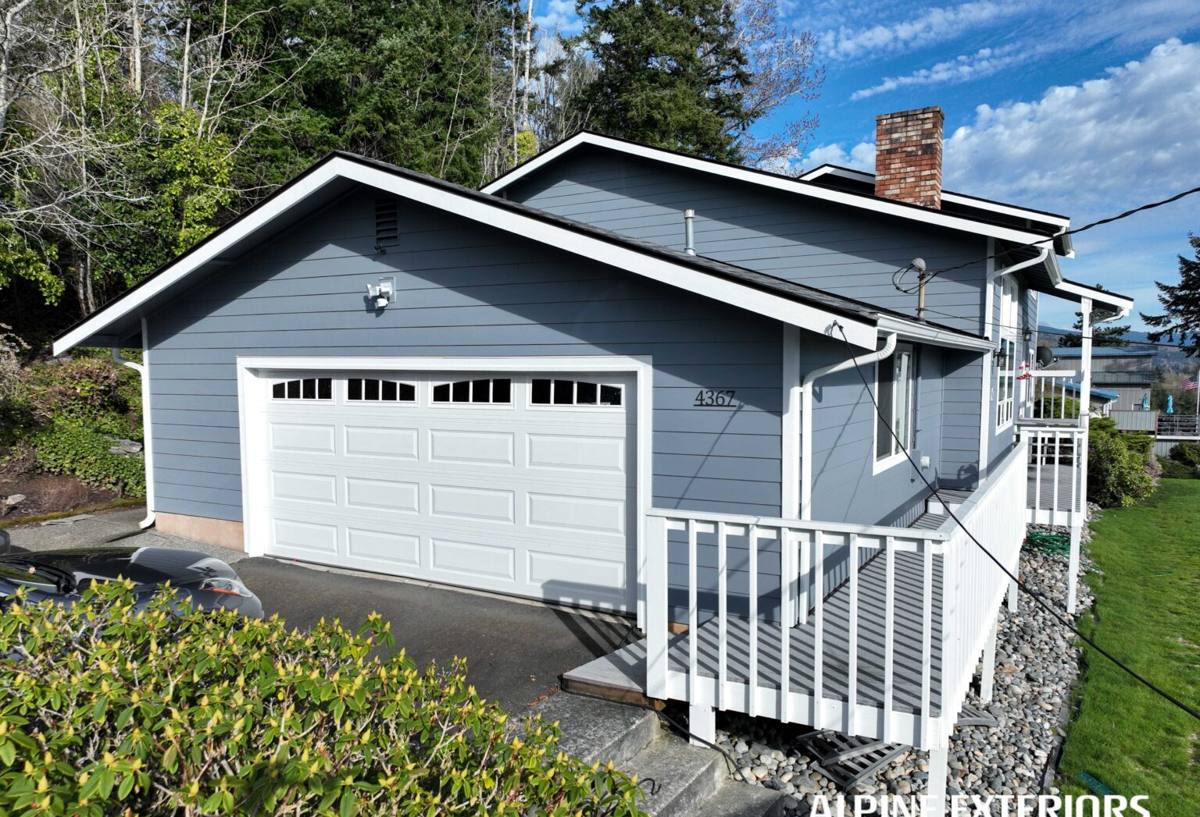
What the Local Climate Actually Does to a Roof
Salt Air and Corrosion
Airborne salt from the surrounding water settles on every exterior surface, including the roof. Over years, it accelerates corrosion on anything metal — nail heads, flashing, roof vents, gutter hardware. Standard galvanized fasteners and light-gauge flashing can start showing rust and pitting well before a comparable roof further inland would. It's not dramatic or sudden; it's a slow wearing-down that eventually shows up as streaking, leaks at flashing seams, or fastener backout.
Driving, Wind-Driven Rain
Rain that comes in sideways off open water behaves differently than rain falling straight down. It can drive up under shingle tabs, work its way into exposed nail heads, and find any gap in flashing that would otherwise be a non-issue. This is less about total rainfall and more about wind direction and exposure — a roof facing open water needs tighter, more deliberate flashing and underlayment work than the same roof on a sheltered lot.
Moss, Algae, and a Long Damp Season
Shaded roof sections, north-facing slopes, and anywhere debris collects stay damp for extended stretches through the fall, winter, and spring. That's exactly what moss and algae need to establish. Once moss gets a foothold, it holds moisture against the shingle surface, lifts tabs as it grows, and shortens the life of the roofing underneath it — a maintenance issue that becomes a structural one if it's ignored for years.
Choosing an Asphalt Shingle for This Environment
Not every asphalt shingle product is built the same way, and out here the differences matter more than they would on a sheltered inland roof. The table below outlines how the common options stack up for a Point Roberts property.
| Shingle Type | Wind Performance | Algae/Moss Resistance | Best Fit Here |
|---|---|---|---|
| Standard 3-tab | Lower wind rating, more tab lift risk in gusty water-side exposure | None unless specified | Budget projects on sheltered, less-exposed roof faces |
| Architectural / laminate | Higher wind ratings, better tab adhesion from dual-layer construction | Available with algae-resistant (AR) granules | Most Point Roberts homes, especially water-facing slopes |
| Algae-resistant (AR) laminate | Same as standard architectural | Copper- or zinc-infused granules actively resist algae growth | Shaded roofs, north slopes, tree-covered lots |
| Impact-rated (Class 4) | Reinforced mat resists granule loss from wind-driven debris | Often paired with AR granules | Homes wanting maximum longevity with less frequent inspection |
For most homes on this peninsula, we steer people toward a laminate architectural shingle with algae-resistant granules as the baseline, then talk through whether the roof's specific exposure and shading justify stepping up further. We won't push a premium product where it isn't earning its keep, and we'll say so plainly if a mid-tier shingle is the more sensible choice for a given roof.
What a Correct Installation Actually Involves
Tear-Off and Deck Inspection
We remove existing roofing down to the deck rather than layering over old shingles. That's the only way to actually see the plywood or plank sheathing underneath — and on a coastal property, it's common to find soft or delaminated spots where moisture has been working into the deck for years, often invisible from inside the attic. Any compromised sheathing gets replaced before anything new goes down; roofing over a weak deck just guarantees a shorter-lived roof.
Underlayment and Water Barriers
Given how much wind-driven rain this stretch of coastline sees, underlayment isn't a place to cut corners. We use synthetic underlayment across the field for its water resistance and tear strength, and we run ice-and-water shield membrane at eaves, valleys, and around every roof penetration — the spots where wind-driven rain and ice most reliably find a way in.
Flashing Details That Matter Here
Step flashing at walls and chimneys, valley flashing, and flashing around vents and skylights are where most roof leaks actually originate — not the shingle field itself. In a salt-air environment we favor corrosion-resistant flashing materials and fastener systems over the cheapest option available, and every flashing detail gets properly layered with the underlayment and shingles rather than just caulked and hoped for.
Ventilation
Balanced intake and exhaust ventilation keeps attic moisture from building up underneath the roof deck. In a climate this damp, poor ventilation contributes to premature deck rot, shingle underside deterioration, and can even make moss and algae growth worse by keeping the roof surface cooler and damper than it should be. We check and correct ventilation as part of every reroof, not as an upsell.
Repair or Replace? Signs Worth Knowing
Not every roofing issue means a full replacement. A quick, honest inspection is usually enough to tell the difference. Here's what we look for before recommending either path:
- Granule loss showing up in gutters or downspouts, especially after storms
- Curling, cupping, or cracked shingle tabs, particularly on water-facing slopes
- Visible moss or algae growth, especially on shaded or north-facing sections
- Rust staining or corrosion around flashing, vents, and fastener heads
- Soft spots or noticeable sag when walking the roof deck
- Daylight visible through the roof deck from inside the attic
- Water stains on interior ceilings or in the attic near penetrations
- Roof age approaching or past the shingle manufacturer's expected service life
If a roof is showing isolated flashing or ventilation issues on shingles that are otherwise sound, targeted repair is usually the honest recommendation. If the shingles themselves are failing broadly, or the deck has moisture damage in multiple areas, patch repairs stop making financial sense and a full reroof becomes the better long-term value.
Why Access and Logistics Matter for a Point Roberts Roof
Because Point Roberts is only reachable by road through Canada, scheduling and material logistics aren't quite as simple as a job in central Blaine. Crews and suppliers need to plan border crossings, coordinate delivery timing, and build in the extra travel time — none of which is a big deal for a contractor who already routes work out here regularly, but it can turn into delays, missed windows, or inflated trip charges with a crew that doesn't. We work Point Roberts often enough that it's a normal part of our scheduling, not a special trip, which keeps both the timeline and the cost predictable for homeowners here.
Keeping a New Roof Performing After Installation
A correctly installed roof still benefits from a bit of upkeep in this climate. Keeping gutters and valleys clear of needles and debris prevents standing water from sitting against shingles. Trimming back overhanging branches reduces the shade and debris load that feeds moss growth. A light annual check for lifted tabs, granule loss, or flashing wear catches small issues while they're still cheap to fix. None of this is complicated, but it's the difference between a roof that reaches its full expected lifespan and one that starts needing attention early because moisture and moss got a head start.
Our Process, Start to Finish
We keep the process straightforward: an on-site inspection and honest assessment of what the roof actually needs, a written estimate that spells out materials and scope, a scheduled install date that accounts for Point Roberts access, a full tear-off with deck inspection, correct underlayment and flashing work, shingle installation, ventilation check, thorough cleanup including a magnetic nail sweep, and a final walk-through so you know exactly what was done and why. No pressure tactics, no scare talk about problems that aren't there — just a clear look at the roof's actual condition and honest options for addressing it.
If you're weighing a repair, a full reroof, or just want an honest read on where your roof stands, we're glad to come take a look. Reach out using the form below for a free, no-pressure estimate.