 Blaine Exterior
 Building a Deck That Actually Holds Up in Point Roberts
Point Roberts sits on its own peninsula, cut off from the rest of Whatcom County by water and reachable by land only through Canada. That geography does more than make it a quirky place to live — it shapes what a deck has to survive. Homes here sit close to open water on multiple sides, which means more salt-laden air, more wind-driven rain hitting horizontal surfaces, and a longer stretch of the year when moss, algae, and standing moisture are working against your outdoor structure instead of for it. A deck built to a generic spec sheet will show it within a few seasons — soft spots at the ledger, corroded fasteners bleeding rust streaks, decking that stays slick well into what should be dry weather.
A deck built for this specific spot is a different project from the start: material selection, fastener grade, drainage detail, and even the order of construction all shift when salt air and standing moisture are part of the daily environment instead of an occasional event.
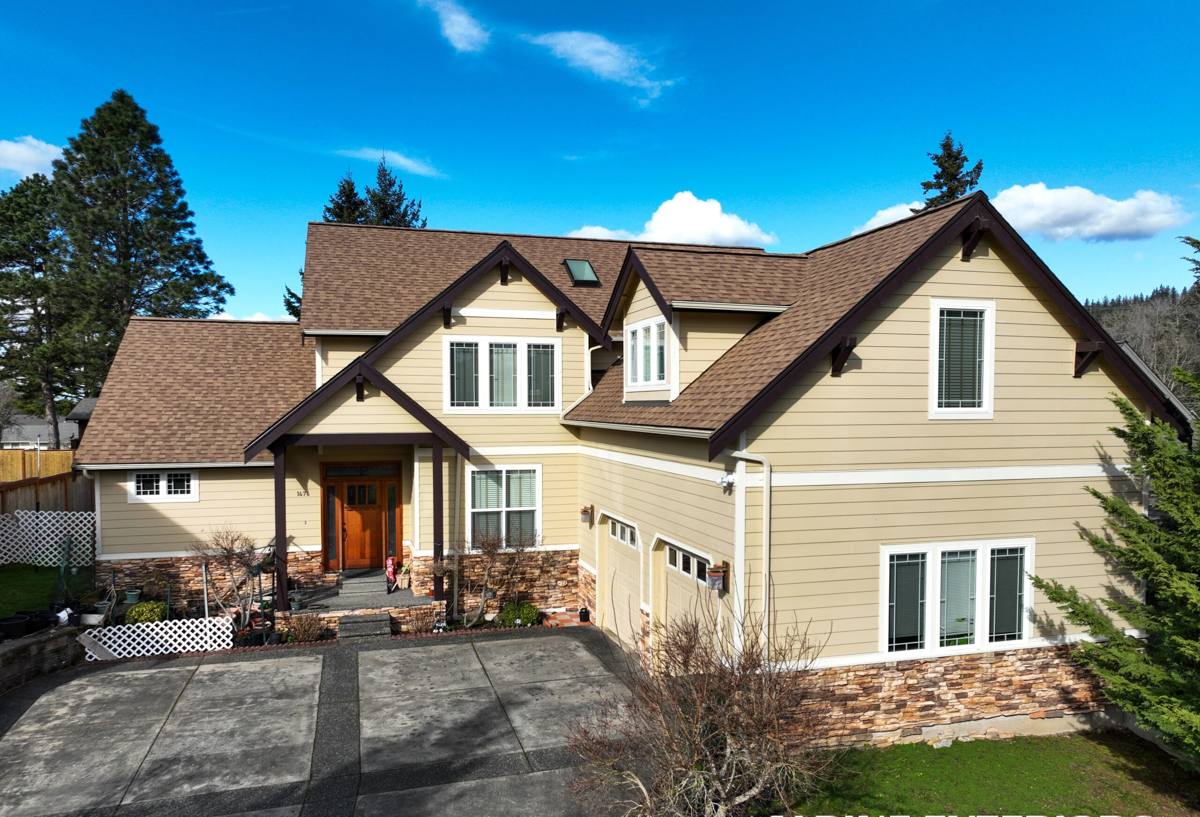
What Makes a Point Roberts Deck Project Different
The Exclave Factor
Because Point Roberts is only reachable by driving through Canadian border crossings (or by boat), material deliveries, permit trips, and even simple return visits for a forgotten part take longer and cost more in windshield time than they would on the mainland side of Blaine. A crew that hasn't planned for this will either pad your bill with trip charges or, worse, cut corners to avoid a second visit. We plan Point Roberts jobs to minimize crossings — ordering complete material lists up front, staging fasteners and flashing before framing starts, and scheduling inspections so we're not making an extra round trip for a five-minute sign-off.
Salt Air and Marine Exposure
Airborne salt from the surrounding water accelerates corrosion on anything metal — nails, screws, joist hangers, bolts — far faster than it would a few miles inland. It also degrades finishes on wood and some composite capstocks over time, and it's part of why untreated or poorly coated hardware on older decks in this area tends to show rust bleed at the fastener heads long before the wood itself fails.
A Long Moss Season
Point Roberts gets the same wet, mild Pacific Northwest winters as the rest of Whatcom County, but the proximity to water keeps humidity elevated for more of the year. That means moss, algae, and mildew have a longer window to establish themselves on any deck surface that doesn't drain and dry quickly. Boards with tight, low-gap spacing or decking laid without a drainage plan underneath stay damp longer, and damp wood is exactly what moss needs.
Choosing the Right Decking Material
There's no single "best" decking material — there's a best fit for your budget, maintenance appetite, and how close your lot sits to the water. Here's how the common options actually compare for a Point Roberts install:
| Material | Moisture & Salt Behavior | Maintenance | Rough Lifespan |
|---|---|---|---|
| Pressure-treated wood | Handles rain well when properly sealed; needs re-coating or it grays and can splinter | Annual cleaning, re-seal every 1–3 years | 15–20 years with upkeep |
| Cedar | Naturally rot-resistant, but salt air still fades and grays it faster than inland use | Regular sealing to hold color and resist checking | 20–25 years with upkeep |
| Capped composite | Excellent moisture and salt resistance; won't rot, splinter, or absorb water | Occasional washing, no sealing or staining | 25–30+ years, manufacturer-backed |
| Uncapped composite (older-style) | Can absorb moisture at the core over time, more prone to mold in constant damp conditions | More frequent cleaning to prevent surface mold | Variable; shorter than capped composite |
For a lot with heavy water exposure or full weather exposure, we lean toward capped composite or a well-sealed cedar, but the honest answer depends on your budget and how much upkeep you actually want to do. We'll walk through the real trade-offs for your specific site rather than push one product line.
Framing and Structure: Where Most Deck Failures Actually Start
Ledger Attachment and Flashing
The ledger board — where the deck ties into the house — is the single most common failure point on any deck, and it's a bigger risk here because driving rain pushes water sideways into gaps that would stay dry in calmer weather. A correct ledger installation uses proper flashing that sheds water away from the house framing, not just caulk and hope. We flash every ledger connection as a matter of standard practice, not as an upsell.
Footings in Wet, Variable Soil
Soil conditions on peninsula lots can vary from sandy to heavier and slower-draining within a short distance, and consistently damp ground affects how footings perform over time. We size and set footings based on what we find when we dig, not a one-size assumption, and we go below frost depth per code regardless of what the soil looks like on the surface.
Joist Spacing and Airflow Underneath
Tighter joist spacing than code minimum adds stiffness, but the framing also needs enough clearance underneath for air to move and moisture to evaporate. A deck built low to the ground with poor underside ventilation stays damp longer after every rain, which feeds the moss and mildew problem before it ever reaches the walking surface.
Fasteners and Hardware: The Detail Homeowners Never See — Until It Fails
This is where salt air does the most damage, and it's the detail most likely to get skipped by a crew that doesn't build here regularly. Standard galvanized fasteners can start showing corrosion within a few years this close to open water. We spec stainless steel or heavy-duty coated fasteners rated for coastal or treated-lumber use throughout — joist hangers, structural screws, and railing hardware — because replacing a rusted hanger buried inside finished framing means tearing the deck apart, not a quick swap.
- Structural screws and hanger nails rated for coastal/marine or ACQ-treated lumber exposure
- Stainless or heavy-coated joist hangers and structural connectors, not bare galvanized
- Corrosion-resistant railing hardware, especially at any cable or metal-baluster connection
- Flashing tape and ledger flashing rated for long-term wet exposure
- Fastener heads set to manufacturer spec — overdriven screws crack composite decking and create water traps
Railings, Surfaces, and Wind-Driven Rain
Open water exposure means wind loads on railings can be higher than a sheltered inland lot, and it's worth confirming your railing design and post spacing meet code for your specific site rather than a generic minimum. Surface choice matters too — a smooth, low-texture board looks good on the showroom sample but turns genuinely slick when it's wet and mossy, which is most of the wet season here. We favor deck boards with real slip resistance built into the surface texture, especially on stairs and any section near a door.
Our Process for a Point Roberts Deck Project
Because of the border-crossing logistics, we run these projects with a tighter plan than a typical mainland job:
- On-site walkthrough to assess soil, drainage, sun/wind exposure, and how the deck ties into the house
- Written estimate with material options and a straightforward explanation of the trade-offs, not just a single number
- Full material list ordered and staged before framing begins, to minimize return trips
- Permit submission and inspection scheduling coordinated up front with Whatcom County
- Framing with flashed ledger, corrosion-resistant hardware, and footings sized to what we find on-site
- Decking, railing, and finish work with attention to drainage and airflow underneath
- Final walkthrough covering care and what to expect through the wet season
Permits and Whatcom County Requirements
Deck projects above a certain size or height typically require a building permit in Whatcom County, and requirements can touch on footing depth, railing height, and guard spacing depending on the specifics of your deck. Because Point Roberts is part of Whatcom County, the same county process applies here as it does in Blaine proper — we handle the permit submission and coordinate inspection timing as part of the job so you're not chasing paperwork or driving in for a scheduling call yourself.
Living With Your Deck Through the Moss Season
Even a well-built deck needs some seasonal attention here. A periodic wash-down keeps moss and algae from getting a foothold, and keeping gutters and any nearby drainage clear reduces how much extra water lands on or near the deck surface. Composite surfaces need less attention than wood, but neither is truly maintenance-free in a climate this wet — the goal of good construction is to reduce how much upkeep you need, not eliminate it entirely.
Why Hire a Crew That Already Works Point Roberts
A contractor who only occasionally works this far out tends to under-budget the travel time, under-spec the hardware for salt exposure, and treat the border logistics as a surprise instead of a planning detail. We build in Blaine and throughout Whatcom County, including Point Roberts, regularly enough to know what actually fails out here and to price and schedule the job accordingly the first time — not after a callback.
If you're planning a new deck or need to know whether an existing one is holding up the way it should, we're glad to take a look. Reach out for a free, no-pressure estimate using the form below.