 Blaine Exterior
 Storm Damage Roof Repair Built for Custer's Weather
Custer sits in the part of Whatcom County that takes the full brunt of marine weather moving in off Boundary Bay and the Strait of Georgia. Homes here deal with a mix most inland roofs never see: salt-laden air, wind-driven rain that finds its way sideways under shingles and flashing, and a moss season that runs most of the year. After a windstorm or a heavy rain event, that combination can turn a small, hidden problem into a real leak fast. This page covers what storm damage repair actually looks like for a Custer roof, what a correct repair involves, and how our process works from the first call to the final inspection.
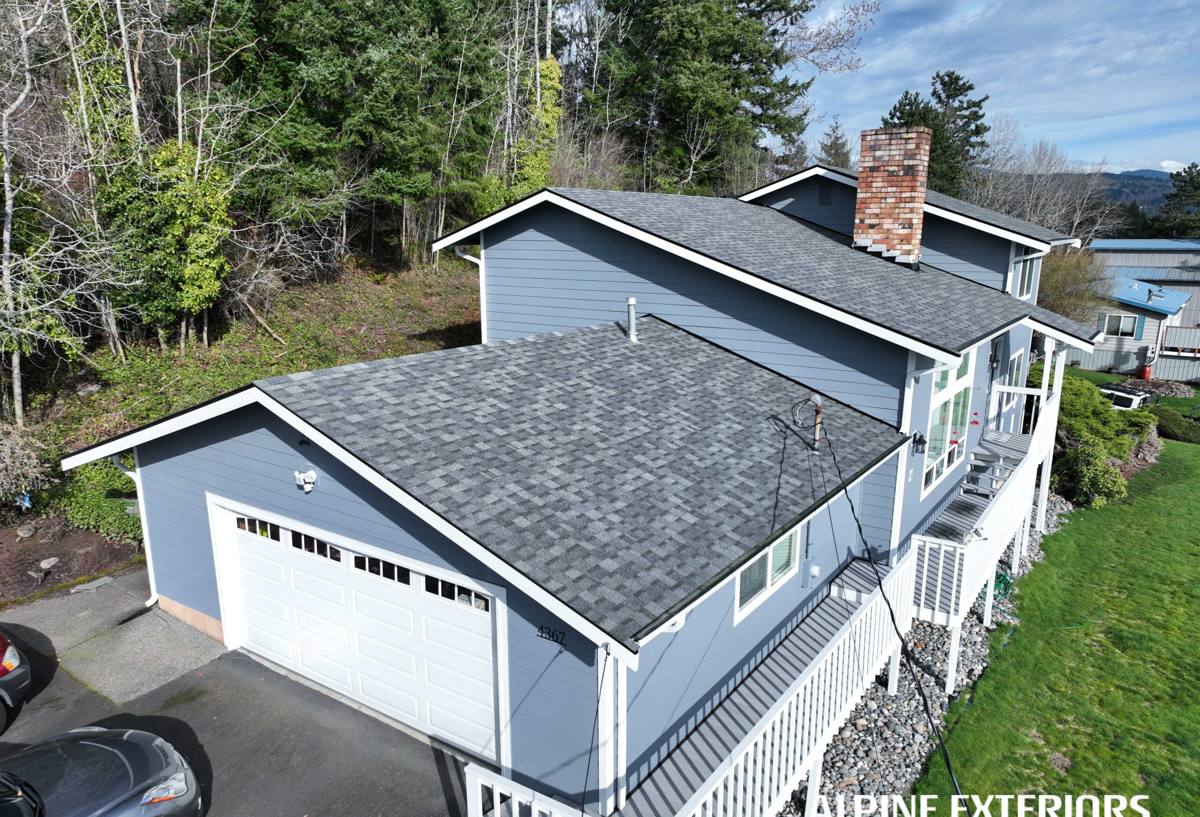
What Custer's Climate Does to a Storm-Damaged Roof
Every region has its own way of aging a roof, and understanding it is half the battle in doing a repair correctly instead of just patching what's visible.
Salt Air and Corrosion
Proximity to the water means airborne salt settles on roofing metal — flashing, fasteners, gutter hangers, vent caps — and accelerates corrosion compared to homes further inland. A storm that loosens or lifts flashing that's already been quietly corroding for years fails a lot faster than flashing on a drier, inland roof. When we repair storm damage in this area, we're always checking metal condition, not just shingle condition.
Wind-Driven, Sideways Rain
Storms coming off the Strait don't just drop rain straight down — sustained wind pushes it sideways and up under shingle edges, ridge caps, and anywhere flashing meets a wall or chimney. This is why storm leaks often show up in places a homeowner wouldn't expect, like along a sidewall well away from where a shingle actually blew off.
A Long Moss Season
Whatcom County's damp, mild winters keep moss and moisture-loving growth active for much of the year. Moss holds water against the roof surface, works into shingle laps, and adds weight — all of which makes a roof more vulnerable when a storm hits, and makes storm damage harder to spot underneath the growth. Any storm repair on an older Custer roof usually turns up some moss-related wear nearby, even if it wasn't the direct cause of the damage.
Signs of Storm Damage Homeowners Often Miss
Obvious damage — a tarp-worthy hole, missing shingles, a branch through the roof — gets called in right away. It's the quieter damage that causes the most expensive surprises later, because it keeps leaking slowly for months before anyone notices a stain.
- Granules collecting in gutters or at downspout outlets after a windstorm
- Shingles that look intact from the ground but are creased, lifted, or loose to the touch
- Flashing around chimneys, skylights, or sidewalls that's bent, separated, or pulled away slightly
- Soft spots or slight sagging when walking the attic after a storm
- New or spreading water stains on interior ceilings, especially near exterior walls
- Ridge cap shingles that are cracked or lifted at the seams
- Debris or moss buildup shifted or displaced after high wind
- Gutters pulled loose from fascia, which often points to wind uplift on the roof edge too
What a Correct Storm Damage Repair Involves
A storm repair is only as good as what happens underneath the new shingles. Nailing a patch over visible damage without checking what's around and beneath it is how the same leak comes back in a different spot next winter.
Inspection Before Anything Gets Touched
We walk the roof and the attic, not just look from the ground. Wind damage is directional — a storm from one direction often only lifts shingles on one or two slopes — so we check the whole roof, not just the side that's visibly damaged, since a homeowner's attention naturally goes to the spot with the ceiling stain rather than the spot that's actually failing.
Emergency Mitigation When Needed
If a roof has active exposure — missing shingles, a hole, or torn flashing — the priority is stopping water intrusion, usually with a properly secured tarp or temporary patch, before scheduling the permanent repair. Rushing a full repair in bad weather, or skipping mitigation entirely, is how interior damage piles up on top of the roof damage.
Decking and Structure Check
Any spot that's had sustained water intrusion gets checked for soft or delaminated decking underneath the shingles. Replacing shingles over decking that's already spongy just buys a short delay before the same area fails again.
Flashing and Fastening, Not Just Shingles
Given how much of this area's storm damage starts at flashing and fastener corrosion rather than the shingle field itself, a correct repair checks and, where needed, replaces flashing at chimneys, skylights, sidewalls, and valleys — not just the shingles closest to the visible damage.
Matching Materials
We try to match existing shingle color, profile, and exposure as closely as the manufacturer's current lineup allows. On older roofs, an exact match isn't always possible since shingle lines get discontinued — we'll tell you honestly if a patch is going to be slightly visible rather than promise a seamless blend we can't deliver.
Our Process, Start to Finish
- Call and initial assessment — we ask what happened, when, and what you're seeing inside, so the site visit is focused.
- On-site inspection — roof and attic walkthrough, photos and notes on the extent and likely cause of the damage.
- Mitigation if needed — tarping or temporary sealing to stop active leaking the same visit, weather permitting.
- Written scope and estimate — what's damaged, what we recommend, and a clear price range before any repair work starts.
- Insurance documentation — if you're filing a claim, we provide photos and a written damage description your adjuster can use.
- Repair — decking, flashing, and shingle work completed to match the existing roof as closely as possible.
- Final walkthrough — we show you the completed work and confirm the area's watertight before we consider the job done.
Repair or Replacement? What Actually Drives That Decision
Not every storm-damaged roof needs full replacement, and not every roof that looks fine after a storm should be left alone. The honest answer depends on a handful of factors, not a blanket rule.
| Factor | Repair Usually Makes Sense | Replacement Usually Makes Sense |
|---|---|---|
| Extent of damage | Isolated to one slope, section, or flashing point | Spread across multiple slopes or the whole roof |
| Roof age | Roof is well within its expected service life | Roof was already near the end of its life before the storm |
| Decking condition | Decking is sound once exposed | Widespread soft, rotted, or delaminated decking |
| Material availability | Matching shingles are still available or the patch location is low-visibility | Shingle line is discontinued and mismatch would be obvious from the street |
| Underlying moss/wear damage | Minor, localized granule loss or moss staining nearby | Long-term moss damage already compromising large sections |
| Cost comparison | Repair cost is clearly proportional to the damage | Repair cost approaches a meaningful share of replacement cost |
Storm Damage and Insurance Claims
Most homeowner policies cover sudden storm damage — wind, falling debris, hail — but coverage details, deductibles, and depreciation schedules vary by policy, so we're not going to tell you exactly what your insurer will pay. What we can do is document the damage thoroughly: dated photos, a written description of the cause and extent, and an itemized scope of repair. That paperwork is usually what determines whether a claim moves smoothly or gets kicked back for more information. We recommend calling your insurer as soon as damage is confirmed and keeping any temporary mitigation receipts, since most policies expect you to prevent further damage while a claim is being processed.
Why Hire a Crew That Already Works in Custer
Storm damage repair rewards familiarity with the specific ways local weather attacks a roof. A crew that mainly works drier, inland regions may not think to check flashing corrosion first, or may underestimate how fast moss reclaims a repaired section in this climate. Working regularly in Custer and the surrounding Blaine area also means faster response when a storm has just come through and water is actively getting in — timing matters more than almost anything else in limiting interior damage. We're also familiar with the shingle lines and flashing details common on homes in this part of Whatcom County, which helps when trying to match an existing roof rather than making the whole slope look patched.
If you've had a storm move through and want a second opinion on damage, or just want a clear-eyed inspection before deciding whether it's a repair or something bigger, we're happy to take a look. Use the form below to request a free, no-pressure estimate.