 Blaine Exterior
 Custer's Climate Is Harder on Siding Than Most People Realize
Custer sits inland from the water compared to downtown Blaine, but it doesn't get much of a break from the weather that defines this corner of Whatcom County. The same marine air that moves off the Salish Sea pushes inland across open farmland and tree-lined properties alike, carrying salt-laden moisture that settles on exterior surfaces year-round. Add driving rain that comes in sideways during winter storms, long stretches of overcast humidity, and shaded lots where sun rarely reaches the siding to dry it out, and you have a climate that punishes cheap materials and sloppy installation in equal measure.
Moss is the most visible symptom. It doesn't just grow on roofs here — it colonizes north-facing siding, trim, and anything that stays damp longer than it should. Behind the moss, moisture works into seams, fastener holes, and cut edges that weren't properly sealed. Most siding failures we see in this area aren't dramatic. They're slow: swelling at the bottom courses, soft spots around window trim, paint that won't hold, and boards that have quietly been absorbing water for years before anyone notices.
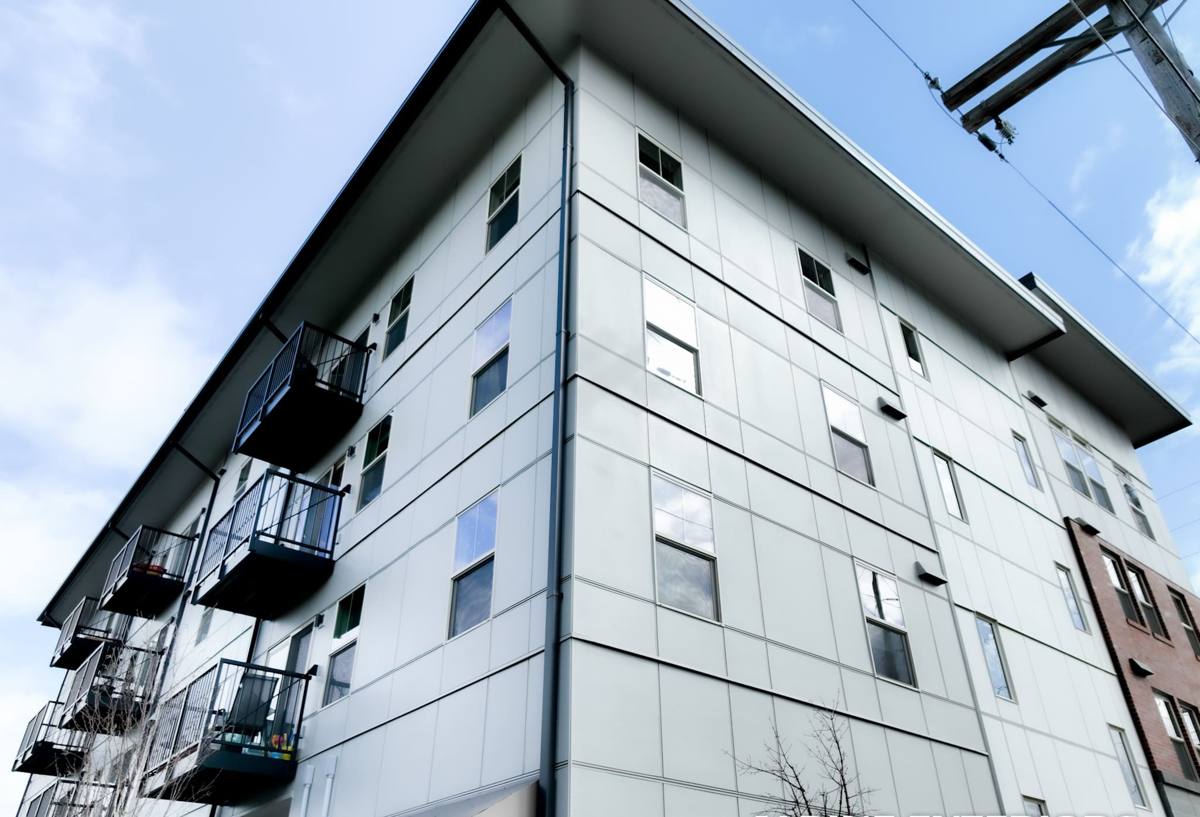
Why Fiber Cement Holds Up Where Other Materials Struggle
Fiber cement siding is made from cellulose fiber, sand, and Portland cement, pressed and cured into planks that don't swell, rot, or delaminate the way wood-based products can. It doesn't feed mold or moss the way organic wood fiber does, and it holds paint and factory finish far longer because the material itself is dimensionally stable — it doesn't expand and contract with every wet-dry cycle the way wood and wood-composite sidings do.
That matters enormously in a climate like Custer's. A siding product that swells slightly every time it absorbs moisture, then shrinks as it dries, is constantly working its seams and fasteners loose. Over ten or fifteen wet seasons, that cycle is what causes cupping, cracking, and the gaps where moisture finally gets behind the cladding. Fiber cement doesn't go through that cycle the same way, which is a big part of why it's become the standard for homes in wet, coastal Pacific Northwest counties.
Why We Only Install James Hardie
Fiber cement is a category, not a single product, and the quality gap between brands is real. We install James Hardie exclusively — not LP SmartSide (which is a wood-strand product, not fiber cement), not vinyl, not Cemplank, not Allura, and not primed spruce or cedar. Hardie's engineered-for-climate product lines, factory-applied ColorPlus finish, and a long track record in wet regions like ours are why we standardized on it. We're happy to explain the trade-offs of other products if you're weighing options, but it's not what we put on homes.
What "Correct" Fiber Cement Installation Actually Means
Fiber cement siding is only as good as the installation behind it. In a climate that stays damp for much of the year, the details that get skipped on a rushed job are exactly the details that determine whether a house stays dry for the next 30 years or starts showing water damage in five.
- Proper clearance and flashing — siding held off decks, patios, and grade with the manufacturer's minimum clearance, and flashed correctly above windows, doors, and any horizontal trim.
- Rainscreen or drainage plane — a gap or drainage layer behind the siding so any moisture that does get past the cladding has somewhere to go instead of sitting against the wall sheathing.
- Correct fastener pattern and depth — Hardie specifies fastener placement and how far they can sit from panel edges; get this wrong and you create stress points where cracking starts.
- Sealed and painted cut edges — every field cut exposes raw material that has to be primed and sealed before installation, not left bare where it will wick moisture.
- Correct joint treatment — butt joints, corners, and trim need the right combination of caulking, flashing, or engineered joiners depending on the detail.
Every one of these steps takes more time than skipping it. That's exactly why they get skipped on jobs where the crew is being paid by the house instead of by the hour, and it's exactly why they matter most in a climate that gives moisture every opportunity to find a way in.
James Hardie's Climate Engineering
James Hardie manufactures different formulations of fiber cement for different climate zones — a system the company calls HardieZone. Products built for HZ5 conditions, which cover much of the Pacific Northwest, are engineered with moisture and mildew resistance as a priority, rather than being optimized for freeze-thaw cycling the way products in colder, drier climates are. That's a meaningful distinction for a Whatcom County home: the siding on your walls should be built for the specific way this climate tries to break it down, not a generic version of "fiber cement."
On top of the base material, ColorPlus factory finish is baked on and cured under controlled conditions before the siding ever reaches the jobsite, giving it a bond and UV resistance that field-applied paint struggles to match — especially in a climate where painting crews are often racing weather windows to get a coat on and dry before the next front moves through.
Fiber Cement vs. the Alternatives
| Material | How It Handles Custer's Climate | Long-Term Maintenance |
|---|---|---|
| James Hardie fiber cement | Dimensionally stable, resists moss growth and moisture absorption, engineered finish holds color | Occasional wash; repaint is rarely needed within the warranty period |
| Vinyl siding | Doesn't rot, but flexes and can warp under heat/cold swings; seams are a common moisture entry point | Low upkeep but fades, cracks with age, and is difficult to repair invisibly |
| LP SmartSide (wood-strand) | Engineered wood product — more moisture-resistant than raw lumber, but still an organic wood substrate | Requires consistent caulk and paint maintenance to keep moisture out of cut edges |
| Primed cedar or spruce | Attractive but highly moisture-sensitive; moss and rot risk is highest of the group in this climate | Frequent repainting, sealing, and moss treatment |
Our Process, Start to Finish
Every project starts with a walk-around of the home, not a generic quote. We look at which elevations take the worst weather exposure, where moss and water staining are already showing up, and what condition the sheathing and trim are in underneath the existing siding — you can't quote a fiber cement job responsibly without knowing what's behind the old material.
- On-site evaluation — exposure, existing damage, trim and flashing condition, and a written scope before any demo begins.
- Tear-off and inspection — old siding removed, sheathing checked for rot or soft spots, and any damage addressed before new material goes up.
- Weather barrier and drainage plane — installed correctly the first time, since this layer is invisible once siding goes back on.
- Hardie installation to spec — correct fastening, flashing, clearances, and joint treatment throughout.
- Final walkthrough — trim, caulking, and paint touch-up reviewed with you before we call the job done.
What a Custer Fiber Cement Project Typically Costs
Every home is different, but the same handful of factors drive most of the cost variation we see on projects in this area. We give firm written quotes after the on-site evaluation — not before.
| Cost Factor | Why It Matters |
|---|---|
| Home size and elevation count | More square footage and more corners/trim detail means more labor and material |
| Condition of existing sheathing | Rot or moisture damage found during tear-off adds repair scope before new siding can go up |
| Siding profile and trim style | Lap width, shake-style panels, and trim complexity affect both material and labor cost |
| Access and site conditions | Steep lots, mature landscaping, and tight access around outbuildings slow the job down |
| Color and finish choice | Factory ColorPlus finish vs. field-applied paint changes both cost and long-term maintenance |
Living With Fiber Cement in a Moss-Prone, Salt-Air Climate
Correctly installed Hardie siding is genuinely low-maintenance here, but "low-maintenance" doesn't mean "no maintenance." A periodic gentle wash — a garden hose and soft brush, not a pressure washer aimed at close range — keeps moss and airborne salt film from building up, particularly on shaded, north-facing walls. Keep gutters clear and downspouts directed away from the foundation so water isn't sheeting down the siding face. Trim back vegetation that's holding moisture against the wall; plants that shade siding also keep it damp longer after every rain, which is exactly the condition moss needs to take hold.
Check caulking at trim joints and penetrations (hose bibs, vents, light fixtures) every year or two, since caulk is the one component in the system that wears out faster than the siding itself. Catching a failed bead of caulk early is a five-minute fix; ignoring it for a few wet seasons can mean repairing sheathing underneath.
Signs It's Time to Replace Your Siding
- Soft or spongy spots when you press on the siding, especially near the bottom courses or under windows
- Paint that keeps failing in the same spots no matter how often it's touched up
- Persistent moss or dark staining that comes back within weeks of cleaning
- Visible gaps, warping, or cupping at panel edges and seams
- Rising energy bills that coincide with drafts you can feel near exterior walls
- Interior signs — peeling paint, musty smell, or discoloration on walls that back up to exterior siding
Why It Matters That We Work This Area Regularly
A crew that installs siding across a wide radius, with Blaine and the surrounding Whatcom County communities as regular stops rather than occasional out-of-town jobs, has already seen how this specific climate treats a house over time. We know which elevations in this area take the worst wind-driven rain, how fast moss re-establishes on shaded walls, and what a job needs to hold up through a winter storm season rather than just looking good on installation day. That familiarity shows up in the details — flashing choices, clearance decisions, and where we tell a homeowner a repair won't cut it and a section needs to be done right.
If you're weighing a siding project on a Custer property, we'll walk the house with you, give you an honest read on what's going on behind the existing siding, and put together a clear, no-pressure estimate for a correctly installed James Hardie system built for this climate. Use the form below to get started.