 Blaine Exterior
 Custer Roofs Work Harder Than Most People Realize
Custer sits close enough to the water that salt-laden air, wind-driven rain, and a moss season that can run eight months or more all show up on local roofs earlier than they would fifty miles inland. Whatcom County's marine climate isn't extreme in the way a hurricane zone is extreme, but it's relentless. It's the steady, year-round exposure that wears out a roof — not one big storm, but hundreds of soggy, gray weeks that never quite dry out between rain events.
A roof that's installed correctly for this environment looks a lot like a roof installed anywhere else on the surface. The difference is underneath: the flashing details, the underlayment choice, the attic ventilation, and the fastening pattern all get adjusted for wind-driven rain and sustained moisture rather than dry heat or heavy snow load alone. When those details get skipped or rushed, homeowners usually don't find out until years later, when moss has worked into the shingle mat or water has found its way under a poorly lapped valley.
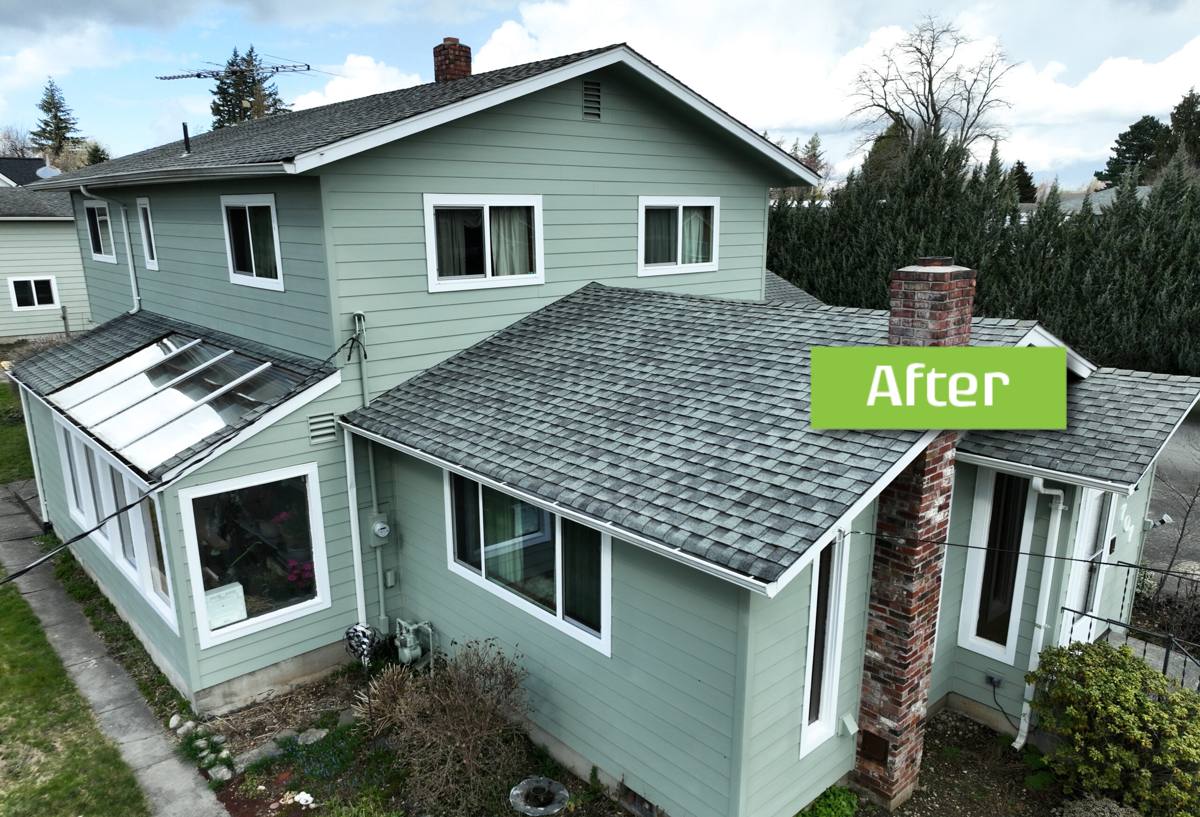
What Custer's Climate Actually Does to a Roof
Salt Air and Metal Fasteners
Homes closer to Semiahmoo Bay, Drayton Harbor, and the Strait catch airborne salt that accelerates corrosion on exposed metal — nail heads, flashing edges, gutter hardware, and vent stacks. Standard galvanized fasteners can start showing rust streaks well before the shingles themselves are due for replacement. It's a slow process, but it's cumulative, and it's one of the reasons fastener and flashing material matters more here than in a dry inland climate.
Driving Rain, Not Just Rain
Whatcom County rain often comes sideways off the water with real wind behind it. That changes how water behaves on a roof surface — it doesn't just run downhill, it gets pushed sideways and can work under shingle edges, around vent boots, and into valleys that would shed water fine in a calmer climate. Roofs here need generous underlayment coverage and flashing laps sized for wind-driven moisture, not just gravity drainage.
Moss: A Long-Season Problem
Shade, moisture, and mild temperatures are exactly what moss wants, and Custer's tree cover and damp winters give it most of a year to establish. Moss isn't just cosmetic — its root structures hold moisture against the shingle surface and can lift shingle edges over time, which is how small moss patches turn into leaks a few seasons later.
What a Correct New Roof Installation Involves
A new roof is more than shingles nailed to plywood. The parts nobody sees from the ground are what determine whether the roof performs for its full service life in this climate.
- Tear-off and deck inspection: Old roofing comes off down to the deck so we can check for soft spots, rot, or delamination before anything new goes down — covering over a compromised deck just hides the problem.
- Ice and water shield at vulnerable points: Eaves, valleys, and roof-to-wall transitions get a self-adhering waterproof membrane, since these are the spots wind-driven rain most often finds a way in.
- Synthetic underlayment across the field: A durable synthetic underlayment gives a second line of defense under the shingles and holds up better than old-style felt in a climate that stays damp for long stretches.
- Flashing at every penetration and transition: Chimneys, skylights, sidewalls, and vent stacks all need properly lapped, corrosion-resistant flashing — this is the single most common source of roof leaks when done wrong.
- Balanced attic ventilation: Intake at the eaves and exhaust at the ridge keep moist air moving out of the attic, which reduces condensation on the underside of the deck and helps discourage moss by keeping the roof surface drying properly.
- Correct fastening for wind exposure: Nail placement and count matter for wind resistance, especially on roofs with open exposure toward the water.
Tear-Off vs. Overlay
Overlaying new shingles on top of an old layer is sometimes allowed by code and can look like a shortcut worth taking, but it means skipping the deck inspection and trapping whatever moisture or damage is already there. In a climate that stays wet as much as Whatcom County does, we recommend a full tear-off on most jobs — it costs more up front but it's the only way to actually know what condition the deck is in and to install underlayment and flashing correctly.
Comparing Roofing Materials for Custer Conditions
| Material | How It Handles Local Climate | Maintenance Considerations |
|---|---|---|
| Architectural asphalt shingle | Good performance for the cost; algae-resistant granule options help slow moss and staining | Periodic moss removal and gutter clearing recommended |
| Standing seam metal | Sheds wind-driven rain very effectively, long service life, resists moss buildup better than most materials | Higher upfront cost; requires correct fastener and underlayment detailing to avoid galvanic issues |
| Cedar shake | Traditional look that fits older homes in the area | Needs more frequent moss and moisture maintenance than asphalt or metal; shorter service life in sustained damp conditions |
| Synthetic/composite shingle | Designed to resist moisture absorption and moss better than wood | Product quality varies significantly by manufacturer — we vet warranty terms and real-world track record before recommending a specific line |
There's no single "right" material for every home — it depends on the roof's exposure, the home's style, and the homeowner's maintenance appetite. We'll walk through the honest trade-offs for your specific roof rather than pushing whatever's easiest to install.
Our Installation Process
- On-site inspection and estimate: We look at the current roof, attic ventilation, and any problem areas, and give a straightforward written estimate — no pressure, no inflated "act now" pricing.
- Material selection: We go over the options that make sense for your home's exposure and budget, including how each holds up to salt air and moss over time.
- Scheduling around Whatcom County weather: We plan installation windows with realistic weather margins rather than rushing a roof onto a house between rain systems.
- Tear-off, deck repair, and dry-in: Old roofing comes off, the deck gets inspected and repaired as needed, and the roof is dried in with underlayment the same day whenever possible so it's never left exposed overnight.
- Flashing, shingle or panel installation, and ventilation tie-in: Every flashing detail and ventilation component is installed to manufacturer spec, not just "close enough."
- Final walkthrough: We review the finished roof with you, explain what maintenance (if any) it needs going forward, and make sure you're clear on warranty coverage.
Living With a New Roof in a Wet, Salty Climate
Even a correctly installed roof benefits from a little seasonal attention in this part of Whatcom County. None of this is complicated, but skipping it is how small issues turn into replacement-sized ones.
- Keep gutters clear so water isn't backing up under the roof edge during heavy rain.
- Trim back overhanging branches where practical — less shade means faster drying and less moss growth.
- Have moss growth addressed before it spreads across a full slope, rather than after.
- Check attic ventilation isn't blocked by insulation or storage, since airflow is a big part of what keeps moss and moisture in check.
- After major windstorms off the Strait, a quick visual check for lifted or missing shingles can catch a small repair before it becomes a leak.
Permits and Local Considerations
Roof replacement in unincorporated Whatcom County typically involves a building permit, and the work needs to meet Washington State Building Code requirements for wind exposure and, where applicable, ventilation. We handle permitting as part of the job rather than leaving it for the homeowner to sort out. Given Custer's proximity to open water, we also pay attention to wind exposure ratings when specifying fastening patterns and material wind ratings — a detail that's easy to overlook but matters when storms roll in off the Strait.
Signs a Custer Home Needs a New Roof, Not a Repair
Not every roofing problem calls for full replacement, and we'll tell you honestly when a repair is the right call. But a few signs usually mean it's time to talk about a new roof rather than patching:
- Granule loss heavy enough that shingles look bald or patchy in spots
- Shingles that are cupping, curling, or cracking across multiple areas of the roof, not just one spot
- Persistent moss coverage that keeps returning even after cleaning
- Daylight visible through the roof deck from inside the attic
- A roof approaching or past the manufacturer's expected service life, especially if it's never had proper ventilation
Why It Matters to Hire a Crew That Already Works in Custer
Roofing crews that mostly work drier, inland climates sometimes install roofs that are technically code-compliant but not really built for what happens here — light underlayment coverage, minimal flashing overlap, or ventilation that's adequate on paper but doesn't account for how much moisture this area holds onto for months at a time. A crew that regularly works Custer and the surrounding Whatcom County area has already seen where those roofs fail, and builds in the extra margin from the start instead of learning the hard way on someone's house.
We'd rather walk your roof, give you a straight answer about its condition, and provide a clear, no-pressure estimate than talk you into more than you need. If you're weighing a repair against a full replacement, or just want a second opinion on a roof's condition, use the form below to request a free estimate — there's no obligation, and we'll tell you plainly what we find.