 Blaine Exterior
 Deck Building in Custer
Custer sits close enough to the water and to open farmland that a deck here takes a different kind of beating than a deck in a sheltered suburb. Homes in this part of Whatcom County deal with salt-laden air blowing in off the Strait, long stretches of driving rain through fall and winter, and a moss season that seems to start earlier and last longer every year. A deck built without those conditions in mind will look fine for a season or two and then start showing problems — soft spots, black staining, corroding hardware, boards that cup or split. A deck built for this climate holds up.
We build and repair decks throughout the Blaine and Custer area, and this page covers what that actually means: the materials, framing choices, and details that matter here, and the process we follow to get it right the first time.
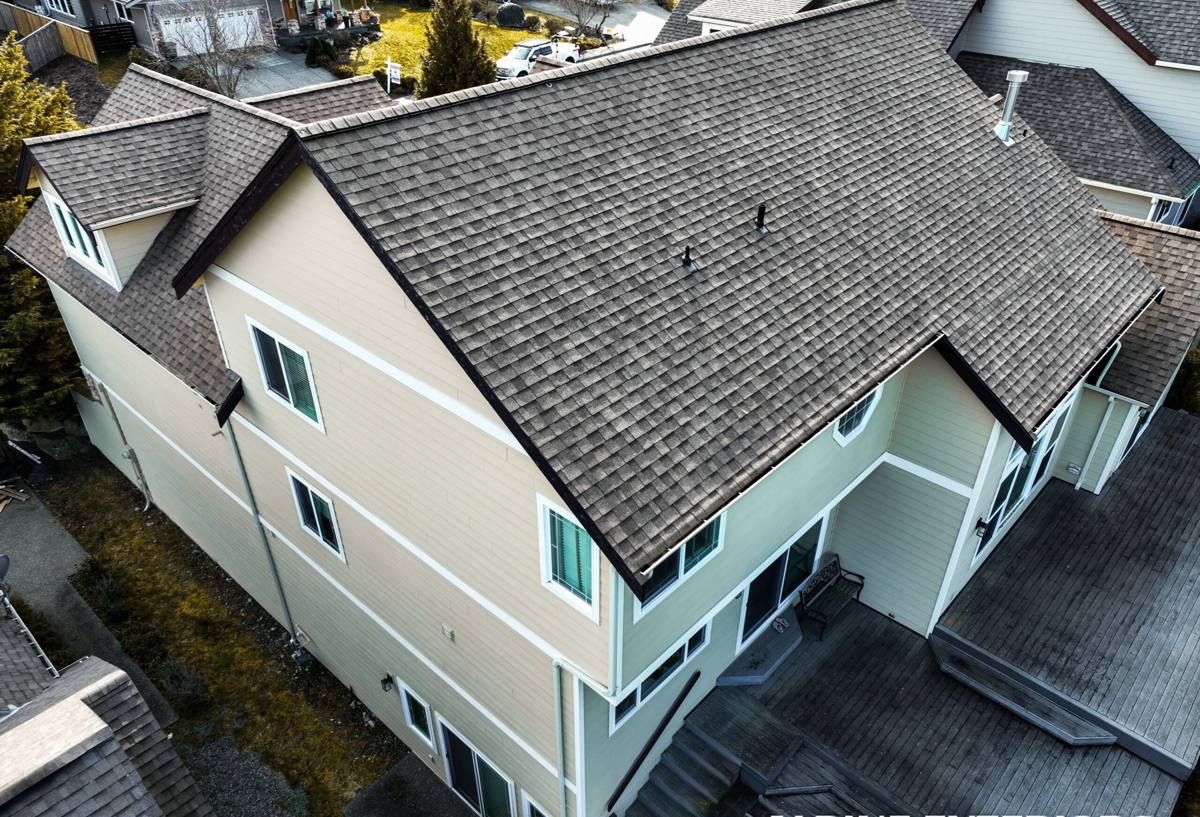
What Salt Air, Rain, and Moss Actually Do to a Deck
It helps to understand the specific ways a Custer deck fails, because it explains almost every decision in a well-built one.
Salt air and metal
Proximity to the water means airborne salt settles on everything outdoors, including your deck. Standard fasteners, brackets, and screws that aren't rated for coastal exposure will start rusting years before they should. Once a fastener corrodes, it loses holding strength — and on a structural connection like a ledger board or post base, that's not cosmetic, it's a safety issue.
Driving rain and water intrusion
Rain here doesn't just fall straight down — wind-driven rain gets pushed sideways and up under railings, ledger flashing, and fascia boards. Any gap in flashing or any spot where water can sit instead of shed becomes the starting point for rot, whether the structure underneath is wood or engineered lumber.
Moss, algae, and shade
Long wet seasons combined with tree cover and low winter sun angles mean moss and algae get a real head start on deck surfaces, especially on the north or shaded side of a house. Beyond being slippery, moss holds moisture against the board surface, which accelerates decay in wood decking and can dull or stain some composite products if it's left to build up.
Choosing Decking Material for This Climate
There's no single "best" decking material — the right choice depends on budget, how much upkeep you want to do, and how exposed the deck is to sun, shade, and moisture. Here's how the common options compare for a Custer property specifically.
| Material | Moisture/Moss Behavior | Maintenance | Typical Lifespan |
|---|---|---|---|
| Pressure-treated wood | Absorbs water; needs sealing to resist moss and staining | Annual cleaning, re-sealing every 1–2 years | 15–20 years with upkeep |
| Cedar | Naturally rot-resistant but still needs finish to fight moss and salt graying | Regular cleaning and re-staining | 15–25 years with upkeep |
| Composite decking | Doesn't absorb water like wood; moss can still grow on the surface film if shaded and dirty | Periodic washing, no sealing or staining | 25–30+ years, manufacturer warranty-backed |
| PVC/cellular decking | Fully water-resistant board; surface moss is a cleaning issue, not a decay issue | Occasional washing | 25–30+ years, manufacturer warranty-backed |
For shaded, north-facing, or heavily treed Custer lots, we lean homeowners toward composite or PVC decking, because the deck won't have the wood-on-wood moisture problem that drives rot. For sunnier, more open sites, a well-sealed cedar or treated wood deck can perform well and costs less up front, as long as the owner keeps up with cleaning and re-sealing.
Framing and Structure — What's Underneath Matters Most
A beautiful deck surface over a compromised frame is a short-lived deck. The framing is where we spend the most attention, because it's the part nobody sees once the project is done and the part that's expensive to fix later.
- Pressure-treated framing lumber rated for ground contact where posts meet soil or concrete
- Joist tape or a comparable capping product on top of every joist, to keep standing water out of the wood fibers
- Proper joist spacing and sizing for the actual span and the decking material chosen — composite and PVC boards often require tighter joist spacing than solid wood
- Post bases that hold the post above grade, not buried or sitting in standing water
- Diagonal or let-in bracing where the deck height or design calls for it, for lateral stability in wind
Skipping joist tape is one of the most common shortcuts we see on older decks in this area, and it's usually the reason a frame that's only 10–12 years old already has soft, spongy joists under the decking.
Ledger attachment and the house connection
Where a deck attaches to the house is the single highest-risk point for water intrusion, and it's also the connection carrying the most structural load. A correct ledger installation uses proper flashing integrated with the house's existing weather barrier — not just caulk over a bolted board — along with structural fasteners sized and spaced to code, not construction screws. Done wrong, this is exactly where wind-driven rain finds its way behind siding and starts rotting the rim joist you can't see from the deck side.
Railings, Fasteners, and Hardware
Because of the salt exposure in the Blaine and Custer area, we don't treat fasteners and hardware as an afterthought. Stainless steel or coated fasteners rated for coastal/marine exposure cost more than standard galvanized hardware, but the difference in corrosion resistance over 15–20 years is significant — a rusted-out railing bracket or a corroded joist hanger is a safety failure, not just an eyesore. The same logic applies to railing systems: cable rail and aluminum systems generally hold up better against salt air than untreated steel components, and composite or PVC railing avoids the repainting cycle that wood railing needs out here.
Drainage and Grading Around the Deck
A deck doesn't exist in isolation from the ground around it. Poor drainage at the base of posts or along the foundation line sends water right back up into the structure, which defeats even good framing choices. Part of doing this correctly means checking that:
- The ground slopes away from post footings and the house foundation
- Gutters and downspouts aren't dumping directly onto or under the deck
- Under-deck areas have enough airflow to dry out between rain events instead of staying damp
- Any low-clearance skirting still allows ventilation rather than sealing in moisture
Our Deck Building Process
We keep the process straightforward and walk you through each stage before it happens, not after.
1. On-site assessment
We look at sun exposure, shade and tree cover, prevailing wind and rain direction, existing drainage, and how the deck will connect to the house. This is where material and framing recommendations get shaped around your specific lot, not a generic template.
2. Design and material selection
We go over decking, railing, and fastener options with honest trade-offs on cost, maintenance, and lifespan — including which choices make the most sense given how much shade and moss exposure the site actually has.
3. Permitting
Most new decks and many substantial deck replacements in Whatcom County require a building permit, particularly once you're above a certain height or attaching structurally to the house. We handle the permit application and coordinate inspections as part of the project, so you're not left navigating that alone.
4. Framing and structural work
This is where the joist tape, ledger flashing, footings, and hardware choices described above actually get built — and where a required inspection typically happens before decking goes down.
5. Decking, railing, and finish work
Surface installation, railing, stairs, and any trim or skirting go in last, followed by a final walkthrough with you.
6. Final inspection and walkthrough
We confirm the deck passes any required inspection and go over basic care so you know what to expect in year one.
Before You Start: A Practical Checklist
If you're planning a deck project in Custer, these are the questions worth answering early — either with us during the assessment or on your own beforehand.
- How much direct sun does the deck site get, and how much shade/tree cover surrounds it?
- Is the deck attaching to the house, and if so, what's the current condition of the siding and wall assembly at that connection?
- Do you want a low-maintenance material (composite/PVC) or are you comfortable with a periodic cleaning and sealing routine (wood)?
- Is there an existing moss or drainage problem in that area of the yard already?
- What's the deck's primary use — dining and entertaining, hot tub support, simple access — since that affects framing and layout?
- Do you have a rough budget range in mind, since material choice affects cost more than almost any other decision?
Maintaining a Deck Once It's Built
Even the best-built deck needs some ongoing attention in this climate. A simple annual routine goes a long way:
- Sweep off leaves and debris regularly, especially in fall, so they don't trap moisture against the boards
- Wash the surface at least once a year to remove algae and moss buildup before it takes hold, focusing on shaded areas
- Check railing hardware and fasteners periodically for early signs of rust or looseness
- Re-seal or re-stain wood decking on the schedule the product calls for — don't wait until it's visibly gray and dry
- Keep gutters clear so runoff isn't landing on or under the deck
Why Hire a Crew That Already Works in Custer
Deck-building fundamentals don't change from town to town, but the details that determine whether a deck lasts 10 years or 30 do change with the site. A contractor who works regularly in Blaine and the surrounding Whatcom County communities already knows which fastener grade holds up against the salt air here, which corners of a lot tend to stay wet and mossy longest, and how local permitting works — instead of learning it on your project. That familiarity shows up in fewer surprises during the build and a deck that's actually built for the conditions it has to survive, not just built to a generic spec sheet.
If you're planning a new deck or need to replace one that's showing its age, we're happy to take a look and put together a straightforward, no-pressure estimate — just fill out the form below.