 Blaine Exterior
 Why Custer Homes Need Windows Built for This Climate
Custer sits close enough to the water that salt air is part of daily life, even on properties that don't have a water view. Add in the driving rain that comes through Whatcom County for months at a time, plus the shaded, tree-lined lots common in this area, and you've got a climate that's genuinely hard on windows. This isn't a place where you can install whatever's cheapest and expect it to hold up. The frame material, the flashing details, and the glass package all need to match what the weather actually does here, not just what a showroom brochure says it can handle.
Salt Air and Corrosion
Airborne salt doesn't need to be blowing hard to do damage. Over years, it settles on hardware, tracks, and fasteners, and it speeds up corrosion on anything that isn't rated for coastal exposure. Cheap aluminum hardware, uncoated screws, and bargain-grade weatherstripping all show their age faster near the water than they would twenty or thirty miles inland.
Wind-Driven Rain
Whatcom County storms often bring rain sideways, not straight down. A window that's fine in a light shower can still leak during a wind-driven storm if the flashing and sill pan weren't done correctly. This is one of the most common reasons we get called out to older Custer homes — not because the window itself failed, but because water was never properly directed away from the rough opening in the first place.
Moss, Shade, and Trapped Moisture
Custer has a lot of wooded and semi-rural lots, which means plenty of shade — and shade plus Pacific Northwest humidity is exactly what moss and algae need to take hold. On windows, that shows up as green growth in the tracks, on sills, and in corners that stay damp long after a rainstorm has passed. Moss itself doesn't destroy wood or vinyl overnight, but the moisture it holds against a surface accelerates rot in wood components and can work into seals that are already starting to fail.
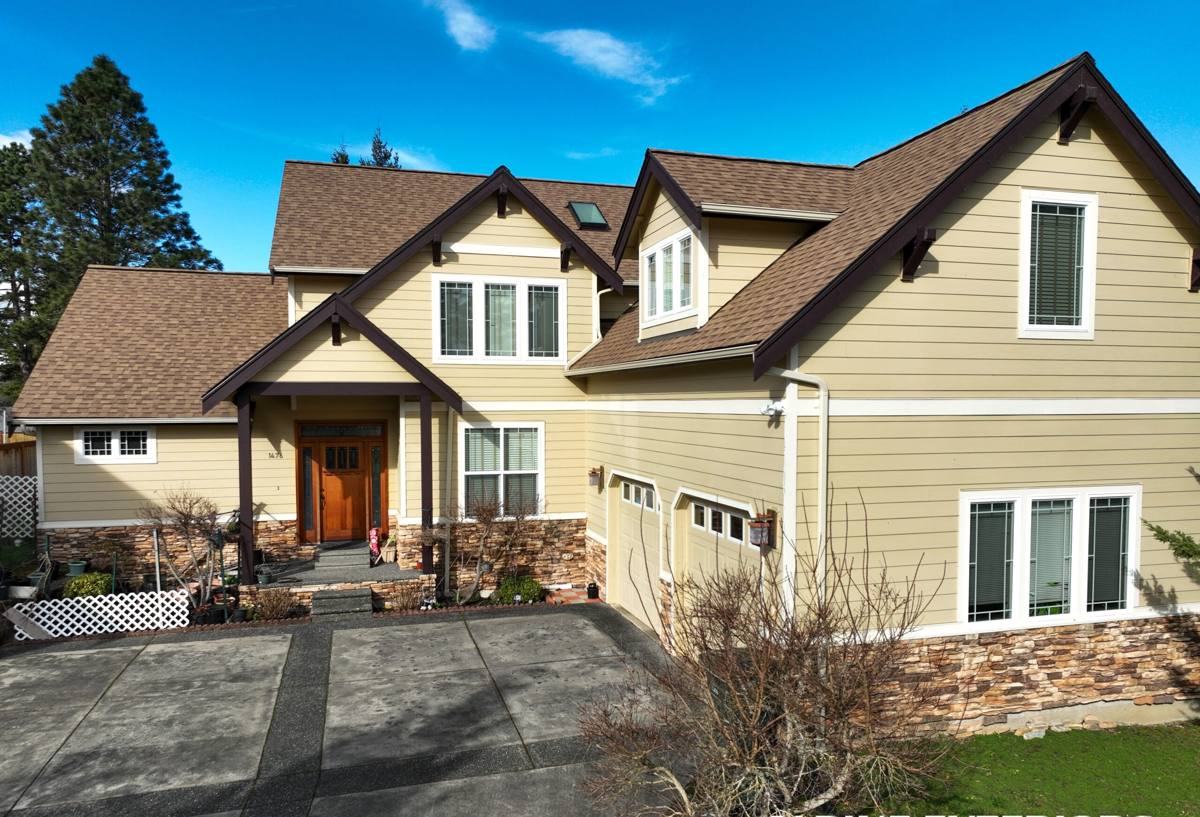
Signs a Custer Home's Windows Are Falling Behind
Most window problems don't show up as one dramatic failure — they show up as a handful of small annoyances that get worse over a few wet seasons. If you're seeing more than one or two of these, it's worth having someone take a real look rather than just re-caulking and hoping.
- Fogging or a hazy film between the panes of double-pane glass (a sign the seal has failed)
- Soft or discolored wood on the sill, jamb, or exterior trim
- Visible moss or dark staining building up in the tracks or lower corners
- Drafts you can feel near the frame even when the window is latched
- Windows that stick, won't stay open, or are hard to lock
- Paint that's bubbling or peeling right at the window frame, not the wider wall
- A noticeable jump in heating costs without any other explanation
- Condensation forming on the inside of the glass regularly through fall and winter
What a Correct Custom Window Installation Involves
"Custom" windows aren't just about picking a size off a chart — for a lot of Custer homes, especially older ones, the rough openings have shifted slightly over the decades as the house has settled. A correct job accounts for that instead of forcing a stock unit into a space it doesn't quite fit.
Flashing and Weatherproofing Details
This is the part of the job nobody sees once it's done, and it's also the part that matters most in a climate like this one. Proper flashing tape, a correctly sloped sill pan, and house wrap integration that directs water outward and downward are what actually keep wind-driven rain out — not just a bead of caulk around the trim. We treat this step as non-negotiable, because it's the difference between a window that lasts and one that leaks in five years.
Sealant and Fastening
Near the coast, fastener and sealant choice matters more than people expect. We use hardware and sealants rated for the moisture and salt exposure this area sees, not generic interior-grade products that break down faster once they're exposed to the elements.
Sizing for Custom Openings
On older Custer homes, it's common to find openings that are slightly out of square or a different size than what's listed on the original plans, if plans even exist. We measure every opening on site and either order a true custom size or shim and adjust so the finished window sits square, seals correctly, and operates smoothly — instead of papering over a gap with extra caulk.
Choosing the Right Frame Material for This Climate
There's no single "best" window material for every home — it depends on your budget, your home's style, and how much upkeep you're willing to do. Here's how the common options actually perform in a salt-air, high-rain environment like Custer's.
| Frame Material | Coastal/Moisture Performance | Maintenance | Typical Trade-Off |
|---|---|---|---|
| Vinyl | Good — won't rot or corrode | Low; occasional cleaning | Fewer color/finish options, can look less premium on older or higher-end homes |
| Fiberglass | Very good — stable in wet, swinging temps | Low | Higher upfront cost than vinyl |
| Wood-Clad | Good on the exterior clad side; interior wood needs protection from condensation | Moderate to high | Best look for period-style homes, but needs attentive upkeep near moisture |
| Aluminum | Prone to corrosion and condensation unless thermally broken and coastal-rated | Moderate | Slim sightlines, but we're selective about where we recommend it near salt air |
We'll walk through these trade-offs honestly during your estimate. If a product isn't a good fit for a shaded, damp lot or a home that catches wind straight off the water, we'll tell you that upfront rather than sell you something that'll give you problems in a few winters.
Our Process for Custer Jobs
On-Site Assessment
We start by looking at the actual conditions on your property — how much shade the house gets, which walls take the worst of the weather, and what kind of rot or wear the current windows are already showing. That tells us as much as the windows themselves do.
Install Day
Old windows come out, the opening gets inspected for hidden rot or water damage before anything new goes in, and flashing is done properly before the new window is set, shimmed, and sealed. We don't cover up problems we find — if there's rot behind the old trim, we'll show you and talk through fixing it as part of the job rather than sealing a new window over a compromised opening.
Final Walkthrough
Every window gets operated, checked for square, and inspected for a clean seal before we call the job done. We'll also point out anything you should keep an eye on going into the wet season.
Why a Crew That Already Works Custer and Blaine Matters
A contractor who works this specific stretch of Whatcom County already knows what the shaded lots and salt air do to a window over time, because they've seen it firsthand on other jobs nearby — not in a training manual. That familiarity shows up in small decisions: which sealants actually hold up here, how much slope a sill pan needs given the rain patterns, and which frame materials are worth the extra cost on a wooded, damp lot versus a more exposed one closer to the water. It also means someone local you can call if a question comes up after the job is finished, instead of chasing down a crew that was only in the area for one project.
Maintaining New Windows Through Whatcom County's Wet Season
Even a correctly installed window benefits from a little seasonal attention in a climate like this. A few habits go a long way:
- Clear leaves, needles, and debris out of tracks and sills before fall rains set in
- Rinse off moss or algae buildup on sills and lower sashes before it spreads or stains
- Check that exterior caulking around trim stays intact — touch up small cracks before they widen
- Wipe down interior condensation on cold mornings so it doesn't sit against the frame or sill
- Test locks and operation once or twice a year so hardware doesn't seize up from disuse
None of this takes much time, but it's the difference between windows that look and perform well for decades and ones that start showing coastal wear within a few years.
If your Custer home's windows are showing their age, or you're planning ahead of the next wet season, we're happy to take a look and give you a straightforward, no-pressure estimate. Use the form below and we'll get in touch to schedule a time that works for you.