 Blaine Exterior
 Board & Batten Siding in Custer's Climate
Custer sits in the part of Whatcom County where Pacific weather comes in hard off the water and doesn't let up for months at a time. Homes here deal with three things year-round: salt-laden air pulled in off the Strait, driving rain that hits siding at an angle instead of just running straight down it, and a moss season that can stretch from fall through spring on anything shaded or north-facing. Board and batten siding can hold up beautifully against all three — but only when the product and the installation are matched to what this specific area throws at a house. A board and batten job done the way it's done in a drier inland climate will not perform the same way in Custer.
That's the whole reason this page exists as its own thing rather than a generic write-up. What we install, how we flash it, and how we space and fasten it changes based on the fact that this is a coastal Whatcom County property, not a Spokane property or a Seattle-metro property with different exposure.
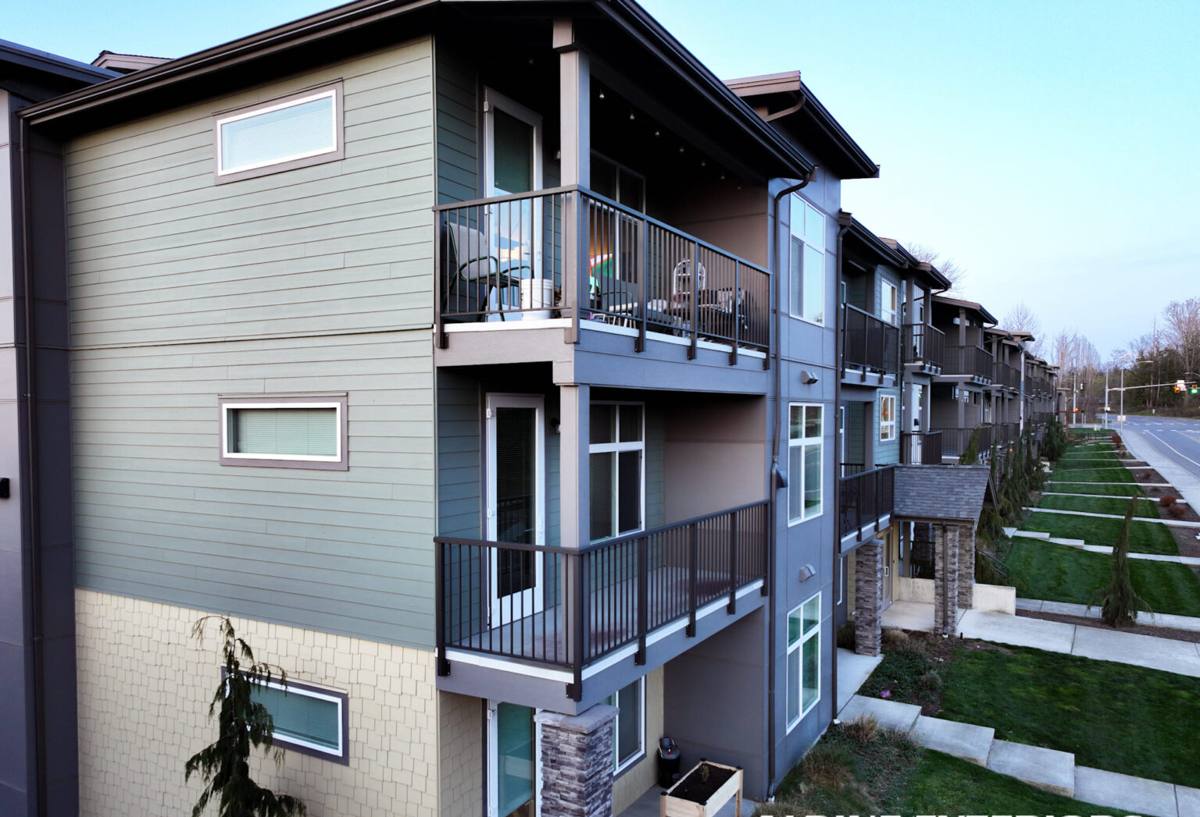
What Board and Batten Siding Actually Is
Board and batten is a vertical siding style: wide flat panels or boards run up the wall, and narrower strips (the "battens") cover the seams between them. It's one of the oldest siding patterns in American building, originally developed because it shed water well off vertical grain wood and didn't require the lap joints that horizontal siding needs. Today it's popular on farmhouse-style homes, modern builds, and as an accent alongside lap siding on gables, dormers, or entry features.
The style is popular for a reason beyond looks. Vertical panel siding has fewer horizontal ledges for water and debris to sit on compared to traditional lap siding, which matters in a region where rain doesn't just fall — it drives sideways into walls during a real Pacific storm. Done correctly, board and batten sheds that water down and off the wall instead of letting it pool at horizontal joints.
We install board and batten using James Hardie's fiber cement panel and batten system exclusively. That means factory-engineered vertical panels paired with Hardie trim battens, not site-cut wood boards and not engineered wood panels. Fiber cement doesn't absorb water the way wood-based products do, which is the single biggest factor in how a board and batten wall performs over ten or twenty years in a coastal climate.
What a Correct Installation Requires Here
A drainage plane behind the panels
Vertical siding needs a way for any moisture that gets behind it to escape downward and out. That means a proper weather-resistive barrier and, on most Custer homes, a rainscreen gap — a small air space between the back of the siding and the wall sheathing — so water doesn't sit trapped against the panel. Skipping this step is one of the most common corners cut on board and batten jobs, and it's invisible once the siding is up, which is exactly why it matters who's doing the work.
Fastening and batten spacing built for wind-driven rain
James Hardie publishes specific fastener types, spacing, and embedment depth for its panel and batten systems, and those specs assume the product will face real weather exposure. In a driving-rain area like Custer, we don't loosen up on fastener spacing or substitute shorter nails to save time — under-fastened panels flex, and flexing panels open seams that let water in.
Flashing at every horizontal break
Every place a board and batten wall meets a window, door, roofline, or foundation is a place water wants to get behind the siding. Head flashing over openings, proper kick-out flashing where rooflines meet walls, and correct starter strip installation at the base of the wall all matter more here than in a climate that doesn't get wind-driven rain for half the year.
Sealant choices that survive salt exposure
Not every exterior sealant holds up the same way near salt air. We use sealants rated for the exposure and UV conditions the product will actually face, and we keep caulking to the joints that are designed to be caulked — over-caulking a board and batten wall can trap moisture just as easily as under-caulking it can let moisture in.
Board and Batten vs. Traditional Lap Siding for a Custer Home
Homeowners often ask whether board and batten or standard lap siding makes more sense for their house. Both are viable with James Hardie products; the right call usually comes down to style goals, wall exposure, and budget. Here's how they compare on the factors that matter most locally:
| Factor | Board & Batten (Vertical) | Lap Siding (Horizontal) |
|---|---|---|
| Water shedding on wind-driven rain walls | Fewer horizontal ledges; sheds water downward efficiently | Good, but each lap edge is a spot water can be pushed into under wind pressure |
| Look | Farmhouse, modern, or accent style | Traditional, classic, most common in the region |
| Moss and algae staining | Vertical grain sheds debris faster; less horizontal buildup | Horizontal laps can hold moisture and organic buildup longer in shaded areas |
| Typical use | Full walls, gables, or accent sections | Full wall coverage, most common default |
| Installation labor | More cutting and batten fitting; moderately more labor | Straightforward, well-established install pattern |
Plenty of Custer homes end up using both — lap siding as the primary field and board and batten as a gable or accent feature — and that combination works fine as long as the flashing detail where the two meet is handled correctly.
How We Approach a Board and Batten Project in Custer
Assessment and wall exposure check
We walk the home and identify which walls take the worst of the weather — usually the sides facing open exposure toward the water or prevailing wind — versus which are more sheltered. This changes fastening detail, rainscreen decisions, and sometimes even which Hardie finish makes sense where.
Removal and substrate check
Old siding comes off and we check the sheathing underneath for rot or moisture damage before anything new goes up. In a climate like this, hidden water damage behind old siding isn't rare — finding it now is far cheaper than finding it in ten years.
Weather barrier and drainage plane installation
New weather-resistive barrier goes on, with rainscreen furring where the wall assembly calls for it, before a single panel is hung.
Panel and batten installation to spec
Panels and battens go up to James Hardie's published fastening and spacing requirements, not a shortcut version of them.
Trim, flashing, and finish work
All flashing, trim, and sealant work gets finished, and if the job uses factory ColorPlus finish, we protect that finish through installation so the warranty stays intact.
Final walkthrough
We walk the finished job with the homeowner before calling it done, so nothing gets signed off that wasn't actually checked.
Living With Board and Batten Siding in a Salt Air, Moss-Prone Area
Fiber cement board and batten is genuinely low-maintenance compared to wood alternatives, but "low-maintenance" doesn't mean "no maintenance" in this climate. A little seasonal attention keeps it looking right and keeps small issues from becoming expensive ones:
- Rinse the exterior once or twice a year to clear salt residue, especially on walls facing open exposure
- Check shaded and north-facing sections for early moss or algae growth before it spreads
- Inspect caulking at trim, windows, and battens annually for cracking or separation
- Keep gutters clear so overflow doesn't run down and sit against the base of the siding
- Trim back vegetation and landscaping that keeps a wall section shaded and damp longer than the rest of the house
- Have flashing and sealant checked after any major windstorm, since driving rain finds weak points fast
Why We Only Install James Hardie for This Work
We get asked why we don't offer board and batten in vinyl, LP SmartSide, primed wood, or other engineered panel products. The honest answer is that we standardized on James Hardie fiber cement because it holds up to the specific abuse this climate delivers: it doesn't absorb water and swell the way wood-based panels can, it's non-combustible, it carries factory-baked ColorPlus finish options that resist the fading salt air and UV exposure cause over time, and it comes with a strong transferable warranty backed by a manufacturer that engineers products specifically for climates like this one (their HZ5 line is built for exactly this kind of Pacific Northwest exposure). Other products aren't necessarily bad products — but we'd rather install one system extremely well and stand behind it fully than spread our crews thin across materials that each have their own moisture and maintenance trade-offs.
Why Hiring a Crew That Already Works in Custer Matters
Board and batten installation is less forgiving of mistakes than lap siding because there are more vertical seams, more battens, and more places for a rushed or unfamiliar install to go wrong. A crew that already works Custer and the surrounding Whatcom County coastline knows which walls on a given lot orientation take the worst wind-driven rain, understands the local permitting and inspection process, and has already seen how moss and salt exposure play out on real homes here over multiple seasons — not just in a manufacturer's spec sheet. That local track record is what turns a correct installation on paper into siding that actually performs for decades.
If you're considering board and batten siding for a home in Custer, we're happy to walk the property, talk through where it makes sense on your house, and put together a free, no-pressure estimate — no obligation, just straight answers. The form below gets you started.