 Blaine Exterior
 Metal Roofing in Custer: Built for This Stretch of Whatcom County
Custer sits close enough to the water that salt air is just part of daily life, and far enough inland that homeowners sometimes assume it doesn't matter. It does. Metal roofing installed correctly in this pocket of Whatcom County has to account for salt-laden moisture, long stretches of driving rain off the Strait, and a moss season that can run from fall through spring. A roof that would perform fine in a dry inland climate can fail early here if the details are wrong. This page is about doing metal roofing right for Custer homes specifically — not a generic overview of what metal roofing is.
Blaine Exterior Co works this area regularly, which matters more than it sounds like it should. A crew that only shows up once knows metal roofing in general. A crew that works Custer, Blaine, and the surrounding Whatcom County coastline knows how this specific climate treats fasteners, flashing, and finishes over years, not just on install day.
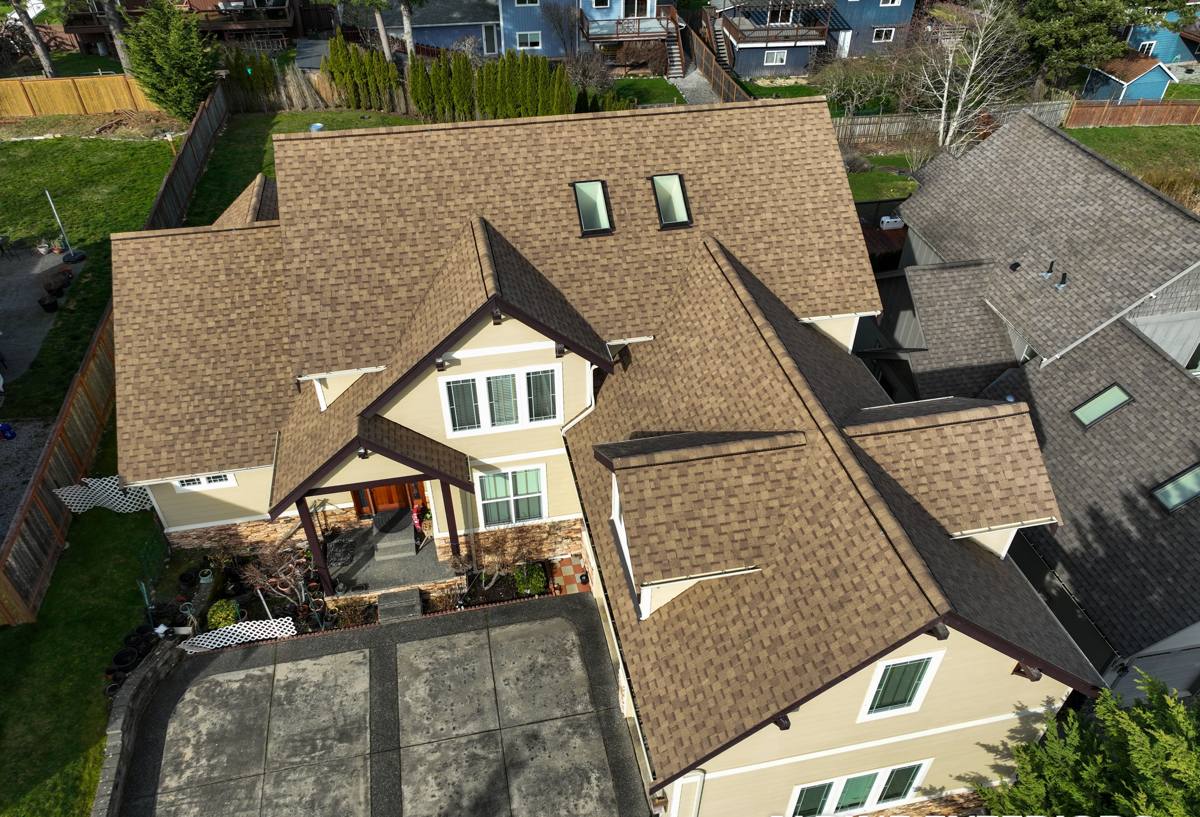
Why Custer's Climate Is Hard on Roofing
Three things stack up against roofs here, and they compound each other.
Salt Air
Proximity to Puget Sound and Semiahmoo Bay means airborne salt reaches roof surfaces even on homes that aren't waterfront. Salt accelerates corrosion at any point where bare or scratched metal is exposed — cut edges, fastener heads, and scuffed coatings. Over time, untreated exposure points become the first place a metal roof shows its age.
Driving Rain
Storms here don't just fall straight down — wind pushes rain sideways and up under laps, seams, and flashing that weren't detailed for that kind of pressure. A metal roof that's watertight in calm rain can still leak in a wind-driven storm if the underlayment and flashing weren't built with that in mind.
Moss Season
Shade, moisture, and mild temperatures give moss a long season to establish itself on north-facing slopes and anywhere debris collects. Moss holds moisture against the roof surface far longer than open sun and wind would allow it to dry, and it works into laps and seams over time, which is exactly where you don't want standing moisture on a metal roof.
None of these factors are unique to Custer, but the combination — salt, wind-driven rain, and moss, all at once, most of the year — is what makes a properly detailed installation matter more here than in drier or more sheltered parts of the county.
What a Correct Metal Roof Installation Actually Involves
Metal roofing is often sold on the panel — the color, the profile, the metal gauge. That's the part homeowners see, but it's not the part that determines whether the roof performs for decades or needs attention in five years. The details underneath and around the panels do that.
Underlayment and Deck Prep
A synthetic, high-temp underlayment goes down first, with self-adhered membrane at eaves, valleys, and any low-slope transitions where wind-driven rain is most likely to find a way in. The roof deck gets inspected and repaired before anything goes over it — covering rot or soft sheathing with new metal just hides the problem.
Fasteners and Panel Attachment
Exposed-fastener panels rely on gasketed screws that seal at every penetration; those gaskets and screw coatings matter more in a salt-air environment, because a fastener that starts corroding becomes a leak point years before the panel itself would fail. Standing seam systems use concealed clips instead of through-panel fasteners, which removes most of those exposure points entirely — one reason it holds up well this close to the water.
Flashing, Laps, and Terminations
Valleys, wall-to-roof transitions, chimneys, and vent penetrations are where most metal roof leaks actually start — not in the open field of panels. Flashing needs to be lapped correctly for the direction of prevailing wind-driven rain, not just laid over the joint. This is the single most common shortcut on a rushed metal roof job, and it's the one that shows up as a leak during the first real storm.
Ventilation
Metal sheds water well, but a roof assembly still needs to breathe. Proper intake and exhaust ventilation keeps moisture from condensing under the deck, which matters in a climate where humidity stays high for long stretches of the year.
Metal Roofing Options We Install
Not every metal roofing system is built the same way, and the right choice depends on the home's roofline, budget, and how much low-maintenance performance the homeowner wants long term.
| System | How It Attaches | Best Fit | Trade-Offs |
|---|---|---|---|
| Standing seam | Concealed clips, no exposed fasteners | Homes wanting the longest maintenance-free run, coastal exposure | Higher upfront cost, requires experienced installers to detail correctly |
| Exposed-fastener panel | Gasketed screws through the panel face | Budget-conscious projects, outbuildings, simpler rooflines | Fasteners and gaskets need periodic inspection, especially in salt air |
| Stone-coated steel | Interlocking panels resembling shake or tile | Homeowners wanting a traditional look with metal's durability | More complex flashing details at transitions; coating integrity matters at cut edges |
We'll walk through which of these actually fits a given roofline and budget rather than defaulting to one system for every job — a complex roof with multiple valleys and dormers doesn't always call for the same system as a simple gable roof.
Our Process, Start to Finish
- On-site assessment — we look at the existing roof, deck condition, ventilation, and any problem areas (valleys, moss buildup, prior leak history) before quoting anything.
- System recommendation — based on the roofline and the homeowner's priorities, we recommend a panel type rather than upselling the most expensive option by default.
- Tear-off and deck repair — old roofing comes off, the deck gets inspected, and any soft or damaged sheathing is replaced before underlayment goes down.
- Underlayment and flashing — self-adhered membrane at vulnerable areas, synthetic underlayment across the field, new flashing detailed for wind-driven rain.
- Panel installation — panels installed to manufacturer spec for fastening pattern or clip spacing, with attention to expansion and contraction allowances.
- Ventilation check — intake and exhaust confirmed adequate for the finished assembly.
- Final walkthrough — we go over the completed roof with the homeowner, including what maintenance (if any) the system needs going forward.
Maintenance Custer Homeowners Should Actually Do
One advantage of metal roofing is how little maintenance it needs compared to other materials, but "little" isn't "none," especially with moss season working against you for months at a time.
- Clear debris from valleys and around penetrations each fall, before the wet season sets in
- Watch for moss establishing on shaded, north-facing slopes and remove it before it spreads
- Keep gutters and downspouts clear so water isn't backing up under eave flashing
- Have fastener heads and gaskets checked periodically on exposed-fastener systems
- Trim back overhanging branches that keep sections of roof shaded and damp longer than the rest
- After any major windstorm, do a visual check for lifted panels or displaced flashing
None of this requires a specialist visit every year, but a quick annual check catches small issues — a loosening fastener, a moss patch starting in a valley — before they become a leak.
What Affects the Cost
Metal roofing costs more upfront than asphalt shingles, and the range within metal roofing itself varies based on a few factors that matter more than the brand name on the panel.
| Factor | Why It Matters |
|---|---|
| Panel system | Standing seam runs higher than exposed-fastener panels due to labor and material |
| Roof complexity | More valleys, dormers, and penetrations mean more flashing labor, regardless of panel type |
| Deck condition | Rotted or damaged sheathing found during tear-off adds repair cost before panels go on |
| Tear-off vs. overlay | Removing old roofing adds cost but lets us properly inspect and repair the deck |
| Access and pitch | Steeper roofs and difficult access add labor time and safety equipment needs |
We give a written estimate that breaks these out rather than a single lump number, so homeowners can see where the money is actually going.
Why a Local Crew Makes a Real Difference
Metal roofing done wrong doesn't usually fail on day one — it fails two, three, five years in, when the fastener gaskets start to go or a flashing lap that wasn't cut for wind-driven rain finally lets water through during the right storm. A crew that's only installed a handful of metal roofs, or one that's not based near Blaine and Whatcom County, isn't around to stand behind that work or to know from experience what this specific stretch of coastline does to a roof over time.
Working Custer and the surrounding Blaine area regularly means we see how our own past installations hold up through multiple wet seasons, and we adjust details accordingly. That's a different kind of knowledge than reading a manufacturer's install manual once and moving on to the next region.
If you're weighing metal roofing for a Custer home, we're glad to walk the roof with you and give a straightforward, no-pressure estimate — just fill out the form below.