 Blaine Exterior
 Siding Built for Custer's Weather, Not Just Its Curb Appeal
Custer sits inland from the Strait of Georgia but still lives inside the same weather system that soaks Blaine and the rest of Whatcom County for much of the year. Homes here deal with a long wet season, salt-tinged air pushed in off the water, and enough shade from mature trees and overcast skies to keep exterior walls damp far longer than homeowners in drier climates ever have to think about. Siding in this part of Washington isn't just a cosmetic decision. It's the layer standing between your framing and a climate that rarely gives a wall a chance to fully dry out between storms.
We install siding on Custer and Blaine homes regularly, and the failures we get called out to fix almost always trace back to the same root causes: the wrong product for this climate, or a correct product installed with shortcuts that let moisture in. This page covers what a proper siding installation looks like for a Custer home, why we've standardized on one product system, and what our process actually involves from first look to final walk-through.
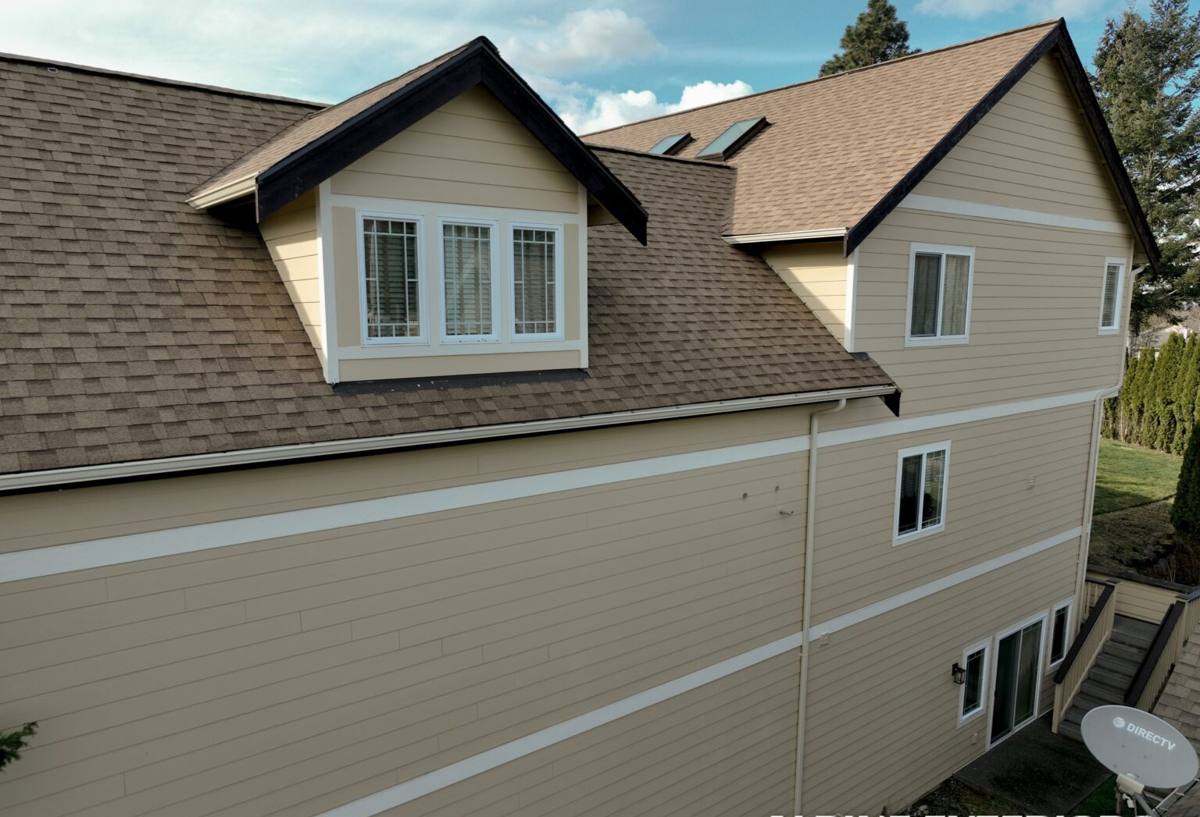
What Whatcom County Weather Does to Siding Over Time
Salt Air and Driving Rain
Even a few miles inland, coastal air carries moisture and salt content that accelerates corrosion on fasteners, trim, and any exposed metal flashing. Combine that with wind-driven rain off the Strait, and siding on the west- and south-facing walls of a Custer home takes a harder beating than the same product would in a landlocked town. Water doesn't just fall straight down here — it gets pushed sideways into laps, seams, and butt joints, which is exactly where poor installation work shows up first.
The Long Moss Season
Whatcom County's moss season isn't a few weeks in spring — it's most of the year. Shaded walls, north-facing elevations, and anywhere siding stays damp longer than it should become prime real estate for moss and algae growth. Beyond the cosmetic issue, moss holds moisture against the siding surface, which is a slow but steady path toward rot in wood-based products and paint failure in anything with a lesser factory finish.
Temperature Swings and Freeze-Thaw
Custer doesn't see the deep freezes of the Cascades' east side, but it does get enough freeze-thaw cycling in winter to matter. Any siding product that absorbs water and then freezes is working against itself — expansion and contraction at the surface level is how cracking and delamination start, especially in products that were never engineered for a marine climate to begin with.
Why We Install Only James Hardie Fiber Cement
We made a decision a while back to stop installing several products that are common in this region, and we think Custer homeowners deserve the honest reasoning behind that, not just a sales pitch for what we do sell.
What We Don't Install, and Why
- Vinyl siding: Inexpensive and low-maintenance in the right climate, but it flexes and can warp under heat and wear thin over decades of UV and moisture cycling. In a wet, salt-air climate, it's not the product we want our name on.
- LP SmartSide and other engineered wood products: Wood-strand composites perform fine when installed and maintained precisely, but any breach in the coating or a caulk joint that fails opens the door to moisture absorption and swelling — a real risk in a climate that doesn't let walls dry out quickly.
- Primed spruce and cedar: Beautiful, and we understand the appeal, but solid wood siding demands a maintenance schedule (repainting, re-caulking, moisture checks) that most homeowners underestimate. In Whatcom County's moss season, that maintenance burden is even heavier.
- Cemplank and Allura: Other fiber cement manufacturers make a reasonable product, but we've standardized our crews, fastening schedules, and warranty backing around one system so there's no ambiguity about spec, and that system is James Hardie.
What James Hardie Gets Right for This Climate
James Hardie fiber cement is non-combustible, dimensionally stable, and doesn't absorb and swell the way wood-based or composite products can. Its ColorPlus factory finish is baked on under controlled conditions rather than field-painted, which matters a lot in a region where field-applied paint has a narrow window of dry days to cure properly. Hardie also engineers specific product lines (HZ5, for example) for harsher, wetter climate zones, which is the category the Blaine and Custer area falls into. The result is a product that holds its finish, resists moisture damage, and doesn't need the repainting cycle that wood siding demands.
What a Correct Siding Installation Actually Involves
The product is only half the equation. We've seen Hardie siding installed poorly and fail early, and we've seen it installed correctly and outlast every warranty timeline. The difference is almost entirely in the details most homeowners never see once the job is done.
Water Management Comes First
Before a single piece of siding goes up, the wall needs a correctly lapped weather-resistive barrier, properly integrated flashing at every window, door, and penetration, and a rainscreen or drainage gap where conditions call for it. In a climate like Custer's, this layer is doing as much work as the siding itself — it's what moves incidental moisture back out instead of trapping it against the sheathing.
Fastening and Clearances to Spec
James Hardie publishes specific fastening patterns, clearances from grade, roof lines, and decks, and gapping requirements at butt joints and trim. Skipping these isn't a small shortcut — it's how caulk joints fail early, how moisture gets behind panels, and how a 30-year product ends up needing repair in year eight. We install to Hardie's published spec, not to whatever gets the job done fastest.
Caulking and Sealant Choices
Not every sealant performs the same in a marine climate. We use products rated for the movement and moisture exposure this region actually sees, and we pay particular attention to butt joints and trim intersections, which is where the vast majority of siding leaks originate.
Our Process for a Custer Siding Project
| Stage | What Happens |
|---|---|
| Initial walk-through | We inspect existing siding, sheathing condition where accessible, trim, flashing, and any moss or moisture staining that points to underlying issues. |
| Written estimate | A clear scope covering product line, color, trim details, and any sheathing or flashing repair the walk-through identified. |
| Prep and removal | Old siding comes off, sheathing is inspected and repaired as needed, and the weather-resistive barrier is installed or corrected. |
| Installation | Hardie panels or lap siding installed to manufacturer spec, with proper fastening, clearances, and flashing integration at every penetration. |
| Trim and finish detail | Corner boards, trim, and caulking completed with sealants suited to a wet, coastal climate. |
| Final walk-through | We review the completed work with you and confirm everything meets spec before calling the job done. |
Signs a Custer Home May Need New Siding Soon
- Persistent moss or algae growth that returns within weeks of cleaning
- Soft spots, bubbling, or visible swelling, especially near the bottom courses or around windows
- Paint that's peeling or chalking faster than a normal repaint cycle would suggest
- Visible warping or cupping in wood or composite panels
- Cracked or missing caulk at butt joints and trim intersections
- Rising energy bills that may point to a compromised weather barrier behind the siding
Why Hiring a Crew That Already Works This Area Matters
Custer and Blaine present a specific set of conditions — salt exposure, sustained rain, and a moss season that punishes any weak point in the building envelope. A crew that installs siding in a dry climate, or one that treats every job the same regardless of region, is more likely to miss the water-management details that matter most here. We work this part of Whatcom County regularly, which means our fastening schedules, flashing details, and sealant choices are already dialed in for what this climate actually does to a home, not for a generic installation manual written for a different part of the country.
There's also a practical side to hiring local: a crew based in the area is easier to reach for warranty follow-up, faster to respond if something needs a look after a hard storm, and has a reputation in the community that depends on doing the job right the first time.
Cost Factors Worth Understanding Before You Get an Estimate
| Factor | Why It Affects Price |
|---|---|
| Siding profile (lap vs. panel vs. shingle) | Different Hardie products have different material and labor requirements |
| Existing wall condition | Sheathing repair or moisture damage found during removal adds scope |
| Home size and wall complexity | More corners, gables, and trim details mean more labor time |
| Color and finish | ColorPlus factory-finished options vs. field-painted affects both cost and long-term maintenance |
| Flashing and water management upgrades | Bringing older detailing up to current standards is worth the investment in this climate |
We don't quote a price without seeing the home first — too many of these factors depend on what's actually happening behind the existing siding.
Get a Straightforward Estimate
If you're weighing a siding replacement for a home in Custer, we're happy to come take a look, explain what we see, and put together a clear, no-pressure estimate. There's no obligation, and you'll get an honest read on what your home actually needs.