 Blaine Exterior
 Windows Near Dakota Creek Take a Different Kind of Beating
Homes around Dakota Creek sit close enough to the water and the open air moving in off Semiahmoo Bay that window assemblies here work harder than they do just a few miles inland. Salt-laden air corrodes hardware and finishes faster than dry-climate coatings are designed to handle. Driving rain off the Strait doesn't just fall straight down — it gets pushed sideways into wall assemblies and window flanges during winter storms. And Whatcom County's long, damp shoulder seasons keep wood trim and sills wet for weeks at a stretch, which is exactly the condition moss, algae, and slow rot need to take hold.
None of that means Dakota Creek needs exotic materials. It means the installation details that get skipped on an easy inland job — flashing sequencing, sill pan drainage, sealant selection — can't be skipped here. A window that's a perfectly good product can still fail in five years if it's installed the way you'd install it in a dry, sheltered lot. Blaine's coastal exposure just doesn't forgive shortcuts the way other places do.
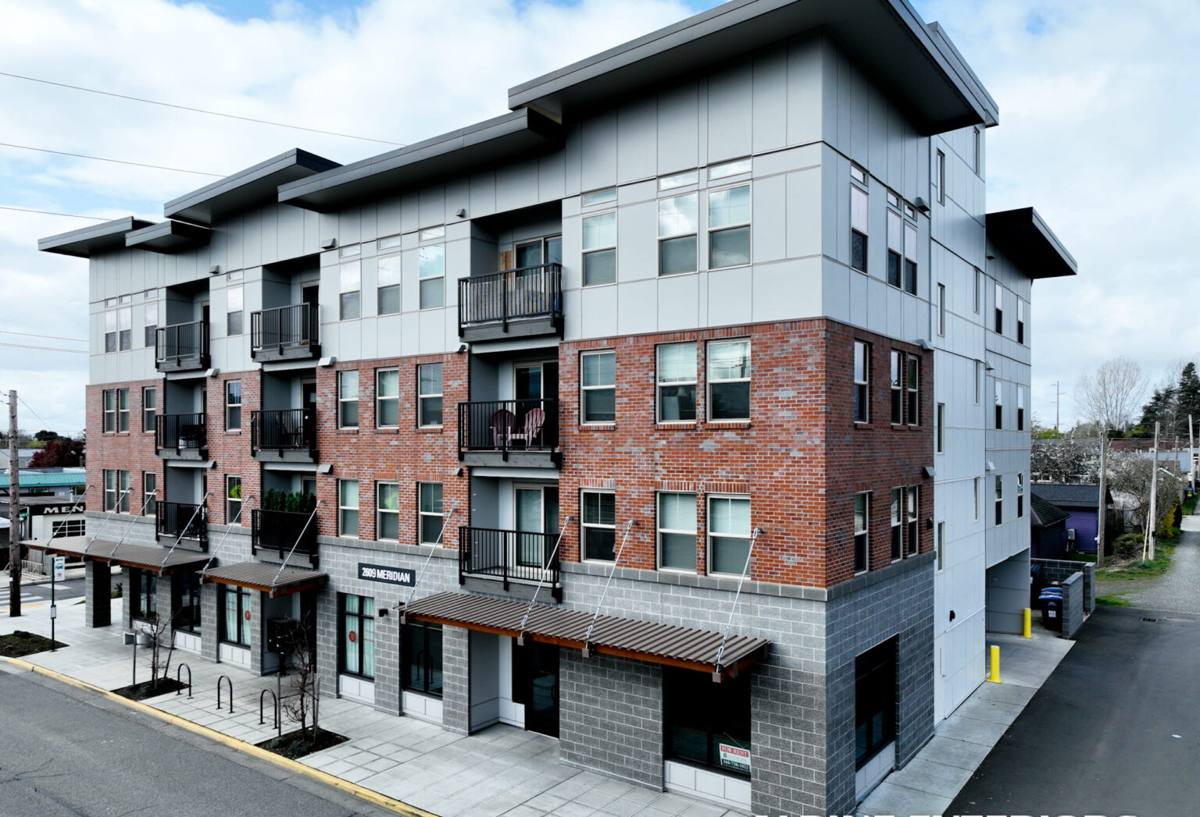
What "Correct" Actually Means for a Coastal Install
A window installation isn't really about the window — it's about how water is managed around it once the window is in the wall. Most leaks and rot we get called out to fix aren't product failures. They're installation failures: missing sill pans, tape run in the wrong order, or caulk asked to do a job that flashing should have done.
The non-negotiables on a job like this
- A sloped sill pan under every unit so any water that gets past the window has somewhere to go besides your wall framing
- Flashing installed shingle-style — each layer overlapping the one below it — so water is always directed outward and down
- Housewrap or weather-resistive barrier integrated with the flashing, not just taped over the top of it
- Backer rod and the right sealant at the exterior joint, sized for the gap rather than smeared on to hide a bad fit
- Shimming and fastening that keeps the frame square without racking it, so weatherstripping seals evenly for the life of the window
- Insulation in the gap between the rough opening and the window frame — not spray foam alone, which can bow thin vinyl frames if overfilled
Skip any one of these and the window can look fine for a year or two while water quietly works its way into the framing behind it. By the time it shows up as a soft spot on interior trim or a musty smell, the damage is usually already sitting in the wall.
Signs Dakota Creek Homeowners Shouldn't Ignore
Because moisture problems here build slowly, most homeowners notice the wrong things first — drafts and fogging — while the more expensive signs go unchecked longer.
- Condensation or fogging between the panes of a double-pane window (the seal has failed — it can't be fixed, only replaced)
- Visible black streaking or green film on the sill or lower frame, especially on north- and west-facing walls
- Paint or finish bubbling on interior trim below or beside the window
- A window that's noticeably harder to open, close, or lock than it used to be — frames can swell or shift as wood absorbs moisture
- A cold draft at the frame edge even when the window is fully latched
- Soft or spongy wood when you press on the exterior sill or trim
Any one of these on its own might just mean the caulk needs refreshing. Several together, especially on a window over ten or fifteen years old, usually means it's time to look at replacement rather than another round of patching.
Choosing a Window That Suits This Location
There's no single "best" window — there's a best fit for the exposure, the home's style, and the budget. For a property near Dakota Creek, we weigh frame material heavily because it's what stands between the glass and constant salt-air exposure.
| Frame Material | How It Handles Salt Air & Moisture | Maintenance | Typical Fit |
|---|---|---|---|
| Vinyl | Won't corrode or rot; performs well in coastal exposure | Low — occasional cleaning | Most homes, best value |
| Fiberglass | Very stable in wet/dry cycling, resists warping | Low | Homes wanting extra durability or larger openings |
| Wood (clad exterior) | Good if cladding is intact; bare wood exposed to salt air and rain needs more attention | Higher — watch exterior seams and joints | Homes prioritizing a traditional wood interior look |
| Aluminum | Conducts cold and can corrode faster near salt air unless properly finished | Moderate to high | Rare for residential use in this area; more common commercially |
We're upfront when a homeowner is drawn to a bare-wood exterior frame for looks: it can work, but it puts more of the long-term maintenance burden on you, and any lapse in upkeep shows up faster this close to the water. Clad wood, fiberglass, and quality vinyl all shift that maintenance burden down considerably, which is usually the right trade-off for a Dakota Creek property.
Glass matters too
Double-pane, low-E glass is the practical standard here — it cuts heat loss and helps control condensation on cold, damp mornings, which are common through the fall and winter. Argon-filled units add a modest efficiency bump. Triple-pane is available but usually only worth the added cost on a north- or water-facing wall that takes the brunt of the weather, or where street noise is a factor.
Our Process on a Dakota Creek Job
- On-site assessment — we check existing flashing, sill condition, and framing before quoting anything, since what's behind the old window changes the scope
- Measurement and product selection — exact rough opening measurements, and a frame/glass recommendation based on that wall's sun and rain exposure
- Removal — old unit comes out carefully so we can inspect the rough opening and sill for hidden rot or moisture damage before anything new goes in
- Repair as needed — any soft framing or compromised sheathing gets addressed before the new window goes in, not covered up
- Sill pan and flashing installation — built in the correct shingle-lapped order every time, no matter how routine the job looks
- Window setting and shimming — leveled, squared, and fastened per manufacturer spec so the unit operates and seals correctly for its full warranty life
- Insulation, air sealing, and exterior sealant — gap filled properly, exterior joint sealed with the right product for the joint size
- Interior and exterior trim finish and a final operational check — every window opens, closes, and locks smoothly before we call the job done
What It Costs, and What Drives That Number
Every job is quoted after we've actually looked at the opening, but the broad factors that move the price are consistent from house to house.
| Factor | Why It Affects Cost |
|---|---|
| Frame material and glass package | Vinyl is the entry point; fiberglass, wood-clad, and upgraded glass (triple-pane, extra low-E coatings) cost more per unit |
| Condition of the existing opening | Hidden rot or damaged sheathing found during removal adds repair time before the new window can go in |
| Window size and configuration | Large picture windows, bays, or custom shapes cost more to source and install than standard operable sizes |
| Number of openings done at once | Doing several windows in one visit is more efficient per-unit than one-off replacements |
| Access and story height | Second-story or hard-to-reach openings take more setup time and equipment |
| Trim and finish work | Matching existing interior trim or exterior siding detail adds labor beyond a bare install |
As a rough guide, homeowners in this area are typically looking at low-to-mid four figures per standard window installed, with larger or custom units running higher — but the only accurate number comes from seeing the actual opening.
Why a Crew That Already Works This Area Matters
Dakota Creek's exposure isn't something you learn from a manual — it's something you learn from being on roofs and at wall openings in this specific stretch of Whatcom County through enough winters to see how the moss builds, which walls take the worst of the driving rain, and where salt air chews through hardware first. A crew that already works Blaine knows to check for it before it becomes a bigger repair, and knows which flashing and sealant details actually hold up here rather than just on paper.
There's a practical side too: a local crew can get to your property faster for the initial look, faster for the install, and faster if a warranty check-up is ever needed. You're not paying for travel time or waiting behind a crew's other regional commitments.
Keeping New Windows Performing Long-Term
A correct install buys you years of trouble-free performance, but a little upkeep protects that investment in this climate specifically.
- Rinse salt residue off exterior frames and glass a few times a year, especially after storms
- Clear moss or algae buildup from sills and tracks before it holds moisture against the frame
- Check exterior caulk lines once a year for cracking or separation and have it renewed before it fails, not after
- Keep gutters and downspouts clear so roof runoff isn't sheeting down across upper windows
- Operate each window through its full range a few times a year so hardware doesn't seize from disuse
If your windows near Dakota Creek are showing any of the signs above, or you're planning ahead for a remodel, we're glad to take a look and give you a straightforward, no-pressure estimate — just fill out the form below.