 Blaine Exterior
 Composite Decking for Lynden Homes
Lynden sits inland from the water compared to Blaine proper, but it still gets the same wet Pacific Northwest weather pattern that defines Whatcom County: long stretches of steady rain from fall through spring, damp mornings even in summer, and enough moisture in the air most of the year to keep anything wood-based working overtime just to stay dry. Add in the salt-tinged air that moves inland off the Strait and Boundary Bay on windy days, and a deck in this area is dealing with more than the average backyard structure has to handle. Composite decking, installed correctly for this climate, is one of the more reliable ways to get a deck that still looks and performs well after a decade of Whatcom County winters.
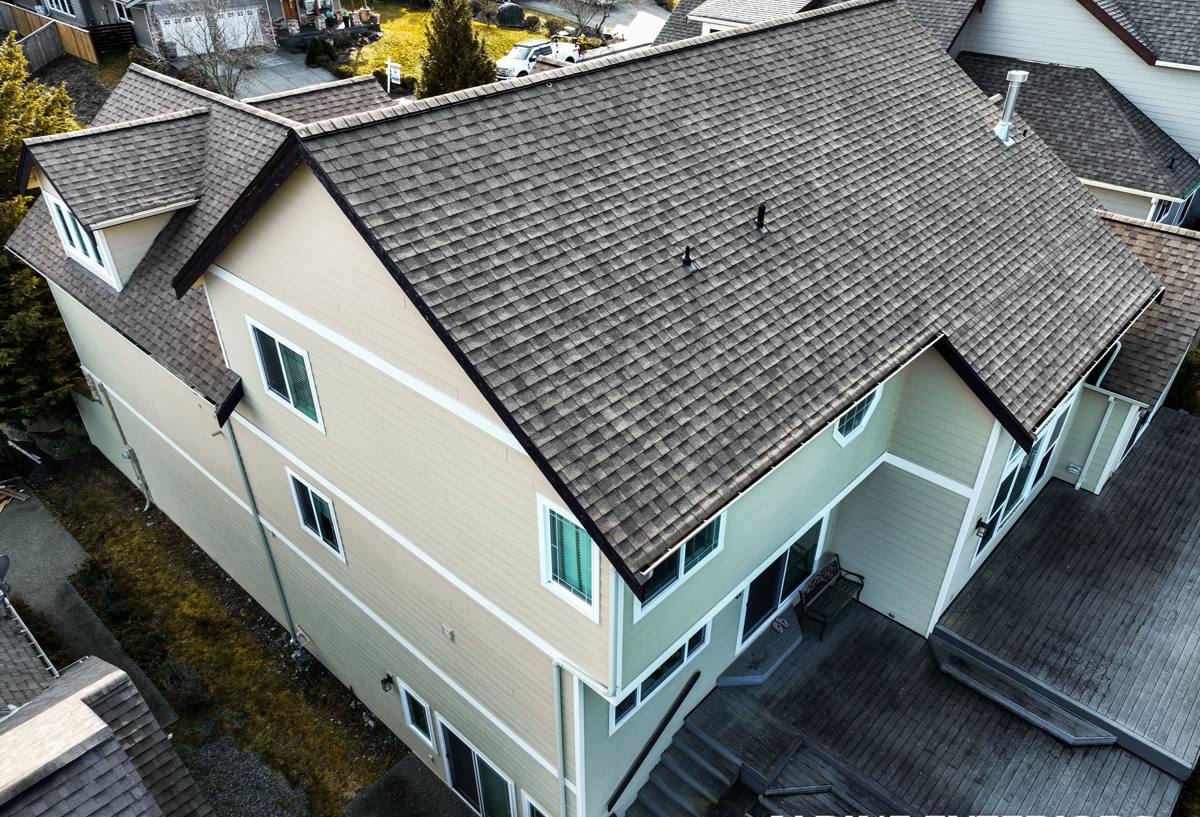
What Local Weather Actually Does to a Deck
It helps to be specific about what's working against a deck here, because it changes what "correct installation" actually means.
Driving rain
Rain in this area rarely falls straight down. Wind-driven rain gets pushed sideways and up under railings, into fastener holes, and along board edges that aren't properly sealed or capped. Over time, water finds any gap in the assembly, not just the top surface.
Extended damp periods
It's not one big storm that causes problems — it's the number of days per year a deck stays damp. Whatcom County's long, low-intensity wet season means a deck surface can stay moist for days at a stretch, which is exactly the condition that lets algae, moss, and mildew get a foothold.
Salt air
Being close to Blaine and the Strait means metal hardware, fasteners, and connectors are exposed to a mild but constant dose of salt in the air. Standard hardware corrodes faster here than it would fifty miles inland, and corroded fasteners are one of the most common hidden causes of deck failure.
Moss season
Moss doesn't just grow on roofs. Any shaded, damp deck surface in this region — especially under trees or on the north side of a house — will grow moss and algae if the board material and drainage don't account for it. Moss holds moisture against the surface, which accelerates whatever wear process is already happening underneath.
Why Composite Holds Up Better Here Than Wood
We install both wood and composite decking, and we're upfront with homeowners about the trade-offs rather than pushing one product. In a climate like this one, composite generally requires less ongoing upkeep because it doesn't absorb water into its fibers the way wood does, doesn't need annual staining or sealing, and resists the graying and splintering that comes from repeated wet-dry cycles. Wood has its own advantages — lower upfront cost and a natural look some homeowners prefer — but it demands a real maintenance commitment in a climate this wet, and skipping that maintenance is what leads to rot, especially at fastener points and board ends.
| Factor | Composite Decking | Wood Decking |
|---|---|---|
| Moisture absorption | Low — capped boards shed water | Higher — needs sealing to resist it |
| Annual maintenance | Occasional cleaning | Cleaning, staining/sealing most years |
| Moss/algae resistance | Better on capped, textured boards | Depends entirely on upkeep |
| Upfront cost | Higher material cost | Lower material cost |
| Lifespan with normal upkeep | Long, more consistent | Variable, upkeep-dependent |
| Fastener/hardware exposure | Still needs corrosion-resistant hardware near the coast | Same requirement |
What a Correct Composite Deck Installation Involves
Composite boards are only as good as what's underneath and holding them together. A lot of the problems we get called out to fix on other companies' composite decks trace back to shortcuts in the framing and fastening, not the decking material itself.
Framing and joist spacing
Composite boards flex differently than wood and generally need tighter joist spacing than a traditional wood deck, especially on diagonal layouts. Manufacturer spec sheets specify this for a reason — going wider to save a few joists is how you end up with a bouncy or sagging deck a few years in.
Ventilation and drainage underneath
A deck that can't breathe underneath traps moisture, which speeds up corrosion of hardware and can lead to mold on the underside of boards and framing. Proper joist spacing, gapping between boards, and keeping the area under low decks clear of debris all matter more here than in a drier climate.
Fasteners and hidden clip systems
Given the salt exposure this area gets, we use stainless or coated fasteners rated for coastal-adjacent conditions rather than standard hardware. Hidden fastener systems also keep water from pooling in screw heads on the board surface, which is one of the more common spots for early wear.
Board selection for shaded, damp areas
Not all composite boards perform the same in low light and constant moisture. Capped composite with a textured surface sheds water and resists moss better than uncapped or lower-grade composite, which matters more on a shaded Lynden lot than it would on a south-facing deck that dries out between rains.
Living With Moss Season
No decking material is completely moss-proof if it sits shaded and damp long enough, but the right board choice and layout reduce how much of a problem it becomes. A few things make a real difference:
- Board gapping sized correctly so water actually drains instead of sitting between boards
- Keeping the deck free of leaf litter and overhanging branches where practical, since organic debris holds moisture and feeds algae growth
- An occasional rinse and soft-bristle brush in fall and spring, before moss gets established rather than after
- Avoiding pressure washing directly into board seams, which can drive water into the substructure instead of just cleaning the surface
None of this is heavy maintenance compared to a wood deck, but it's not zero-maintenance either — anyone telling you composite decking needs no attention in this climate isn't giving you the full picture.
Our Process
We start with an in-person look at the site, not a phone estimate, because deck framing needs, sun/shade exposure, and drainage conditions vary a lot even between lots a few blocks apart in Lynden. From there:
- We walk the site and talk through layout, board options, and how the deck will actually be used
- We give a written estimate with material and labor broken out, so you can see what you're paying for
- We handle permitting where required — deck permits are common in Whatcom County jurisdictions and we don't skip that step
- We build the substructure to spec for the specific composite product being installed, not a generic framing plan
- We install decking, railing, and hardware rated for the local moisture and salt exposure
- We walk the finished deck with you before calling the job done
What Affects the Cost
| Cost Factor | Why It Matters |
|---|---|
| Deck size and shape | Complex layouts and cutouts increase labor and board waste |
| Board tier | Entry-level vs. premium capped composite affects both price and long-term appearance |
| Height and railing requirements | Taller decks need code-compliant railing and stairs, adding material and labor |
| Substructure condition | Replacing an old wood deck's framing costs more than building new on a clear footprint |
| Site access | Tight side yards or sloped lots can add labor time |
We won't quote a price without seeing the site, but we're happy to talk through rough ranges and what drives cost up or down during the estimate visit.
Questions Worth Asking Any Deck Contractor
- Are you pulling a permit for this deck, and who's responsible for it?
- What fastener and hardware grade are you using, and is it rated for coastal-adjacent exposure?
- What joist spacing are you using for this specific composite product?
- What does the manufacturer's warranty actually cover, and does your installation keep that warranty valid?
- Can I see a deck you've built in this area that's been through a few wet seasons?
Why It Matters That We Work Lynden Regularly
A contractor who works this part of Whatcom County knows which board finishes actually hold up under real moss season, which fastener grades are worth the extra cost given the salt air, and how local framing and permitting requirements apply here. That's different from following a generic national install guide. We're not guessing at how a deck will perform in this climate — we're building to what we've seen actually happen to decks in Lynden and the surrounding area over time.
If you're weighing composite decking for a home in Lynden, we're glad to come take a look and give you a straightforward, no-pressure estimate — just fill out the form below and we'll get in touch.