 Blaine Exterior
 Deck Repair in Sumas: Built for What Whatcom County Weather Does to Wood
A deck in Sumas doesn't fail because the homeowner neglected it. It fails because Whatcom County weather is relentless in ways that don't show up until you're standing on soft boards or looking up at a ledger board you can't quite trust anymore. Long stretches of driving rain, short winter days that never let wood fully dry out, and a moss season that can run most of the year all work against any deck that isn't detailed and maintained correctly. Whether the moisture arrives as salt-tinged coastal air closer to Blaine or as the steady, soaking rain that settles into Sumas through fall and winter, the effect on an outdoor structure is the same: wood stays damp longer than it should, and damp wood is where rot, fastener corrosion, and structural problems start.
We repair decks in Sumas regularly, and the patterns repeat. Ledger boards pull moisture from the house wall behind them. Joists near grade stay wet longer than joists up higher. Railings loosen from repeated freeze-thaw and wet-dry cycling. None of this is unusual — it's just what happens to a deck in this climate over years of use. The question isn't whether a deck will need repair eventually, it's whether the repair gets caught early, done correctly, and matched to what the structure actually needs.
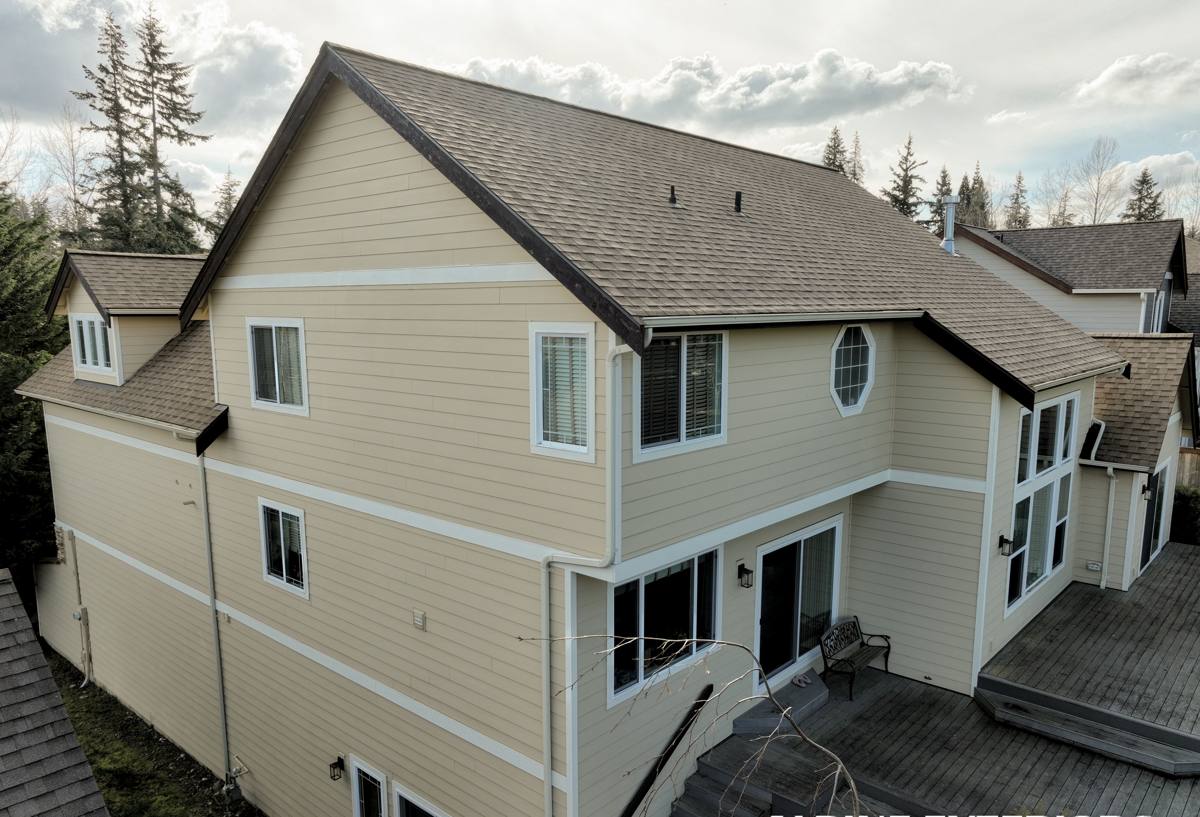
Signs a Sumas Deck Needs Repair, Not Just a Wash
Pressure washing and a new coat of stain make a deck look better for a season, but they don't fix what's happening underneath. Before recommending any repair, we look past the surface for the signs that actually matter:
- Soft, spongy, or springy decking boards, especially near the house or in shaded areas that stay wet longer
- Rust streaks or dark staining around fasteners, which usually means moisture has been sitting against the metal
- Gaps, cracking, or separation where the deck ledger meets the house — a common entry point for water
- Railings or posts that wobble or flex under normal weight
- Visible moss, algae, or persistent green staining that keeps returning within weeks of cleaning
- Stair stringers that feel uneven or show splitting at the point where they meet the treads
- Gaps between boards that have closed up or warped, trapping debris and moisture instead of shedding it
Any one of these on its own might be minor. Several together, especially around the ledger board or support posts, usually mean the repair needs to go deeper than the visible surface.
Why Moss Matters More Than It Looks Like It Should
Moss on a deck isn't just cosmetic. It holds moisture directly against the wood surface, blocks airflow, and keeps boards from drying between rain events — which in a long Whatcom County moss season can mean boards are damp for months at a stretch. Left alone, moss accelerates the exact decay process that leads to soft boards and structural repair. Addressing moss as part of a repair, not as a separate cosmetic task, is part of doing the job correctly.
What a Correct Deck Repair Actually Involves
A repair that just replaces the boards you can see, without checking what's underneath, tends to fail again within a couple of seasons. We treat deck repair as a structural inspection first, cosmetic work second.
Structural Check
This means getting under the deck where possible to check joists, beams, and support posts for soft spots, checking the ledger board connection to the house for water intrusion, and testing railing posts and stair stringers for movement. Structural issues are the ones that matter most for safety, and they're the ones most likely to be hidden behind boards that still look fine from above.
Flashing and Water Management
A huge percentage of deck repair problems trace back to missing or failed flashing at the ledger board — the point where the deck attaches to the house. If water has been getting behind that flashing, repairing the visible damage without correcting the flashing just guarantees the same repair again in a few years. Correct flashing detail is one of the least visible parts of a repair and one of the most important.
Fastener and Hardware Condition
Older decks are often held together with fasteners that were never rated for long-term outdoor exposure, or hardware that has corroded from years of moisture contact. Part of a proper repair is replacing failed hardware with fasteners and connectors rated for exterior use, not just swapping the boards around them.
Board Replacement
Once the structure and water management are sound, damaged decking boards, railings, and stair components get replaced. This is the visible part of the job, but it's the last step, not the first.
Repair Materials and How They Hold Up in Sumas Conditions
| Material | Typical Repair Approach | How It Handles Local Moisture |
|---|---|---|
| Pressure-treated wood | Sistering or replacing damaged joists, boards, and posts with matched treated lumber | Reliable and cost-effective, but needs consistent sealing and drainage to avoid repeat rot in wet years |
| Cedar | Board and rail replacement, careful matching for appearance | Naturally decay-resistant but still needs sealing and airflow underneath to prevent moss and softening over time |
| Composite decking | Board and clip replacement; substructure repair still done in wood | Resists rot in the boards themselves, but the wood framing underneath still needs inspection and repair |
Most of the decks we repair in Sumas are wood-framed regardless of what the surface decking is made of, which is why structural inspection matters even on composite decks — the framing underneath is still doing the structural work.
Our Deck Repair Process
- On-site inspection: We walk the full deck, get underneath where access allows, and check the ledger, framing, posts, and surface boards together — not just what's visible from the top.
- Honest assessment: We tell you what's cosmetic, what's structural, and what can reasonably wait versus what shouldn't.
- Written scope and estimate: You get a clear plan of what's being repaired and why, before any work starts.
- Structural repair first: Framing, flashing, and hardware issues get addressed before anything cosmetic.
- Surface repair and finish: Boards, railings, and stair components are replaced and finished to match the rest of the deck as closely as possible.
- Walkthrough: We go over what was repaired and what to watch for going forward, especially around seasonal maintenance.
Repair vs. Replace: How We Help You Decide
Not every deck problem means a full rebuild, and we don't push replacement when a targeted repair will genuinely hold up. The deciding factors usually come down to how much of the structure is affected versus how much is isolated:
- If the ledger board, main beams, or multiple support posts are compromised, repair costs can approach replacement costs — and replacement often makes more sense
- If the problems are isolated to a few boards, one section of railing, or a single joist, targeted repair is usually the right call
- Deck age matters — a deck built without correct flashing or drainage details is more likely to develop repeat problems even after repair
- How the deck is used matters too — a deck that gets heavy daily use has different priorities than one used occasionally
We'll always tell you honestly which situation you're in. A repair that's likely to fail again within a couple of seasons isn't a good use of your money, and we'd rather say so upfront than sell a short-term fix.
Keeping a Repaired Deck in Good Shape
Once a deck is repaired correctly, the work that keeps it that way is mostly seasonal and straightforward — but skipping it is how the same problems come back.
- Clear leaves and debris from between boards and along the ledger board regularly, especially in fall
- Address moss and algae growth as soon as it appears rather than waiting for it to spread
- Check railings and stair connections for movement once or twice a year
- Keep gutters and downspouts near the deck clear so runoff isn't draining directly onto it
- Reseal or refinish wood surfaces on the schedule appropriate to the finish product used
- Watch for standing water on the surface after rain — it usually means boards have lost their pitch or spacing
Why Hire a Crew That Already Works in Sumas
Deck repair done right depends on recognizing what's typical for this area versus what's a red flag. A crew that works Whatcom County regularly knows what a normal amount of weathering looks like on a deck this age, versus what points to a flashing failure or a framing problem that needs to be addressed before it gets worse. That judgment comes from doing this work in these conditions repeatedly, not from a general checklist.
It also means showing up with the right approach from the start — knowing that a repair here has to account for a longer wet season than a lot of other parts of the country, and building that into how the repair is done rather than treating it as an afterthought.
Get a Straightforward Deck Repair Estimate
If you're dealing with soft boards, a wobbly railing, or a deck that just doesn't feel as solid as it used to, we're happy to take a look and give you a clear, honest assessment — no pressure, no upsell. Use the form below to request a free estimate for deck repair in Sumas.