 Blaine Exterior
 Siding That Has to Hold Up on Cherry Point
Cherry Point sits right up against the Strait of Georgia, and that location shapes everything about how exterior materials perform out here. Homes and outbuildings in this stretch of Whatcom County take a steady diet of salt-laden marine air, wind-driven rain off the water, and long stretches of gray, damp weather that keep surfaces wet far longer than they'd stay wet a few miles inland. Add in the moss and algae growth that thrives under Northwest Washington's tree cover and cloud cover, and you have a climate that is genuinely tough on siding — tougher than most manufacturers' marketing materials let on.
We install exclusively James Hardie fiber cement siding, and Cherry Point is exactly the kind of environment that explains why. This page walks through what local homes actually need from their siding, what a correct fiber cement installation looks like, and how our process is built around the realities of this specific stretch of coastline rather than a generic install checklist.
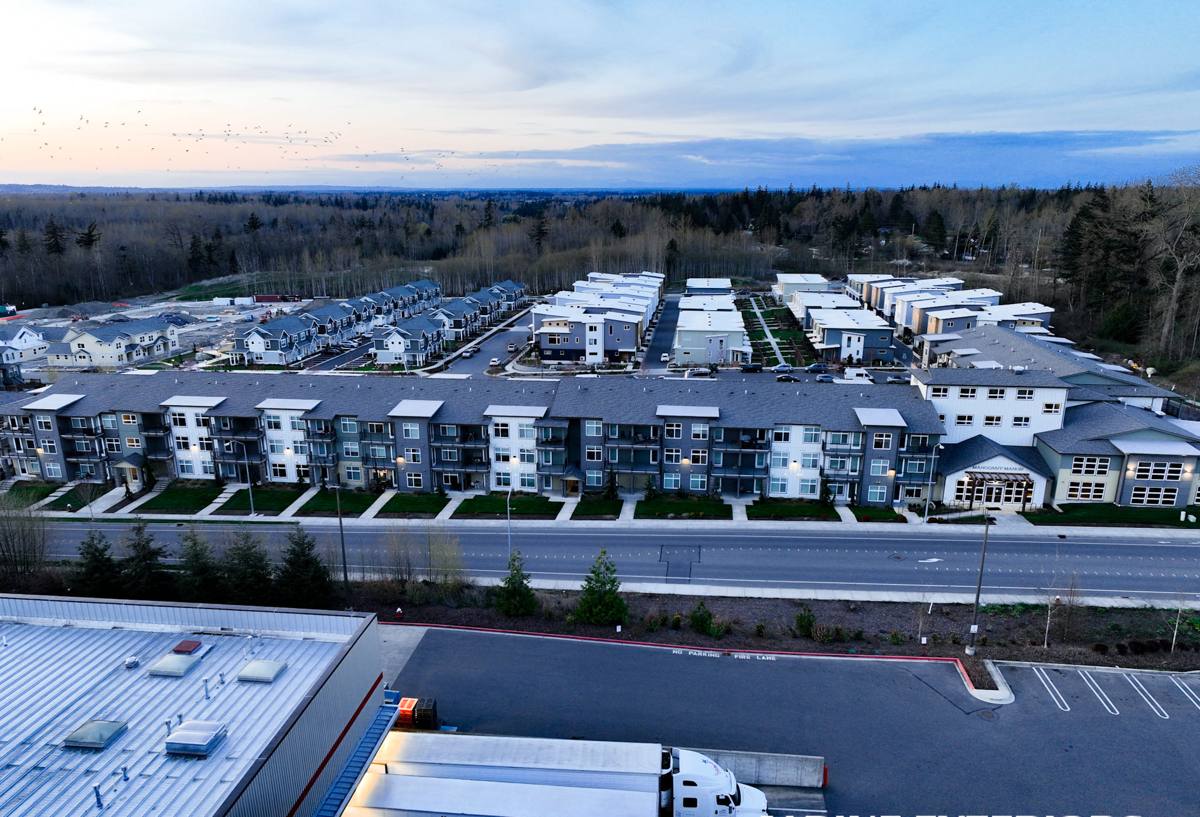
What Cherry Point's Climate Actually Does to a House
Salt Air and Corrosion
Airborne salt from the Strait doesn't just affect metal — it accelerates the breakdown of paint films, caulking, and any wood-based siding product over time. Salt is hygroscopic, meaning it pulls moisture out of the air and holds it against a surface, which keeps siding damper than it would be a few miles from the water. That constant low-level dampness is what drives rot, coating failure, and fastener corrosion faster here than in drier inland parts of the county.
Driving Rain
Storms coming off the water tend to arrive with real wind behind them, which means rain doesn't just fall on Cherry Point homes — it gets driven sideways into wall assemblies, lap joints, and trim intersections. Siding and flashing details that would be marginal but tolerable in a calmer inland setting can fail outright here, because wind-driven rain finds every shortcut in a house's water-management system.
Moss, Algae, and Extended Dampness
Whatcom County's long wet season and heavy tree cover give moss and algae plenty of time to establish themselves on north-facing and shaded walls. Once organic growth gets a foothold on a porous or poorly sealed surface, it holds moisture against the substrate underneath, which is where slow rot and paint failure usually start.
What a Correct Fiber Cement Job Requires Here
Fiber cement siding is not a "hang it and forget it" product, especially in a marine climate. A correct installation on Cherry Point depends on details that are easy to skip and hard to notice until years later:
- Proper clearance and flashing at every horizontal surface — decks, roof lines, window and door heads — so wind-driven rain has a place to go besides behind the siding.
- A functioning weather-resistive barrier and rainscreen gap behind the siding, giving any moisture that does get past the cladding a way to drain and dry instead of sitting against the sheathing.
- Correct fastener type, placement, and spacing per the manufacturer's installation instructions — under-fastening or over-driving nails is one of the most common causes of premature siding failure.
- Sealed and primed cut edges on any field-cut boards, since a factory-finished edge that gets cut on site is the one place moisture can wick into the substrate if it's left untreated.
- Correct gapping at butt joints and trim to allow for the material's normal expansion and contraction without caulk joints splitting open.
Skip any one of these and the siding itself can be excellent material installed in a way that shortens its life dramatically. This is where installation quality matters as much as product choice.
Why We Standardized on James Hardie for This Coastline
We don't install LP SmartSide, vinyl, Cemplank, Allura, or bare cedar or primed spruce siding, and Cherry Point's climate is a big part of why. Each of those products has real strengths, but they each carry a trade-off that we've decided isn't worth the risk on homes exposed to this much salt air and driving rain:
- Vinyl can warp and become brittle under UV exposure and temperature swings, and its seams and panels give wind-driven rain more opportunities to find a path behind the cladding.
- LP SmartSide is an engineered wood product, and any wood-based siding depends heavily on its factory coating and field sealing staying intact — a tall order in a climate that keeps surfaces damp for extended stretches.
- Cedar and primed spruce are attractive but require an ongoing maintenance commitment (recoating, caulk inspection, moisture monitoring) that most homeowners underestimate until the first signs of rot show up.
James Hardie fiber cement is non-combustible, doesn't swell or rot from moisture absorption the way wood-based products can, and comes with a factory-applied ColorPlus finish engineered to hold up under UV and moisture exposure without the recoating schedule that wood siding demands. Hardie's HZ5 product line is specifically engineered for climates like ours — cold, wet, and humid — which matters more here than in drier regions of the country.
How Fiber Cement Compares in a Marine Climate
| Factor | James Hardie Fiber Cement | Vinyl | Wood / Engineered Wood |
|---|---|---|---|
| Moisture behavior | Resists swelling, cracking, and rot from moisture absorption | Doesn't absorb moisture, but seams allow water intrusion behind panels | Absorbs moisture; prone to rot if coating fails |
| Salt air exposure | Factory finish engineered to resist coastal UV and moisture | Can become brittle and discolored over time | Coating breaks down faster; more frequent maintenance |
| Fire resistance | Non-combustible | Combustible, can melt or warp under heat | Combustible |
| Maintenance | Occasional wash, minimal recoating over its service life | Low, but repairs are difficult to color-match | Regular recoating and caulk inspection required |
| Typical warranty | Long-term, transferable manufacturer warranty | Varies widely by manufacturer and product tier | Limited or coating-only warranties are common |
Our Process for Cherry Point Homes
1. On-Site Assessment
We start by walking the exterior and looking specifically at the sides of the house that take the most weather — usually west- and south-facing walls exposed to the Strait — checking existing siding, trim, flashing, and any signs of moisture intrusion or moss buildup.
2. Removal and Sheathing Check
Once old siding comes off, we inspect the sheathing and weather-resistive barrier underneath. This is the point where hidden moisture damage from a previous installation often shows up, and it needs to be addressed before new siding goes on — covering a compromised wall assembly with new siding just hides the problem.
3. Water Management Details
We install flashing at all penetrations and horizontal transitions, confirm a proper rainscreen gap, and pay close attention to the areas most exposed to wind-driven rain off the water.
4. Installation to Manufacturer Spec
Fiber cement siding, trim, and fasteners go on following James Hardie's published installation requirements — correct nailing patterns, gapping, and sealed cut edges — because deviating from spec is the most common way a good product underperforms.
5. Final Walkthrough
We review the completed exterior with the homeowner, point out anything we found and addressed along the way, and go over basic care going forward.
Maintenance Checklist for Cherry Point Homeowners
- Rinse siding annually to remove salt residue, especially on walls facing the water.
- Check north- and shade-facing walls each fall for early moss or algae growth and remove it before it spreads.
- Inspect caulking at trim, window, and door joints yearly — caulk is the first thing to fail in a marine climate.
- Keep gutters and downspouts clear so roof runoff isn't dumping extra water onto siding below.
- Trim back vegetation that keeps siding shaded and damp for long periods.
- Have any impact damage or cracked boards repaired promptly — an open crack is a direct path for moisture.
Why Local Experience on Cherry Point Matters
A crew that already works this part of Whatcom County knows which walls on a Cherry Point property take the worst of the weather before they ever climb a ladder. That local knowledge shapes decisions on flashing details, fastener choice, and where to spend extra attention during installation — decisions a crew unfamiliar with this specific coastline might not think twice about. It also means we're not guessing at how James Hardie's HZ5 products perform here; we're installing them in the same conditions, on the same stretch of coast, repeatedly.
Blaine and the surrounding Whatcom County shoreline share a lot of these same conditions, but Cherry Point's direct exposure to the Strait makes getting the details right even more important. A siding job that's technically correct on paper but ignores the realities of salt air and driving rain won't hold up the way it should.
Get a Straight Answer on Your Siding
If you're weighing a siding replacement or repair on a Cherry Point property, we're happy to take a look and give you an honest read on what your home needs — no pressure, no upsell. Fill out the form below for a free estimate and we'll walk the exterior with you and talk through what correct fiber cement installation looks like for your specific house.