 Blaine Exterior
 Siding Replacement Built for Grandview's Climate
Homes in the Grandview area near Blaine sit close enough to the water that salt-laden air is a daily fact of life, not an occasional nuisance. Add Whatcom County's long stretch of driving rain and the months-long moss season that follows, and siding here works harder than siding almost anywhere else in the state. Paint fades faster near the coast, moisture finds its way behind poorly flashed panels, and anything with exposed wood fiber or a weak factory finish starts to show its age years before it should.
Siding replacement in Grandview isn't just a cosmetic project. Done right, it's a system: the right material, the right water management details behind it, and installation that accounts for how this specific microclimate behaves. Done wrong, homeowners end up redoing the same work a decade later — sometimes sooner.
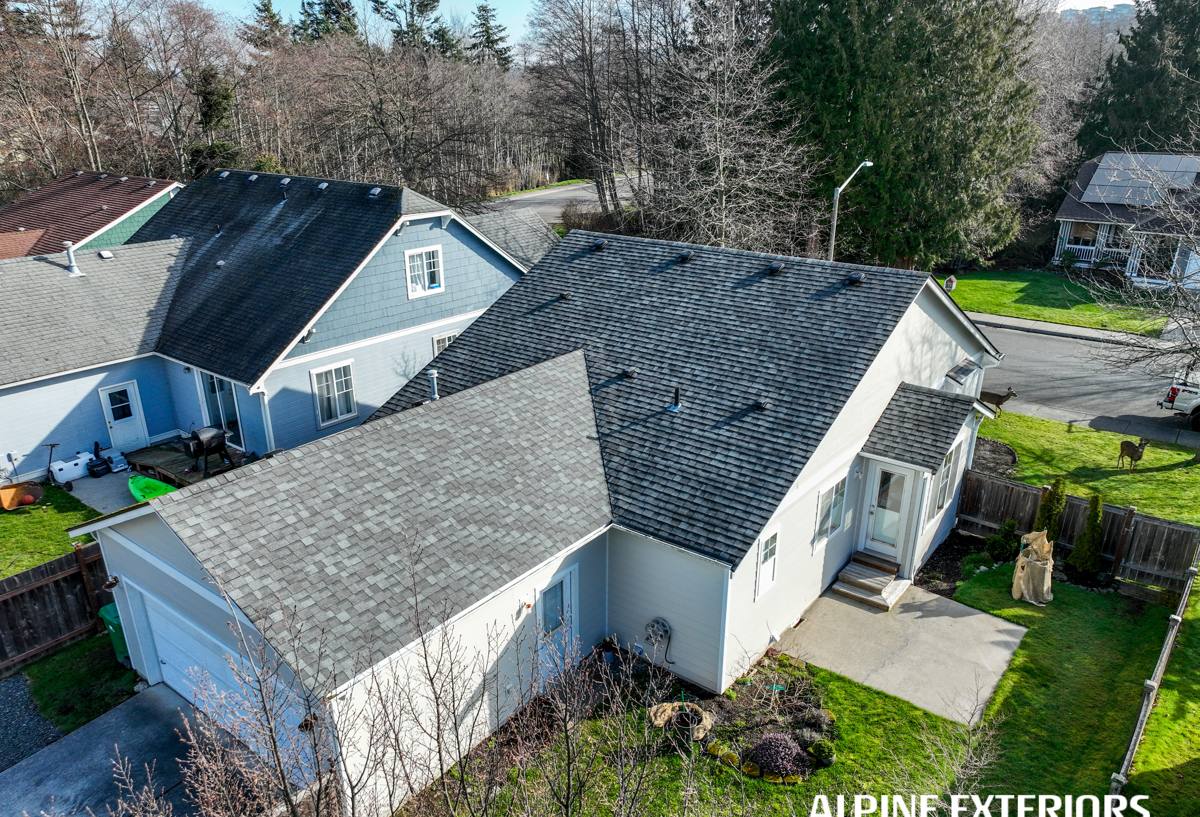
Signs a Grandview Home Needs New Siding
Moisture and Rot Damage
Driving rain off the water pushes moisture sideways into siding, not just down onto it. On older homes, that means water finds gaps around trim, window flashing, and butt joints that were never sealed for this kind of exposure. Soft spots, dark staining at seams, and siding that flexes or feels spongy near the bottom courses are signs the substrate underneath is already compromised.
Moss, Mildew, and Persistent Staining
Moss season in Whatcom County isn't a few weeks — it's a good chunk of the year. Siding that stays damp longer than it should, whether from poor sun exposure, tight landscaping, or bad drainage, will grow moss and mildew faster than siding elsewhere. If pressure washing only knocks the growth back for a month or two before it returns, that's usually a sign the material itself is holding moisture rather than shedding it.
Chalking, Fading, and Finish Failure
Salt air accelerates UV and finish breakdown. Paint that's chalking, peeling, or fading unevenly — especially on the sides of the house that face prevailing weather — means the factory or field-applied finish has reached the end of its service life, and repainting is a temporary fix at best.
Why We Install Only James Hardie Fiber Cement Here
We standardized on James Hardie fiber cement siding for every home we work on, including in Grandview, and the reasoning comes directly from what this climate does to alternative materials over time.
Vinyl siding can warp and gap under repeated wet-dry cycling, and its seams give wind-driven rain more opportunities to work behind the panel. Engineered wood products like LP SmartSide use a wood-strand core that, however well-treated, is still wood fiber — introduce moisture at a cut edge, a fastener hole, or a failed sealant joint near the water, and that core is at risk of swelling and breaking down. Cedar and primed spruce carry the same fundamental vulnerability: they're organic material in a climate that specializes in keeping wood wet for long stretches, which is exactly the environment moss and rot need.
James Hardie fiber cement is cement, sand, and cellulose fiber — it doesn't have an organic core to rot, and it isn't combustible. Its ColorPlus factory finish is baked on and warrantied against fading and peeling under conditions far more aggressive than most inland climates, which matters directly for a salt-air, high-UV coastal exposure. Hardie's HZ5 product line is engineered specifically for climates with freeze-thaw cycling and sustained moisture exposure — the exact combination Grandview sees most winters. It's not the cheapest material on the market, but it's the one we're willing to put our name behind for homes that take this kind of weather every year.
What a Correct Siding Replacement Involves
Tear-Off and Inspection
Every replacement starts with full removal of the old siding, not an overlay. That's the only way to actually see what's underneath — sheathing condition, existing rot, old flashing that was never installed correctly, and any framing damage that needs to be addressed before new siding goes on. Covering up a problem instead of fixing it just moves the failure a few years down the road.
Weather-Resistive Barrier and Flashing
This is the step that determines whether a siding job survives a coastal climate. A properly lapped weather-resistive barrier, correctly integrated window and door flashing, and careful detailing around every penetration — vents, hose bibs, light fixtures — are what actually keep driving rain out. Siding is the visible layer; the drainage plane behind it is what does the real work.
Installation to Manufacturer Specification
James Hardie siding has specific requirements for fastener placement, gapping, clearance from grade and rooflines, and caulking at joints. Installed to spec, it performs the way it's engineered to. Installed with shortcuts — panels butted too tight, fasteners overdriven, clearances ignored — even the best material can fail early. Correct installation is what the manufacturer's warranty actually depends on.
Finishing Details
Trim, corner details, and caulking joints get finished to shed water at every transition, not just look clean. In a climate where wind-driven rain hits from multiple angles over the course of a winter, these details are functional, not decorative.
Our Process, Start to Finish
- Free on-site estimate: We walk the home, look at existing siding condition, and talk through what's actually needed versus what's optional.
- Detailed scope and pricing: A written plan covering material, tear-off, any sheathing repair, and finish details — no vague allowances.
- Tear-off and inspection: Old siding comes off, substrate gets inspected, and any necessary repairs are addressed before moving forward.
- Weather barrier and flashing installation: The water management layer goes in correctly before a single piece of new siding is hung.
- James Hardie installation: Panels, fasteners, and trim installed to manufacturer spec by crews who install this material regularly.
- Final walkthrough and cleanup: We review the finished work with the homeowner and clear the site of debris and old material.
Cost Factors for Siding Replacement in Grandview
Every home is different, but the same handful of factors drive most of the price difference between projects. Broad ranges depend heavily on home size, current condition, and how much repair work the tear-off uncovers.
| Factor | Why It Matters |
|---|---|
| Home size and complexity | More square footage, corners, and roofline transitions mean more material and labor. |
| Substrate condition | Rot or moisture damage found during tear-off adds repair scope before new siding can go on. |
| Siding profile and trim detail | Lap width, shingle-style accents, and trim complexity affect both material and install time. |
| Color and finish selection | Standard ColorPlus colors versus custom or field-painted finishes shift cost and lead time. |
| Access and site conditions | Multi-story sections, tight lot lines, or limited staging area affect labor time. |
Choosing a Contractor Who Knows This Area
A crew that regularly works in Grandview and the greater Blaine area already understands how the local weather behaves against a house — which exposures take the worst of the driving rain, where moss tends to establish first, and how to detail flashing for a coastal climate rather than a generic install. That local pattern-recognition is hard to substitute for.
- Ask whether they are a certified James Hardie installer and how many Hardie projects they've completed
- Ask to see how they handle flashing and weather-barrier details, not just the finished siding
- Confirm whether tear-off and substrate inspection are included, not treated as a change order
- Get a written scope that specifies material line (e.g., HZ5), fastening method, and finish
- Ask how warranty claims are handled — through the installer, the manufacturer, or both
- Check that they carry proper licensing and insurance for work in Washington State
Living With Hardie Siding Through Moss Season
Fiber cement doesn't eliminate the need for basic upkeep, but it removes the structural risk that comes with organic siding materials in a wet climate. Periodic gentle washing to keep moss and mildew from building up on the surface is normal maintenance, not a warning sign. Because ColorPlus finish is factory-cured and warrantied, homeowners aren't stuck repainting every few years just to keep ahead of coastal weathering — a real difference over the life of the home compared to materials that depend on field-applied paint holding up against salt air and driving rain.
If your Grandview home's siding is showing moisture damage, persistent moss staining, or a finish that's past saving, we're happy to take a look and give you a straightforward assessment — no pressure, no upsell, just an honest read on what your home actually needs. Reach out for a free estimate and we'll walk the property with you.