 Blaine Exterior
 Why Dakota Creek Roofs Take a Different Kind of Beating
Homes near Dakota Creek sit close enough to the water that salt-laden air is a constant presence, even on days when there's no storm in sight. Add Whatcom County's long wet season, frequent wind events off the Strait of Georgia, and the deep shade many of these lots get from mature evergreens, and you have a roofing environment that punishes shortcuts. A roof that would hold up fine in a drier inland climate can fail years early out here if it wasn't built or repaired with this specific exposure in mind.
Storm damage in this area rarely shows up as one dramatic event. More often it's wind-driven rain finding its way under a lifted shingle tab, a gust that cracks a ridge cap nobody notices from the ground, or moss that's been quietly working into a seam for two seasons before a heavy rain finally pushes water through. By the time a stain appears on a ceiling, the roof has usually been compromised for a while.
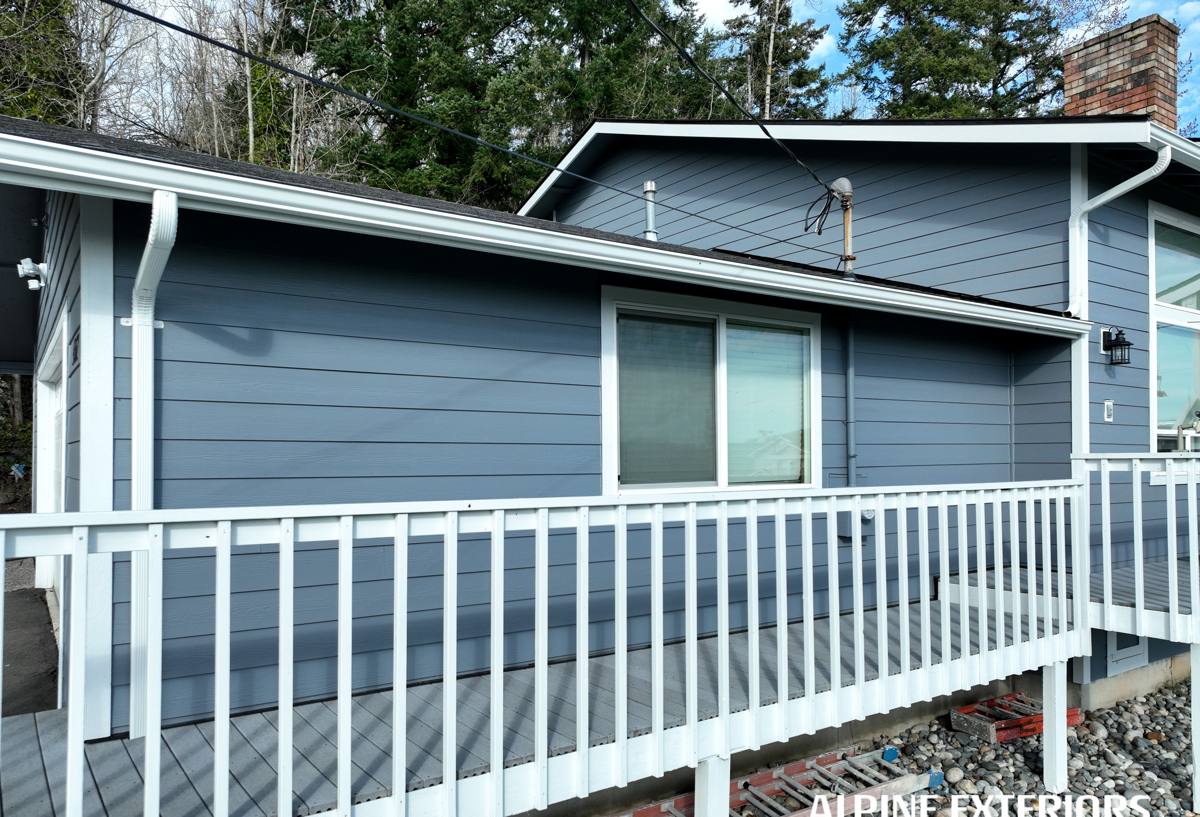
How Salt Air, Driving Rain, and Moss Actually Damage a Roof
Salt Air
Airborne salt accelerates corrosion on exposed metal — flashing, fasteners, gutter hardware, and any exposed nail heads. Once corrosion starts on a fastener, it loses holding strength, which is exactly what lets a roof section lift in the next windstorm instead of staying put.
Driving Rain
Storms off the water in this part of Whatcom County don't just drop rain, they push it sideways. Wind-driven rain gets forced up and under shingle tabs, into ridge vents, and along any flashing that isn't sealed tight. A roof that sheds a normal vertical rain just fine can still leak badly in a driving storm if the underlayment and flashing details weren't done correctly.
Moss
Shaded, damp roof sections — common on tree-covered Dakota Creek lots — grow moss on a longer season than almost anywhere else in the state. Moss holds moisture against the roofing material, works its root structure under shingle edges, and lifts tabs just enough to let wind and water in. It's slow damage, but it's cumulative, and it's one of the most common root causes we find when a "sudden" storm leak turns out to have been building for a while.
What a Correct Storm Damage Repair Actually Involves
A proper storm repair isn't just replacing whatever shingles are visibly missing. It means finding every point where wind and water compromised the system, not just the one that happens to be leaking into the house right now.
- Full roof inspection, not just the damaged section — wind and moss damage often extends past the obvious spot
- Check of flashing around chimneys, vents, skylights, and roof-to-wall transitions for lifted or corroded metal
- Inspection of the underlayment where shingles were removed, since wind can tear or expose it even when shingles look intact
- Assessment of fastener condition in the affected area, especially on older roofs near the water where corrosion is more advanced
- Gutter and downspout check, since storm debris and moss runoff commonly clog drainage right when the roof needs it most
- Moss and debris removal from the full roof plane, not just the repair zone, to stop the damage from recurring nearby
- Matching replacement materials as closely as possible so the repair doesn't stand out or create a mismatched wear pattern down the line
Reading the Damage: What We Look For
Not every storm mark on a roof needs the same fix. Part of doing this job honestly is telling a homeowner what's cosmetic, what's a real vulnerability, and what's already caused hidden damage.
| Sign | What It Usually Means | Typical Response |
|---|---|---|
| Missing or torn shingle tabs | Direct wind damage, often isolated | Targeted replacement, check surrounding tabs for lift |
| Granule buildup in gutters | Wind or hail abrasion accelerating shingle wear | Inspect shingle condition, note if replacement is nearing |
| Cracked or lifted ridge cap | Direct wind stress on the roof's highest point | Ridge cap replacement and fastener check |
| Moss mats on north-facing slopes | Long-term moisture retention, likely early tab lift underneath | Moss removal, inspection of shingles beneath for hidden lift or rot |
| Rust streaks below flashing | Salt-air corrosion of fasteners or flashing metal | Flashing and fastener replacement, not just a caulk patch |
| Interior ceiling stain after a storm | Active or recent water intrusion | Priority inspection to trace entry point before more rain arrives |
Our Process for Dakota Creek Storm Repairs
1. Assessment First, No Guessing
We walk the full roof, not just the damaged spot, because storm and moss damage in this area rarely stays contained to one section. We document what we find and explain it in plain terms before any work starts.
2. Honest Scope
If the damage is limited to a repair, we say so. If we find enough underlying wear — corroded fasteners, widespread moss undermining, or an underlayment that's failed in more than one spot — that a repair would just be a temporary patch, we'll tell you that too, along with why.
3. Materials Suited to This Exposure
Given the salt air and moss pressure in this part of Blaine, we prioritize corrosion-resistant fasteners and flashing, and we're careful about matching shingle or roofing material so the repaired section weathers at the same rate as the rest of the roof rather than aging visibly faster or slower.
4. Cleanup That Prevents Repeat Problems
Moss removal and gutter clearing are part of the job, not an upsell, because leaving them out just sets up the same failure again next wet season.
Repair vs. Replacement: An Honest Look
Storm damage doesn't always mean a full new roof, but it's worth understanding what pushes a job from one category to the other.
| Factor | Favors Repair | Favors Replacement |
|---|---|---|
| Age of roof | Under roughly 10-12 years | Nearing or past expected material lifespan |
| Extent of damage | Isolated to one section or slope | Multiple areas across different slopes |
| Underlayment condition | Intact where inspected | Compromised in more than one location |
| Moss/moisture history | Recent or surface-level | Long-term, with signs of underlying rot |
| Fastener/flashing condition | Sound, minimal corrosion | Significant salt-air corrosion throughout |
We won't push a full replacement when a repair genuinely solves the problem, and we won't recommend a repair on a roof where the underlying material is too far gone to hold one properly. This is a judgment call that requires actually being on the roof, not estimating from a photo or a phone call.
Why Local Storm Repair Experience Matters Here
Storm damage repair looks different in Whatcom County than it does even a couple hours south. Crews who don't regularly work this stretch of the Washington coast can underestimate how much salt air accelerates corrosion, or miss how much moss has already undermined a section that looks fine from the ground. Working in and around Blaine regularly means knowing which roof orientations on Dakota Creek lots hold moisture longest, which fastener and flashing choices actually hold up against the marine air, and what a genuinely storm-worthy repair looks like versus one that will need redoing after the next big blow off the water.
It also means being available when storms actually hit. Wind and rain events in this region tend to arrive in clusters, and a roof with active storm damage needs attention before the next system rolls through, not weeks later.
What Homeowners Can Do Between Storms
A few habits go a long way toward catching problems before they become emergencies:
- Do a visual check from the ground after any significant wind event, looking for lifted tabs, debris, or displaced flashing
- Clear gutters and downspouts at least twice a year, more often on lots with heavy tree cover
- Keep an eye on shaded, north-facing roof sections where moss establishes first
- Address small leaks or stains immediately rather than waiting for a bigger storm to "confirm" the problem
- Have a roof inspected after any storm severe enough to bring down branches or cause visible property damage nearby
None of this replaces a professional inspection, but it helps catch the early signs before wind-driven rain or another moss season turns a small issue into an interior leak.
Get a Straight Answer on Your Roof
If a recent storm left you with missing shingles, a new stain on the ceiling, or just a nagging feeling that the roof took more of a hit than it looks like from the driveway, it's worth having it checked before the next system moves through. We offer free, no-pressure estimates for Dakota Creek homeowners — we'll walk the roof, tell you honestly what we find, and lay out your options without any obligation. Use the form below to get started.