 Blaine Exterior
 Windows Built for the Peace Arch Border Climate
Homes near the Peace Arch in Blaine sit right where Puget Sound weather meets the border — salt-laden air off Semiahmoo Bay, wind-driven rain that comes at windows sideways rather than straight down, and a moss season that runs longer here than almost anywhere else in Whatcom County. Windows in this pocket of Blaine take a beating that homes even twenty minutes inland don't see. We've replaced windows on plenty of houses in this exact neighborhood, and the failure patterns are consistent: swollen wood sashes, corroded aluminum frames, fogged double panes, and sills that have been catching standing water for years without anyone noticing until the drywall underneath started to go soft.
This page is specifically about window replacement for the Peace Arch area of Blaine — not a general window page. If you live near the border crossing or along the coastal edge of town, the salt exposure and wind direction change what "correct installation" actually means, and it's worth understanding before you sign a contract.
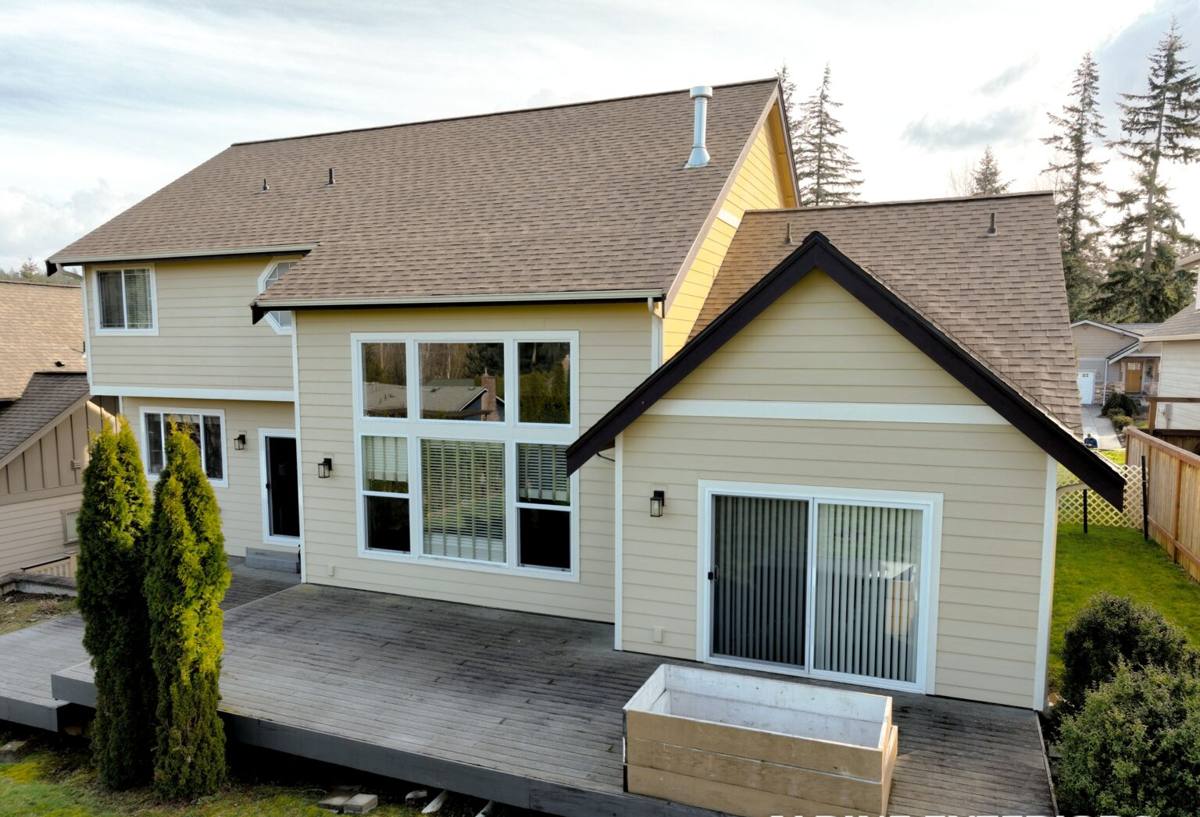
Why This Location Is Harder on Windows Than Most
Salt Air and Metal Fatigue
Proximity to salt water accelerates corrosion on anything metal — window balances, screws, aluminum cladding, and older steel or aluminum frame systems. Salt air doesn't just sit on the surface; it works into hardware and fastener points over years, which is why older aluminum-frame windows in this part of Blaine often show pitting and stiff or seized hardware well before the glass itself fails.
Driving Rain and Wind Direction
Blaine's exposure to Georgia Strait and Semiahmoo Bay means storms frequently push rain horizontally, not vertically. A window that would stay dry in a calmer inland location can take direct wind-driven water on the Peace Arch side of town. That puts real weight on flashing details, sill pitch, and sealant quality — the parts of a window job that don't show up in a sales brochure but determine whether water gets behind the frame in year three.
The Long Moss Season
Whatcom County's moss season stretches from fall through spring, and it doesn't stop at the roofline. Moss and algae growth on window sills, tracks, and exterior trim holds moisture against wood and painted surfaces far longer than dry weather ever would. On homes we've looked at near the Peace Arch, sill rot almost always traces back to trapped moisture sitting under moss or debris that was never cleared.
How to Tell Your Windows Need Replacing, Not Just Repair
- Fogging or a visible haze between panes — the seal has failed and the insulating gas is gone
- Windows that are difficult to open, close, or lock, especially older aluminum sliders
- Soft, discolored, or spongy wood at the sill or lower frame corners
- Visible daylight or a noticeable draft around the frame when it's windy
- Condensation forming on the inside of the glass regularly, even with normal ventilation
- Paint or finish that's cracking, peeling, or bubbling on the exterior frame
- A noticeable jump in heating costs without any other explanation
Some of these are repairable — a failed balance or worn weatherstripping doesn't always mean a full replacement. But once wood framing has gone soft or a seal has failed, repair is usually a short-term patch, not a fix.
What a Correct Window Replacement Involves Here
The window itself is only part of the job. In a coastal, high-rain location like the Peace Arch area, the installation details matter more than the product label.
Removal and Inspection
We remove the old window carefully and inspect the rough opening before anything new goes in. This is where hidden problems show up — soft framing, old water staining, or insulation that's been wet and compressed. If there's damage, it gets addressed before the new window goes in, not covered over.
Flashing and Water Management
Proper flashing — at the sill, jambs, and head of the opening — is what actually keeps wind-driven rain out over the long run. This is the step that gets rushed or skipped by installers who aren't used to working in a marine climate, and it's the single biggest reason windows fail early in this area.
Sill Pitch and Drainage
The sill needs to shed water outward, not let it pool against the frame. On older Blaine homes, we sometimes find sills that were installed level or even slightly reverse-pitched, which practically guarantees moisture problems over time.
Sealing and Insulation
Low-expansion foam or backer rod and sealant around the frame perimeter closes air gaps without bowing the frame out of square. Exterior caulking has to be a product rated for continuous wet exposure, not a general-purpose sealant that breaks down after a couple of wet seasons.
Frame Material Trade-Offs for a Salt-Air, High-Rain Location
| Frame Material | How It Handles This Climate | Maintenance |
|---|---|---|
| Vinyl | Doesn't corrode from salt air; handles moisture well; can expand/contract with temperature swings | Low — occasional cleaning |
| Fiberglass | Very stable in wet, salty conditions; strong dimensional stability | Low |
| Aluminum (modern, thermally broken) | Better than older aluminum but still more prone to corrosion near salt water than vinyl or fiberglass | Moderate — watch hardware and finish over time |
| Wood (unclad) | Attractive but the highest-maintenance option in this environment; vulnerable to rot without diligent upkeep | High — regular painting/sealing required |
| Wood-clad (vinyl or aluminum exterior) | Wood interior look with a protected exterior shell; a reasonable middle ground | Moderate |
We generally steer homeowners in this part of Blaine away from unclad wood exteriors and older-style aluminum unless there's a strong reason to want them — not because the material is bad everywhere, but because the maintenance burden in a salt-air, high-rain pocket like this one is genuinely higher, and a missed repaint cycle can lead to rot faster than people expect.
Glass and Energy Performance Considerations
Double-pane, low-E glass with argon fill is the standard baseline for this climate — it cuts heat loss and reduces condensation risk, which matters given how much of the year is cool and damp here. For west- or southwest-facing windows that take the brunt of storm exposure, we sometimes talk through impact-resistant or heavier-gauge glass options, less for storm protection and more because that exposure sees the most wear over time. There's no need to over-spec every window in the house — matching glass performance to each elevation's actual exposure is more useful than a blanket upgrade.
Our Process for Peace Arch-Area Homes
- On-site assessment — we look at existing windows, framing condition, and exposure direction for each elevation of the house
- Honest scope — we tell you which windows need full replacement, which could be repaired, and why
- Product selection — matched to your budget and to what actually holds up in this climate, not just what's cheapest upfront
- Careful removal — protecting interior finishes and inspecting the opening before install
- Correct flashing and sealing — the step that determines whether the job lasts
- Final check and walkthrough — operation, seal, and cleanup confirmed before we consider the job done
Why a Crew That Already Works This Neighborhood Matters
Window installation isn't identical everywhere in Whatcom County. A crew that mostly works drier, inland jobs may not think twice about flashing details that are non-negotiable a few blocks from the border. We've seen the specific ways windows fail in this area — sill rot from trapped moss moisture, corroded hardware from salt exposure, sealant that was never rated for this much sustained wet weather — and we build the installation around preventing those exact problems, not generic best practices pulled from a manual written for a different climate.
There's also a practical side to hiring local: warranty service, follow-up adjustments, and honest answers about a past job are all easier when the crew is already working in your neighborhood regularly, not driving in from out of the area for a one-off install.
What to Expect Cost-Wise
Window replacement pricing depends on frame material, glass package, window size and count, and how much work the opening needs beyond the window itself — for example, if hidden rot turns up once the old window is out. Vinyl and fiberglass options generally sit at the more affordable end for this climate's demands, while wood-clad and larger custom sizes cost more. Rather than quote a number that won't reflect your actual house, we'll walk your windows in person and give you a clear, itemized estimate before any work starts.
Ready for a Free Estimate?
If you're dealing with foggy glass, stuck sashes, drafts, or you just want a straight answer on whether your windows are due for replacement, we're happy to take a look. The estimate is free, there's no pressure, and you'll get a clear explanation of what we find — use the form below to get started.