 Blaine Exterior
 Building or Framing a Home in Sandy Point? Get the Windows Right the First Time
New-construction windows are a different job than window replacement, and if you're building, remodeling down to the studs, or adding a room on a Sandy Point property, the distinction matters. New-construction units have a nailing fin around the perimeter of the frame that gets fastened directly to the sheathing before the weather-resistive barrier and siding go on. That fin is what ties the window into the home's drainage plane — the layered system of house wrap, flashing, and siding that's supposed to move water down and out instead of into the wall cavity. Get that sequencing wrong on a Sandy Point lot exposed to Georgia Strait wind and salt spray, and you're not looking at a minor callback. You're looking at rot inside a wall that nobody sees until the drywall or siding comes off.
We install new-construction windows for framing crews, general contractors, and homeowners managing their own build in Blaine and throughout Whatcom County. This page covers what that job actually involves, what Sandy Point's exposure means for window selection and flashing detail, and why the installation sequence deserves the same attention as the window itself.
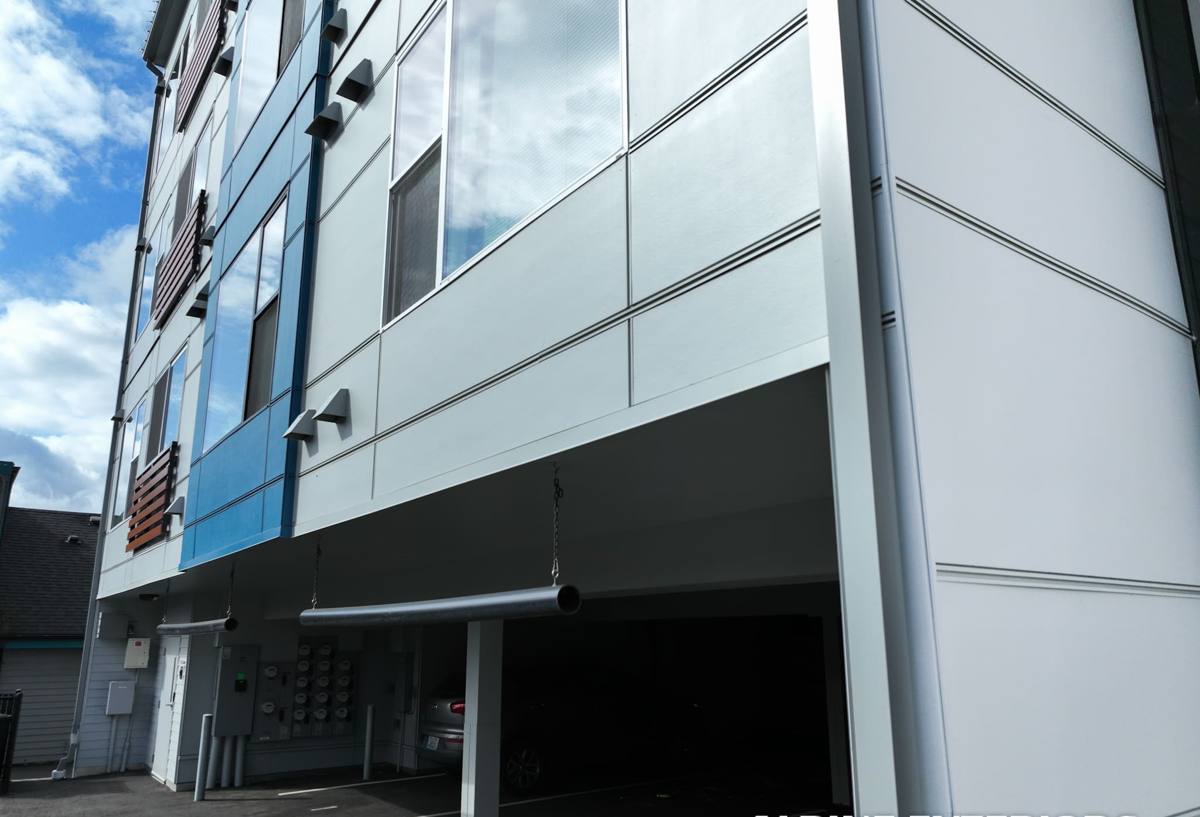
Why Sandy Point's Exposure Changes the Approach
Sandy Point sits out on the water, and that location comes with a specific set of stresses most inland Whatcom County homes don't deal with to the same degree.
Salt Air
Airborne salt from the Strait of Georgia settles on everything — siding, trim, and window hardware included. Over years, salt exposure accelerates corrosion on fasteners, hinges, and lower-grade metal components. It's also hard on certain finishes, which is why we pay attention to cladding material and hardware spec on waterfront jobs, not just glass performance.
Driving Rain
Wind off the water doesn't just drop rain straight down — it drives it sideways into wall assemblies, and it does it often. A window that's perfectly watertight in a still rain can still leak under wind-driven conditions if the flashing details around the rough opening weren't built for that load. This is the single biggest reason new-construction window failures show up years later as hidden rot rather than an obvious leak on day one.
A Long Moss and Damp Season
Whatcom County's wet season runs long, and Sandy Point's moisture load — from both rain and marine humidity — keeps sills, trim, and sheathing damp for extended stretches. Any gap in the flashing or sealant becomes an entry point that stays wet instead of drying out between storms, which is exactly the condition that lets rot get established.
None of this means a Sandy Point build needs exotic materials. It means the water management details — flashing, house wrap integration, sill pans, sealant joints — have to be done correctly and in the right order, every time, with no shortcuts.
What Correct New-Construction Window Installation Actually Involves
A window installed correctly on day one should outlast several re-siding cycles without a leak. Here's the sequence we follow and why each step matters.
- Rough opening check. We verify the opening is square, plumb, and sized correctly before the window ever goes in. An opening that's out of square stresses the frame and can prevent the sash from operating smoothly for the life of the window.
- Sill pan flashing. A sloped, flashed pan at the bottom of the opening gives any water that gets past the window a way to drain back out rather than pool on the sill and soak into the framing. This is one of the most commonly skipped steps on lower-cost installs, and it's one of the most important on a wind-driven-rain site like Sandy Point.
- Window-to-opening seal and fastening. The window is set, leveled, and fastened through the nailing fin per the manufacturer's schedule — enough fasteners, in the right pattern, without over- or under-driving them, which can distort the frame.
- Flashing tape integration. Flashing tape at the sides and top is layered in "shingle fashion" with the house wrap — each layer overlapping the one below it — so water is always directed outward and downward, never trapped behind a layer.
- Head flashing. A drip cap or head flashing above the window kicks water away from the top of the frame before it ever reaches the seal line.
- Interior and exterior sealant. Backer rod and sealant at the interior air seal, plus exterior sealant where the trim meets the window, close the assembly against both air and water infiltration.
- Final operation check. Every sash and lock gets tested before we call the job done — a window that leaks is a problem, but so is one that doesn't open or lock correctly.
Every one of these steps happens before siding goes on, which is why new-construction window work has to be scheduled and sequenced with the rest of the shell — it's not something that gets fixed easily after the fact.
New-Construction vs. Replacement: Know Which Job You're Actually Doing
We get asked this often enough that it's worth spelling out plainly, especially for homeowners managing their own project.
| Factor | New-Construction Window | Replacement (Retrofit) Window |
|---|---|---|
| Frame design | Nailing fin, fastens to sheathing | No fin, fits inside existing frame |
| When it's used | New builds, additions, gutted-to-studs remodels | Existing home, siding and trim staying in place |
| Flashing access | Full access to sheathing and house wrap | Limited — works around existing exterior finish |
| Best for | Best possible long-term water management | Faster, less invasive upgrade to an existing wall |
| Typical use in Sandy Point builds | New homes and additions where exposure is highest | Renovations where siding stays intact |
If you're framing new walls or opening a wall up to the studs, new-construction windows almost always give you the more durable, better-flashed result — which matters more on an exposed waterfront lot than it does on a sheltered inland site.
Choosing Materials and Glass for a Waterfront Whatcom County Site
Frame material and glass package both play into how a window holds up under salt air and sustained damp conditions.
Frame Material
Vinyl, fiberglass, and clad-wood frames each perform differently in a marine environment. Vinyl is a solid, low-maintenance, budget-friendly choice and holds up well to salt air since it doesn't corrode. Fiberglass costs more but resists expansion and contraction better across temperature swings and holds paint finishes longer. Clad-wood gives you a wood interior with a protected exterior face, which is a good option if you want a natural look inside — just know the exterior cladding and its seams are the part doing the weather work, so that detail needs to be right. We'll talk through the trade-offs for your specific project rather than push one material across the board.
Glass and Hardware
Dual-pane, low-E glass is the standard baseline for new construction in this climate and helps with both energy performance and condensation control during Whatcom County's long, damp shoulder seasons. On hardware, we favor corrosion-resistant fasteners and hinges for anything close to the water — standard-grade hardware can start showing surface corrosion within a few years in a salt-air environment, well before the window itself is due for any attention.
Our Process for Sandy Point New-Construction Jobs
Whether we're working directly with a framing crew, a general contractor, or a homeowner running their own project, the process looks the same:
- Site visit and rough opening review, either from plans or in the field
- Product selection walkthrough — frame material, glass package, and hardware suited to a waterfront exposure
- Written estimate with a clear installation timeline that fits your framing schedule
- Sill pan and flashing installed per manufacturer instructions and best-practice sequencing
- Window set, fastened, and sealed per the steps outlined above
- Final walkthrough with an operation and seal check on every unit before we sign off
We coordinate directly with framers and siding crews when we're one piece of a larger build, so the window install doesn't hold up your schedule or get sequenced out of order with the house wrap and siding.
What to Ask Before Hiring Anyone for New-Construction Window Work
Because this work gets covered up by siding within days or weeks, you generally only get one look at it. A short checklist worth going through with any contractor you're considering:
- Do they install sill pan flashing on every opening, or only "when needed"?
- Can they explain their flashing sequence — house wrap, tape, and window — in the order it happens?
- Do they have experience with waterfront or high-exposure sites specifically, not just general residential work?
- Will they walk you through frame and hardware options suited to salt air, rather than defaulting to whatever's cheapest?
- Are they available to coordinate their schedule with your framing or siding crew?
- Will they show you the flashing and sealant work before it's covered, if you ask?
A crew that already works Sandy Point and similar Whatcom County waterfront properties has usually already worked out the answers to these questions through repetition — they've seen what wind-driven rain does to a poorly flashed opening and they build around it as a default, not an upsell.
Why Local Experience on This Specific Site Type Matters
General window installation experience doesn't automatically translate to waterfront installation experience. A crew that mostly works sheltered, inland lots may never have had a reason to treat sill pan flashing or head flashing as non-negotiable, because on those sites, a smaller margin of error is more forgiving. Sandy Point doesn't offer that margin. Sustained wind, salt exposure, and a long wet season mean any shortcut in the water management details tends to surface as a real problem — just not right away, which is what makes it costly.
We treat every opening on a waterfront job the way we'd want it done if it were our own house: full flashing sequence, no skipped steps, and materials matched to the exposure rather than the lowest bid. That approach costs a little more attention up front and saves a lot of trouble later.
Get a Free, No-Pressure Estimate
If you're planning a new build, addition, or full remodel in Sandy Point and need new-construction windows done right the first time, we're glad to take a look at your plans or framing and walk you through options. Fill out the form below for a free estimate — no pressure, just a straight answer on what your project needs.