 Blaine Exterior
 Roof Repair for Sumas Homes
Sumas sits up against the Canadian border in northeast Whatcom County, and the roofs out here take a beating that's different from what you'd see further south or further inland. Winters bring long stretches of steady rain broken up by wind events funneling down from the Fraser Valley, and the moss season runs longer than most homeowners expect — often eight months or more of the year with enough moisture and shade for growth to take hold. A roof that isn't inspected and maintained on a regular schedule in this part of the county tends to develop problems years before it would somewhere drier.
We're Blaine Exterior Co, and while our home base is Blaine, we've worked Sumas and the surrounding rural properties long enough to know the patterns: which roof styles hold up, which ones fail early, and where the water actually gets in versus where the stain shows up. That gap between entry point and visible damage is where a lot of roof repairs go wrong when the crew doesn't know the area.
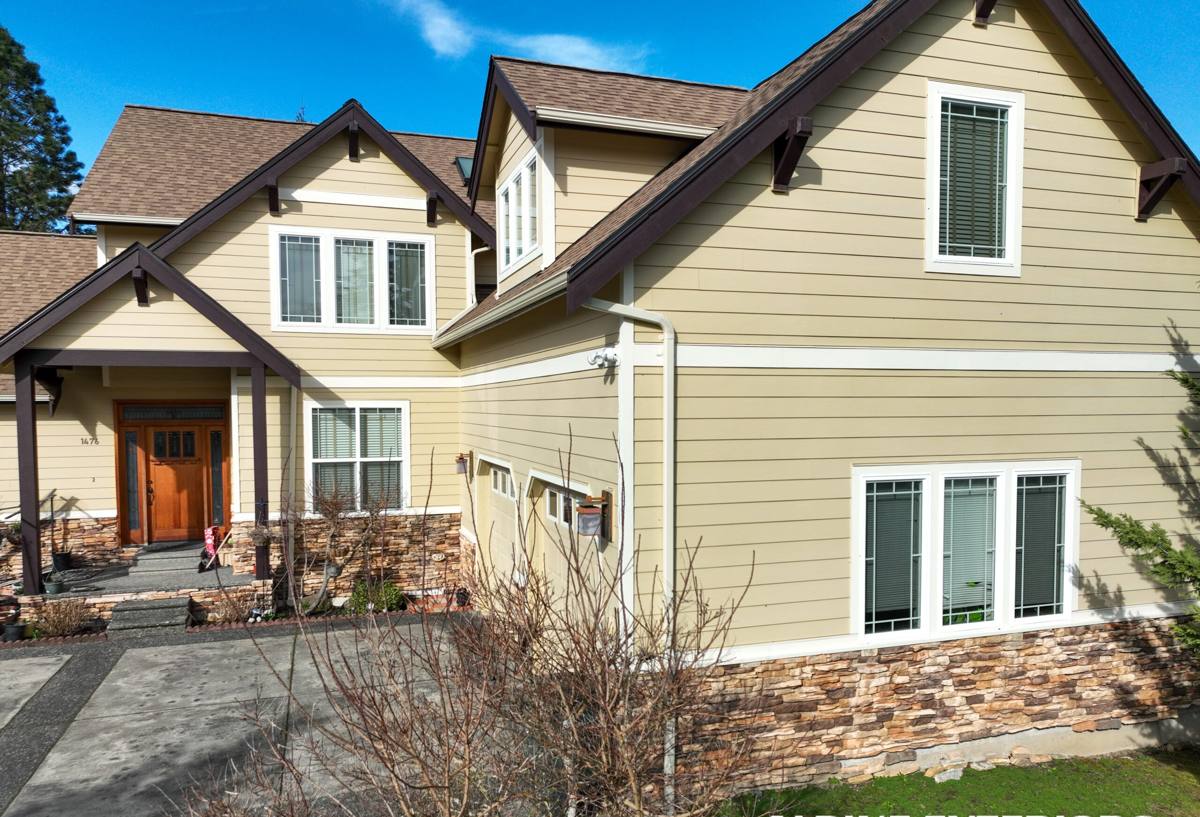
What Whatcom County Weather Does to a Roof
Roof repair in this region isn't just patching a leak — it's understanding why the leak happened in the first place. A few climate factors specific to this corner of Washington drive most of the repair calls we get:
- Driving rain: Wind-driven storms push water sideways and uphill under shingle tabs, around flashing edges, and into any gap that a calm-weather roof would never leak through.
- Extended moss season: Moss and algae hold moisture against the roof surface for months at a time, breaking down shingle granules and lifting edges as root systems spread.
- Salt-influenced air: Coastal moisture in the air accelerates corrosion on exposed metal — nails, flashing, and vent caps — long before the shingles themselves wear out.
- Freeze-thaw swings: Occasional cold snaps followed by rain can force water that's already worked its way under a shingle to expand and widen the damage.
None of these factors act alone. A roof with moss buildup holds water longer, which accelerates flashing corrosion, which opens a path for wind-driven rain — one problem compounds the next. That's why a repair that only addresses the visible symptom (a stain on the ceiling, a missing shingle) often comes back within a season or two.
Common Roof Repair Issues We See Around Sumas
Flashing Failure
Flashing around chimneys, skylights, and roof-to-wall transitions is usually the first thing to fail in this climate. It's thin metal, it's mechanically fastened rather than fully sealed, and it takes the brunt of wind-driven rain. Once the sealant dries out or a fastener backs out, water finds the gap.
Moss and Algae Damage
Moss doesn't just sit on top of a roof — it roots into the texture of the shingle and lifts the tabs as it grows, breaking the seal that keeps water out. By the time moss is visible from the ground, it's usually been established for a season or more.
Shingle Wear at Valleys and Edges
Valleys concentrate runoff, and edges take the most wind exposure. These are the two spots on a roof that wear out first, regardless of the age of the rest of the roof surface.
Ventilation and Moisture Buildup
A roof that isn't ventilated correctly traps moisture in the attic space, which shows up as premature sheathing rot from the underside — a problem that looks like a leak but is actually a ventilation issue, and needs a different fix.
Nail Pops and Fastener Corrosion
Salt-influenced moisture in the air corrodes exposed fasteners faster than inland dry climates. A popped nail head is a small thing until it works itself proud of the shingle and becomes a direct path for water.
What a Correct Roof Repair Actually Involves
A proper repair starts with figuring out the real source of the problem, not just patching where the water shows up inside the house. Water travels — it can enter at a flashing seam and track along the sheathing before dripping somewhere else entirely. Here's the sequence we follow:
- Interior and exterior inspection: We trace the visible damage back to its likely entry point, checking attic sheathing, insulation, and framing for moisture along the way.
- Roof surface assessment: We look at the shingles, flashing, vents, and valleys around the suspected entry point, plus the general condition of the surrounding roof so we're not missing a second problem.
- Root-cause repair: We fix the actual failure point — re-securing or replacing flashing, replacing damaged shingles, correcting a ventilation gap — rather than just sealing over the symptom.
- Moss and debris removal: If moss or organic buildup contributed to the failure, we clear it using methods that don't damage the shingle surface, and treat the area to slow regrowth.
- Verification: We check the repair holds under water testing where practical, and walk the homeowner through what we found and what we did.
Skipping any one of these steps is how a "fixed" roof ends up leaking again in the same spot after the next big storm.
Repair vs. Replacement: How We Make the Call
Not every roof problem in Sumas needs a full replacement, and we're not going to tell you it does. But there's a point where repeated repairs cost more over time than doing the job right once. Here's how we think through it:
| Factor | Favors Repair | Favors Replacement |
|---|---|---|
| Roof age | Under 15 years, or recent replacement with an isolated issue | Near or past the shingle's expected service life |
| Extent of damage | Localized — one flashing point, one section of shingles | Widespread wear, multiple leak points, or moss coverage across most of the surface |
| Underlying structure | Sheathing and framing intact | Rot or soft spots found during inspection |
| Repair history | First or second repair call | Repeated repairs to the same or nearby areas |
| Budget timing | Want to extend the roof's life a few more years | Planning ahead and want to avoid recurring repair costs |
Cost for roof repair work varies with the type and extent of damage, roof pitch and access, and material involved — we won't quote a number without seeing the roof, but we'll always tell you honestly whether a repair makes sense or whether you're better off putting that money toward a longer-term fix.
Why a Crew That Already Works Sumas Matters
Roofing crews that mostly work in drier parts of the state, or in denser urban areas, don't always account for how much of a difference the Fraser Valley wind and the extended wet season make to material choice and detailing. We make adjustments specific to this area as a matter of course:
- Extra attention to flashing fastening and sealant at wind-exposed edges, not just standard-spec installation.
- Material and product choices that account for months of sustained moisture exposure, not just occasional rain.
- Realistic expectations about moss regrowth timelines, so we're not promising a one-time treatment will solve a recurring seasonal issue.
- Familiarity with the rural and semi-rural property layouts common around Sumas — longer driveways, detached structures, well-treed lots that shade roofs longer into the day.
That local pattern recognition is the difference between a repair that's built for this climate and one that's built for a generic spec sheet.
Maintenance That Extends the Life of a Repair
A repair is only as good as the maintenance that follows it. In Whatcom County's climate, a roof that gets looked at once a year holds up noticeably better than one that only gets attention when something's already leaking. A basic seasonal checklist for homeowners:
- Check gutters and downspouts before the fall rains start — a clogged gutter backs water up under the roof edge.
- Look for visible moss or algae growth each spring and address it before it spreads.
- Have flashing around chimneys, skylights, and vents checked every year or two, since these are the first points to fail.
- Trim back overhanging branches that keep sections of the roof shaded and damp longer than the rest.
- After any major wind event, do a quick visual check from the ground for lifted or missing shingles.
None of this requires climbing on the roof yourself — a lot of it can be checked from the ground, and the rest is worth having a professional look at during a routine visit.
Our Process, Start to Finish
When you call us for a roof repair in Sumas, here's what to expect:
- We schedule a visit and inspect both the roof surface and, where relevant, the attic and interior signs of water intrusion.
- We explain what we found in plain terms — where the problem is, why it happened, and what it will take to fix it correctly.
- We provide a written estimate before any work starts, with repair scope and materials clearly laid out.
- We complete the repair, clean up the work area, and confirm the fix with you before we consider the job done.
We don't upsell a full roof replacement when a targeted repair will genuinely solve the problem, and we won't sell you a patch job when the underlying damage calls for more. That honesty is what keeps homeowners around here calling us back for the next thing, whether that's a repair, a gutter issue, or eventually a full roof.
Get a Free, No-Pressure Estimate
If you're dealing with a leak, spotting moss buildup, or just want a second opinion on a roof that's due for a look, we're glad to come out and take a look. Fill out the form below and we'll get back to you to schedule a free estimate — no pressure, no obligation, just an honest read on what your roof actually needs.